10 centavos 1921
Market Prices
2 salesAbout This Note
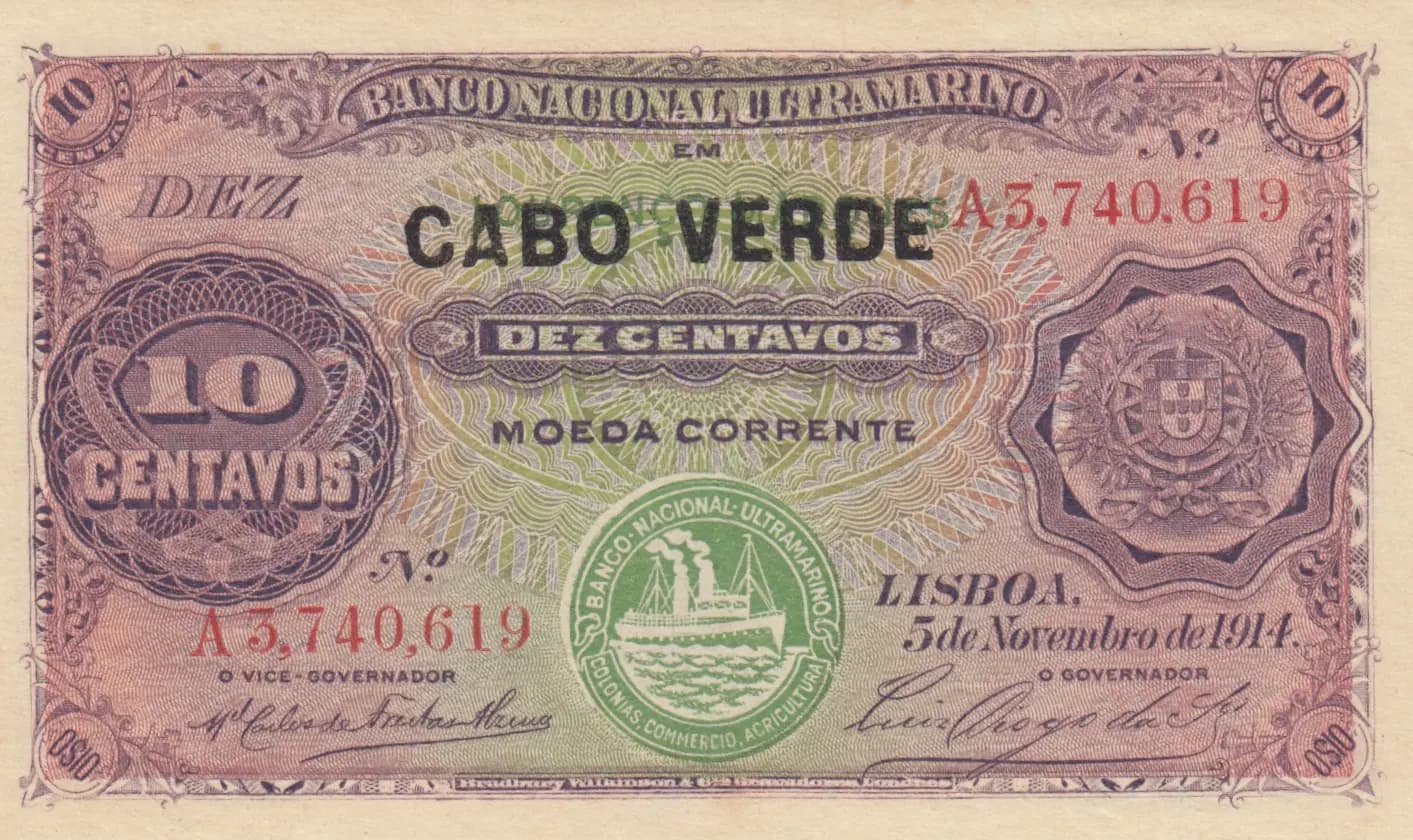
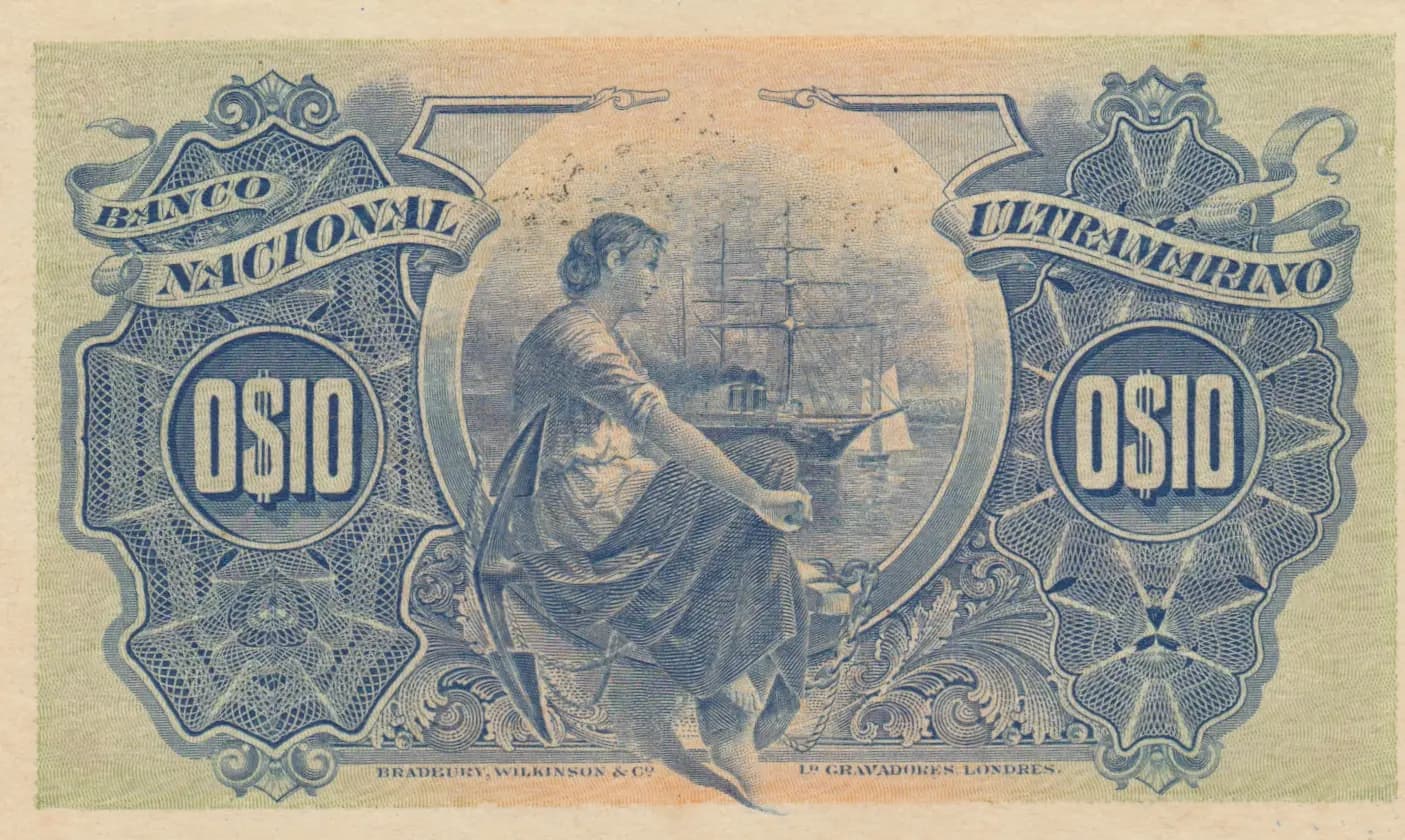
This is a Cape Verde 10 Centavos note from 1921, issued by the Banco Nacional Ultramarino and printed by the prestigious Bradbury Wilkinson of London. The note displays the characteristic purple/mauve obverse with an ornate ship seal and allegorical reverse featuring a classical female figure gazing toward maritime vessels, rendered in blue and cream tones. In UNC condition, this note exhibits the patina typical of early 20th-century Portuguese colonial currency, with no major damage, making it a desirable example for collectors of Portuguese African colonial issues.
Common. Although early 20th-century Cape Verde notes have limited collector circulation, eBay market data shows similar notes in Fine condition selling for approximately $30, with higher grades (PMG 63) reaching $167.50. This pricing range, combined with the availability of comparable examples in the market and standard print runs for Portuguese colonial currency of this period, indicates this is a common note. UNC examples are more desirable than circulated pieces, but the denomination and issue are not scarce.
This note represents the monetary authority of Cape Verde under Portuguese colonial rule, issued during the interwar period when Portugal maintained tight control over its Atlantic island possessions. The Banco Nacional Ultramarino, based in Lisbon, centralized the issuing of currency across Portugal's African territories, as evidenced by the overprint marking this as Mozambique plate currency repurposed for Cape Verde circulation. The allegorical maritime imagery on the reverse—featuring a woman with ships—symbolizes Portugal's naval and commercial dominance in its colonial sphere and the strategic importance of Cape Verde as a coaling station and trading hub.
The obverse features a purple and multicolored design with ornamental corner medallions bearing the denomination, a prominent circular seal at center depicting a steamship with 'Banco Nacional Ultramarino' text, and baroque-style scrollwork and geometric ornamentation throughout. The reverse showcases a classical allegorical female figure (representing Commerce or Navigation) seated in classical dress, gazing toward a maritime scene with sailing vessels and harbor imagery, rendered predominantly in blue and cream with green tinting. Both sides feature decorative corner emblems and complex intaglio patterns characteristic of high-security banknote design. The 'O$10' denomination circles anchor both sides of the reverse.
FRONT: 'Banco Nacional Ultramarino' (National Overseas Bank); 'Cabo Verde' (Cape Verde); 'Dez Centavos' (Ten Centavos); 'Moeda Corrente' (Current Currency); 'Lisboa' (Lisbon); '5 de Novembro de 1914' (November 5, 1914 — original issue date); 'Vice-Governador' (Vice-Governor); 'Governador' (Governor); Serial number 'A 2,740,619'; Reference marking 'D577'. BACK: 'Banco Nacional Ultramarino' (National Overseas Bank); 'O$10' (10 centavos); 'Bradbury, Wilkinson & Co' (printer); '1º Gravadores Londres' (First Engravers London).
Intaglio engraving (also called recess or copperplate printing), executed by Bradbury Wilkinson & Co of London, one of the world's most prestigious security printers of the era. The fine line work, complex geometric backgrounds, multiple color registration, and intricate portrait and allegorical figure engraving are hallmarks of this technique. The note displays no evidence of lithography or letterpress; the depth, detail, and security features are consistent with classical intaglio production standards of 1914-1921.
This is an overprint variety: the base design originated as Mozambique P-59 (dated 1914), with 'Cabo Verde' overprinted in black to designate it for Cape Verde circulation in 1921. The serial number 'A 2,740,619' and reference marking 'D577' are consistent with the documented variant for Pick P-20. Signature varieties are known to exist on this issue, though the specific signatures on this example are not clearly legible in the visual analysis. This note represents the primary variety catalogued under P-20.