1000 riels 1973
About This Note
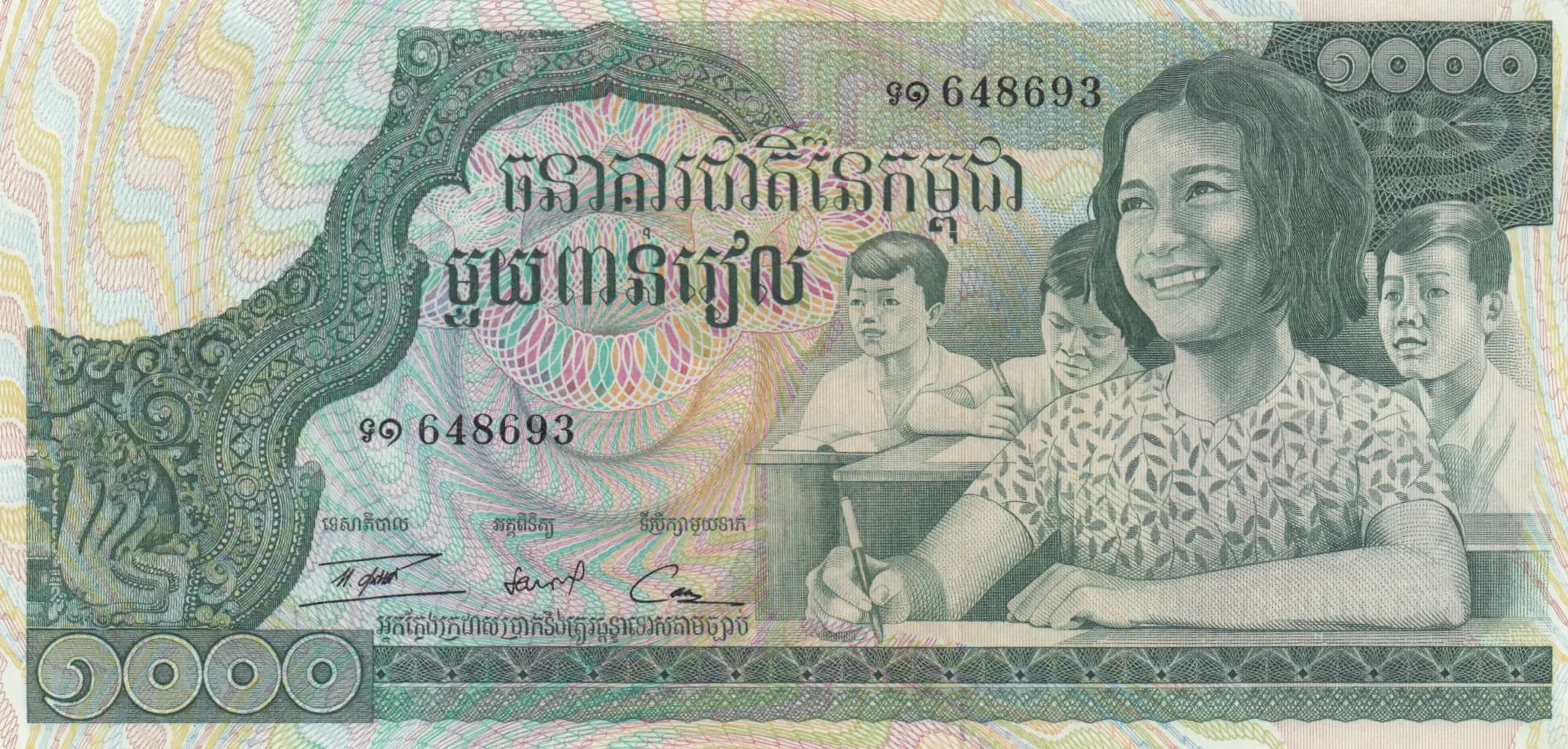
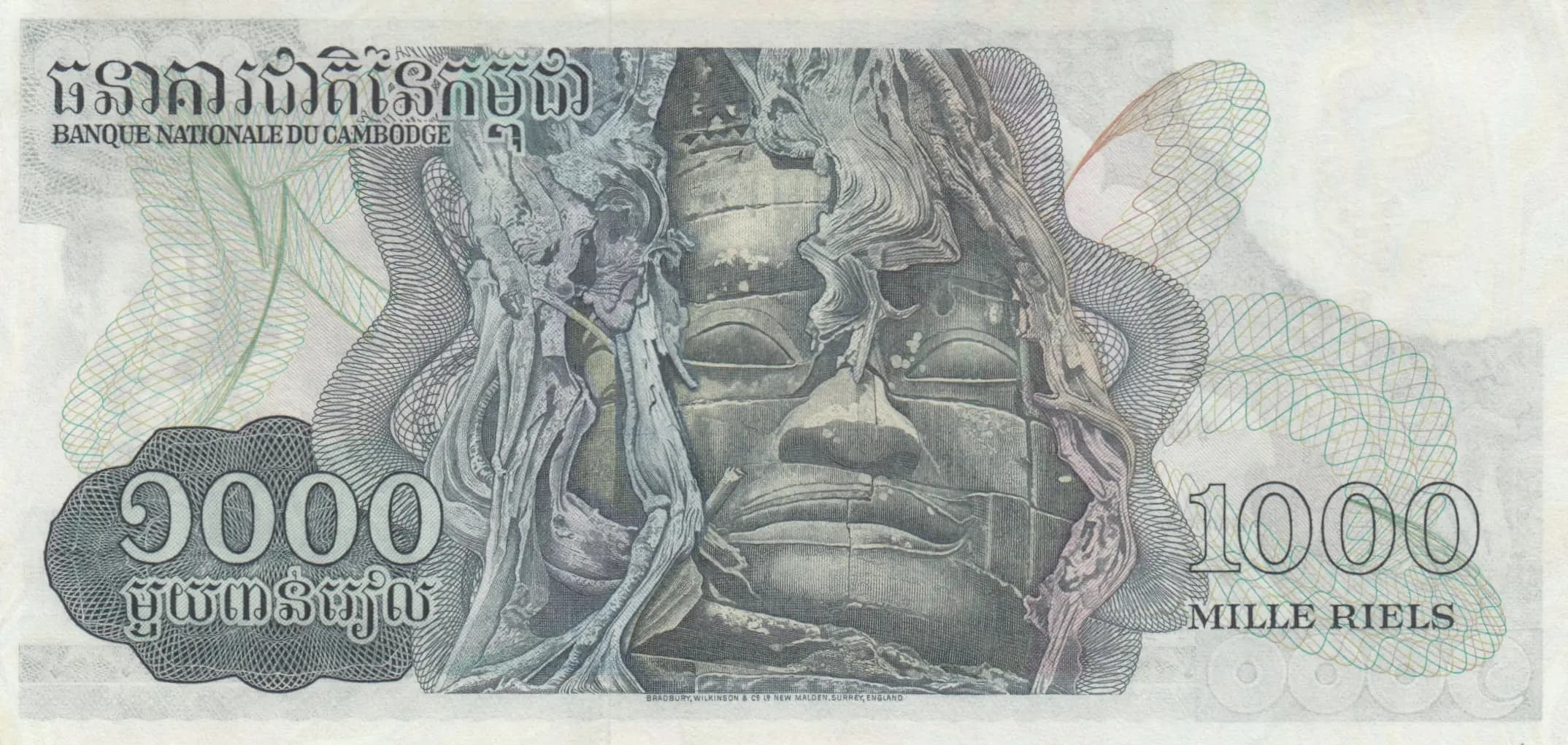
A superb uncirculated example of the 1973 Cambodian 1000 Riels (Pick P-17) issued by the Banque Nationale de Cambodge. The obverse features an attractive family group portrait with a smiling woman and children rendered in vibrant pastel colors, complemented by an ornate decorative circular medallion with intricate scrollwork on the left. The reverse displays a striking engraved Khmer sculptural face, likely from Angkor temple architecture, rendered in fine black and gray intaglio work. This note represents an important piece of Cambodian monetary history from the final years of the Khmer Republic before the 1975 political upheaval.
Common. The 1973 1000 Riels (P-17) is a standard circulation issue from the Khmer Republic period with likely substantial print runs. While notes from this tumultuous era (1970-1975) can show variable survival rates, uncirculated specimens of this denomination remain readily available to collectors at modest prices. No evidence of short print runs, recalls, or special restrictions on this particular Pick number exists in numismatic literature.
Issued in 1973 during the Khmer Republic period (1970-1975), this banknote reflects Cambodia's monetary sovereignty following the 1970 coup that deposed Prince Norodom Sihanouk. The reverse's prominent Angkor temple sculpture represents the nation's cultural heritage and historical identity, while the obverse's family imagery emphasizes national unity during a period of significant political turbulence. This denomination and design series would soon be rendered obsolete by the Khmer Rouge regime's radical restructuring of Cambodian society and currency system.
The obverse presents a warm family portrait composition on the right side featuring a smiling Cambodian woman with long dark hair in patterned traditional dress, flanked by two children (a young boy and toddler girl), with a man visible in the background. The left side displays an ornate circular decorative medallion with elaborate spiral and floral motifs characteristic of Khmer artistic tradition. The background employs a sophisticated pastel color palette of pink, yellow, green, and blue with geometric patterns and fine guilloche line work for security purposes. The reverse is dominated by a large, finely-engraved sculptural face representing classical Khmer temple art, likely derived from Angkor-period stone sculpture. This centralized portrait is surrounded by decorative geometric mesh patterns in the corners with colored-line lattice work, and ornamental border designs frame the composition. The bilingual inscriptions in Khmer and French reflect Cambodia's colonial heritage and contemporary national identity.
FRONT: ថ្នាក់ប្រាក់ដល់សិក្ខាណុ ព្រះរាជាណាច់ក្រុង (Banknote issued by the Royal Government); ឬយើងក្រុង (State/Government); រដ្ឋមន្ត្រី (Minister); ឧបលេខាធិការ (Deputy Secretary); १००० in Khmer numerals (1000 - appears twice). Serial numbers: ៩៩ ៦៤៨៦៩៣ (appears in upper right and lower left). BACK: ធនាគារ ជាតិ របស់ កម្ពុជា (National Bank of Cambodia in Khmer); BANQUE NATIONALE DU CAMBODGE (National Bank of Cambodia in French); ១००០ (1000 in Khmer numerals); ម៉ាន់រីយែល (Mille Riels in Khmer transliteration); 1000 MILLE RIELS (in Arabic numerals and French).
Multi-color intaglio (engraved) printing on the obverse with fine guilloche patterns and security circles in each corner. The reverse employs detailed intaglio engraving for the sculptural portrait with fine line work throughout. Complex geometric mesh patterns with multi-colored lines create additional security features. This represents high-quality currency-grade printing typical of Banque Nationale de Cambodge's 1970s production, likely executed by a specialized security printer. The technique demonstrates the sophisticated printing capabilities available to Cambodia during the early 1970s.
The observed serial number 99 648693 indicates this note belongs to the standard series printed in 1973. The bilingual format (Khmer/French) is consistent with the primary P-17 variety. No overprints, security features variants, or signature varieties have been documented for this Pick number that would distinguish major subtypes. The note represents the standard production variety of this denomination.