1 riel 1956
About This Note
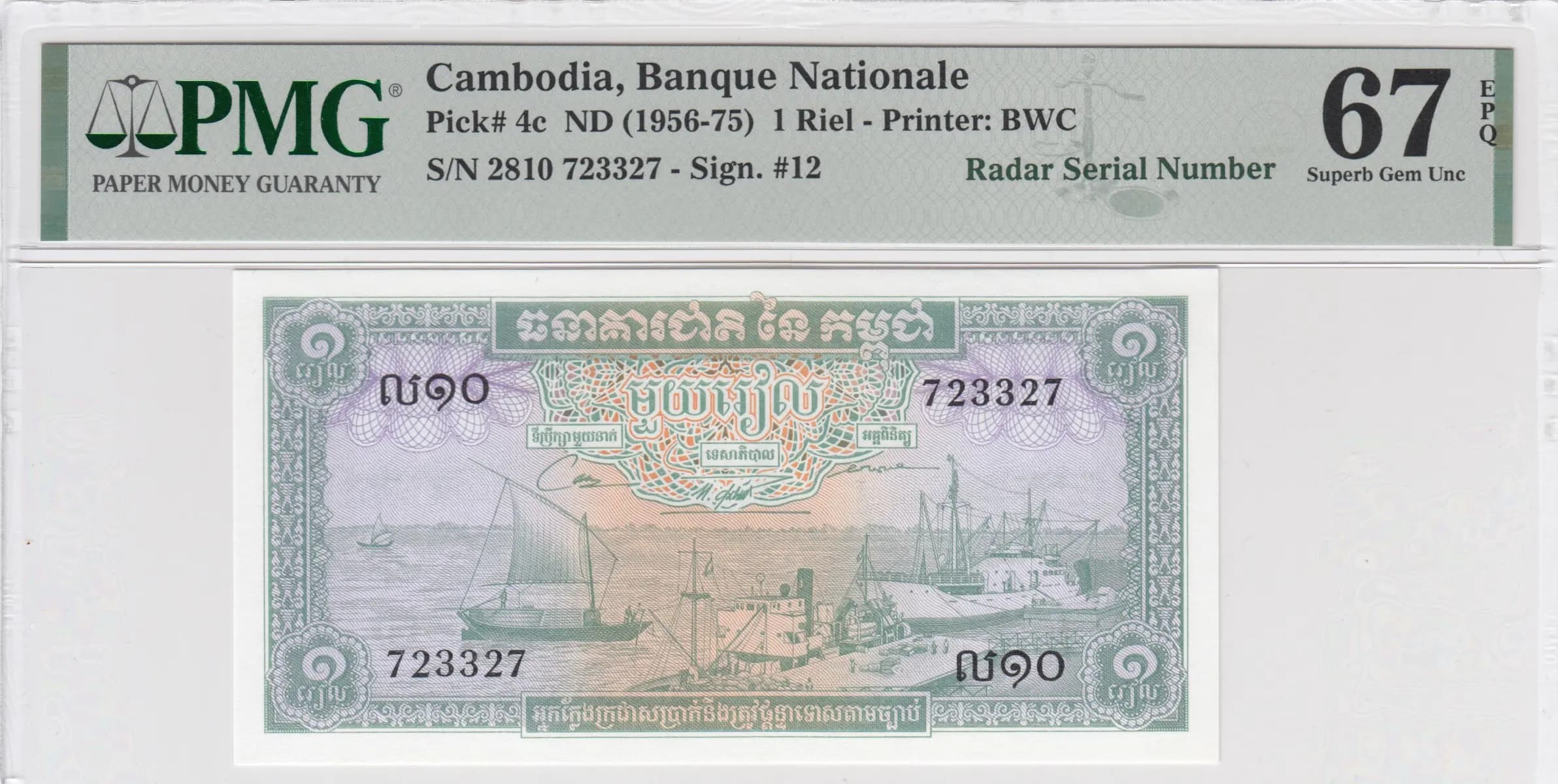
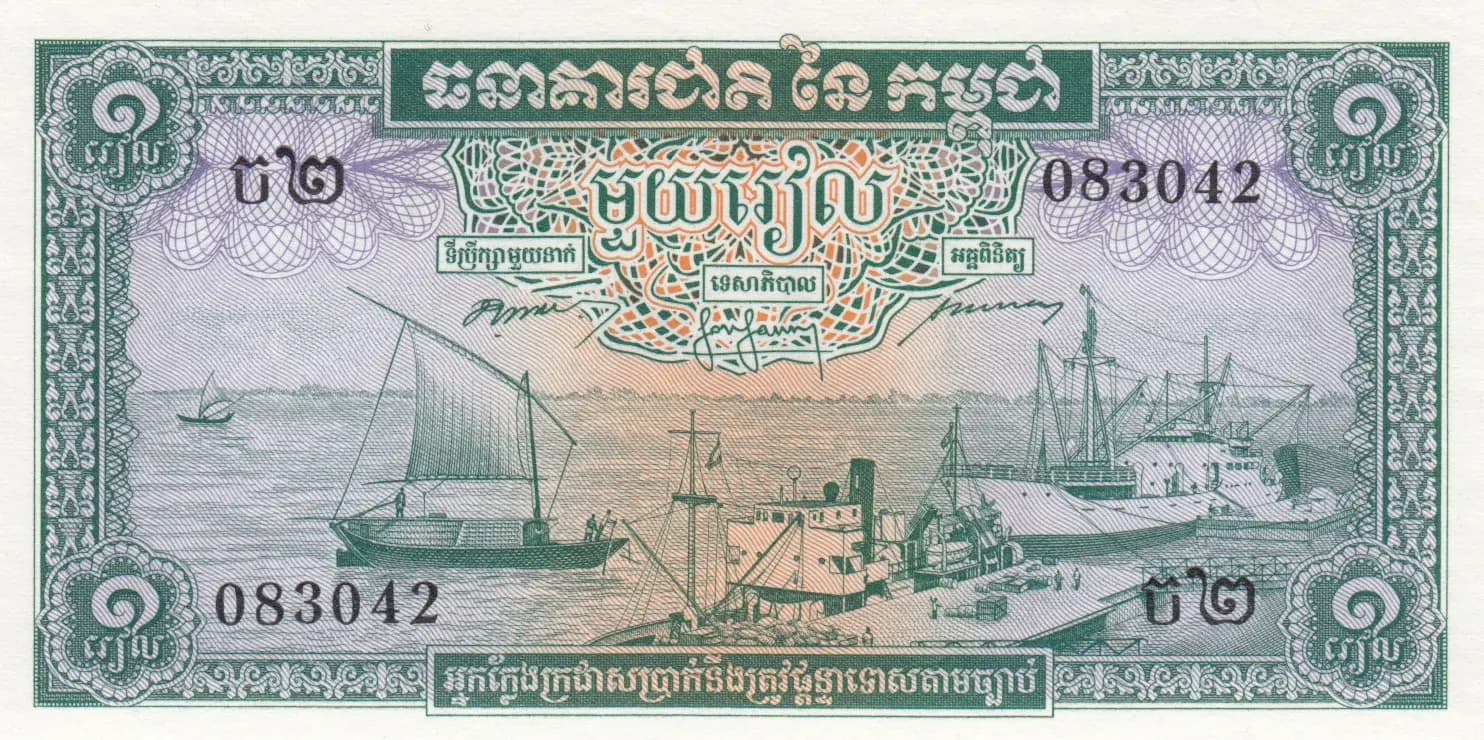
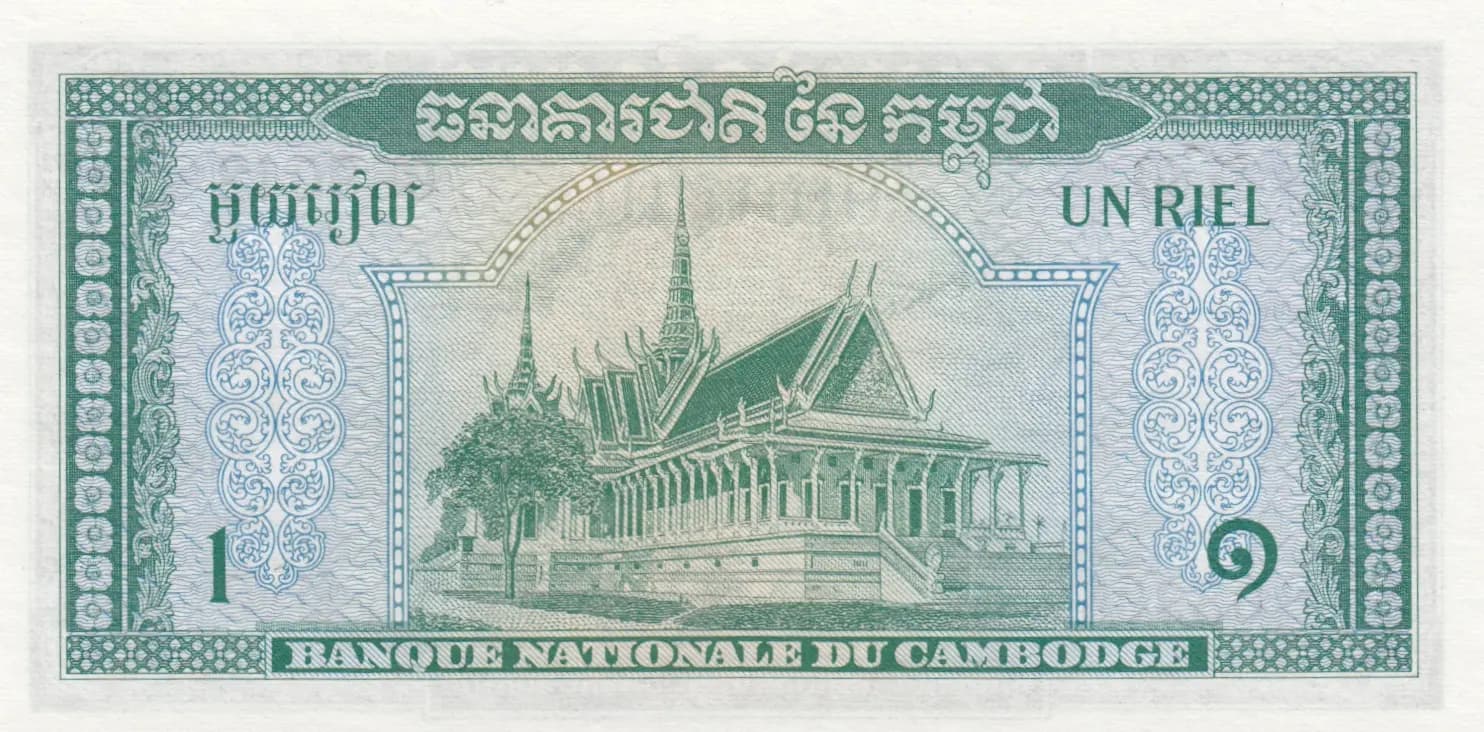
This 1 Riel note from 1956 represents an early emission of Cambodia's post-independence currency, issued by the Banque Nationale de Cambodge. The note is presented in UNC condition with sharp engraving throughout, featuring a striking maritime scene on the obverse and a traditional Cambodian Buddhist temple on the reverse, both rendered in delicate green and complementary color tones. The intricate decorative borders and fine line work exemplify the high-quality security printing standards of mid-20th century Southeast Asian currency.
Common. The 1956 1 Riel is a standard circulation issue from the early post-independence Cambodian currency series with substantial print runs. No documented evidence of limited mintage, early recall, or extraordinary scarcity exists for this Pick number. UNC examples are available in the collector market, indicating sufficient survivors to maintain common status despite the note's age and historical interest.
This note was issued during Cambodia's early years following independence in 1953, when the newly formed Banque Nationale de Cambodge was establishing the nation's modern currency system. The maritime harbor scene on the obverse symbolizes Cambodia's commercial development and connection to international trade through its ports, while the Buddhist temple on the reverse reflects the deep cultural and religious significance of Buddhism in Cambodian society and its central role in national identity during the post-colonial period.
The obverse features an elaborate maritime harbor scene with multiple sailing vessels and steamships, rendered in green and purple-lavender tones with meticulous engraving detail. The composition captures the economic vitality of Cambodia's port infrastructure with traditional fully-rigged sailing ships alongside modern steamships with smokestacks, all framed by ornamental borders featuring intricate geometric and floral patterns with circular spiral motifs in the corners. The reverse depicts a prominent Buddhist temple in traditional Cambodian architectural style, characterized by multiple tiered roofs with distinctive pointed spires, ornamental pavilion details, and the characteristic Southeast Asian religious design vocabulary. The temple is centered and flanked by decorative borders with floral and geometric elements. The note employs a bilingual approach with both Khmer script and French text, reflecting Cambodia's post-French colonial administrative transitional period.
FRONT SIDE: The Khmer numeral '០' (zero) and character 'ល' (L) appear with serial number 083042. Khmer text includes 'ពលរដ្ឋកម្ពុជា' (Cambodian people/citizens), 'ធនាគារ' (Bank), 'ឧត្តមលិប្ប' (Liberty/Freedom), 'ឫទ្ធិ' (Right/Authority), and 'ប្រជាធិបតេយ្យ' (Democracy). BACK SIDE: Features Khmer numerals '១' (one) and '៩' (nine), with Khmer text 'ដូលារ' (Dollar) and 'ឯកតា' (Unit/Single). French/English inscriptions read 'UN RIEL' (One Riel) and 'BANQUE NATIONALE DU CAMBODGE' (National Bank of Cambodia), with 'ធនាគារ' (Bank) repeated in Khmer.
The note was produced using intaglio engraving (copperplate printing), evidenced by the fine line work, intricate security patterns, complex decorative borders, and sharp detail reproduction visible throughout both sides. The precise rendering of the maritime scene and architectural elements, combined with the sophisticated border ornamentation and fine parallel line patterns used for shading, are characteristic of the high-security intaglio process employed by major security printers of the era. The specific printer for this Pick number was likely a European security printer contracted by the Banque Nationale de Cambodge, consistent with Cambodian practice during this period.
The specific variety noted is P-4a2 per the catalog data, with serial number 083042 visible on this example. Known varieties for 1 Riel 1956 emissions may include different serial number prefixes and signature variants depending on printing batches and issue dates within the 1956 year. The bilingual French-Khmer text arrangement and specific architectural rendering of the temple on this variant should be compared against documented P-4a1 and other closely related varieties to establish precise variety classification.