50 riels 1956
About This Note
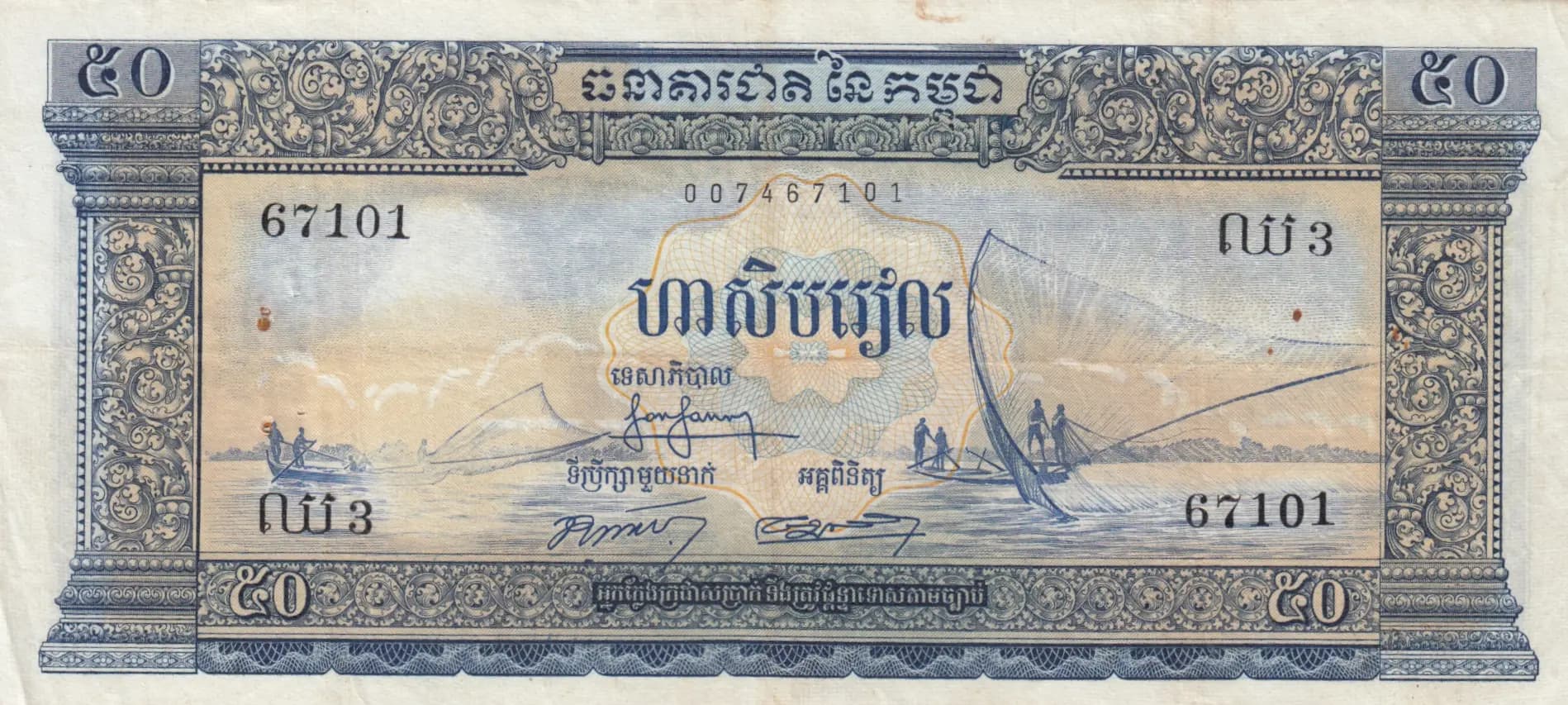
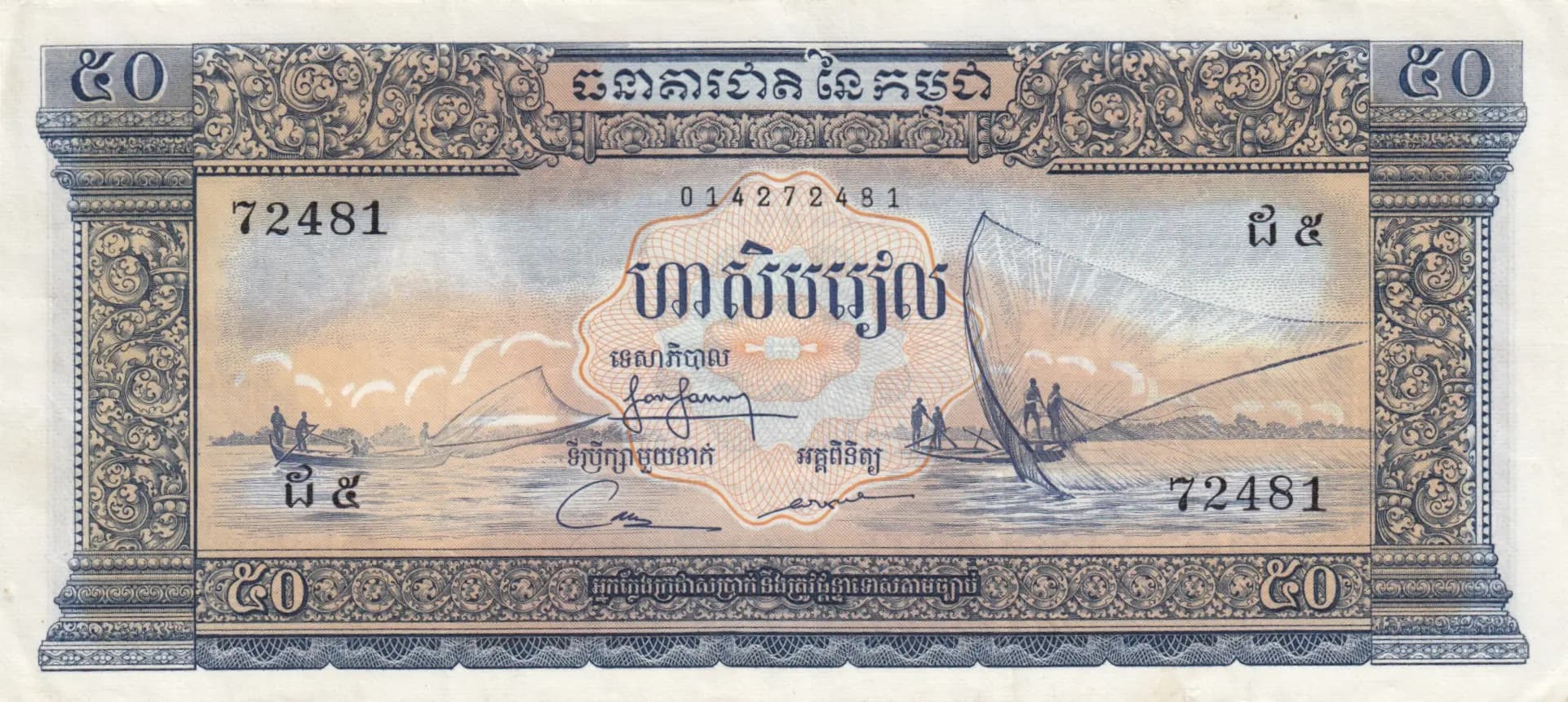
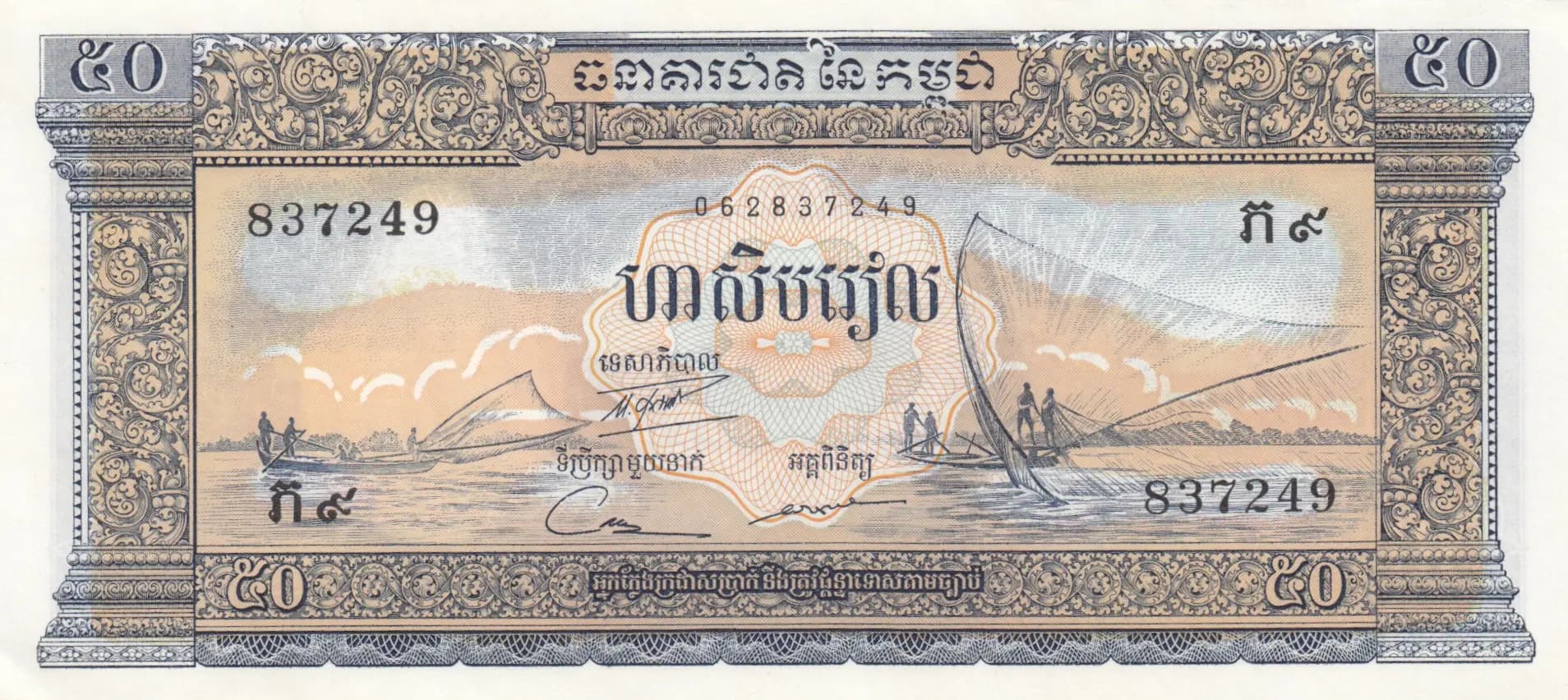
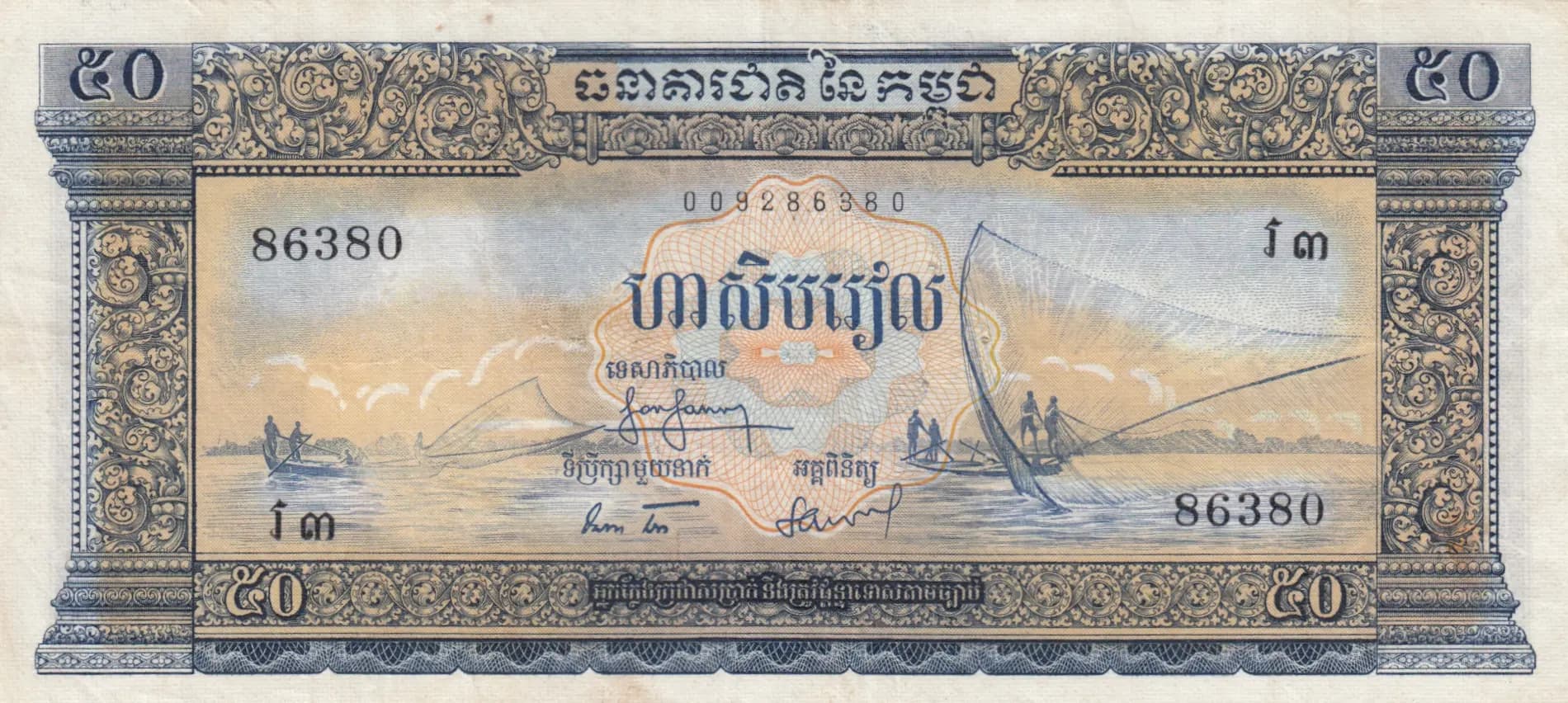
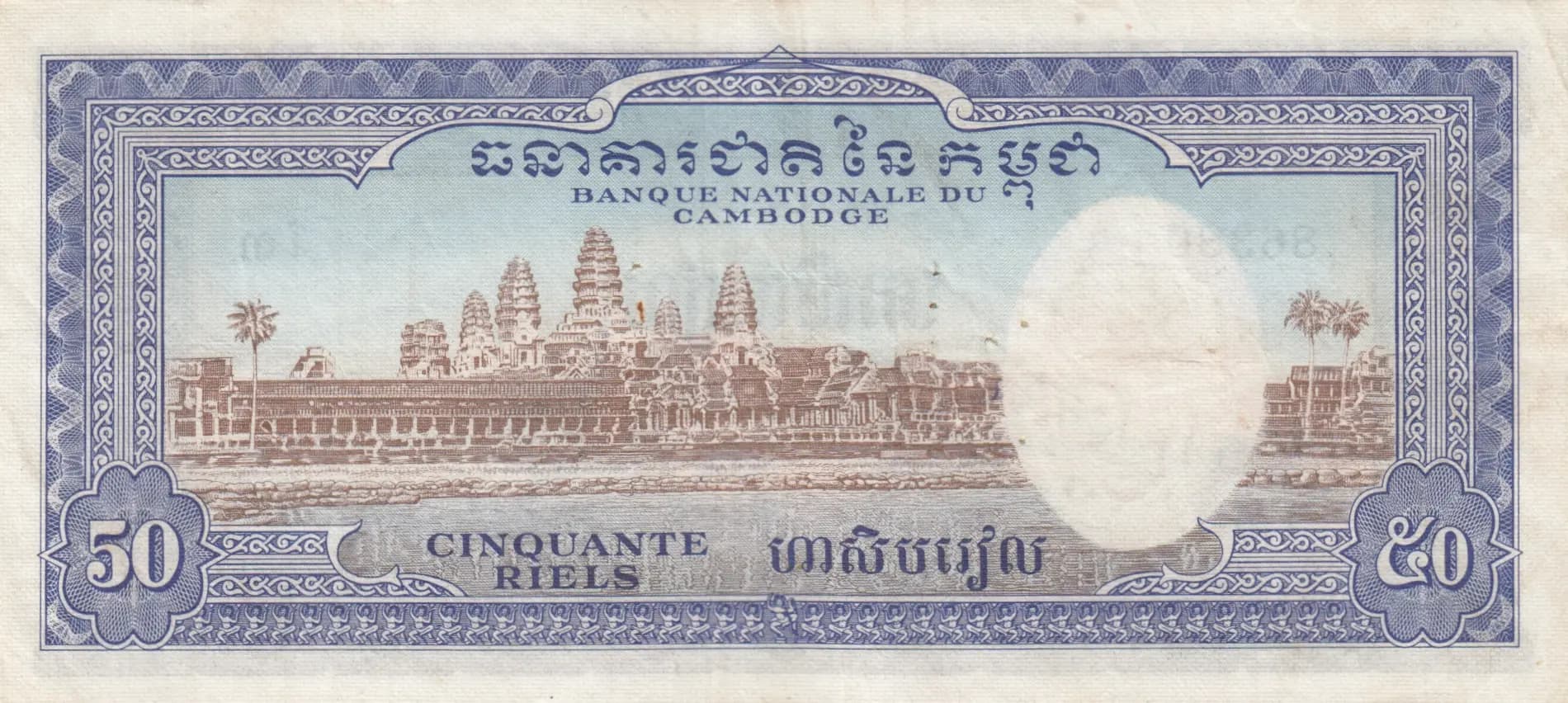
This is a well-preserved example of Cambodia's 50 riels banknote from 1956, issued by the Banque Nationale de Cambodge during the early years of the nation's independence. The note features exceptional engraving quality with a charming river scene on the obverse and the iconic Angkor Wat temple complex on the reverse, making it both historically significant and visually compelling. In Fine condition, the note exhibits appropriate age patina with minor yellowing and foxing, but maintains structural integrity and clarity of design elements—a desirable state for this early Cambodian issue.
Common. The 50 riels 1956 (P-7b1) was part of Cambodia's initial post-independence currency series and was issued in significant quantities by the Banque Nationale de Cambodge. This denomination and issue date remain readily available in the collector market across various condition grades. The Fine condition grade observed here is standard for circulated examples of this note and does not command premium pricing. Collector demand for early Cambodian notes exists but supply remains adequate.
This 50 riels note was issued in 1956, just three years after Cambodia gained independence from France in 1953, representing the young nation's establishment of its own monetary authority. The bilingual French-Khmer inscriptions reflect Cambodia's transitional post-colonial status, while the prominent depiction of Angkor Wat on the reverse emphasizes national pride and cultural heritage at a formative moment in Cambodian history. The river scene on the obverse, depicting traditional Cambodian boats and watercraft, represents the country's maritime and agricultural traditions central to its economy during this period.
The obverse features an ornately framed river landscape vignette depicting traditional Cambodian sailing vessels with fishing nets on water, rendered in blue and orange tones against a beige background. An orange circular seal or watermark occupies the central area with official signature lines and stamps. The reverse showcases a detailed engraving of the Angkor Wat temple complex—Cambodia's most iconic architectural monument—depicted from across a body of water with its characteristic multi-tiered towers and intricate stonework clearly rendered in brown tones. Palm trees frame the temple structure, and a white circular watermark space is positioned centrally. Both sides are enclosed by elaborate decorative borders: the obverse features scrollwork patterns in black, while the reverse displays geometric and floral patterns in Khmer style within a blue/purple frame.
FRONT: Khmer numerals '៥០' (50) appear in corners; 'បាលស៊ីព័ន្ធ' (National Bank/Bank) inscribed in center area; Arabic numerals '86380' and '00928638O' represent serial number components. BACK: '50' in Arabic numerals and '៥០' in Khmer appear in corners; 'CINQUANTE RIELS' (Fifty Riels in French); 'បាលស៊ីព័ន្ធ' (National Bank in Khmer); 'BANQUE NATIONALE DU CAMBODGE' (National Bank of Cambodia in French) displayed prominently.
Intaglio (copperplate) engraving, evidenced by the fine line work, intricate architectural detail of Angkor Wat, ornate border designs, and the precision of the decorative scrollwork visible throughout both sides. The high-quality engraving is characteristic of De La Rue's security printing work, the established security printer for early Cambodian banknotes. Traditional letterpress elements appear in the inscription areas.
The serial number format visible (86380 and 00928638O) and the signature lines present suggest this is a standard circulation variety without apparent overprints or unusual markings. The Pick catalog designation P-7b1 indicates this is the first subvariety of the 50 riels 1956 issue, likely distinguishing it by printer or signature variant. No notable varieties have been recorded as particularly scarce or valuable for this specific note type in standard reference literature.