100 riels 1956
About This Note
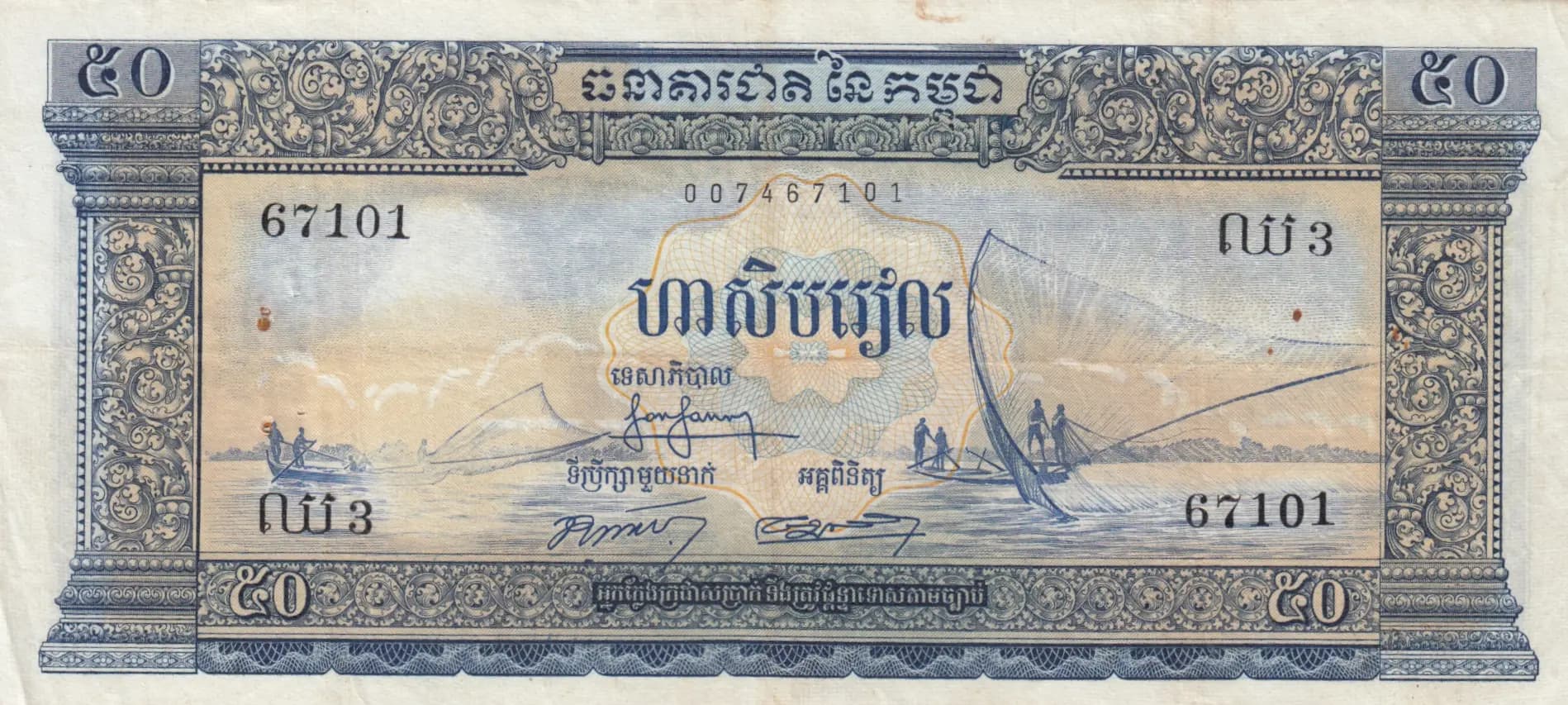
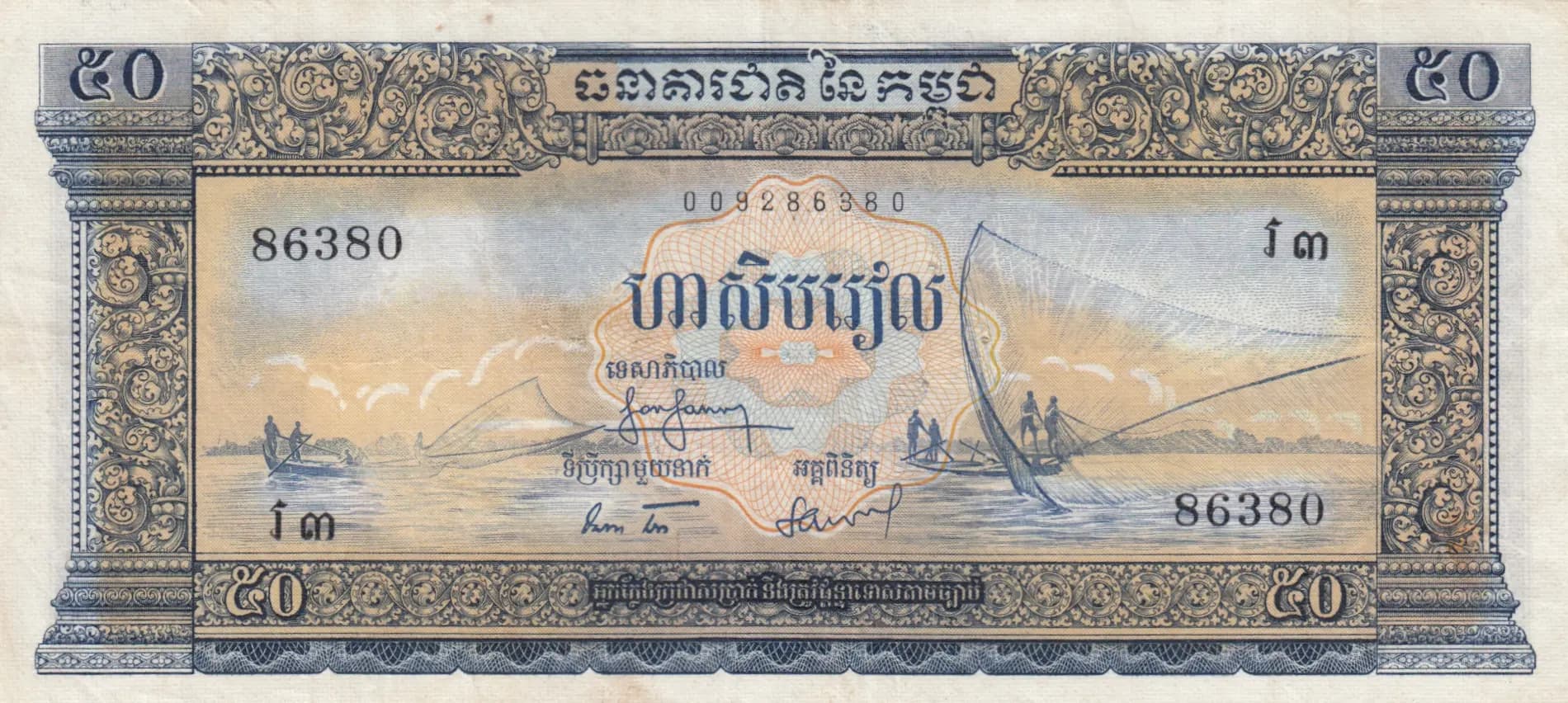
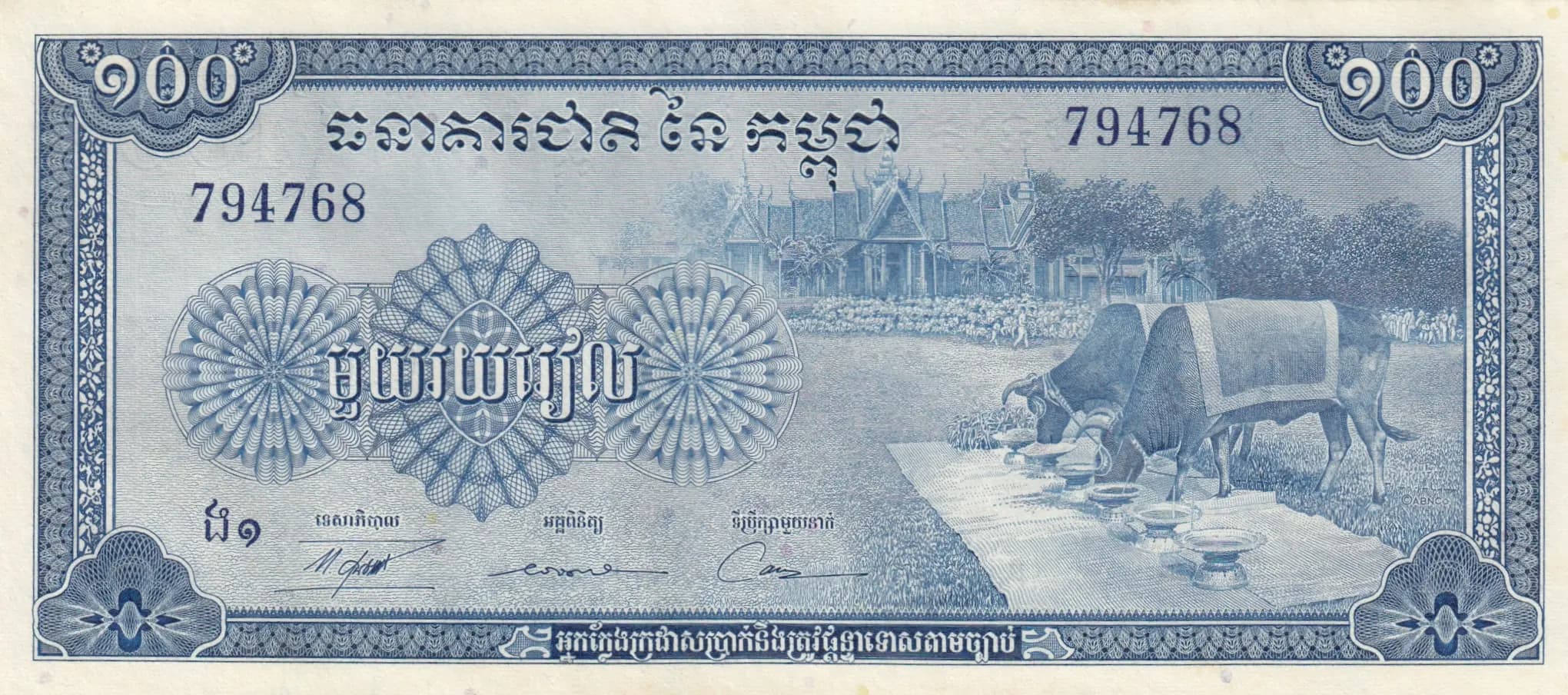
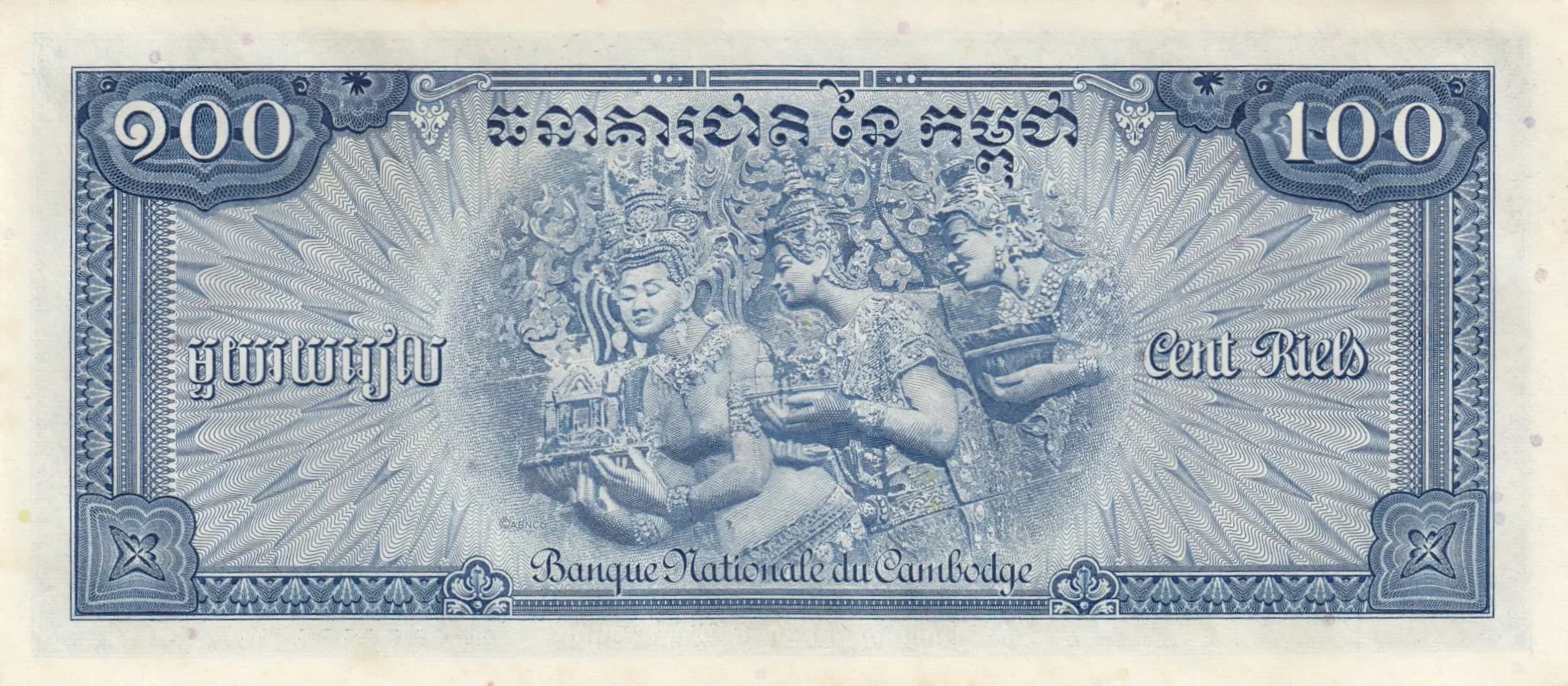
A beautifully engraved 100 Riels banknote from Cambodia's 1956 issue, presented in pristine uncirculated condition. The note features exceptional detail work across both sides, with the obverse depicting a rural agricultural scene with oxen at a water trough and temple architecture, while the reverse showcases classical figures in elaborate traditional dress. The sharp engraving, vibrant blue color scheme, and complete absence of wear make this an excellent example of mid-20th century Cambodian currency artistry.
Common. The 100 Riels 1956 (Pick 13b) was a standard circulating denomination from Cambodia's early post-independence currency series. No evidence of limited print runs, recall, or scarcity has been documented. While the UNC condition grade represents excellent preservation, the denomination itself remains readily available to collectors. Early Cambodian banknotes from this period are moderately collected but not scarce in the numismatic market.
Issued by the Banque Nationale de Cambodge in 1956, this note represents Cambodia during the early years of independence following the French Indochina period. The depicted agricultural scene with livestock and temple symbolism reflects Cambodia's agrarian economy and Buddhist cultural identity of the era. The classical mythological or courtly figures on the reverse connect to Cambodia's rich Khmer heritage, emphasizing national pride during a period of post-colonial nation-building.
The obverse features an ornate engraved composition with the denomination 900 displayed prominently in the upper corners. The central vignette depicts a peaceful rural scene with oxen drinking from a water trough, with a Buddhist temple featuring multiple pointed spires visible in the background landscape, symbolizing Cambodia's agricultural heritage and spiritual traditions. Three large ornamental circular rosette designs with radiating fan-like patterns are positioned in the lower and center portions. The entire design is framed by elaborate guilloche borders with repeating geometric and floral motifs typical of high-security banknote engraving. The reverse displays classical or mythological figures—likely representing Khmer legends or Hindu-Buddhist cosmological scenes—rendered in elaborate detail with ornate headdresses and jewelry. These figures occupy the central vignette, surrounded by decorative four-pointed star designs and geometric corner ornaments. Fine parallel line patterns create an intricate security background throughout both sides.
Front side: '900' (Arabic numerals indicating 9 × 100 Riels denomination), 'ព័ណ្ណលេខប័ណ្ណនៃសាធារណរដ្ឋកម្ពុជា' (Khmer: 'Banknote of the Cambodian State/Republic'), '794768' (serial number), 'ឯកឧត្តម' (Khmer: honorific title of respect). Back side: '900' and '100' (denomination numerals), 'Cent Riels' (French: 'One Hundred Riels'), 'Banque Nationale du Cambodge' (French: 'National Bank of Cambodia'), 'ឯកឧត្តម' (Khmer: honorific title).
Intaglio engraving (line engraving/copperplate printing), the standard high-security method for banknote production of this era. The visual analysis confirms characteristic features of intaglio work: extremely fine parallel line patterns, complex guilloche security backgrounds, intricate detail in portraiture and landscape elements, and sharp, crisp borders. This note was produced by security printers experienced in classical banknote engraving techniques, likely under French technical influence given the French inscriptions and the period immediately following French colonial administration.
Pick catalog number P-13b indicates this is the second variety (suffix 'b') of the 100 Riels 1956 issue. Varieties in this series typically differ in signature blocks, printer details, or minor design adjustments. Serial number 794768 is noted on the obverse. The specific variety classification (13b vs. 13a) would depend on signature combinations or other technical differentiators documented in detailed Pick catalog entries; without access to comparative images of the 13a variety, the specific distinguishing features cannot be definitively stated, but the catalog designation confirms this represents a recognized sub-type within the 1956 series.