500 cruzeiros 1980

Market Prices
3 salesAbout This Note
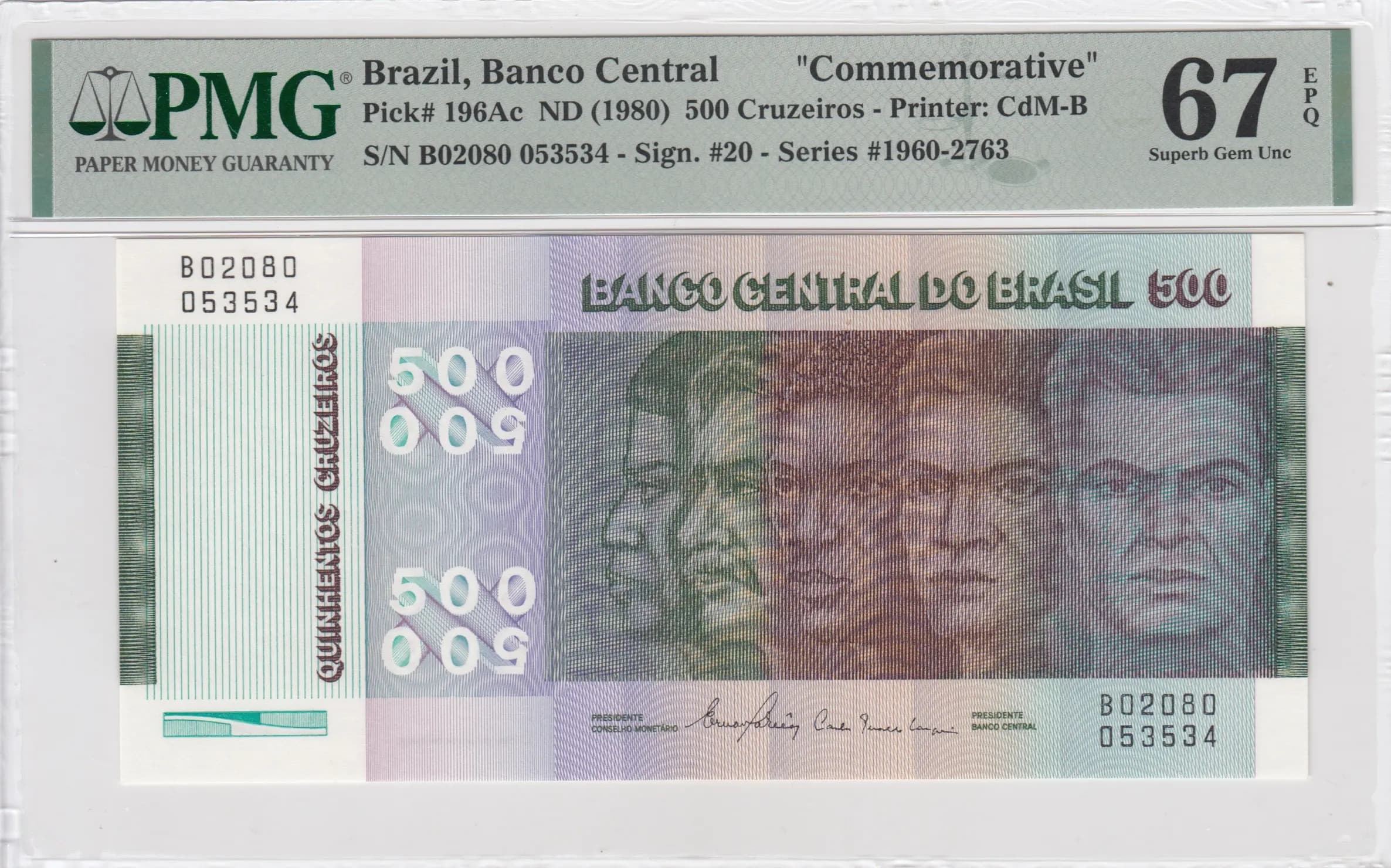
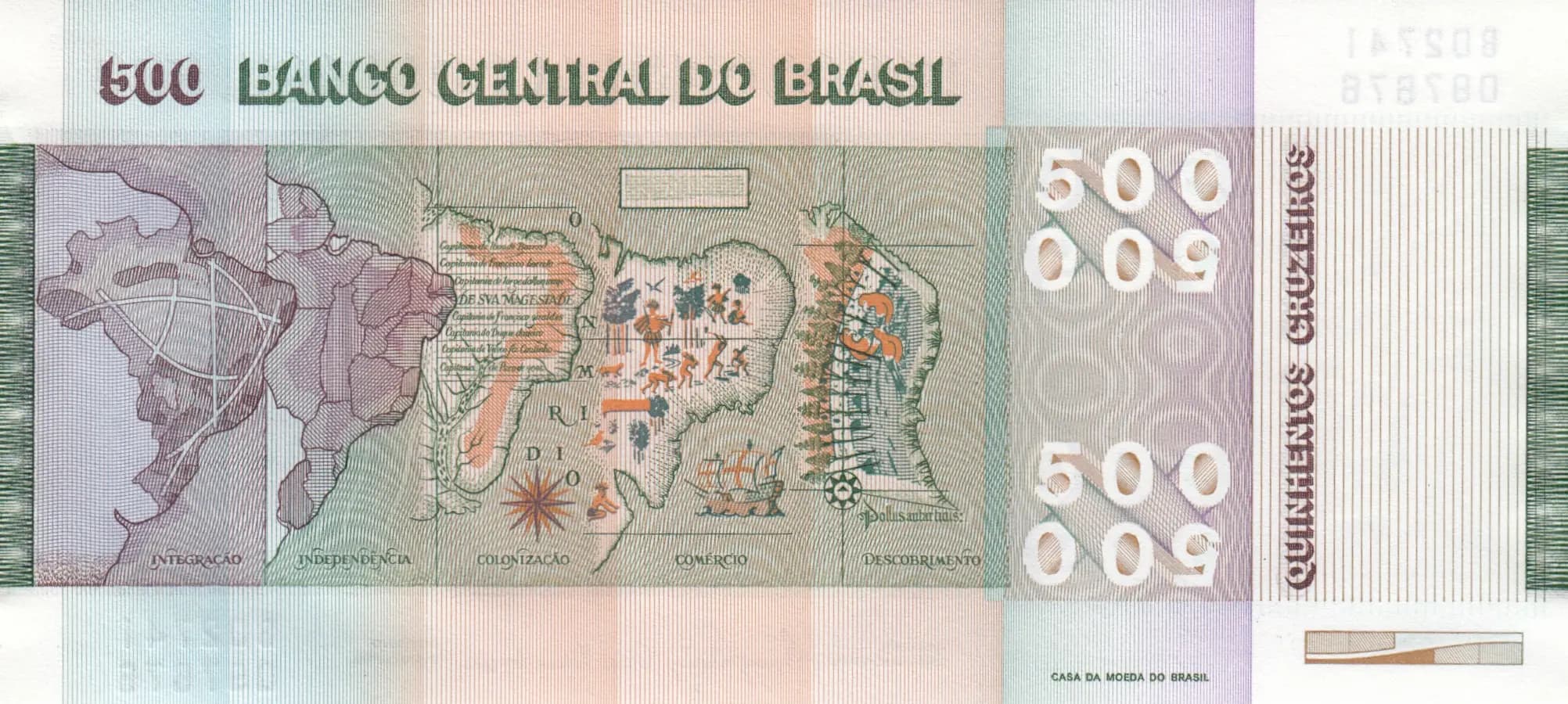
This is an exceptional uncirculated example of Brazil's 500 Cruzeiros commemorative banknote from 1980 (Pick P-196Ac), celebrating the 150th Anniversary of Brazilian Independence. The note showcases vibrant multi-color printing with purple, pink, green, and blue tones, featuring portraits of five men representing different racial groups on the obverse and an elaborate historical map depicting Brazil's discovery, colonization, commerce, and independence on the reverse. In UNC condition with no visible wear or damage, this note represents an important piece of Brazilian numismatic history during the transition period of the Brazilian currency system.
Common. This commemorative note has a relatively high print run consistent with Brazilian circulation currency of the early 1980s. Market data from realbanknotes.com shows UNC examples selling for $25-77 in recent years, with multiple sales recorded, indicating ready availability in the collector market. The series prefix B and serial numbers in the observed range (B02741) fall within standard circulation patterns rather than low-number or special varieties that would command premium pricing. The note is readily available to collectors and does not exhibit rarity characteristics despite its commemorative status.
Issued in 1980 by the Banco Central do Brasil, this commemorative note honors the 150th anniversary of Brazil's declaration of independence from Portugal in 1822. The reverse design's four labeled scenes—DESCOBRIMENTO (Discovery), COLONIZACAO (Colonization), COMERCIO (Commerce), and INDEPENDENCIA (Independence)—visually narrate Brazil's historical trajectory from European arrival through economic development and national sovereignty. The front's emphasis on racial diversity reflects Brazil's multicultural identity, an important national theme during the late 20th century.
The obverse features five male portraits representing different racial and ethnic groups of Brazil, arranged horizontally and positioned in the center-right portion of the note, symbolizing the nation's racial diversity and unity. The reverse displays an elaborate historical map of Brazil incorporating four thematic scenes labeled with pivotal periods of Brazilian history: Discovery, Colonization, Commerce, and Independence, with architectural and agricultural illustrations integrated throughout. Both sides employ sophisticated multi-color gradients transitioning through purple, pink, green, blue, orange, and white, creating depth and visual interest. The watermark area on the front contains vertical security lines and the dates '1822 1972' in the clear area at left, reinforcing the commemorative theme. The note was printed by Casa da Moeda do Brasil (Brazilian Mint) with Series prefix B and serial numbers visible on both sides.
Front side: 'BANCO CENTRAL DO BRASIL' (Central Bank of Brazil), '500' (denomination), 'Quinhentos Cruzeiros' (Five Hundred Cruzeiros), 'B02741' (series prefix), '097676' (serial number). Back side: '500' (denomination, repeated twice), 'BANCO CENTRAL DO BRASIL' (Central Bank of Brazil), 'Quinhentos Cruzeiros' (Five Hundred Cruzeiros), 'DESCOBRIMENTO' (Discovery), 'COLONIZACAO' (Colonization), 'COMERCIO' (Commerce), 'INDEPENDENCIA' (Independence), 'CASA DA MOEDA DO BRASIL' (Brazilian Mint/Casa da Moeda do Brasil).
This note was produced by Casa da Moeda do Brasil using intaglio engraving combined with multicolor offset printing to achieve the complex gradient backgrounds and layered color effects observed. The vertical line patterns visible in the watermark area on both the front and back represent a security feature typical of Brazilian currency printing from this period. Microprint and fine line work visible throughout the design, particularly in the historical map and portrait areas, are characteristic of high-security intaglio production. The complexity of the color layering and the precision of the multicolor gradients indicate advanced offset printing technology combined with traditional engraved plates.
This example displays Series prefix 'B' with serial number B 097676, placing it within the known range of circulation for this issue. The visual analysis indicates standard printing characteristics with no overprints, special markings, or distinguishing varieties noted that would create a scarcer sub-type. The watermark dates 1822-1972 and vertical security lines are standard features of the P-196Ac series. No significant varieties (such as different signatures, dates, or printer marks) have been identified in this specific specimen.