100 cruzeiros 1974
Market Prices
18 salesAbout This Note
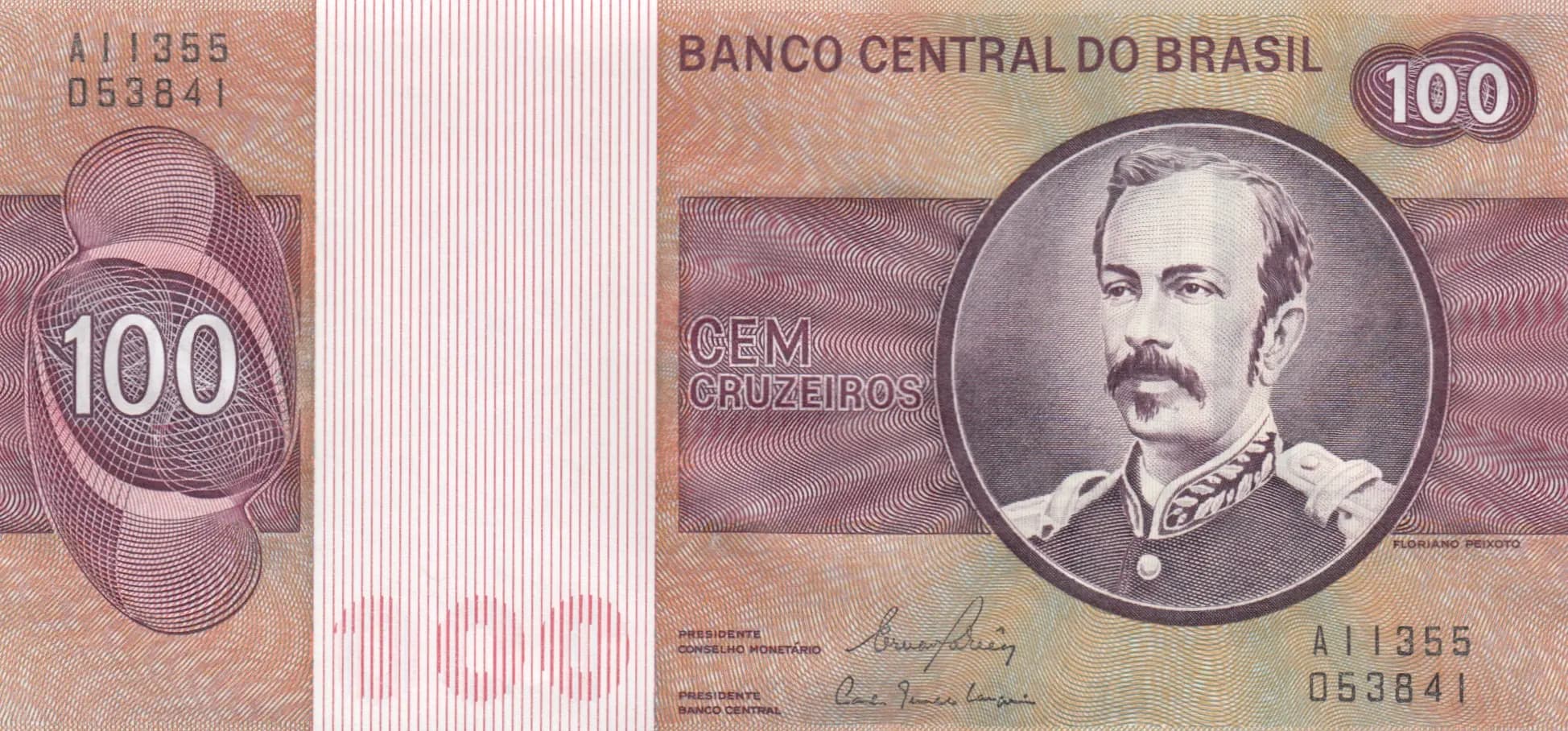
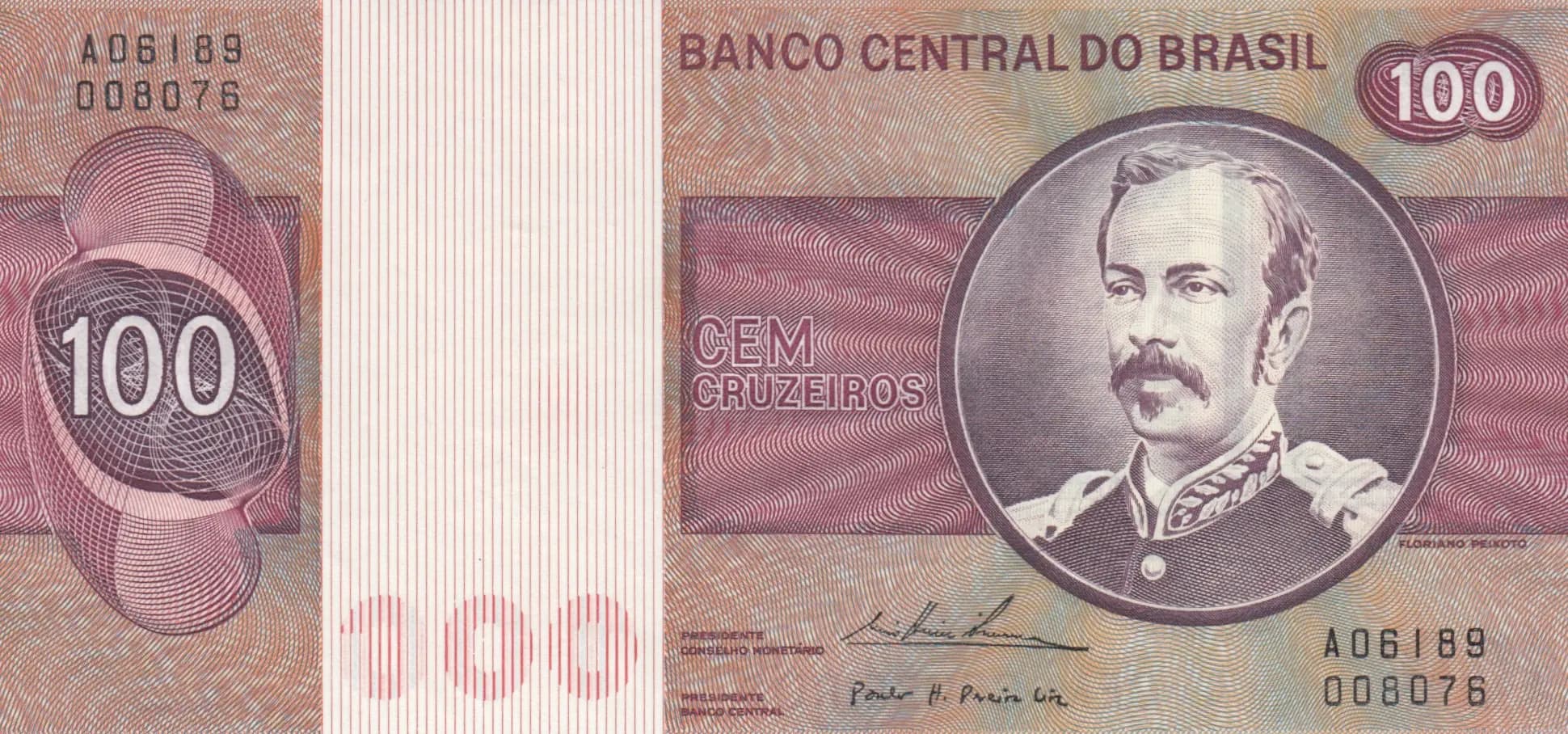
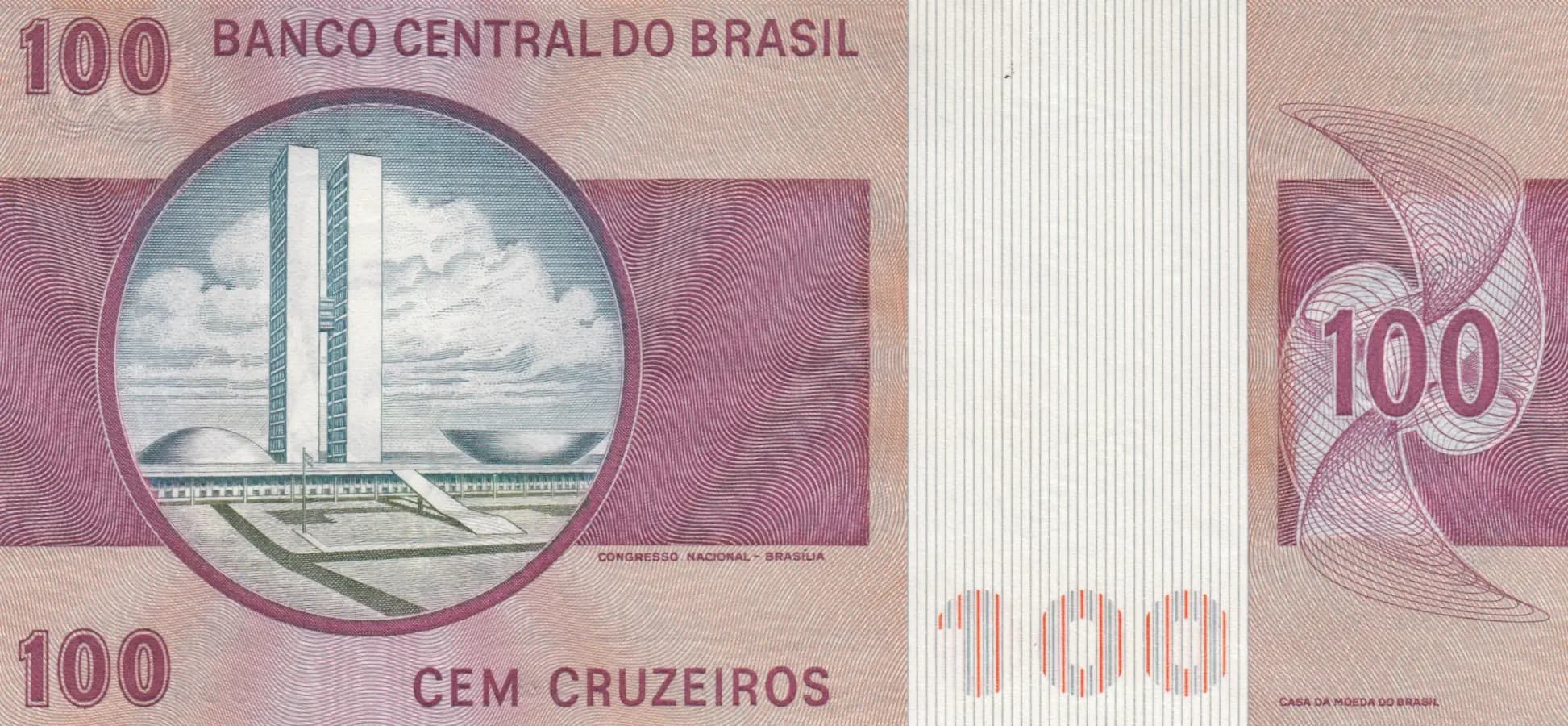
This is an exceptional example of Brazil's 100 Cruzeiros note from 1974 (Pick P-195Aa) in uncirculated condition, displaying crisp paper stock with no visible wear, creases, or damage. The note features vibrant red and purple geometric spiral patterns alongside a distinguished portrait of Marechal Floriano Peixoto in formal military dress, complemented by a striking modernist architectural vignette of Brasília's National Congress building on the reverse. The combination of pristine condition, bold color palette, and iconic Brazilian imagery from the 1970s makes this an attractive entry-level collectible for Brazil enthusiasts.
Common. This note is a regular issue from a major 1970-1974 production run by Brazil's central bank, with no documented short print runs, recalls, or scarcity issues. eBay market data confirms commonality: even uncirculated examples have sold for $9.98 (2020) and catalog value for UNC condition is only $6 (2019 estimate). The consistent availability of examples across multiple condition grades (F through UNC) and regular transaction history spanning over a decade indicates substantial circulation survival and lack of collector competition for this particular Pick number.
This banknote was issued during Brazil's military dictatorship period (1974), when Marechal Floriano Peixoto—a 19th-century republican leader and former president—remained a celebrated figure in national mythology. The reverse's prominent depiction of the Congresso Nacional in Brasília reflects the regime's continued emphasis on the modernist capital city, inaugurated in 1960 as a symbol of national progress and centralized federal authority. The Banco Central do Brasil, established in 1965, maintained control over currency production through Casa da Moeda do Brasil, linking this note to Brazil's mid-20th-century institutional consolidation.
The obverse (front) presents Marechal Floriano Peixoto (1839-1895), a pivotal republican military figure and Brazil's second president, depicted in three-quarter profile wearing formal military dress with shoulder insignia, contained within a circular frame on the right side of the note. The left side displays an oversized denomination numeral '100' executed with intricate concentric circular spiral geometric patterns in red and purple, serving both an aesthetic and security function. The reverse features a dramatic circular vignette of the Palácio do Congresso Nacional (National Congress Palace) in Brasília, designed by Oscar Niemeyer, showing its iconic twin vertical towers and modernist architecture set against a clouded sky. Both sides employ fine-line microprint-style background patterns and complementary color schemes of red, purple, brown, and tan on lighter grounds, with blue tones enriching the architectural reverse. The geometric spiral designs and layered security printing reflect Thomas de la Rue's sophisticated intaglio engraving techniques.
{"front":{"BANCO CENTRAL DO BRASIL":"Central Bank of Brazil","CEM CRUZEIROS":"One Hundred Cruzeiros","FLORIANO PEIXOTO":"Floriano Peixoto (portrait subject)","Serial numbers":"A051 88, A06189, 008076"},"back":{"BANCO CENTRAL DO BRASIL":"Central Bank of Brazil","CONGRESSO NACIONAL - BRASILIA":"National Congress - Brasília","CEM CRUZEIROS":"One Hundred Cruzeiros","CASA DA MOEDA DO BRASIL":"Brazilian Mint"}}
This note was produced using intaglio (engraved steel plate) printing, evident from the fine-line geometric patterns, crisp detail in the portrait and architectural vignette, and the dimensional quality of the color layering. The printer attribution to Thomas de la Rue, London, with production by Casa da Moeda do Brasil (Brazilian Mint) as shown in the imprint, indicates a collaboration between the renowned British security printer and Brazilian state printing facilities. The concentric spiral security designs, microprint-style backgrounds, and multi-color intaglio process demonstrate the sophisticated anti-counterfeiting measures standard for central bank currency of this era.
The visual analysis documents series number 01359-10455 with serial numbers A051 88, A06189, and 008076, consistent with the known production sequence for P-195Aa. The note exhibits signature variety characteristics typical of this issue (signature combinations varied across the print run), though the specific signatory names are not clearly legible in the provided images. This example represents the standard 1974 printing with no documented overprints, date variations, or special printings that would constitute a distinct catalogable variety from P-195Aa.