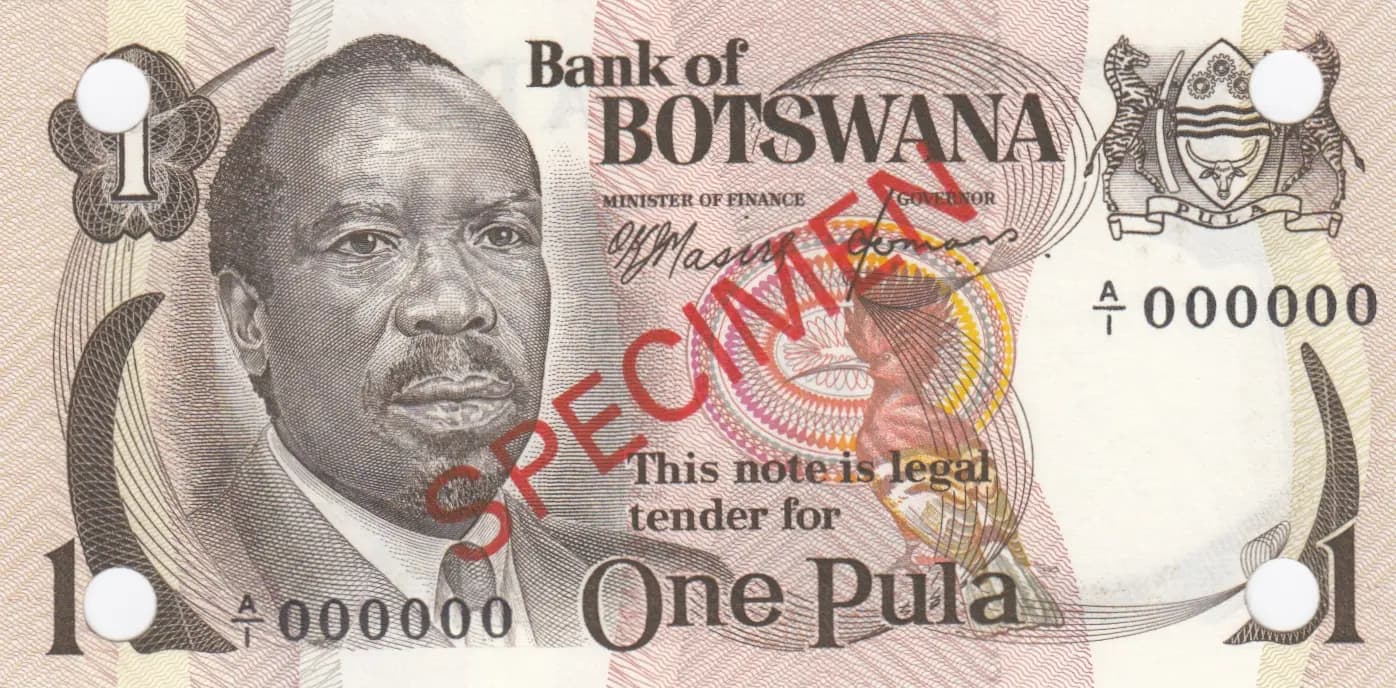
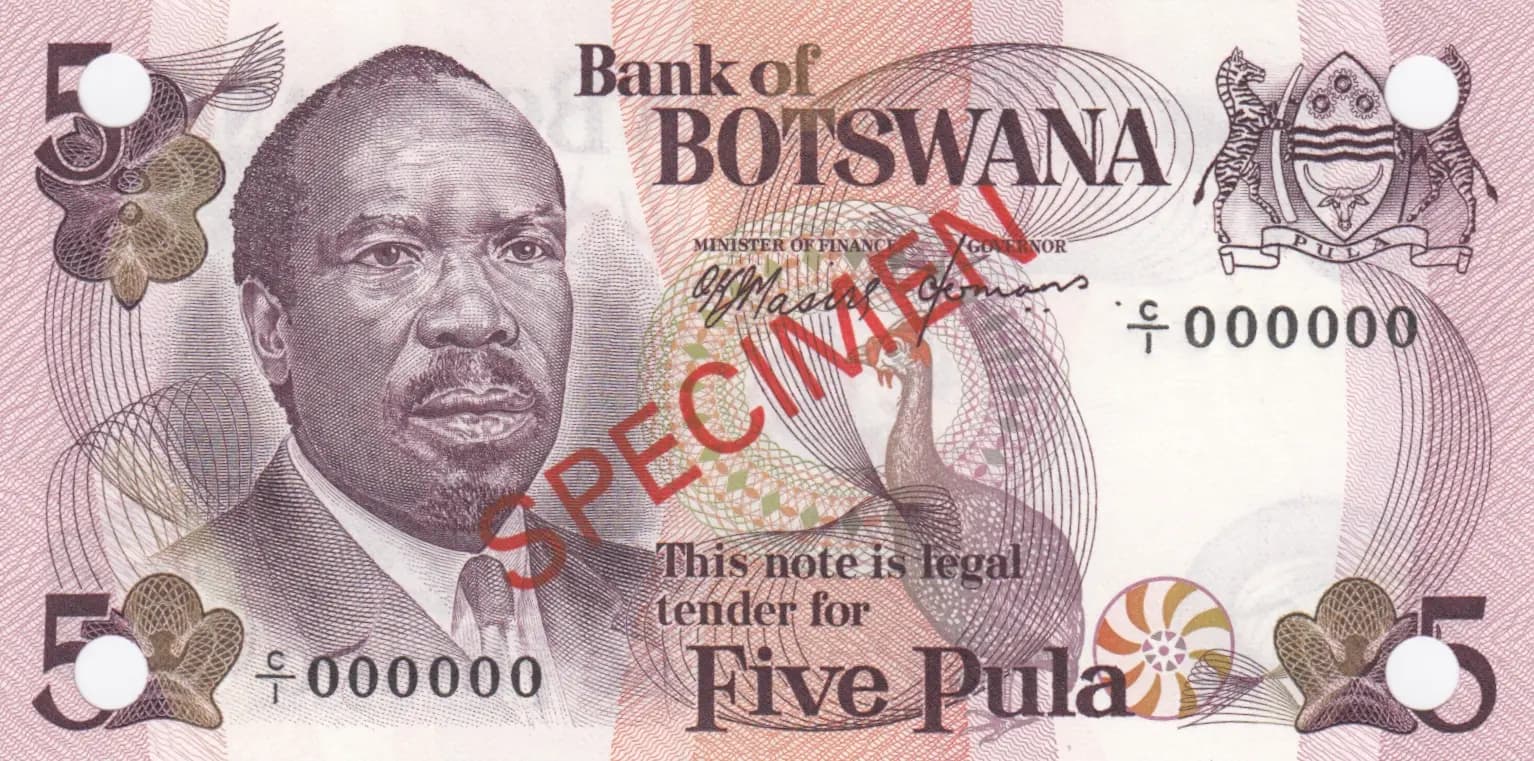
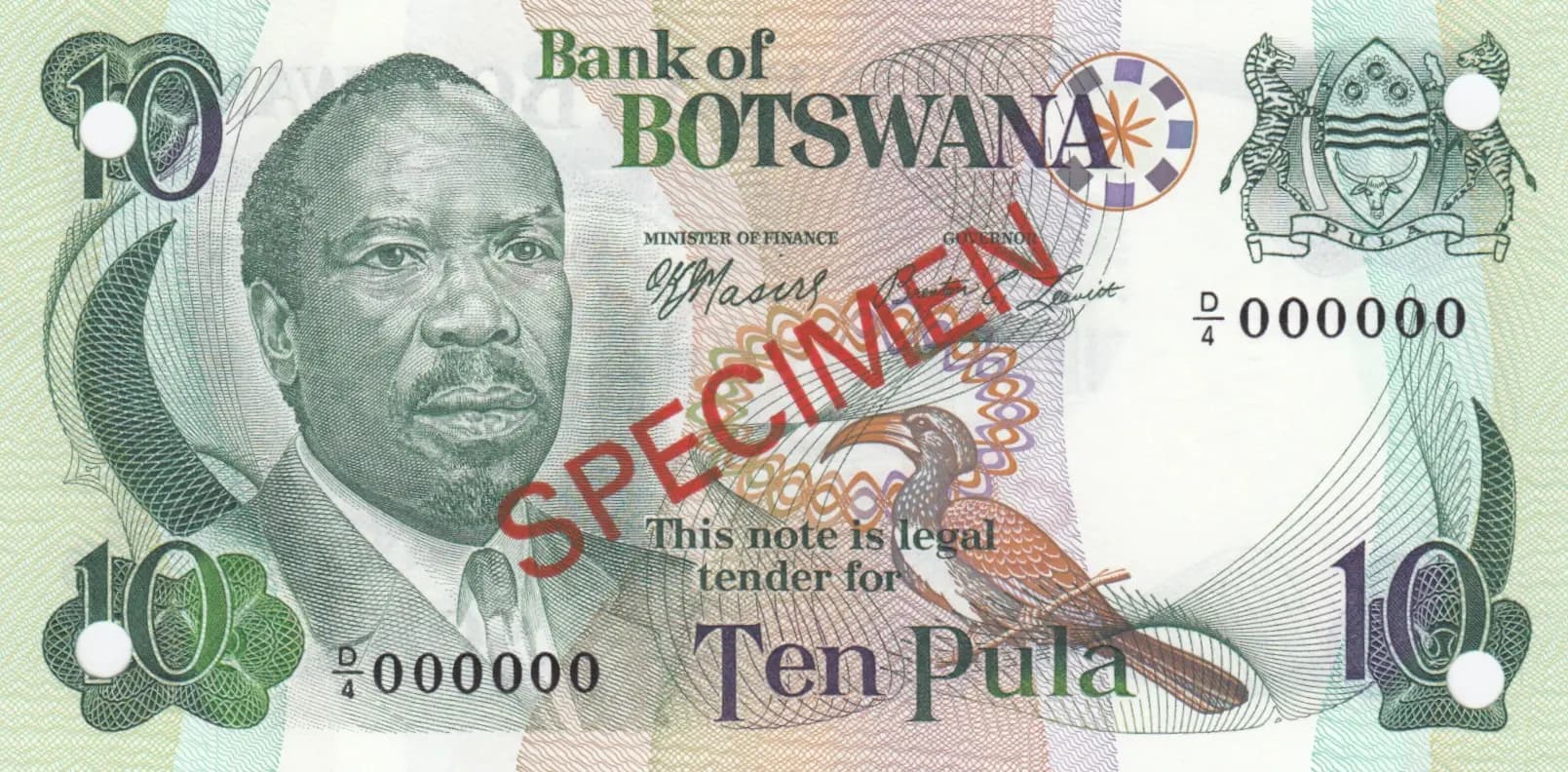
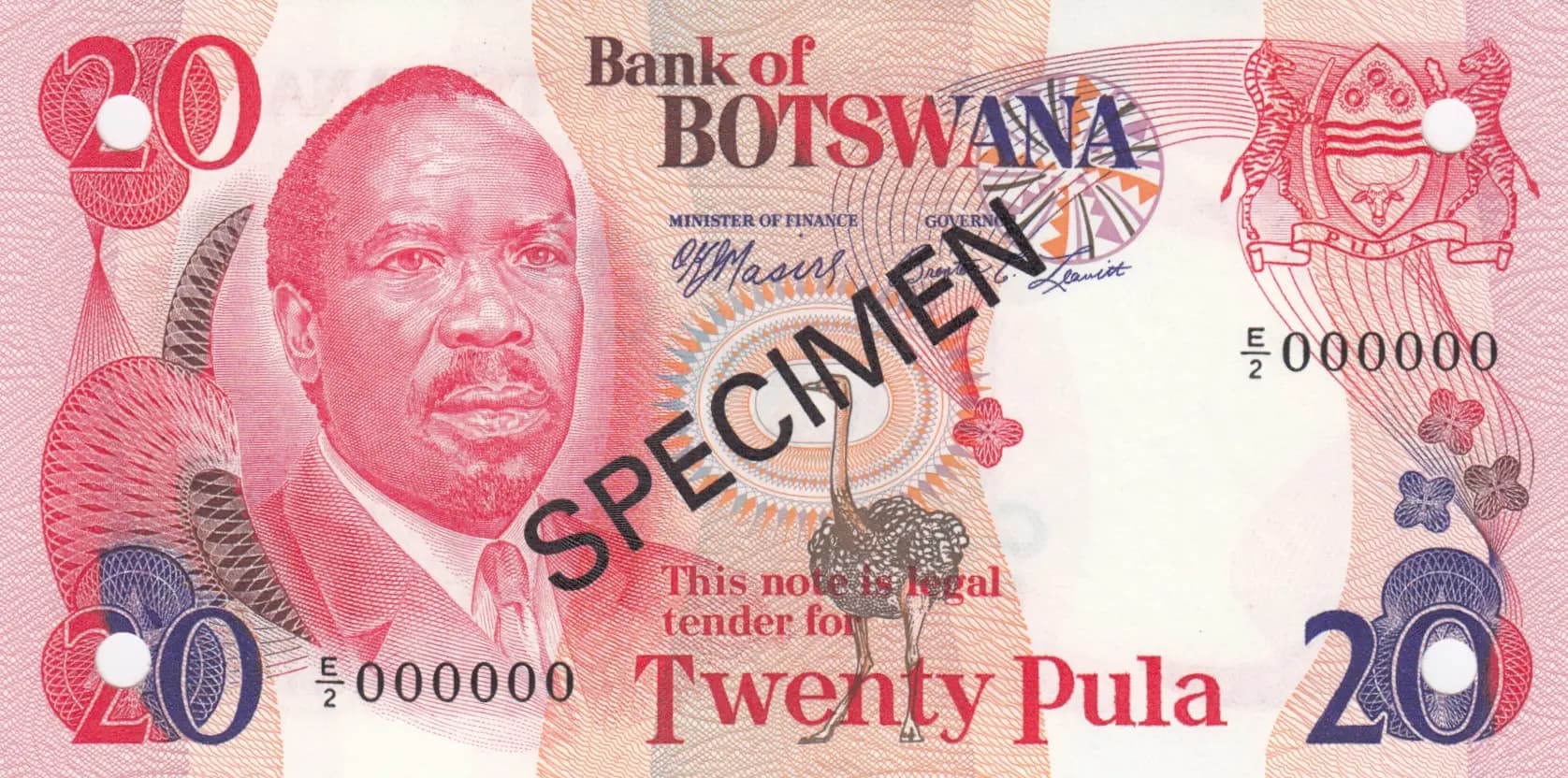
2 pula 1976 specimen
Market Prices
About This Note
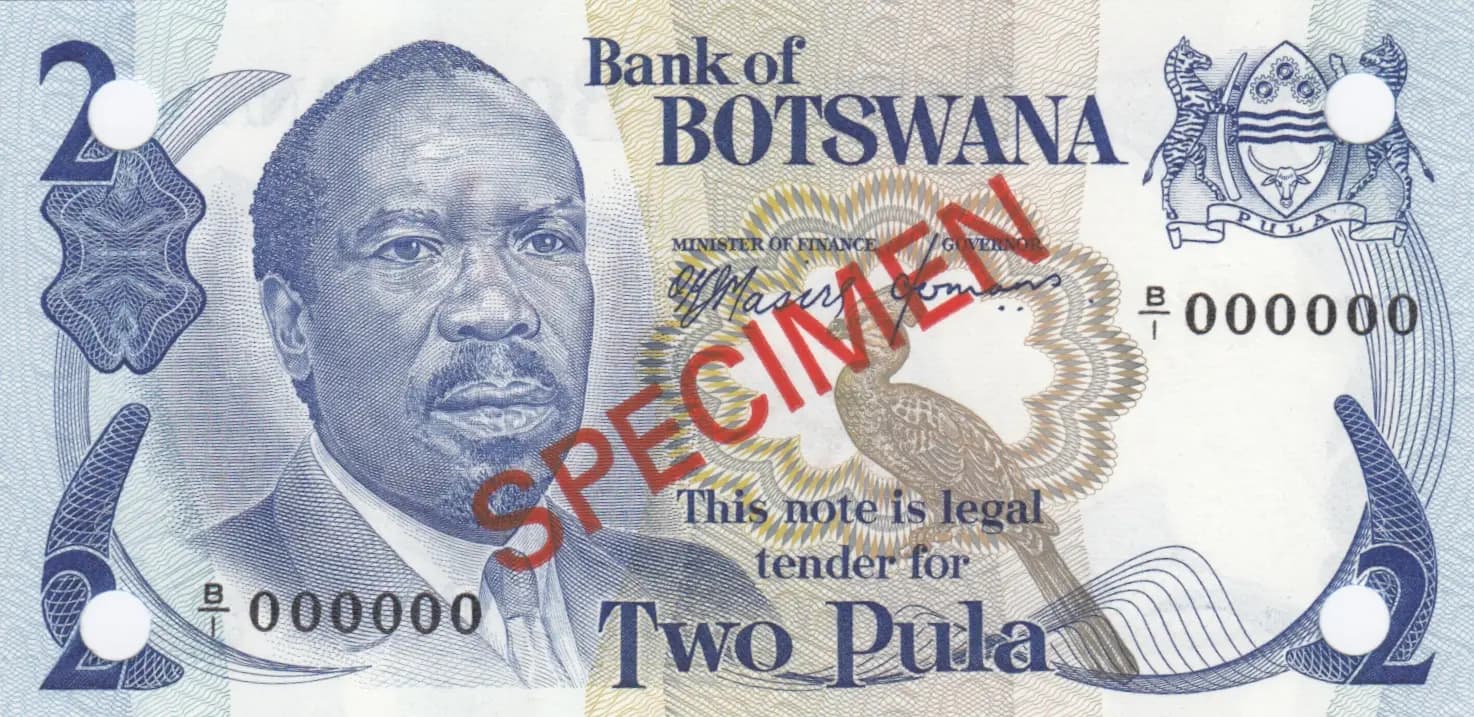
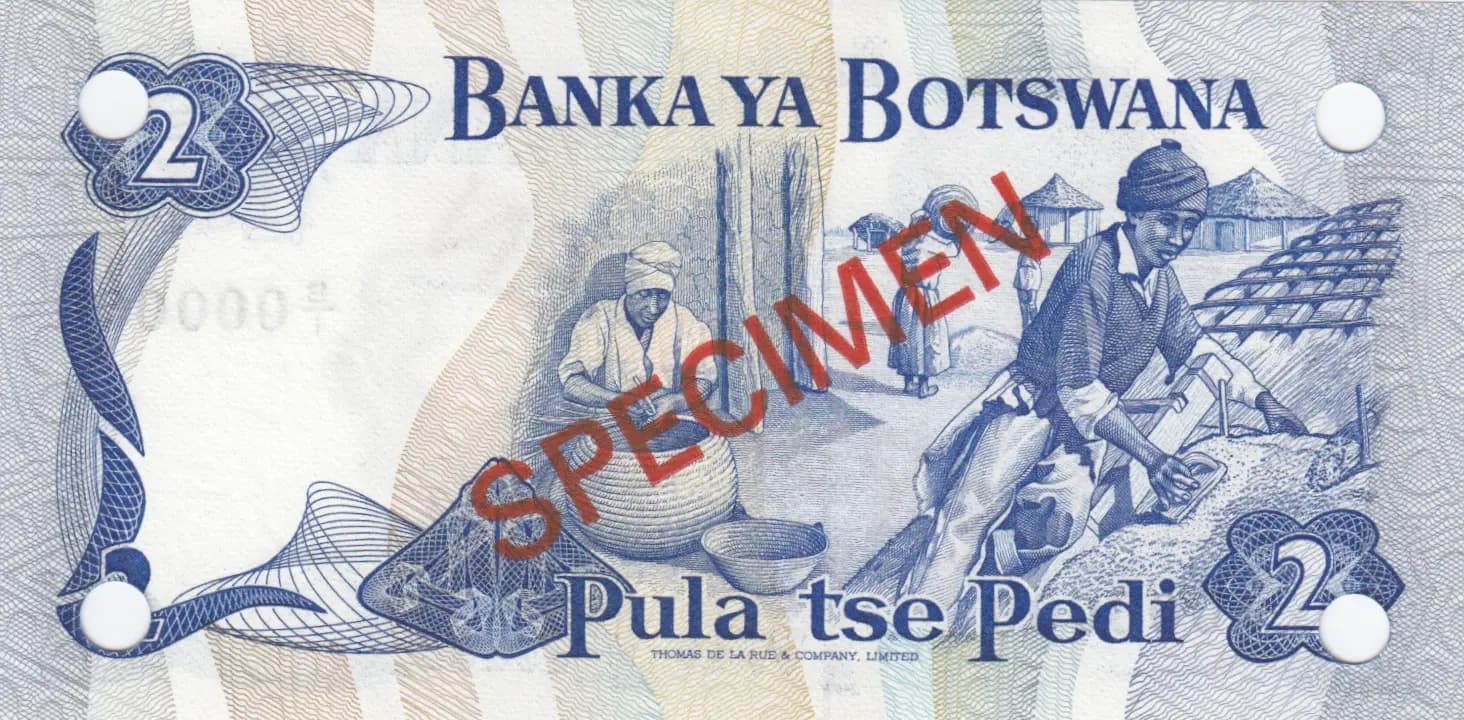
This is a 1976 Botswana 2 Pula specimen banknote, printed by Thomas de la Rue and graded UNC. The note features a striking portrait of President Sir Seretse Khama on the obverse with the national coat of arms, while the reverse depicts villagers engaged in agricultural and construction activities, reflecting the nation's development themes at independence. As a specimen note with the characteristic red diagonal SPECIMEN overprint and B/1 serial prefix, this represents a non-circulating presentation piece that remains in pristine condition with sharp engraving, clean margins, and no wear.
Common. Specimen notes from the first post-independence Botswana issue of 1976 are regularly encountered in the collector market. eBay pricing data for UNC examples ranges from approximately $19.99 to $35.00 USD, with most transactions clustered in the $20–$35 range, indicating steady collector demand but abundant supply. The 2019 catalogue value of $95 USD represents a premium retail estimate, but actual market transaction data suggests these notes are accessible and not scarce. As specimen/presentation pieces, they were produced in quantities sufficient to serve banking and official distribution purposes, and survival rates remain good.
Issued in 1976, just a decade after Botswana's independence in 1966, this note reflects the young nation's focus on development and national identity under President Seretse Khama. The reverse imagery depicting agricultural workers and construction scenes symbolizes Botswana's post-colonial economic development and agricultural heritage, while the bilingual inscriptions (English and Setswana) emphasize national unity and the Bank of Botswana's role in the newly established financial system.
The obverse features a formal portrait of President Sir Seretse Khama positioned on the left side, rendered in a classical engraving style with careful attention to facial detail, showing him with a mustache in formal presentation. The Botswana national coat of arms appears at the upper right, displaying two rearing zebras supporting a shield with horizontal lines, symbolic of the nation's wildlife heritage and heraldic tradition. The reverse presents a thematic composition of workers engaged in agricultural labor and construction activities, representing nation-building efforts, set against a checkered background pattern with stylized geometric borders. A rearing zebra watermark is incorporated into the center of the note, reinforcing national iconography. The color scheme of light blue, beige, and white creates an elegant, professional appearance appropriate to early post-independence currency design.
Front side: 'Bank of BOTSWANA' (English), 'MINISTER OF FINANCE' (English), 'This note is legal tender for Two Pula' (English), 'SPECIMEN' (English overprint). Back side: 'BANKA YA BOTSWANA' (Setswana, translates to 'Bank of Botswana'), 'Pula tse Pedi' (Setswana, translates to 'Two Pula'), 'THOMAS DE LA RUE & COMPANY, LIMITED' (English, printer attribution), 'SPECIMEN' (English overprint), '2' (denomination marker).
Intaglio engraving, the traditional security printing method employed by Thomas de la Rue & Company, London (TDLR). This technique is evidenced by the sharp, finely detailed line work visible throughout both sides, the intricate geometric and animal pattern borders, and the precise portrait engraving of President Khama. The security thread area and watermark integration are consistent with de la Rue's advanced security printing practices of the 1970s.
This is catalogued as Pick P-2s, denoting the specimen variety of the 2 Pula 1976 issue. The specimen marking is indicated by the diagonal red 'SPECIMEN' overprint and the serial number prefix B/1 (with zeros filling the remaining serial positions), which is standard for specimen notes from this issuer and period. The note has been printed by Thomas de la Rue & Company Limited as confirmed by the back inscription. PMG population data indicates P-2s is one of 16 documented varieties for the base Pick number P-2, with other varieties including regular circulation issues (P-2a) and replacement notes (P-2aCS1).