100 pula 1993 specimen
Market Prices
About This Note
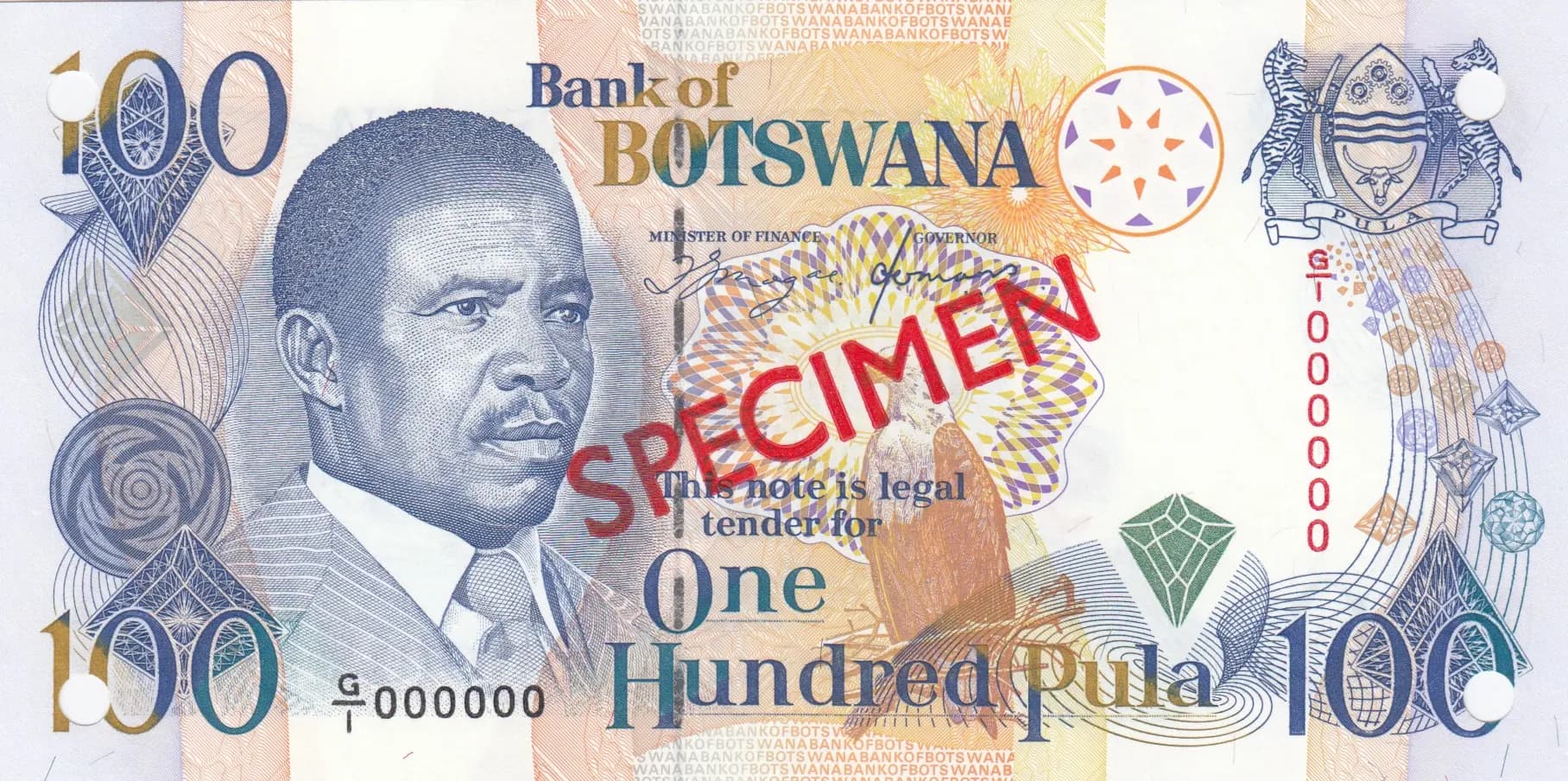
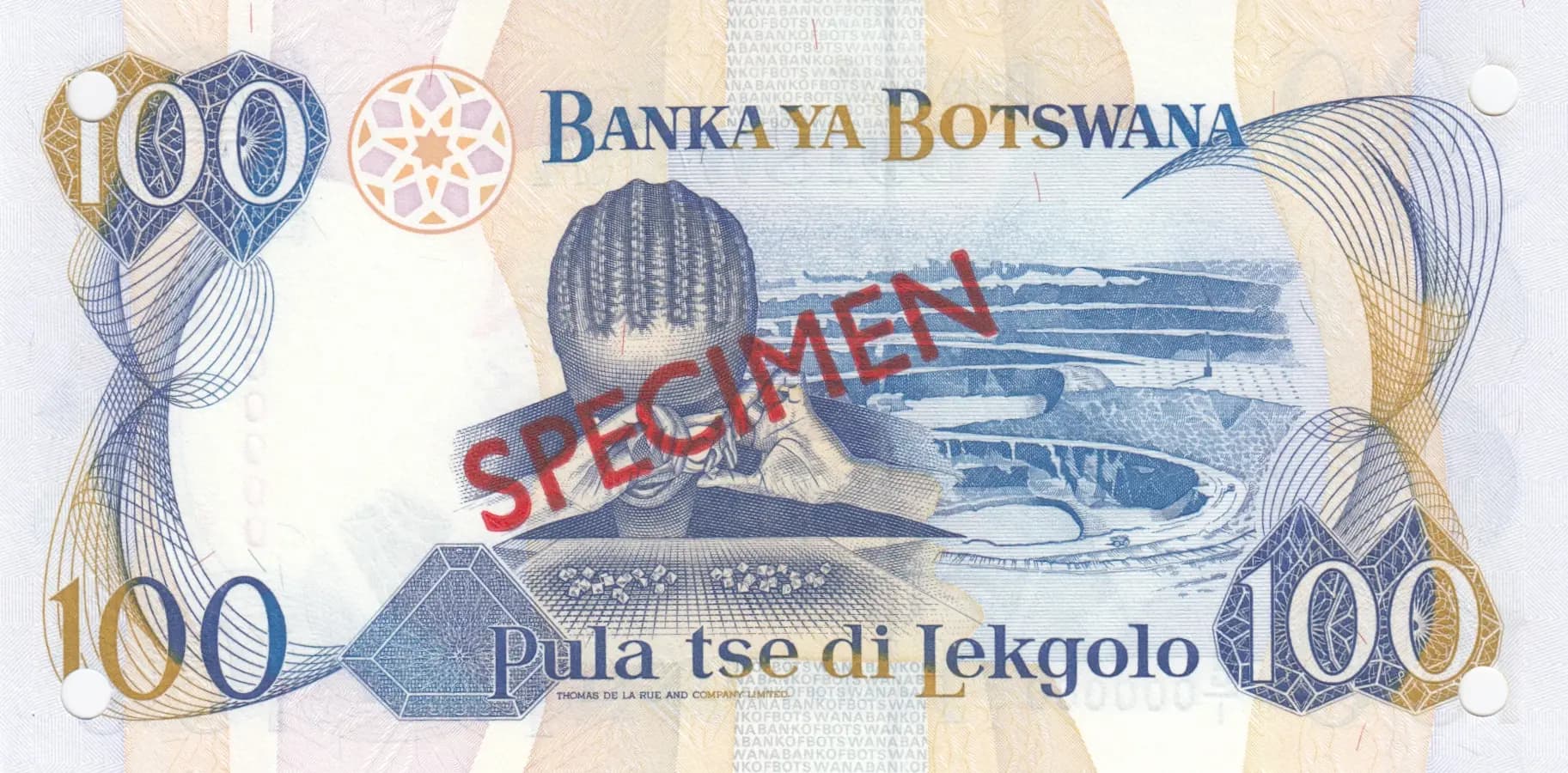
This is a 1993 Botswana 100 Pula specimen banknote (Pick P-16s) in uncirculated condition, printed by Thomas de la Rue. The note features President Sir Ketumile Masire in formal portrait on the obverse with the national coat of arms, while the reverse depicts a scenic landscape of Botswana's natural terrain rendered in blue tones. As a specimen note with red diagonal overprint and serial number prefix G/1 or G/6, this represents a pre-release sample not intended for circulation, making it a desirable item for collectors of Botswana currency and specimen notes.
Common. While specimen notes command premiums over circulated examples, this 1993 Botswana 100 Pula specimen is not exceptionally rare. eBay market data shows specimen/UNC examples trading between $7.99 and $475.00 USD, with significant variance suggesting no strong scarcity premium; the 2019 catalog value of $60 UNC further supports common classification. Specimen notes from major security printers like Thomas de la Rue were produced in substantial quantities for distribution to banks, collectors, and archival purposes. Print run data for Botswana notes of this era does not indicate restricted production, and no recall or short-lived issue circumstances apply.
This 1993 issue commemorates Botswana's post-independence economic development under President Masire's leadership during the nation's diamond boom era. The reverse landscape imagery and the prominent depiction of diamond-sorting activities reflect Botswana's transformation into one of Africa's wealthiest nations through responsible diamond mining and export. The bilingual inscriptions (English and Setswana) underscore the nation's commitment to its linguistic and cultural heritage during this period of modernization.
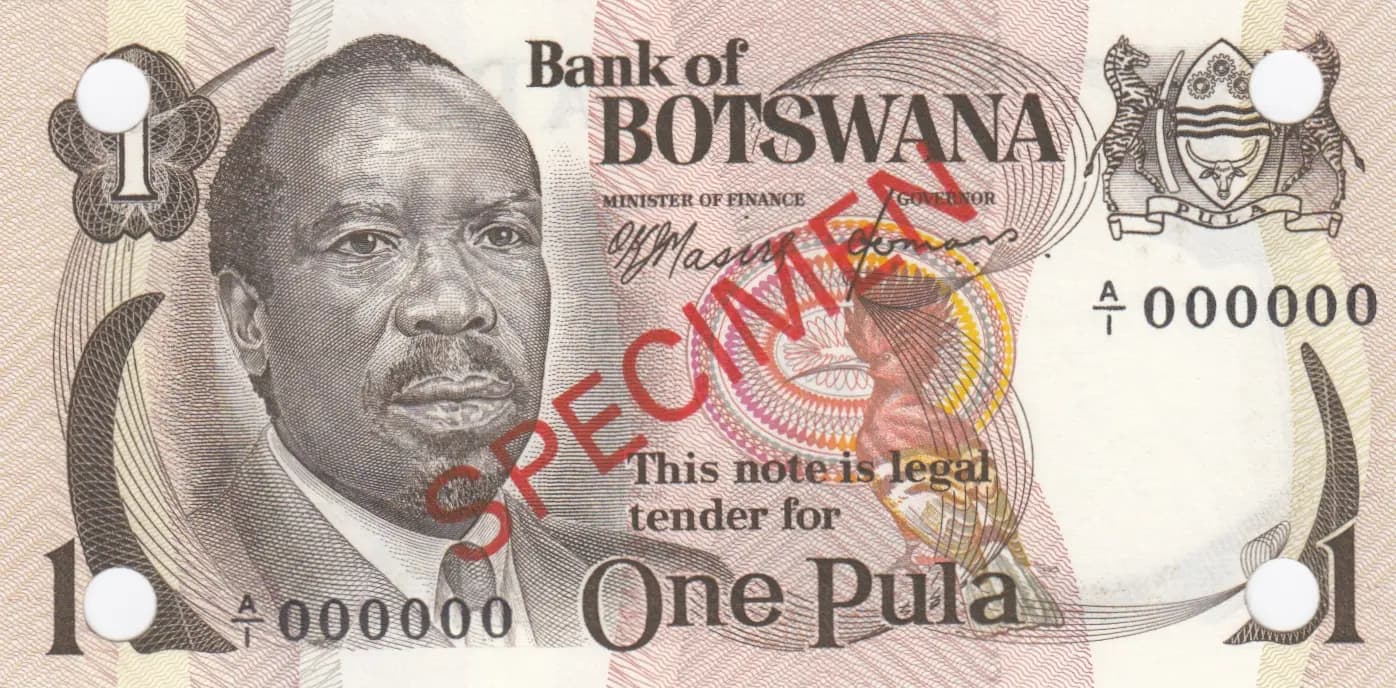
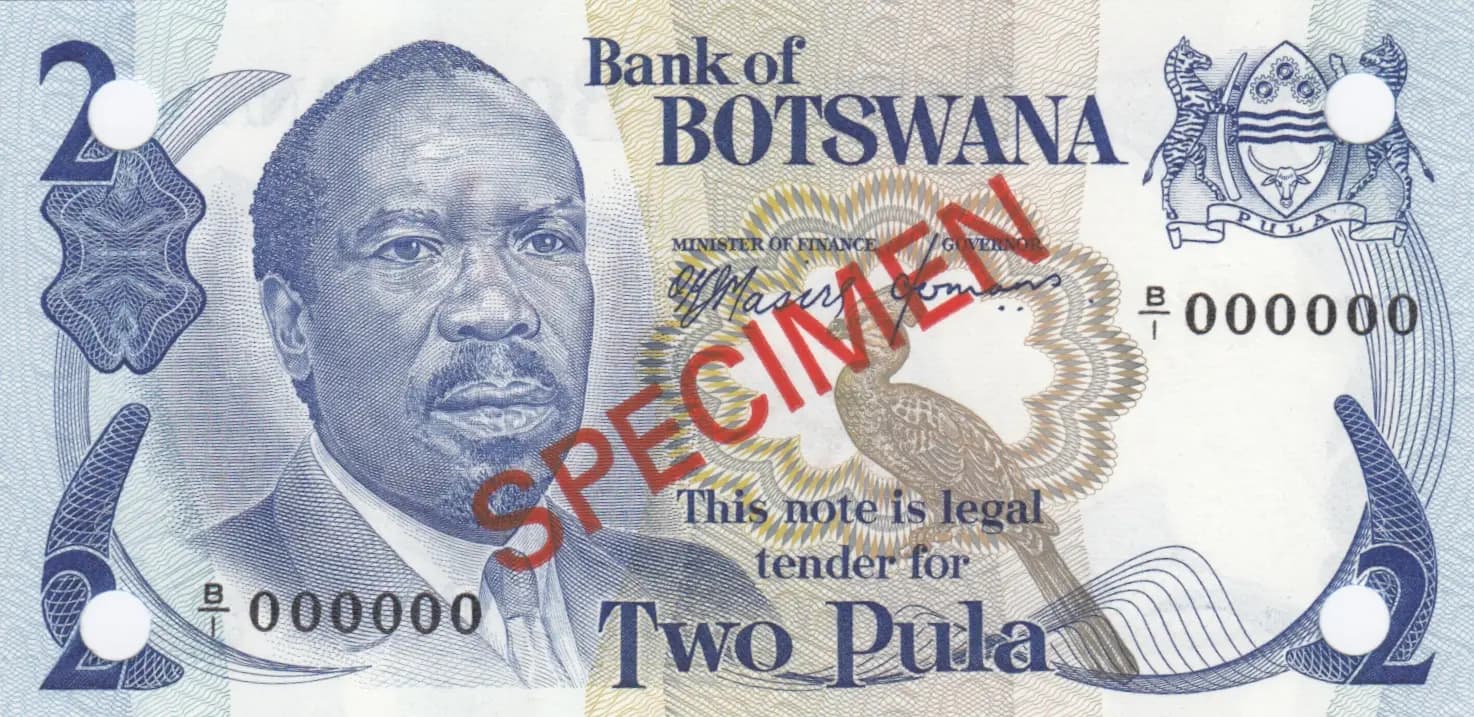
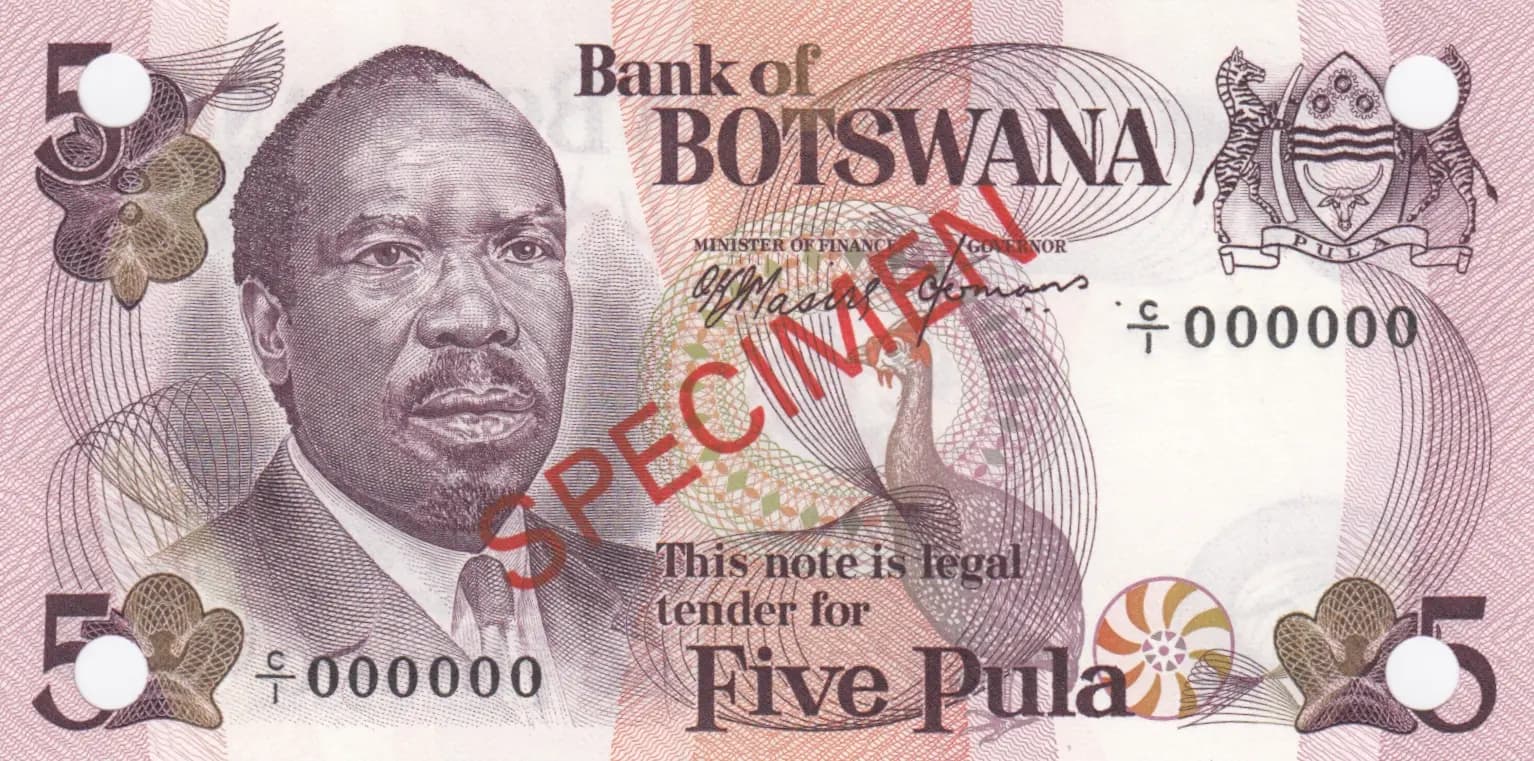
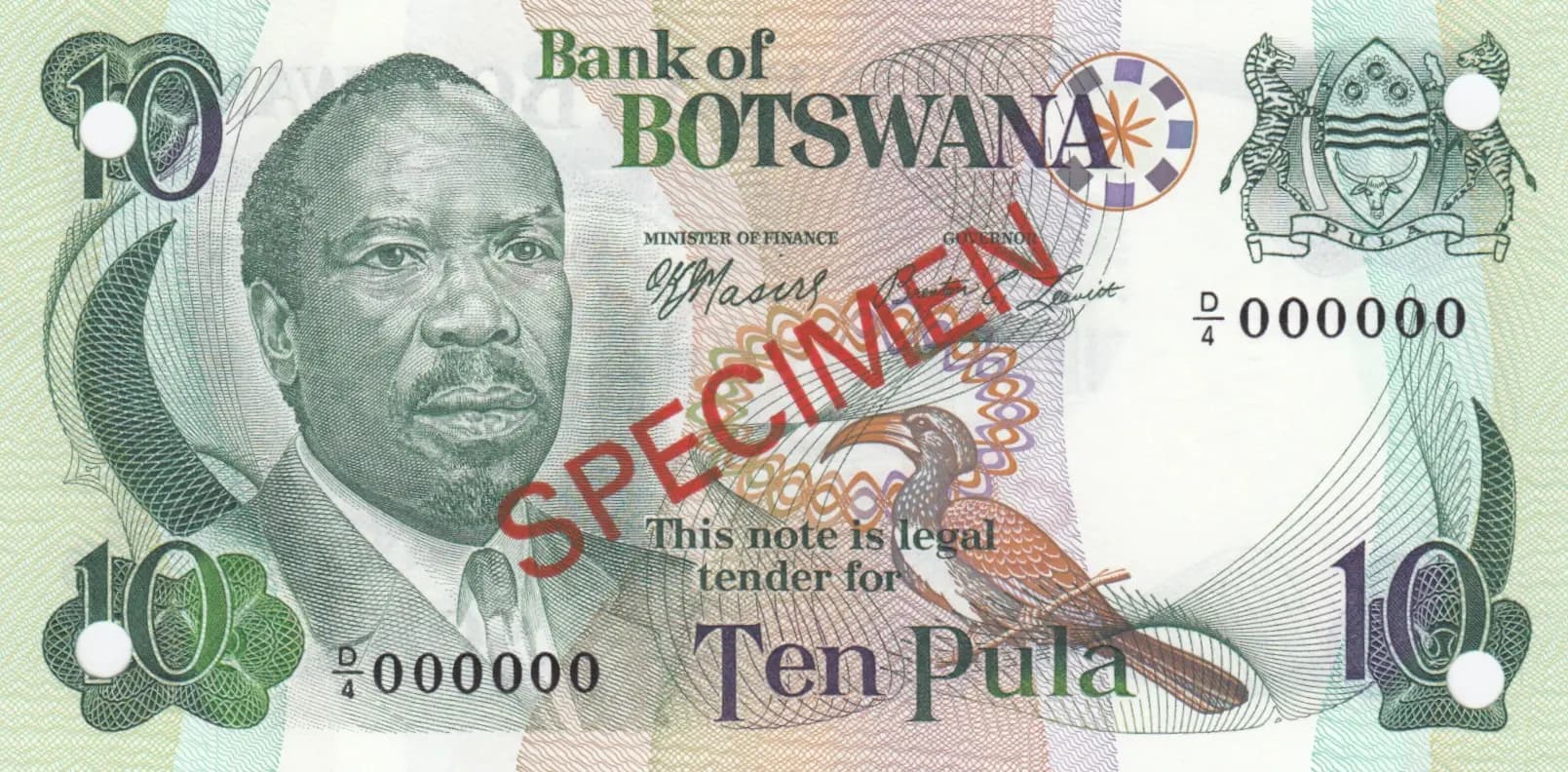
The obverse features a formal three-quarter profile portrait of President Sir Ketumile 'Quett' Masire positioned at center-left, rendered in intaglio engraving on a cream and gold underprint with blue security elements. The national coat of arms with zebra supporters appears at upper right, with decorative circular geometric medallions distributed across the field. The reverse depicts a stylized landscape scene representing Botswana's natural geography—specifically a valley or river gorge with water features rendered in blue—symbolizing the nation's natural resources. Decorative corner medallions with geometric patterns in all four corners provide additional security and aesthetic balance. The fish eagle motif referenced in catalog data integrates into the overall national symbolism, though the primary reverse focus is the diamond-sorting activity and landscape.
FRONT: 'Bank of BOTSWANA' (English - issuing institution name); '100' (numeral); 'This note is legal tender for One Hundred Pula' (English - legal tender statement); 'MINISTER OF FINANCE' and 'GOVERNOR' (English - signatory titles); 'SPECIMEN' (English - specimen designation); 'G000000' (serial number prefix). BACK: 'BANKA YA BOTSWANA' (Setswana/English mixed - Bank of Botswana); '100' (numeral); 'Pula tse di lekgolo' (Setswana - One Hundred Pula); 'SPECIMEN' (English - specimen designation); 'THOMAS DE LA RUE AND COMPANY LIMITED' (English - printer attribution).
Intaglio engraving (recess printing) executed by Thomas de la Rue and Company Limited, London, the world's premier security printer. The visual analysis confirms fine line engraving, multiple intaglio patterns, and decorative elements characteristic of high-security banknote production. Security features include a watermark (rearing zebra) positioned in the portrait region, repeating microtext security pattern ('BANK OF BOTSWANA' repeated throughout background), and fine-line engraved decorative elements. The specimen overprint in red was applied separately to distinguish this as a non-circulating sample.
This is Pick number P-16s, specifically the specimen variant (indicated by the 's' suffix). The PMG population report confirms two cataloged variants: P-16a and P-16s, both printed by TDLR. The specimen designation, red diagonal 'SPECIMEN' overprint, and serial number prefix G/1 or G/6 are the key identifying characteristics of this variety. No significant sub-varieties within the specimen type are noted; the specimen overprint and serial numbering system remain consistent across documented examples.