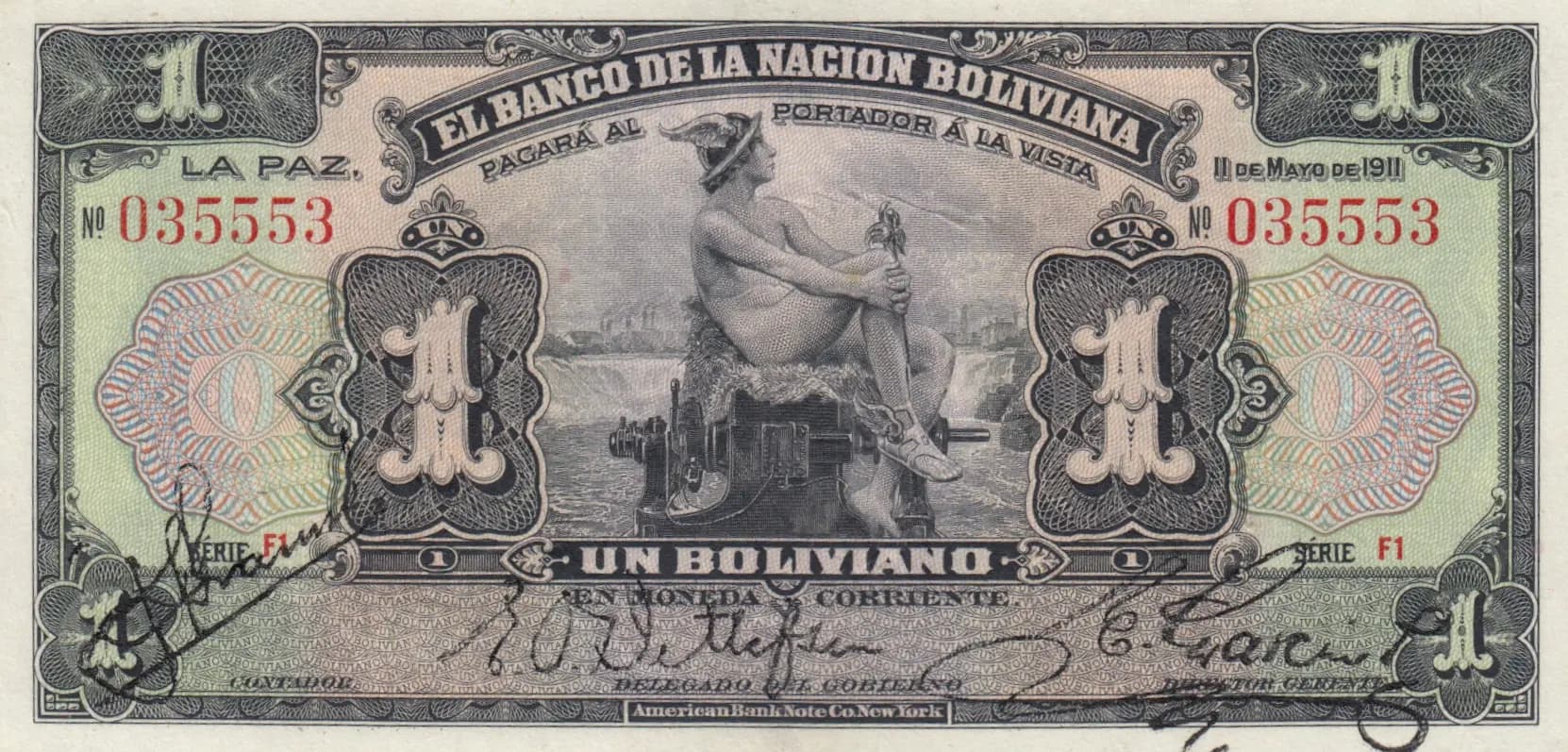
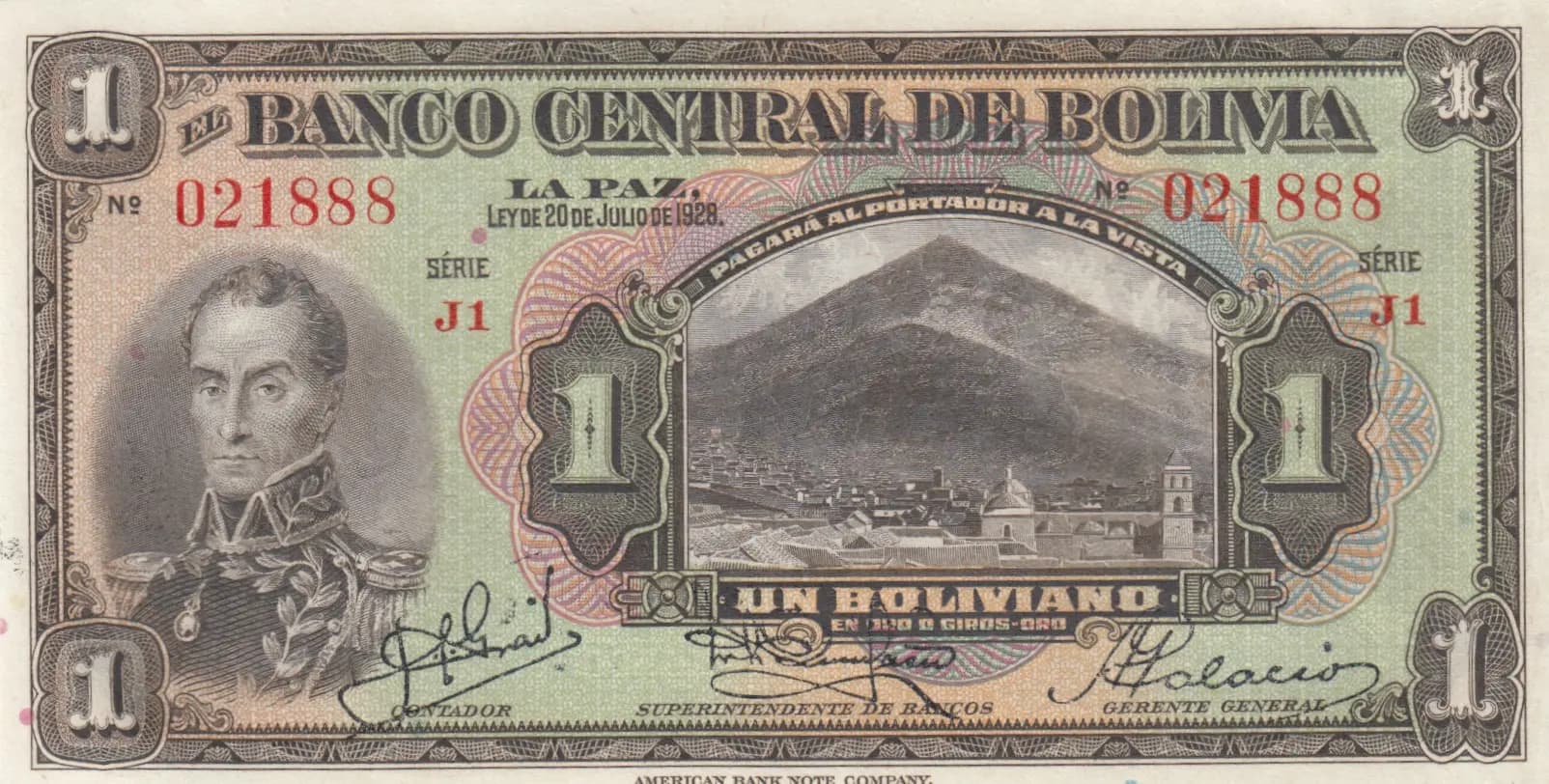
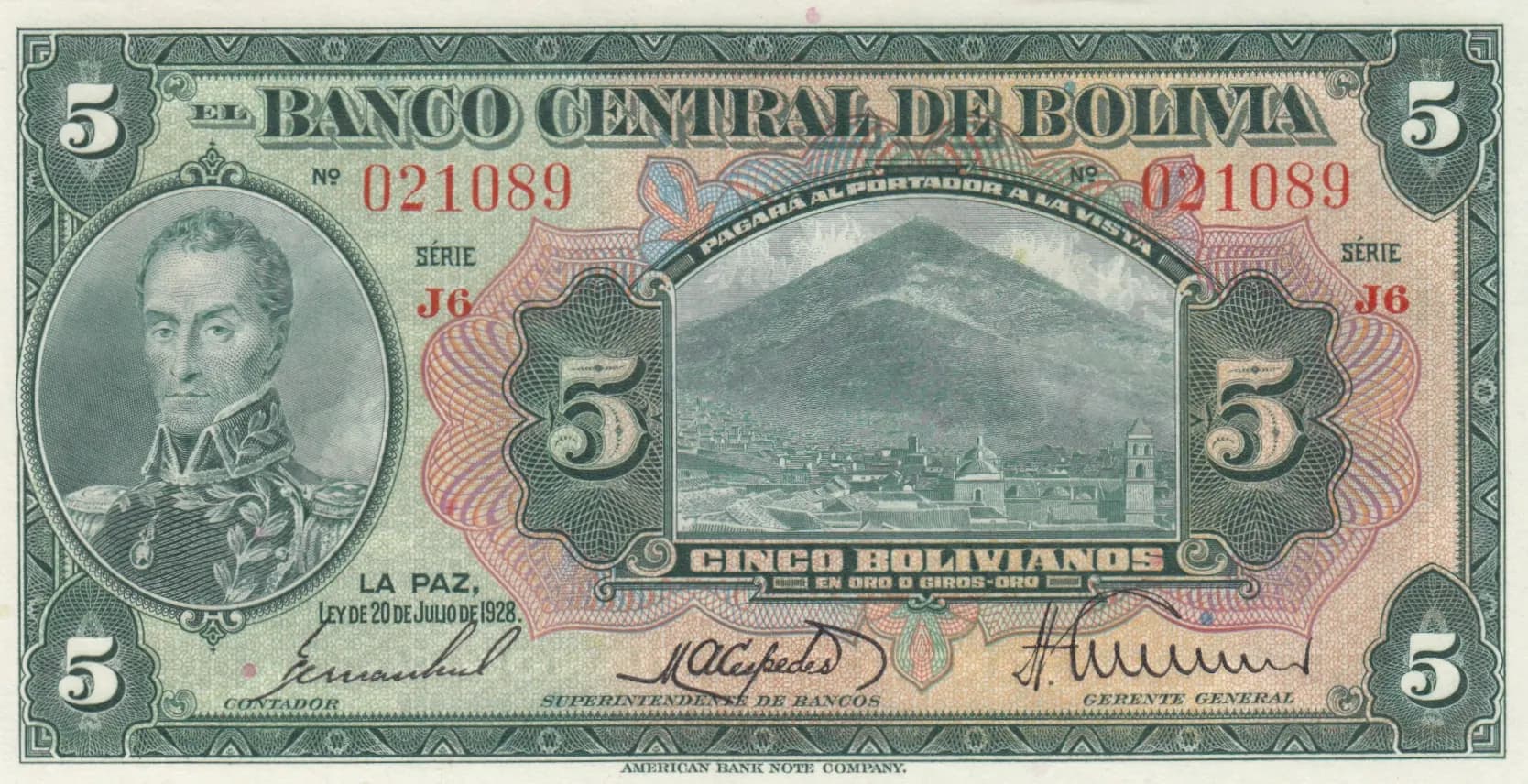
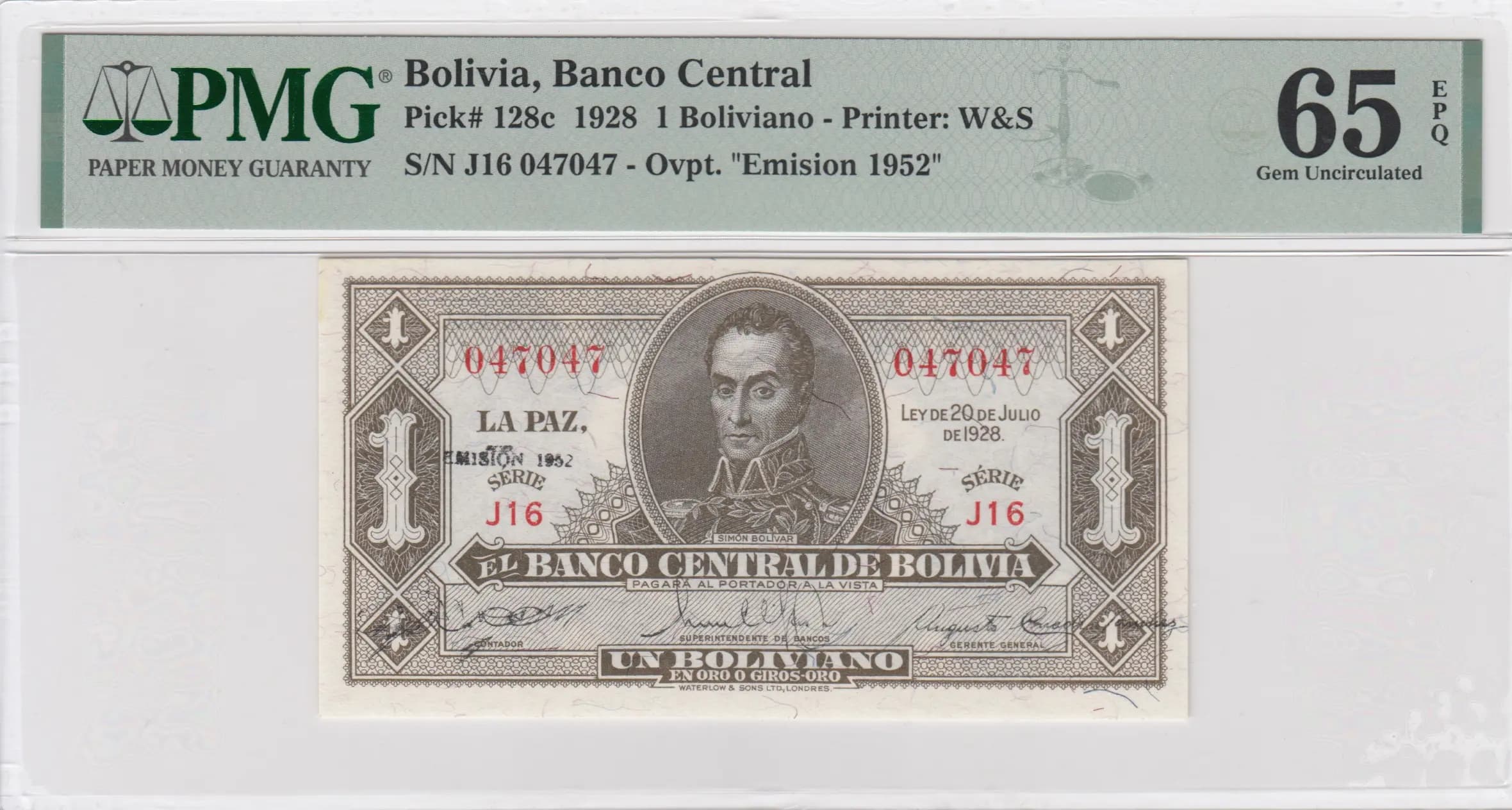
100 bolivanos 1928
Market Prices
15 salesAbout This Note
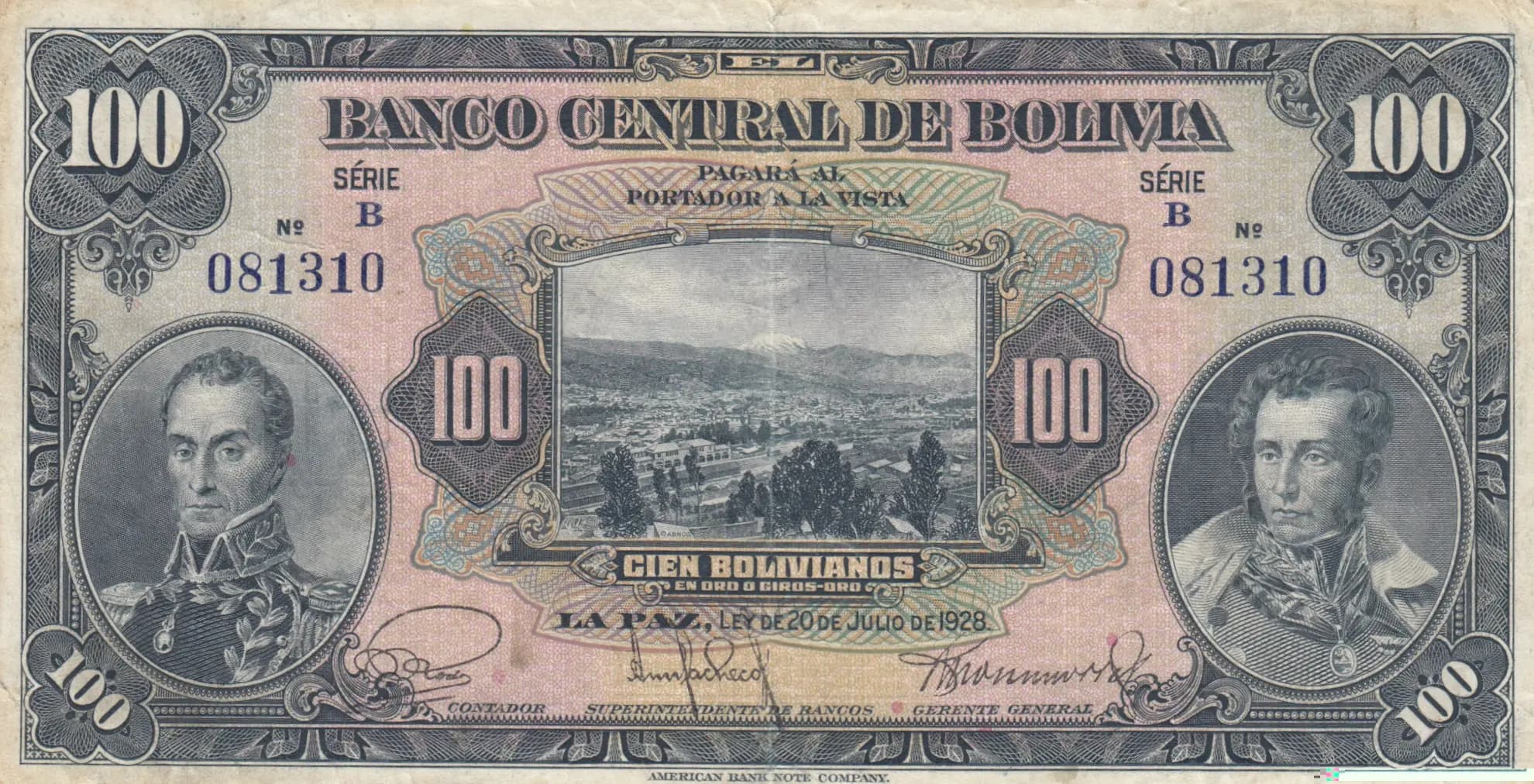
A well-preserved example of Bolivia's 1928 centennial issue featuring prominent portraits of Simón Bolívar and Antonio José de Sucre flanking an aerial view of La Paz. The note displays the characteristic pink/rose coloring and intricate engraving typical of American Bank Note Company production, with visible aging consistent with its nearly century-old origin. In Fine condition, this note shows moderate wear including creasing and foxing, yet retains good legibility of all design elements and inscriptions.
Common. The eBay price history provided demonstrates consistent market activity with notes in Fine condition selling between $5.50 and $15.76 over the past 15 years, with an average price around $10-12. The 2016 catalog value of $9 for VF specimens confirms this is a readily available note among collectors. While this is a historically significant 1928 issue, the relatively high print run and survival rate of this denomination place it firmly in the common category despite its age.
This 100 bolivanos note was issued under the Law of July 20, 1928, representing Bolivia's monetary reform during the post-war period. The dual portraits of Bolívar (the independence movement's leader) and Sucre (Bolivia's founding president) underscore the nation's emphasis on its revolutionary heritage, while the prominent depiction of La Paz—the seat of government—reflects the centralization of national identity. The explicit promise to pay 'in Gold or Gold Draft' reflects the gold standard monetary system still in effect during this era of economic stability in South America.
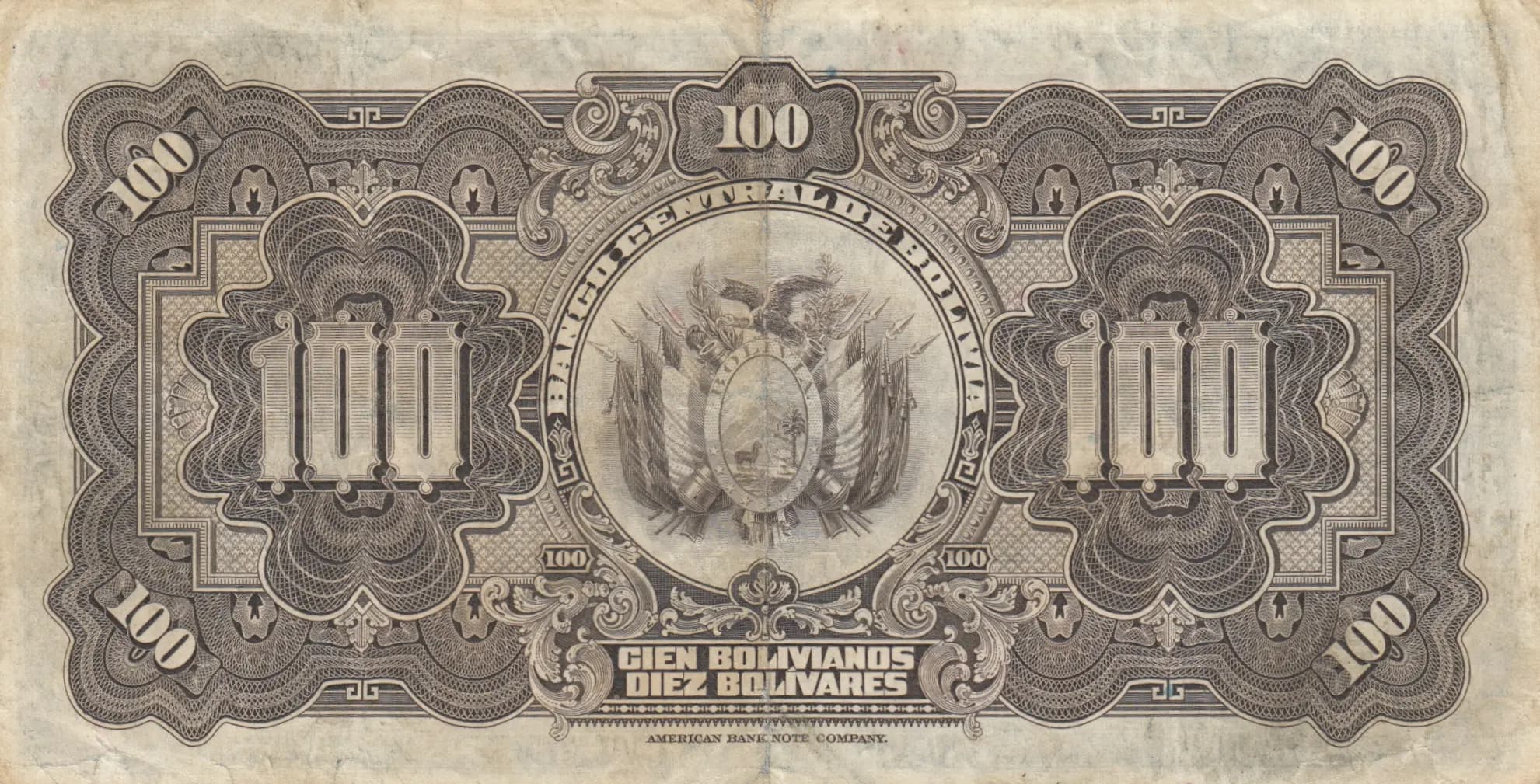
The obverse features a tri-partite composition with Simón Bolívar in military uniform positioned at the left and Antonio José de Sucre in formal civilian attire at the right, both rendered as ornate portrait medallions. The central vignette depicts an aerial landscape view of La Paz with mountains and valleys visible in the background—a striking geographic representation emphasizing the city's strategic mountain valley location. The reverse displays the Bolivian coat of arms prominently in a central circular medallion, featuring the national condor with spread wings above a shield, surrounded by wreaths and laurel designs. Ornamental architectural elements flank the arms on both sides, with extensive geometric border patterns framing the entire design. The color scheme of the obverse employs pink/rose as the primary background with black and tan accents, while the reverse utilizes gray and black engraving on a cream/white field.
FRONT: 'BANCO CENTRAL DE BOLIVIA' (Central Bank of Bolivia); 'SERIE B' (Series B); 'No 081310' (Serial number); 'PAGARÁ AL PORTADOR A LA VISTA' (Pay to Bearer on Demand); 'CIEN BOLIVIANOS EN ORO O GIRO-ORO' (One Hundred Bolivianos in Gold or Gold Draft); 'LA PAZ, LEY DE 20 DE JULIO DE 1928' (La Paz, Law of July 20, 1928); 'AMERICAN BANK NOTE COMPANY' (printer identification); denomination '100' in four corners. BACK: 'CIEN BOLIVIANOS DIEZ BOLIVARES' (One Hundred Bolivianos Ten Bolivares); '100' in four corners; 'AMERICAN BANK NOTE COMPANY'.
Intaglio engraving (steel or copper plate) executed by the American Bank Note Company of New York, as indicated by the printer's imprint on both sides of the note. The extensive fine line work, intricate geometric patterns, decorative flourishes, and the three-dimensional textural effects visible in the design elements are characteristic of high-quality intaglio production. The layered color printing on the obverse suggests multiple plate runs for the pink/rose base and the black/tan overprints, typical of security printing practices in the 1920s.
This example is identified as Series B, serial number 081310. The 1928 Bolivia 100 bolivanos is known to exist in series A through M, with Series B being a mid-range production series. No major recognized varieties (such as signature variations, date overprints, or emergency printings) are documented for this Pick number, making this a standard regular issue example. The specific series designation and serial number serve as identifying characteristics for this particular note but do not constitute a cataloged variety.