1 bolivano 1928
Market Prices
29 salesAbout This Note
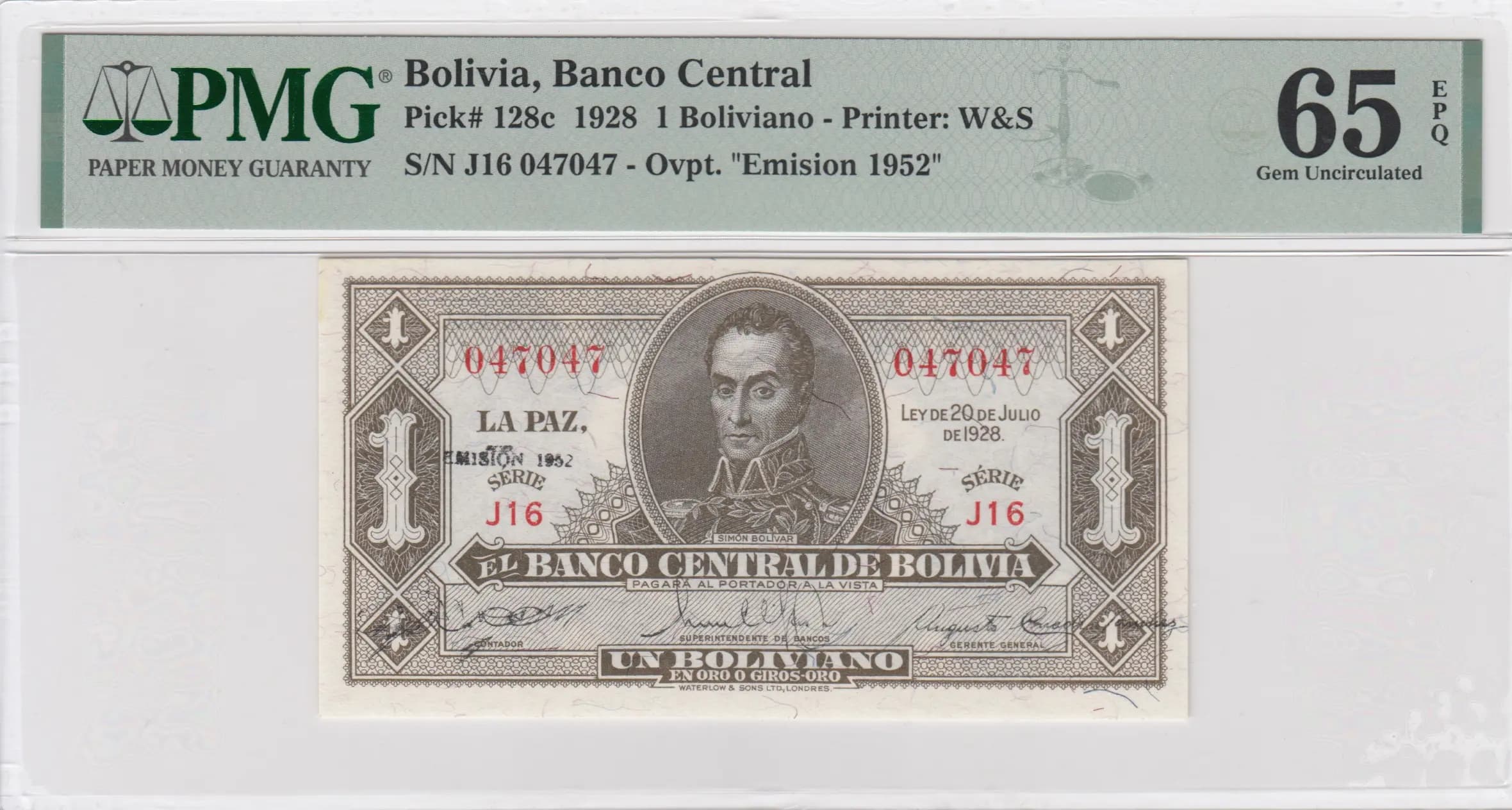
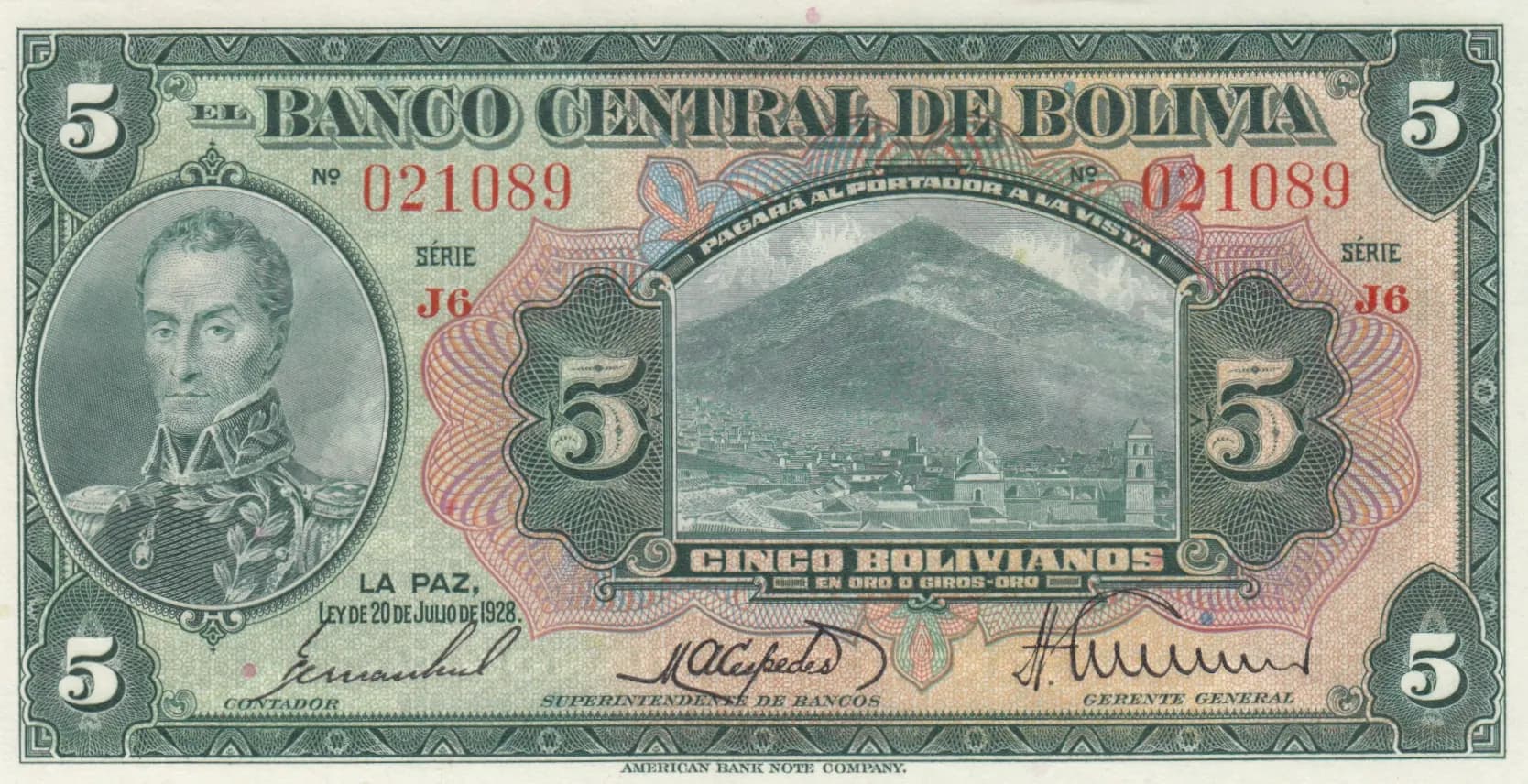
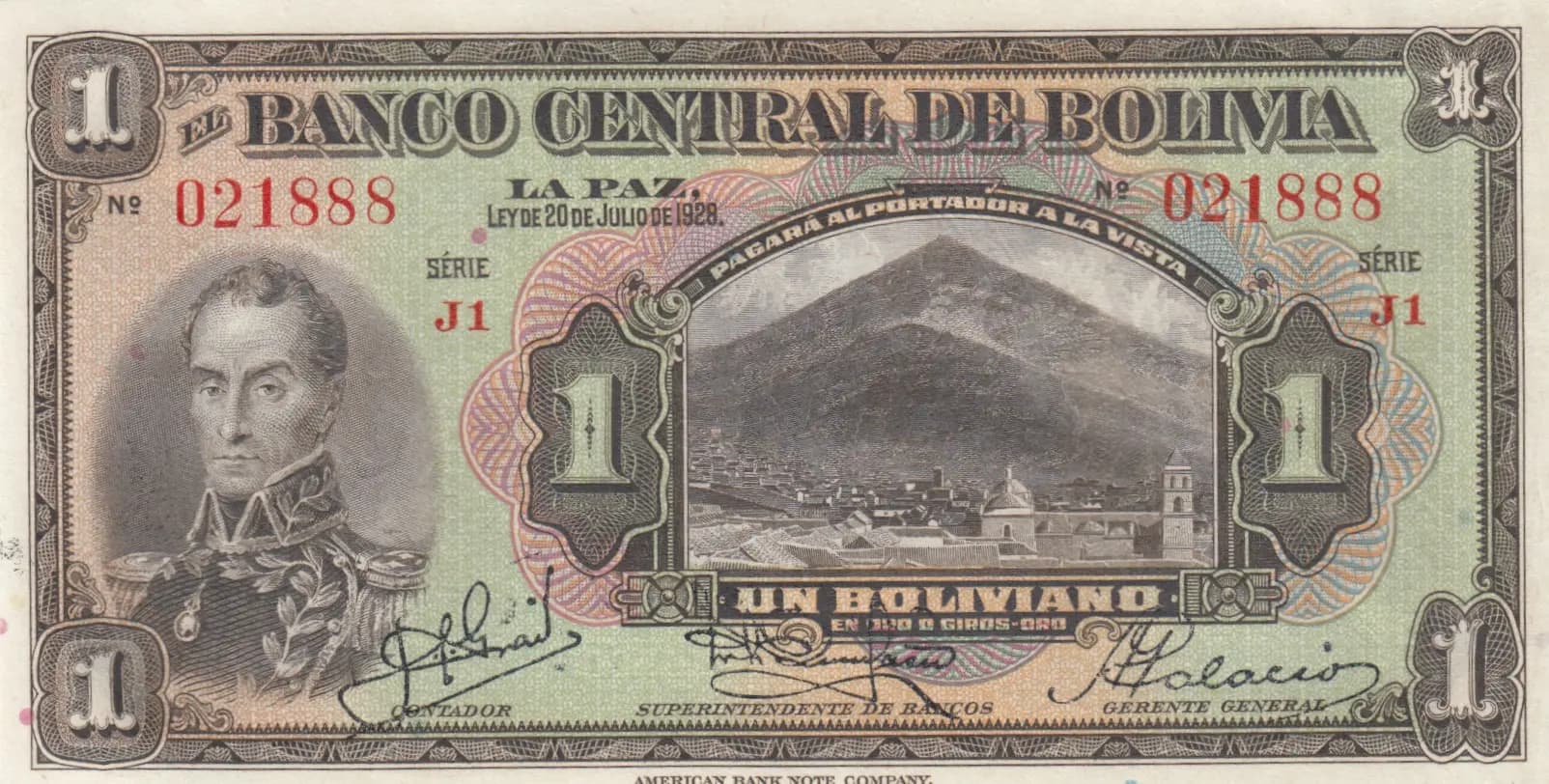
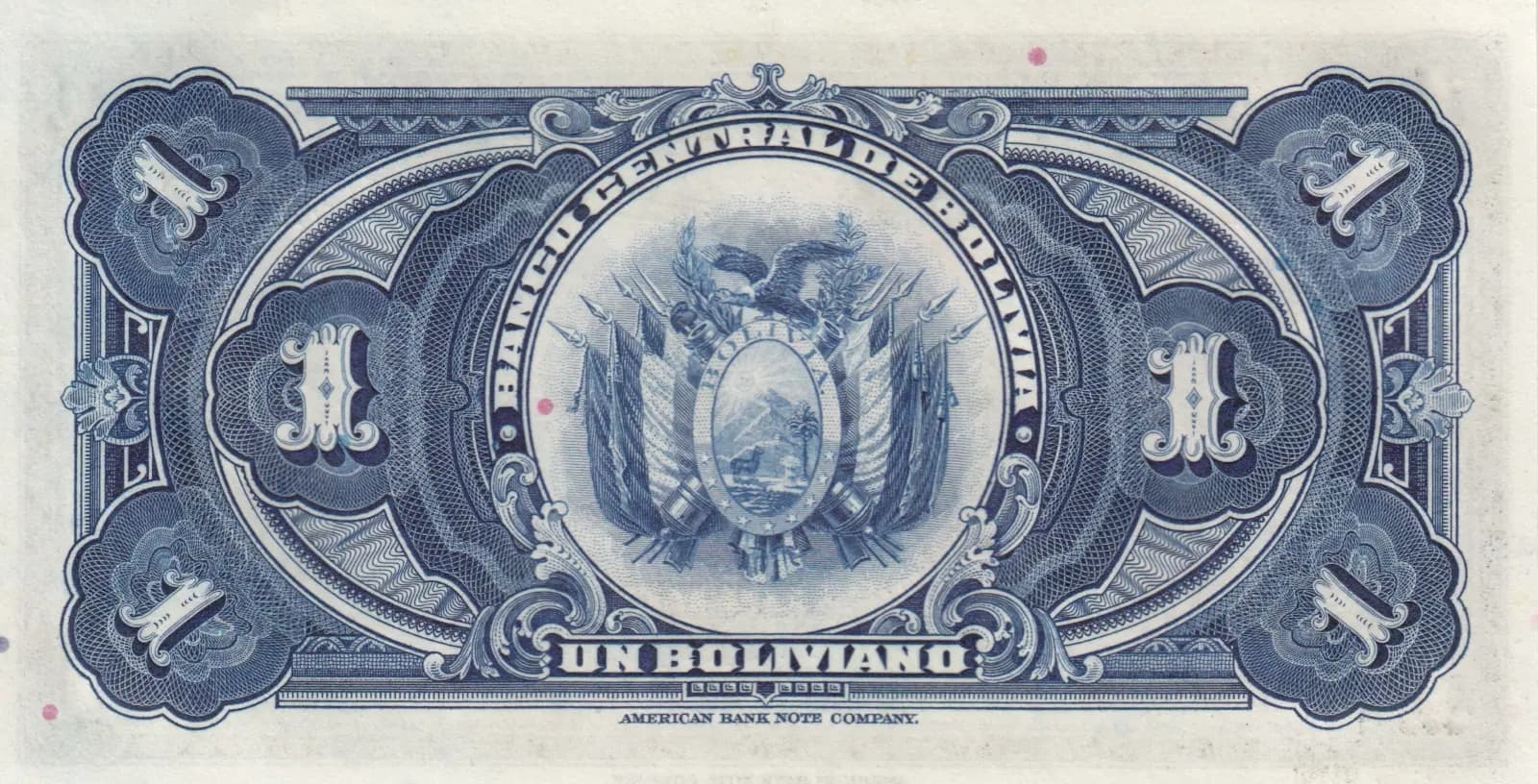
This is a 1928 Boliviano from the Banco Central de Bolivia, printed by the American Bank Note Company in New York. The note features a portrait of Simón Bolívar in military uniform on the obverse, with a striking central vignette depicting the mountain city of Potosí. The reverse displays Bolivia's national coat of arms with an eagle within an ornate circular frame. The specimen shows age-appropriate patina with light foxing and staining consistent with nearly a century of existence, and while circulated, it retains good structural integrity and clear impressions of the fine engraved details.
Common. The eBay sales data provided shows consistent market pricing between $2–$18 for this note across multiple condition grades spanning nearly a decade, with UNC specimens regularly available in the $2.49–$18.30 range. The 2016 catalog value for UNC is listed at only $5, further confirming this is a regularly available issue. The Banco Central de Bolivia issued substantial quantities of this denomination in 1928, and no evidence suggests a limited print run or special scarcity factors. The multiple signature varieties noted in the catalog data indicate a prolonged production run rather than a one-time limited printing.
This note was issued under the Law of July 20, 1928, during the post-World War I period when Bolivia was modernizing its financial institutions under the newly established Banco Central de Bolivia. The obverse prominently features Simón Bolívar, the Venezuelan military leader and liberator of South American republics including Bolivia (then Upper Peru), reflecting the national veneration of the independence movement. The depiction of Potosí—historically one of the world's richest silver mining centers—on the reverse underscores Bolivia's mineral wealth and economic identity during this era.
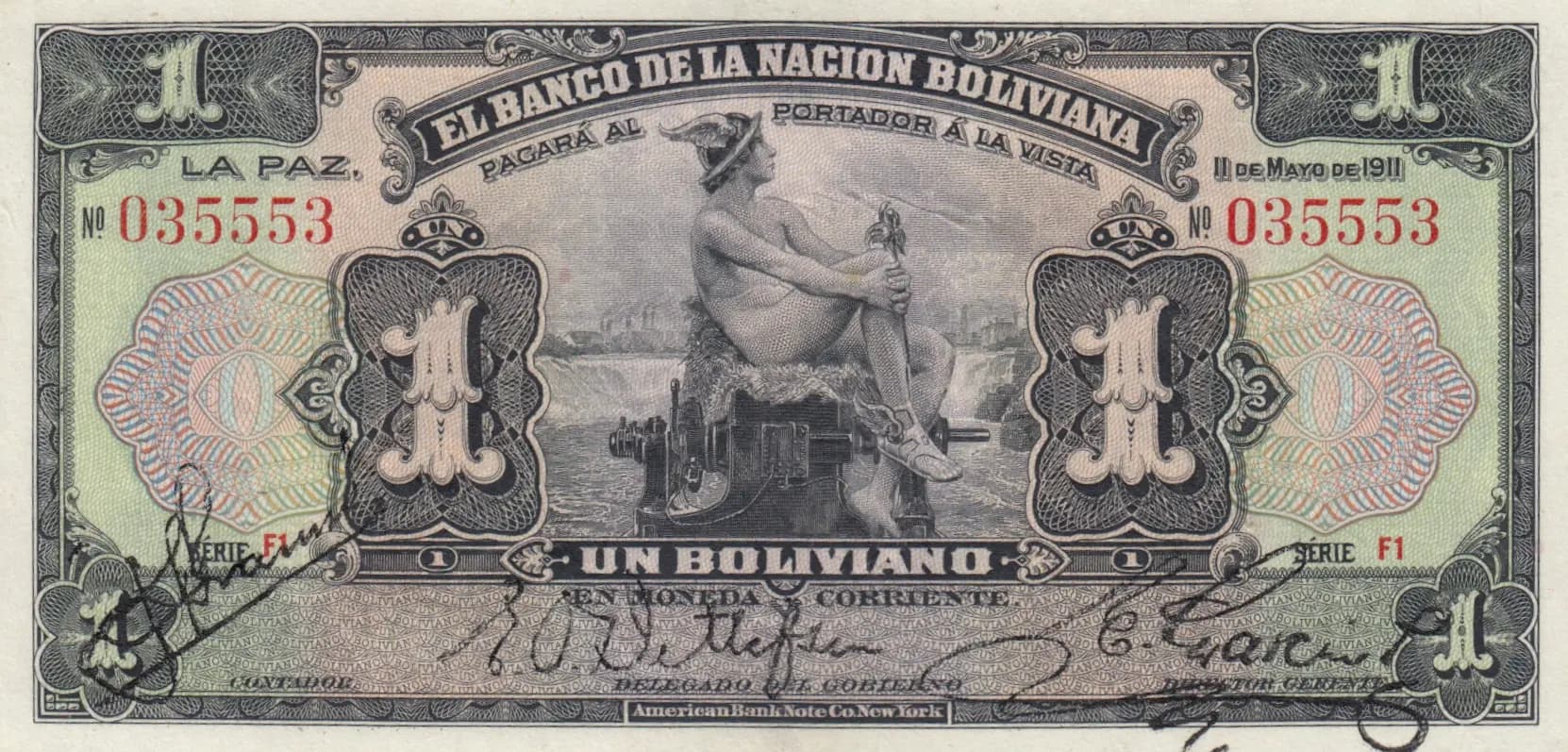
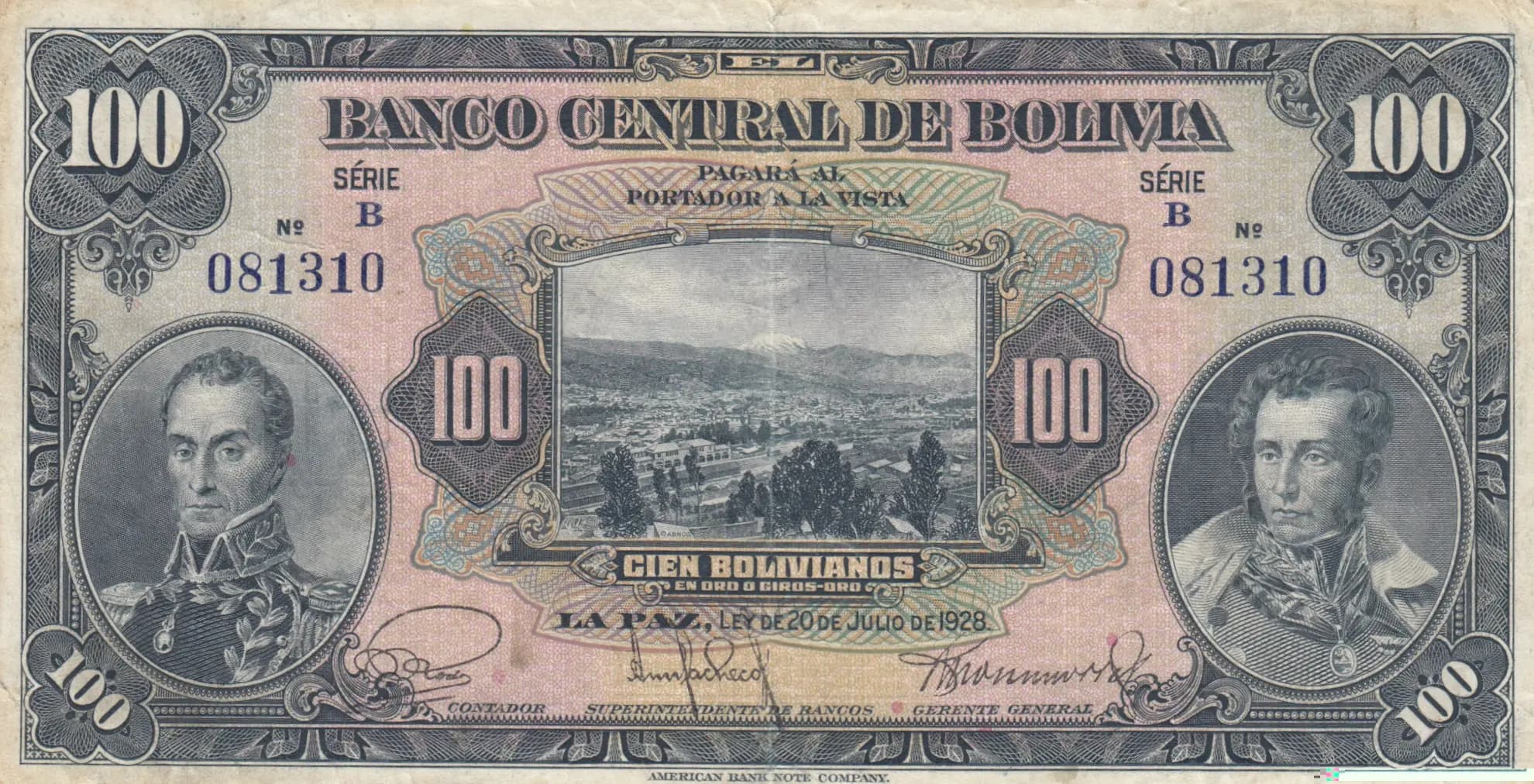
The obverse features a left-facing profile portrait of Simón Bolívar dressed in military uniform with decorative collar insignia, positioned on the left third of the note. The central design showcases a detailed landscape vignette of Potosí, depicting a large mountain peak dominating the composition with a colonial-era city settlement featuring a prominent cathedral with domed roof in the valley below. The entire design is framed by elaborate ornamental scrollwork, geometric patterns, and corner medallions bearing the numeral '1' in each corner. The color scheme employs deep brown as the primary ink with green, orange, and rose underprints creating a harmonious multi-tonal effect. The reverse presents Bolivia's national coat of arms—an eagle with spread wings—centrally positioned within an ornate circular decorative frame, rendered in deep blue ink. All four corners feature matching medallions with the numeral '1', and the borders are filled with symmetrical scrollwork and geometric design elements typical of high-security banknote engraving.
FRONT SIDE: 'BANCO CENTRAL DE BOLIVIA' (Central Bank of Bolivia); 'LEYNE 20 DE JULIO DE 1928' (Law of July 20, 1928); 'UN BOLIVIANO' (One Boliviano); 'PAGARA AL PORTADOR A LA VISTA' (Will pay to bearer on sight); 'EN ORO O GIROS-ORO' (In gold or gold drafts); 'SERIE J1' (Series J1); 'No 021888' (Serial Number 021888); 'CONTADOR' (Counter/Accountant); 'SUPERINTENDENTE DE BANCOS' (Superintendent of Banks); 'GERENTE GENERAL' (General Manager). BACK SIDE: 'BANCO CENTRAL DE BOLIVIA' (Central Bank of Bolivia); 'UN BOLIVIANO' (One Boliviano); 'AMERICAN BANK NOTE COMPANY' (printer attribution).
This note was produced using intaglio (engraved) printing by the American Bank Note Company of New York, the premier security printer of the era. The intaglio process, evident from the fine line work, intricate geometric patterns, and detailed portrait engraving visible in both the visual analysis and the design complexity, was the standard anti-counterfeiting technology of the period. The multi-color printing technique employing brown primary ink with green, orange, and rose underprints demonstrates sophisticated register control typical of American Bank Note Company's advanced facilities.
The Pick catalog identifies two variants for this base number: P-118a (standard issue) and P-118s (specimen note with special markings). The observed specimen displays 'SERIE J1' with serial number 021888, indicating this is a P-118a circulation note from Series J, with multiple signature varieties known to exist on this issue. No overprints, commemorative marks, or special designations are visible on this particular example, identifying it as a regular issue circulation note.