20 francs 1954
Market Prices
13 salesAbout This Note
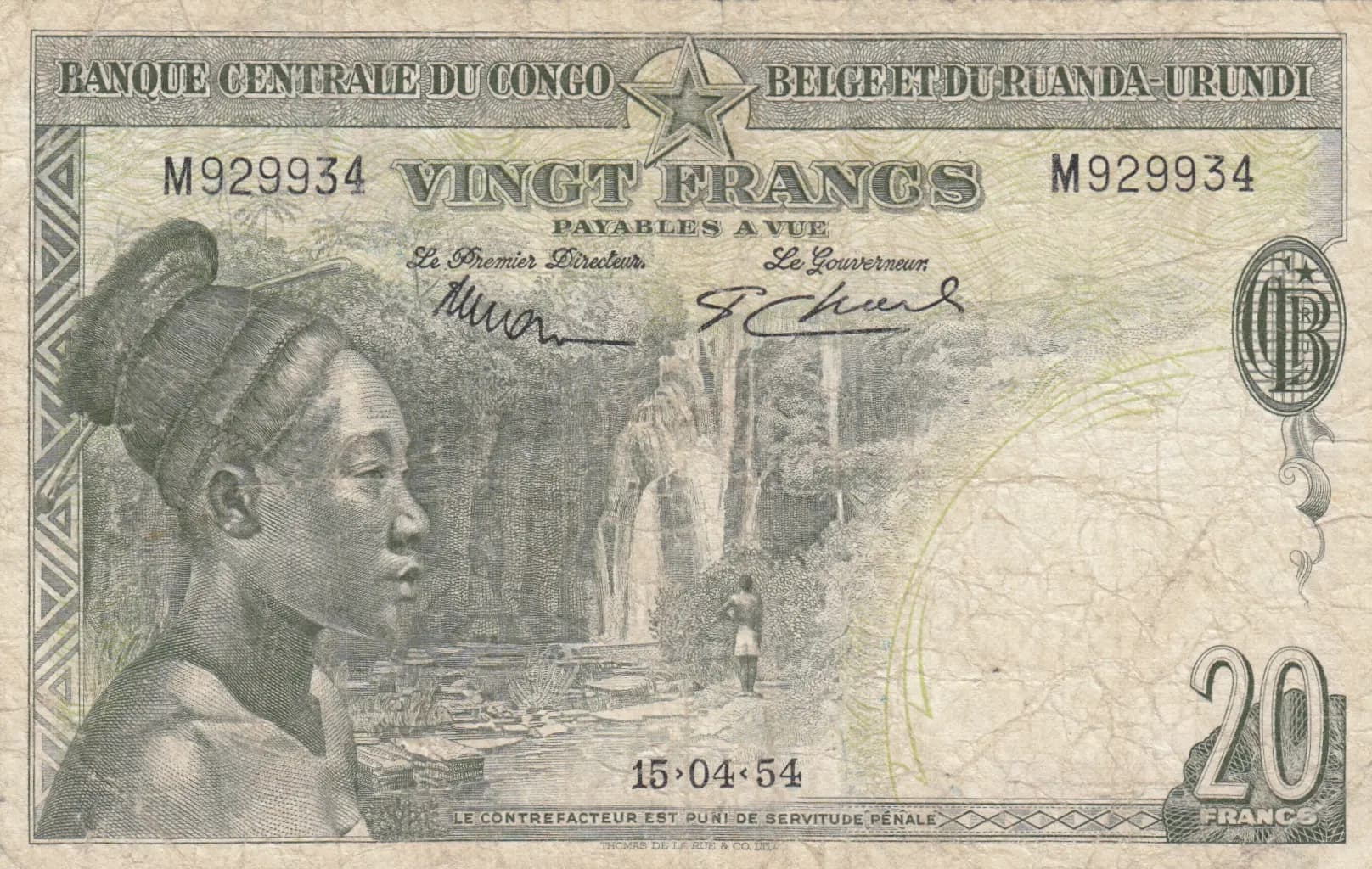
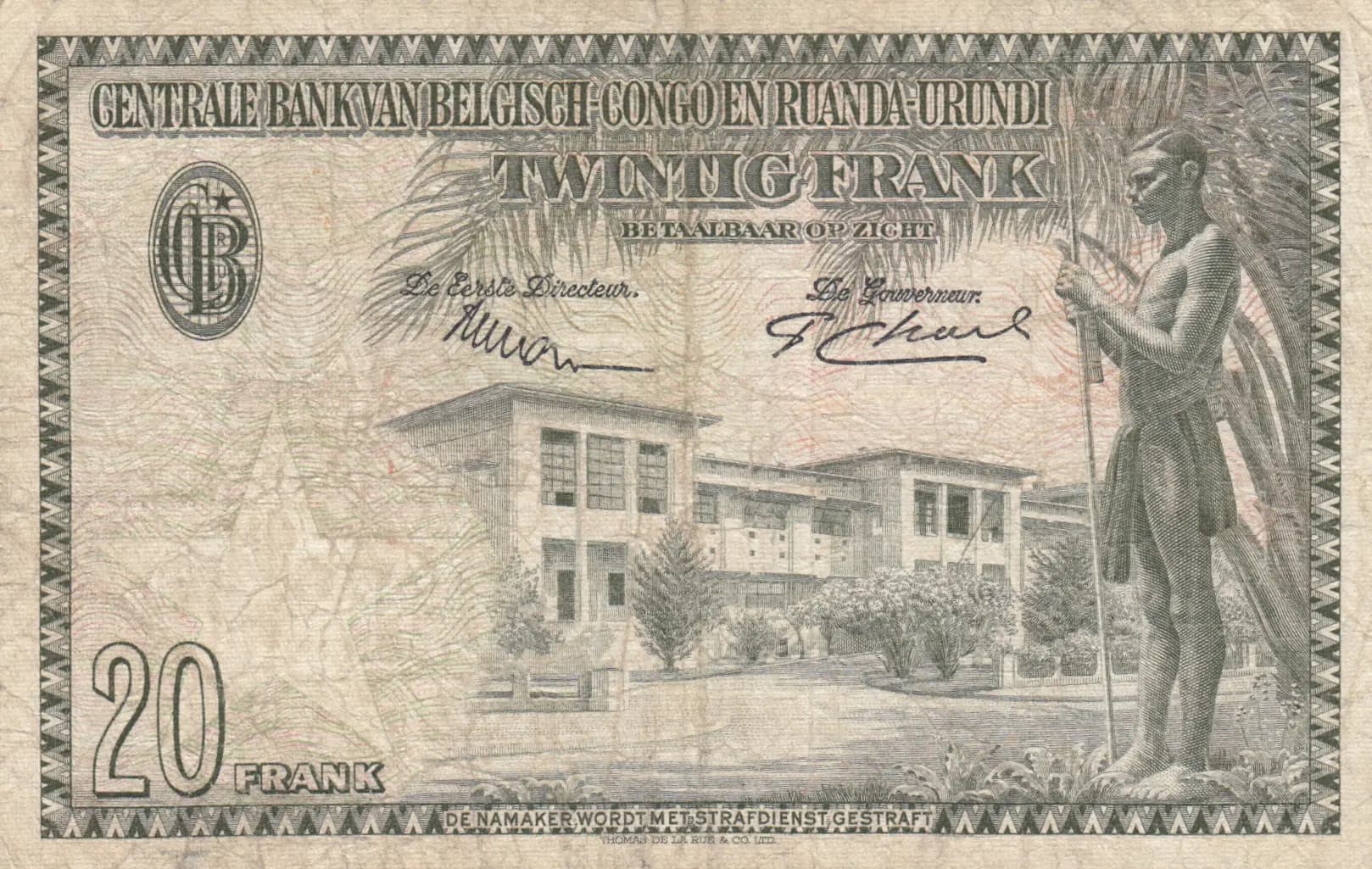
This Belgian Congo 20 francs note from 1954 presents a classic example of post-colonial African currency from the Banque Centrale du Congo Belge et du Ruanda-Urundi. The VG-graded specimen displays typical age-related patina with foxing and yellowing throughout, creasing, and fading consistent with natural circulation and storage over nearly 70 years. The note features exceptional fine engraving on both sides—a portrait of an African man in traditional dress on the obverse and the Queen Astrid Laboratory building in Leopoldville on the reverse—representing the transitional period of Belgian Congo administration before independence.
Common. The eBay sales history shows consistent trading in the $20-$130 range across various condition grades, with VG-graded examples (the condition of this note) selling for approximately $22-$56 in recent sales history. The 2016 catalog value for VG is listed at $10. The note was part of a regular issue by the Banque Centrale, suggesting substantial print runs. Current market prices well below $100 for VG specimens and the consistent availability of examples across multiple condition grades indicate this is a commonly available note in the collector market.
Issued in 1954, this note represents a brief window in Belgian Congo's monetary history, coming just six years before the territory's turbulent transition to independence in 1960. The reverse depicts the Queen Astrid Laboratory in Leopoldville (modern-day Kinshasa), a symbol of Belgian colonial institutional presence and scientific advancement in the Congo. The bilingual design (French on obverse, Dutch on reverse) reflects the dual administration of Belgian Congo and Ruanda-Urundi, emphasizing Belgium's governance structure during the final years of colonial rule.
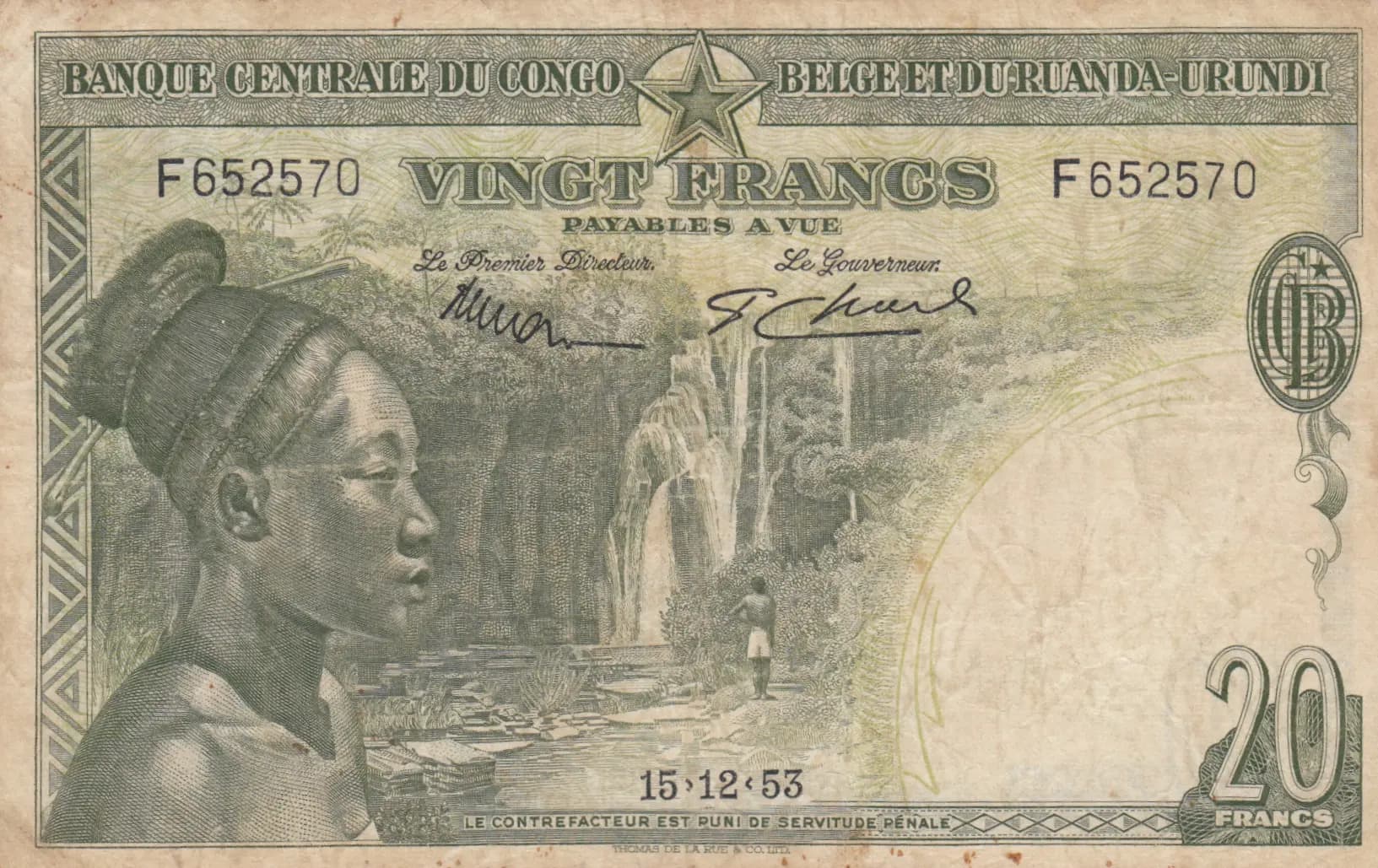
The obverse features a finely engraved portrait of an African man in profile facing right, wearing a traditional wrapped head covering, positioned at the left with a tropical landscape scene depicting vegetation, palm trees, and figures in the background. A five-pointed star ornaments the top center, with an oval institutional seal on the right side. A distinctive geometric diagonal pattern border runs along the left edge as a security feature. The reverse displays the Queen Astrid Laboratory (Laboratoire Astrid) in Leopoldville as a multi-story institutional building with regular window placement and landscaped grounds. A classical male figure in relief stands to the right in a formal pose, with palm fronds visible at the edges. A geometric diamond pattern border repeats across all edges of the reverse. Both sides feature the watermarked elephant's head, consistent with the issuing authority's symbolic representation.
OBVERSE (French): 'Banque Centrale du Congo Belge et du Ruanda-Urundi' (Central Bank of Belgian Congo and Ruanda-Urundi) / 'Vingt Francs' (Twenty Francs) / 'Payables à Vue' (Payable on Demand) / 'Le Premier Directeur' (The First Director) / 'Le Gouverneur' (The Governor) / '15•04•54' (15 April 1954) / 'Le Contrefacteur est Puni de Servitude Penale' (The Counterfeiter is Punished with Penal Servitude) / Serial number: M929934. REVERSE (Dutch): 'Centrale Bankvvan Belgisch-Congo en Ruanda-Urundi' (Central Bank of Belgian Congo and Ruanda-Urundi) / 'Twintig Frank' (Twenty Francs) / 'Betaalbaar op Zicht' (Payable on Sight) / 'De Eerste Directeur' (The First Director) / 'De Gouverneur' (The Governor) / '20 Frank' (20 Francs) / 'De Namaker wordt met Strafsdienst Gestraft' (The Counterfeiter is Punished with Penal Servitude). Both sides signed by officials and printed by 'Thomas De La Rue & Co Ltd'.
This note was produced using fine line engraving, the standard security printing method employed by Thomas De La Rue & Co Ltd (TDLR), one of the world's foremost currency printers. The detailed portraiture, intricate background landscapes, geometric security borders, and precise line work visible throughout both sides are characteristic of high-quality steel-plate intaglio engraving. The repeated serial numbers and multilingual text demonstrate the sophisticated production standards of mid-20th century colonial currency manufacture.
This specimen corresponds to Pick catalog P-26 with TDLR printer designation. PMG records indicate two variants exist for this base Pick number (P-26 and P-26s), though the visual analysis does not reveal specimen-specific distinguishing features that would definitively identify which variant this particular note represents. The date '15•04•54' (15 April 1954) on the obverse is consistent with the 1953-1954 issue period. The serial number M929934 visible on this example represents standard numbering from the regular circulation print run.