50 escudos 1972
Market Prices
24 salesAbout This Note
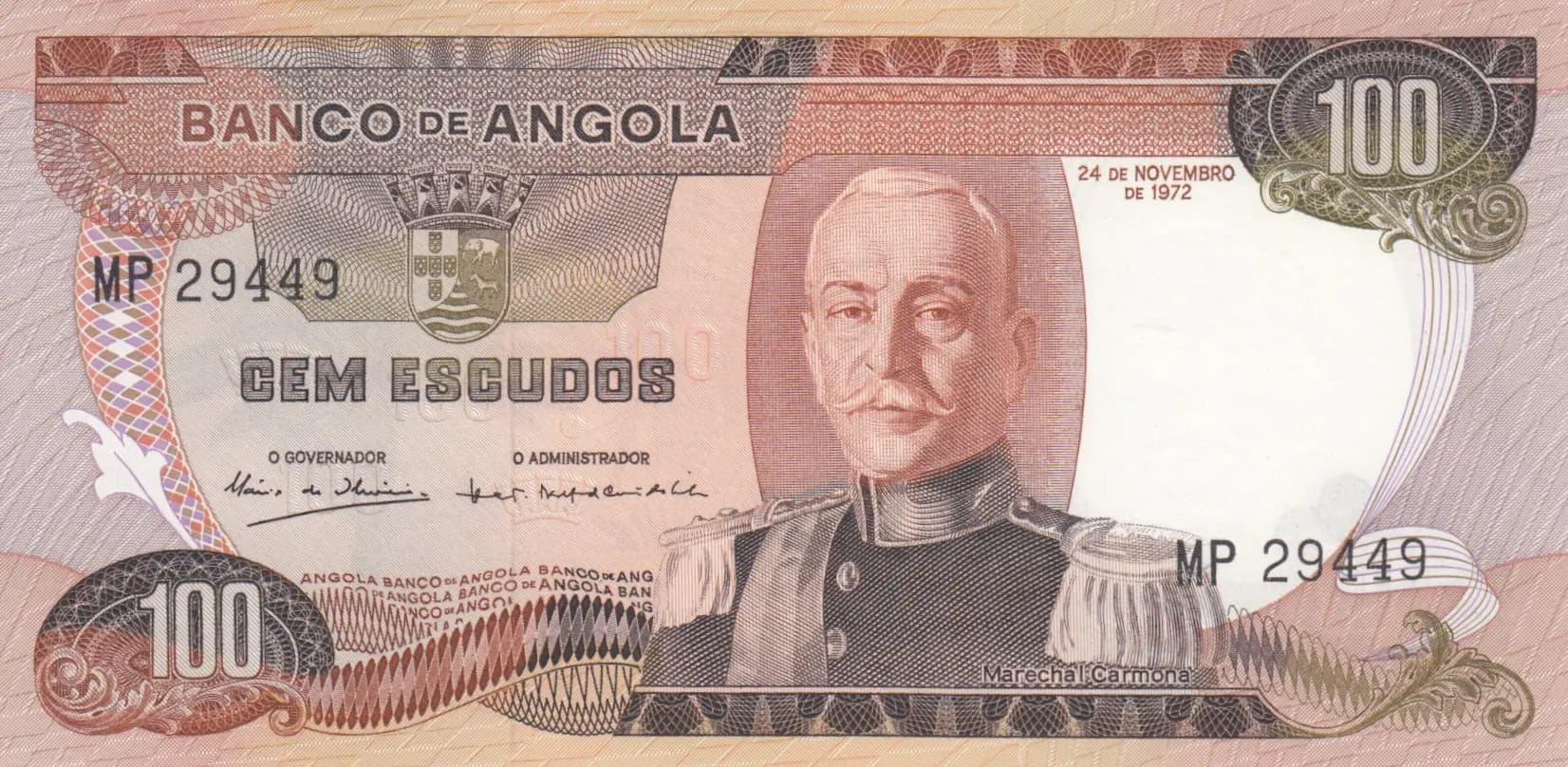
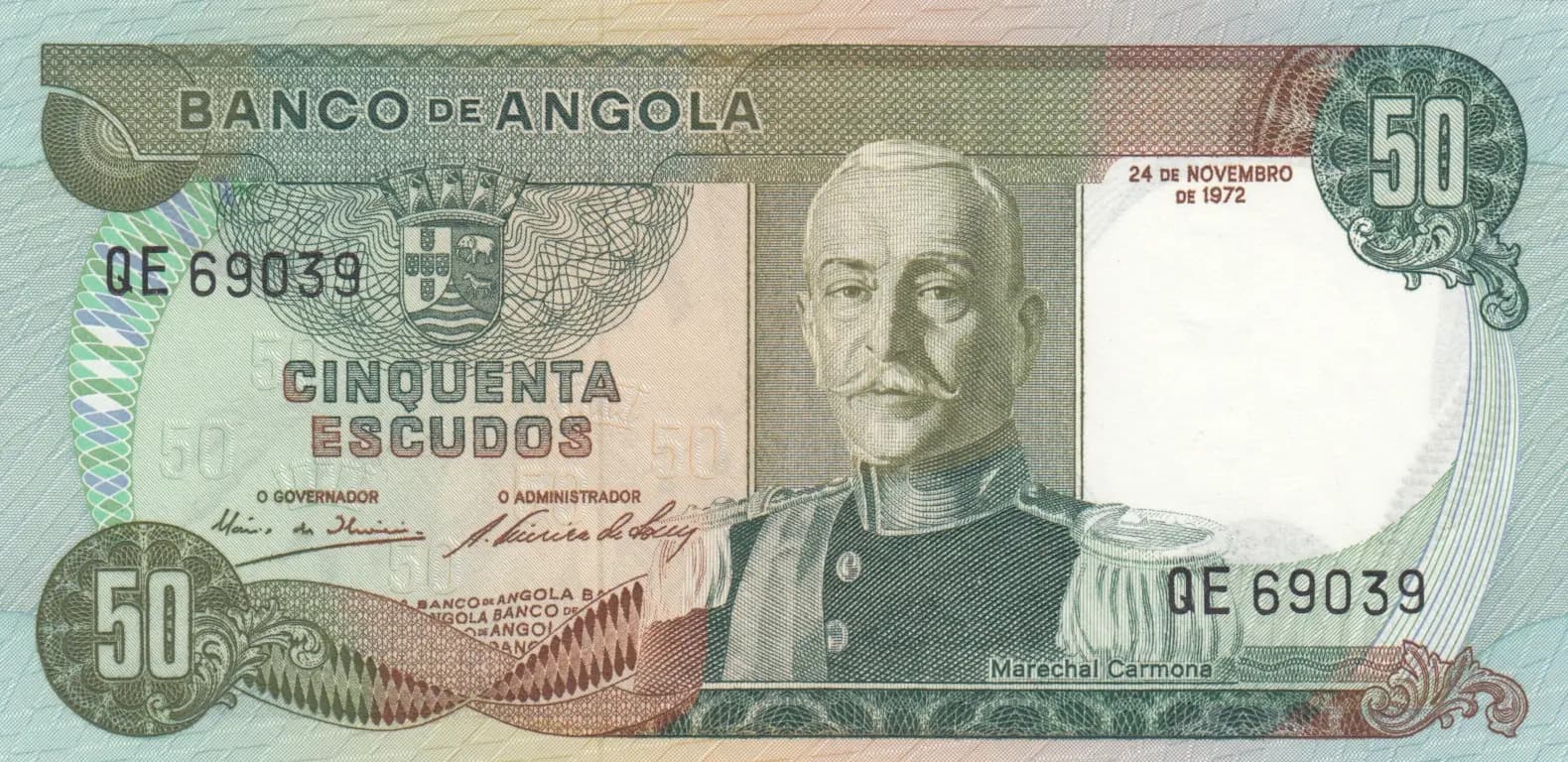
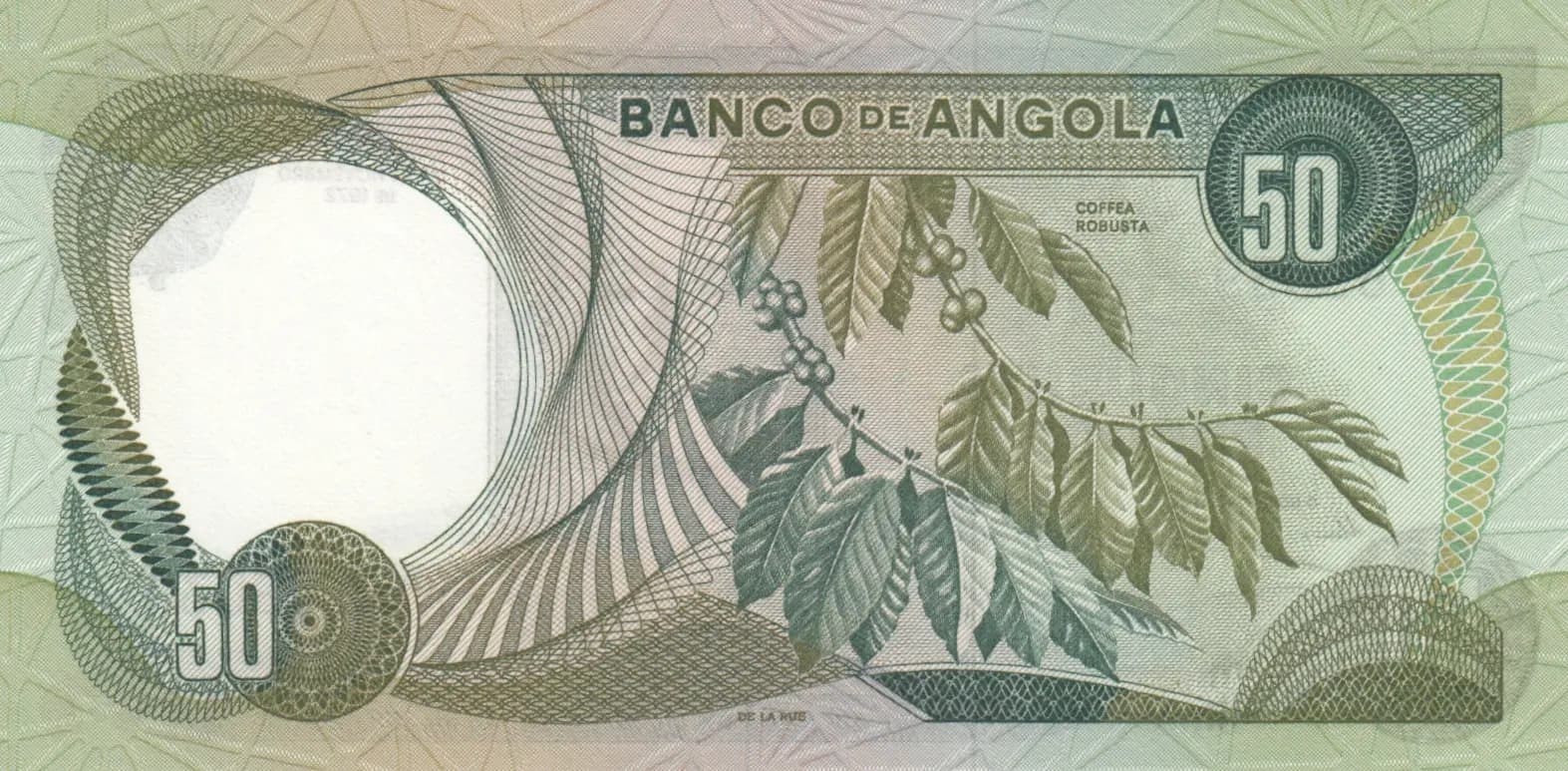
This 1972 Angola 50 Escudos note (Pick P-100) is presented in uncirculated condition with sharp, crisp printing throughout and no visible wear, creasing, or damage. The note features an impressive portrait of Marshal António Oscar de Fragoso Carmona in military dress uniform on the obverse, complemented by the nation's coat of arms with winged heraldic design, while the reverse showcases a detailed botanical illustration of Coffea robusta coffee plants—reflecting Angola's significant coffee production heritage. The multicolor design with predominant greens and tans, combined with sophisticated guilloche security patterns and fine line work, exemplifies the De la Rue printing standard of the early 1970s.
Common. eBay sales data shows consistent pricing in the $1–$7.50 range for uncirculated examples across multiple transactions from 2009–2025, with a 2019 catalog value of $6.50 for UNC condition. The note's availability in quantity on secondary markets, regular auction appearance, and modest pricing indicate a substantial print run with no known scarcity factors. This is a standard colonial-era Portuguese banknote with no reported production issues, recalls, or significant varieties affecting supply.
Issued on November 24, 1972, during the final years of Portuguese colonial rule in Angola (independence came in 1975), this note represents the Banco de Angola's last series issued under colonial administration. The prominent portrayal of Marshal Carmona, Portugal's long-serving head of state (1926-1951), reflects the Estado Novo regime's political continuity, while the reverse's emphasis on coffee—a major colonial export crop—underscores the economic foundations of Portuguese Angola at the time of issuance.
The obverse features a right-facing portrait of Marshal António Oscar de Fragoso Carmona, identifiable by his distinctive mustache and formal military uniform with epaulettes, positioned at center-right. To the left stands the Portuguese coat of arms with a characteristic winged heraldic shield design, a symbol of national sovereignty. Decorative circular denomination seals bearing '50' appear in the corners, with ornamental scrollwork and flourishes enhancing the formal presentation. The reverse displays a botanically accurate illustration of Coffea robusta coffee plant branches complete with leaves and characteristic berry clusters, reflecting Angola's role as a major coffee producer. A large decorative oval frame with fine guilloche border occupies the left side, and matching circular denomination seals appear symmetrically in corners. Throughout both sides, intricate geometric guilloche patterns and fine line security work create depth and protection against counterfeiting.
Front side: 'BANCO DE ANGOLA' (Bank of Angola), 'CINQUENTA ESCUDOS' (Fifty Escudos), '24 DE NOVEMBRO DE 1972' (24 November 1972), 'O GOVERNADOR' (The Governor), 'O ADMINISTRADOR' (The Administrator), 'Marechal Carmona' (Marshal Carmona), serial number 'QE 69039'. Back side: 'BANCO DE ANGOLA' (Bank of Angola), 'COFFEA ROBUSTA' (Coffea robusta—the botanical name for robust coffee plant).
Intaglio (recess) printing, the standard security printing method employed by De la Rue, London (TDLR) for this note. The characteristic fine line work, guilloche patterns, and sharp portrait rendering visible in the visual analysis are hallmarks of intaglio production. Multiple color registration and the sophisticated security features suggest multi-pass intaglio printing with careful color separation, typical of the De la Rue house style during this period.
Serial number observed: QE 69039. The PMG Population Report indicates a single cataloged variant for Pick P-100 with printer notation TDLR (De la Rue, London). No overprints, significant date variants, or signature varieties are documented for this issue; it was released as a single, regular-issue series on the stated date of 24 November 1972. The serial number prefix 'QE' appears standard for this series.