1 angolar 1948
Market Prices
15 salesAbout This Note
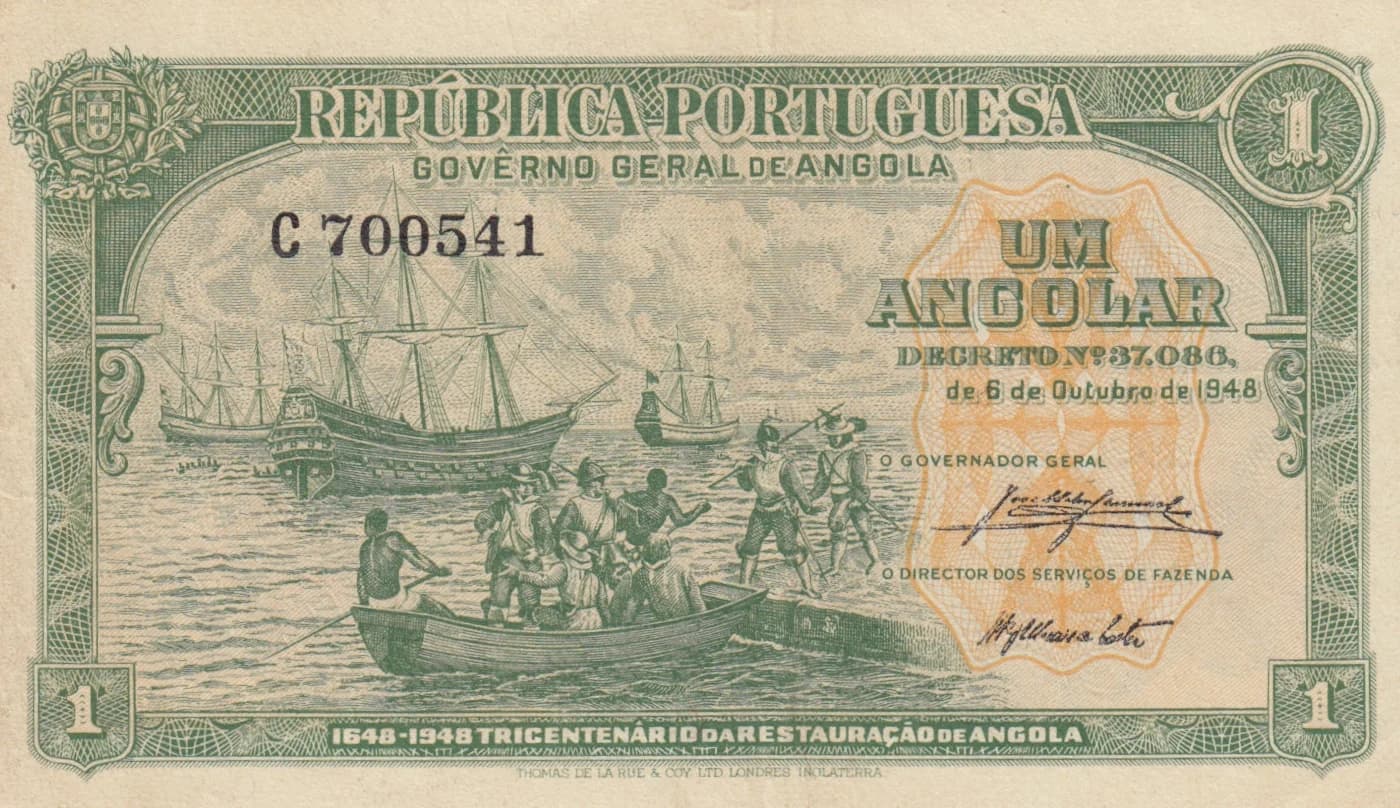
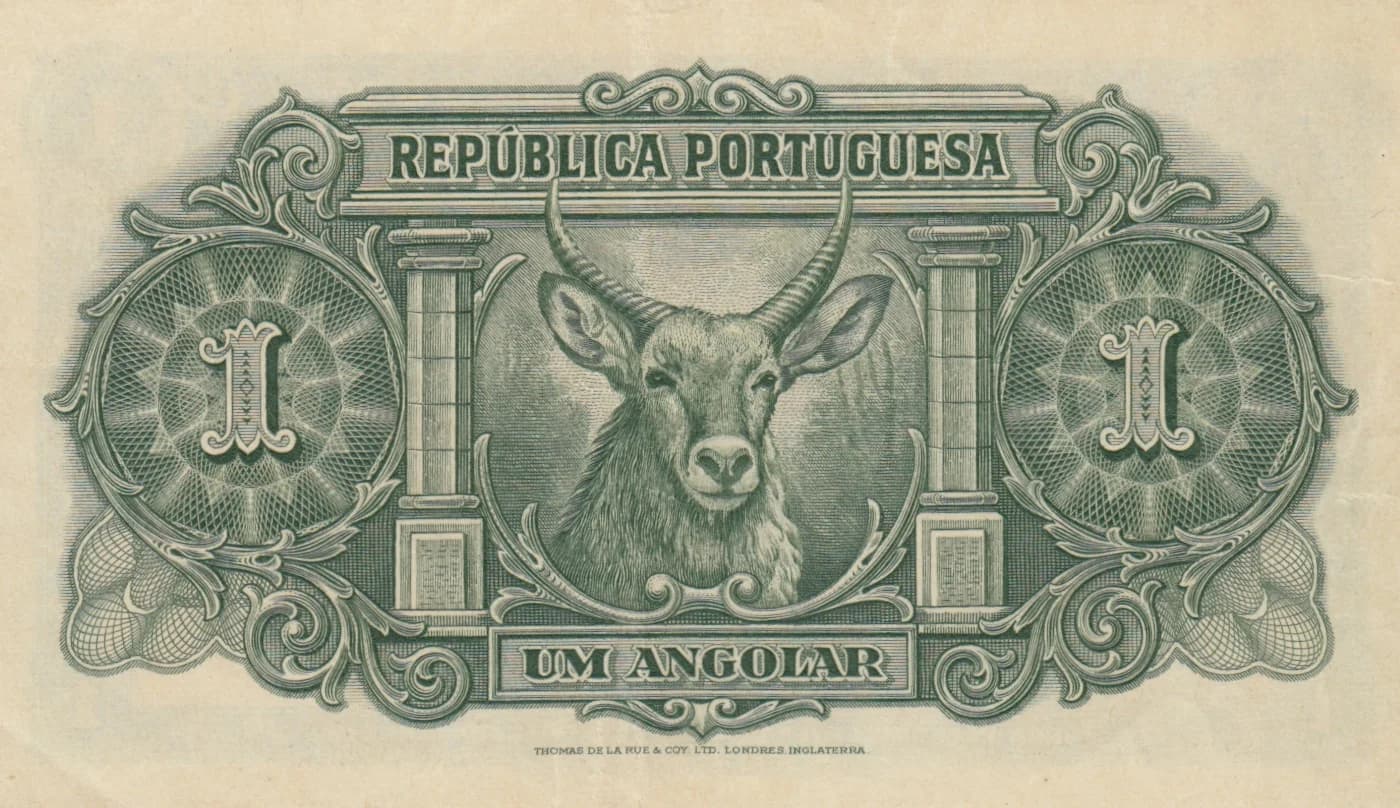
This is a well-preserved 1948 Angolar note from Angola celebrating the 300th anniversary of Portuguese rule, printed by Thomas de la Rue. The front features a historically significant maritime scene depicting Portuguese landing in Angola with period sailing ships and figures in a rowboat, while the reverse displays an engraved portrait of a palanca negra (black antelope). The note appears to be in VF condition with no visible circulation wear, making it an attractive example of this commemorative issue.
Common. This is a regular issue banknote with no indication of a particularly limited print run. Market data shows consistent circulation at moderate prices: recent VF sales range from $33-$100 (2020-2024), with catalog values for VF at $75 (2016). The PMG population report shows it as a straightforward single-variant issue without any indication of scarcity. Notes in this denomination and period from Angola typically entered circulation in substantial quantities.
Issued on October 6, 1948, this note commemorates the 1648-1948 Tercentenary of the Restoration of Angola under Portuguese colonial rule. The front design depicting Portuguese ships and landing figures represents the historical narrative of Portuguese maritime expansion and colonization in Angola, while the reverse features the palanca negra, reflecting the natural fauna and resources of the territory. This issue represents a significant moment in Angola's monetary history during the late Portuguese colonial period.
The obverse depicts a historic maritime scene representing Portuguese colonial expansion, showing multiple masted sailing vessels in a harbor setting with a rowboat containing figures in traditional dress in the lower center, symbolizing the initial Portuguese contact and landing in Angola. The reverse features a centrally placed engraved portrait of the palanca negra (a black antelope species native to Angola), flanked by elaborate baroque-style architectural and scrollwork elements including classical columns. Both sides display ornate circular frames containing decorative numerals '1' and employ fine crosshatch patterns and engraved borders typical of De la Rue's high-security currency production. The Portuguese coat of arms with laurel wreath appears in the upper left corner of the obverse.
Front side: 'REPÚBLICA PORTUGUESA' (Portuguese Republic); 'GOVERNO GERAL DE ANGOLA' (General Government of Angola); 'UM ANGOLAR' (One Angolar); 'DECRETO Nº37.080' (Decree No. 37,080); 'de 6 de Outubro de 1948' (of October 6, 1948); '1648-1948 TRICENTENÁRIO DA RESTAURAÇÃO DE ANGOLA' (1648-1948 Tercentenary of the Restoration of Angola); 'O GOVERNADOR GERAL' (The General Governor); 'O DIRECTOR DOS SERVIÇOS DE FAZENDA' (The Director of Treasury Services); 'THOMAS DE LA RUE & COY LTD LONDRES INGLATERRA' (Thomas De La Rue & Co Ltd London England); Serial number: 'C 700541'. Back side: 'REPÚBLICA PORTUGUESA' (Portuguese Republic); 'UM ANGOLAR' (One Angolar); 'THOMAS DE LA RUE & COY LTD. LONDRES INGLATERRA' (Thomas De La Rue & Co Ltd. London England).
Intaglio engraving (recess printing) by Thomas de la Rue & Company Ltd., the renowned London security printer. The fine line crosshatching, ornate baroque decorative elements, complex engraved borders, and detailed portraiture visible throughout both sides are characteristic of De la Rue's masterwork in currency production. The precision and depth of the engraved lines visible in the security features indicate traditional copper plate intaglio technology.
This specimen carries serial number C 700541. Pick catalog lists P-70 as the sole variant for the 1 Angolar 1948 issue. No overprints, signature variants, or other distinguishing features indicating subtypes are apparent from the visual analysis. The consistent design across observed examples suggests a stable single printing for this commemorative issue.