100 escudos 1972
Market Prices
32 salesAbout This Note
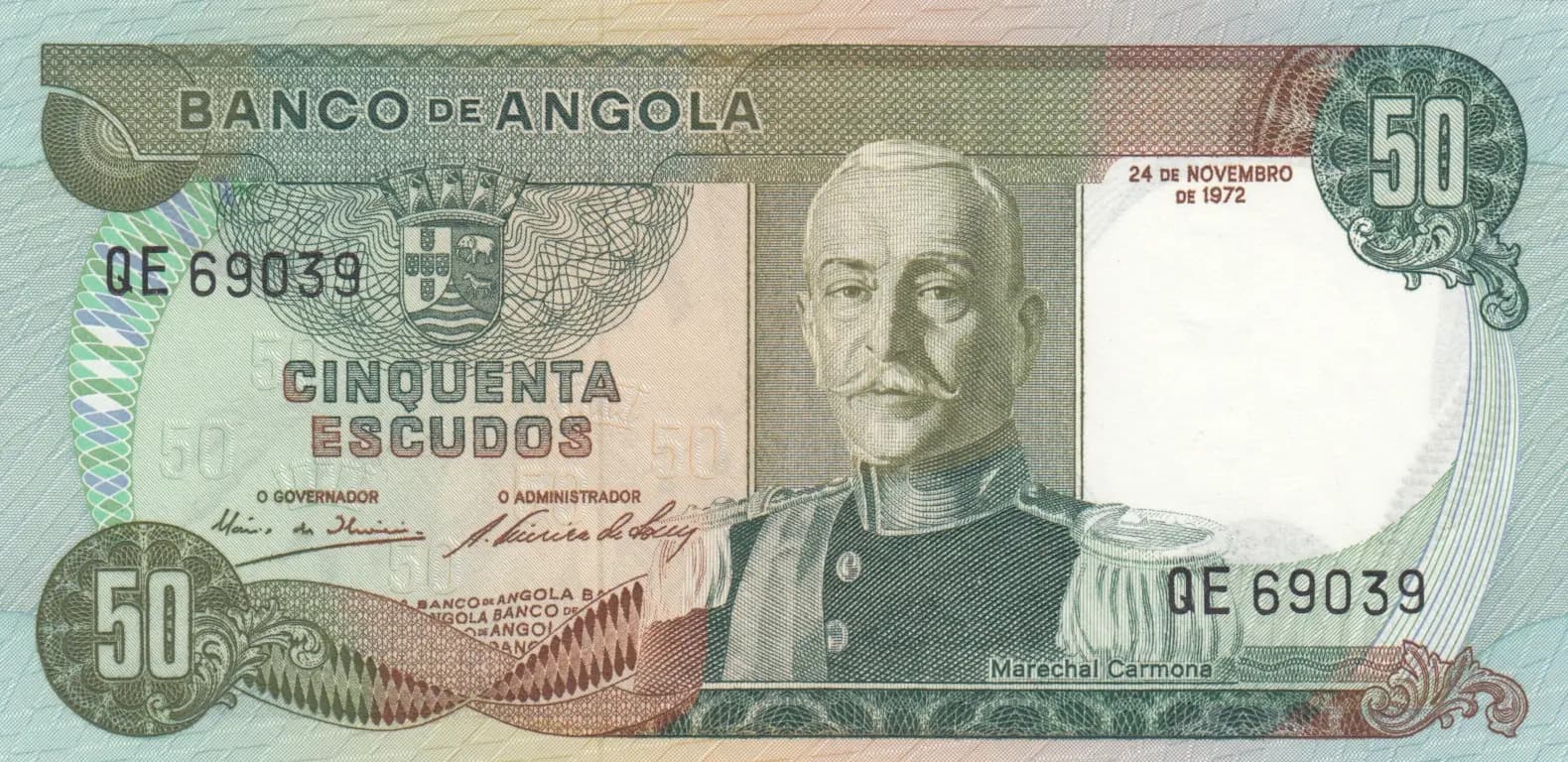
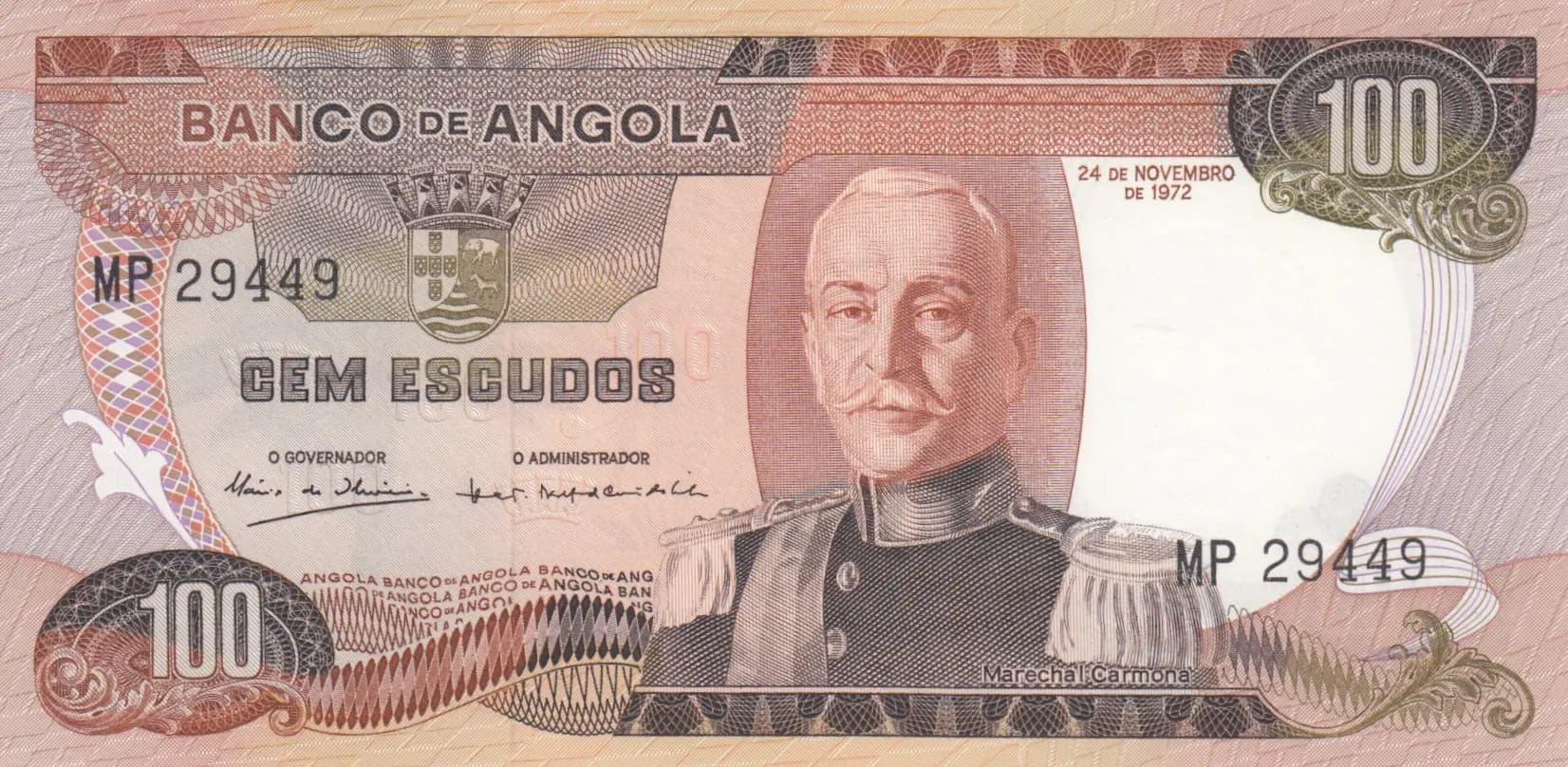
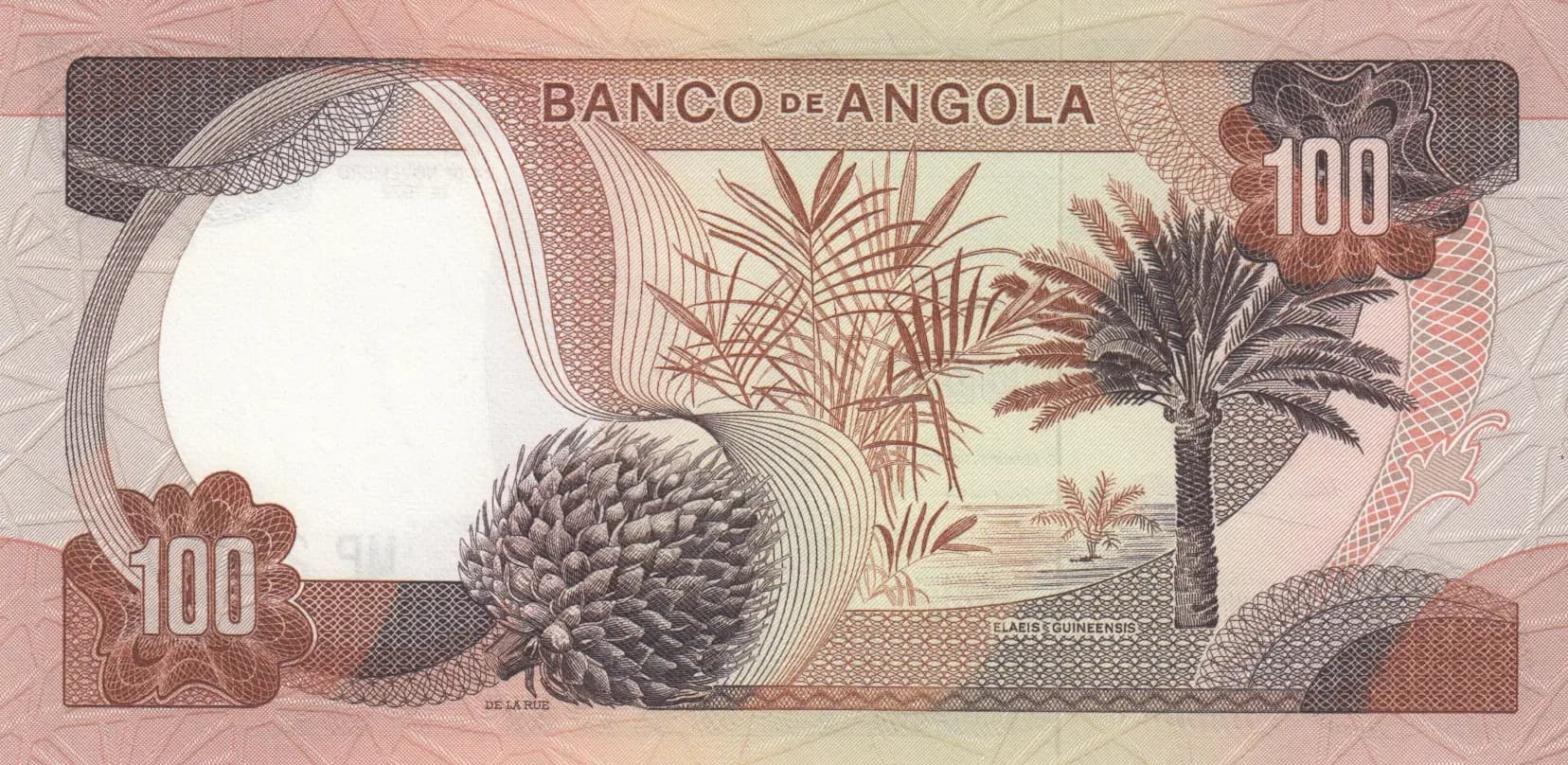
This is an uncirculated example of the Banco de Angola's 100 Escudos note from 1972, featuring Marshal António Oscar de Fragoso Carmona in formal military dress on the obverse. The note exhibits pristine condition with sharp detail, vibrant reddish-brown and tan coloration, and intact security features including intricate guilloche patterns throughout. The reverse displays a botanical illustration of the African oil palm (Elaeis guineensis) set within a tropical landscape, reflecting Angola's agricultural heritage during the Portuguese colonial period.
Common. This note regularly appears on the secondary market with modest pricing reflecting its abundance. eBay market data shows consistent sales of UNC examples in the $2.36–$4.00 range (2013–2024), with professionally graded PMG 66 examples commanding $16–$19. The 2019 catalogue value for UNC is $6.50. High-grade examples with PMG certification achieve premiums due to scarcity in professional grades, but raw uncirculated examples remain readily available and affordable. The large production run typical of regular-issue colonial currency supports a common classification.
Issued on November 24, 1972, during the final years of Portuguese colonial rule in Angola, this banknote commemorates Marshal Carmona, a significant figure in Portuguese political history. The choice to feature the oil palm on the reverse symbolizes the economic importance of agriculture and natural resources to colonial Angola. The note represents a transitional period in Angola's monetary history, issued just months before the Carnation Revolution in Portugal and years before Angola's independence in 1975.
The obverse features a formal portrait of Marshal António Oscar de Fragoso Carmona, depicted in full military dress uniform with visible epaulettes, positioned on the right side of the note. The portrait is rendered in fine engraving with careful attention to detail. The upper center displays the coat of arms of Angola, symbolizing state authority. Ornamental circular denominational markers reading '100' appear symmetrically in the top right and bottom left corners. The background is filled with intricate guilloche geometric patterns and security lines that create visual depth and anti-counterfeiting protection. The reverse presents a naturalistic botanical illustration of the African oil palm (Elaeis guineensis), shown with characteristic fronds and fruit clusters, situated within a tropical savanna or desert landscape featuring additional palm trees and vegetation. This botanical motif reflects Angola's significant palm oil production during the colonial period. The overall composition uses warm earth tones—reddish-brown, tan, and beige—creating a cohesive aesthetic that emphasizes the note's Portuguese colonial heritage.
FRONT SIDE: 'BANCO DE ANGOLA' (Bank of Angola) / 'CEM ESCUDOS' (One Hundred Escudos) / '24 DE NOVEMBRO DE 1972' (November 24, 1972) / 'O GOVERNADOR' (The Governor) / 'O ADMINISTRADOR' (The Administrator) / 'Marechal Carmona' (Marshal Carmona) / Serial number: 'MP 29449' / Repeated security text pattern: 'ANGOLA BANCO DE ANGOLA' (Angola Bank of Angola). BACK SIDE: 'BANCO DE ANGOLA' (Bank of Angola) / 'ELAEIS GUINEENSIS' (African oil palm, Latin binomial nomenclature) / 'DE LA RUE' (De La Rue, the printer).
This note was produced by De La Rue, London, utilizing intaglio engraving (recess printing) combined with multicolor lithographic underprinting. The detailed portraiture, fine guilloche patterns, security line work, and intricate botanical illustration are characteristic of intaglio engraving's superior detail reproduction. The multicolored base layer visible beneath the primary design elements indicates the use of offset lithography for the color underprint, with subsequent intaglio overprinting for the primary security features and portrait. This combination represents the highest-grade banknote production standards of the 1970s.
This note is identified as Pick P-101, the standard 1972 regular issue of the 100 Escudos denomination. The visual analysis shows serial number 'MP 29449,' indicating part of the MP series produced by De La Rue. PMG catalogues one primary variant for this Pick number. No overprints, commemorative markings, or significant variety characteristics are evident in this example. The consistent design, signature authorities ('O GOVERNADOR' and 'O ADMINISTRADOR'), and standard issue date of November 24, 1972 confirm this as the standard variety with no known major variants.