20 dong 1951
About This Note
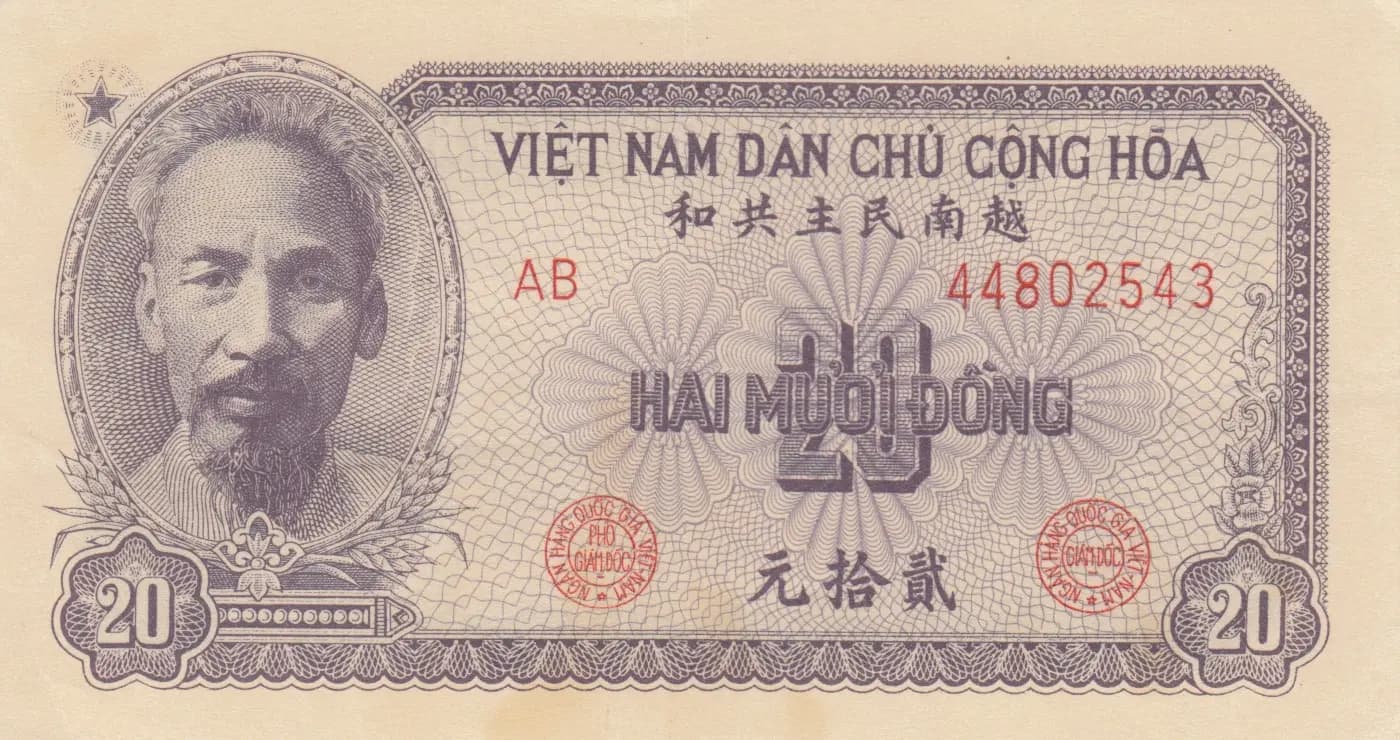
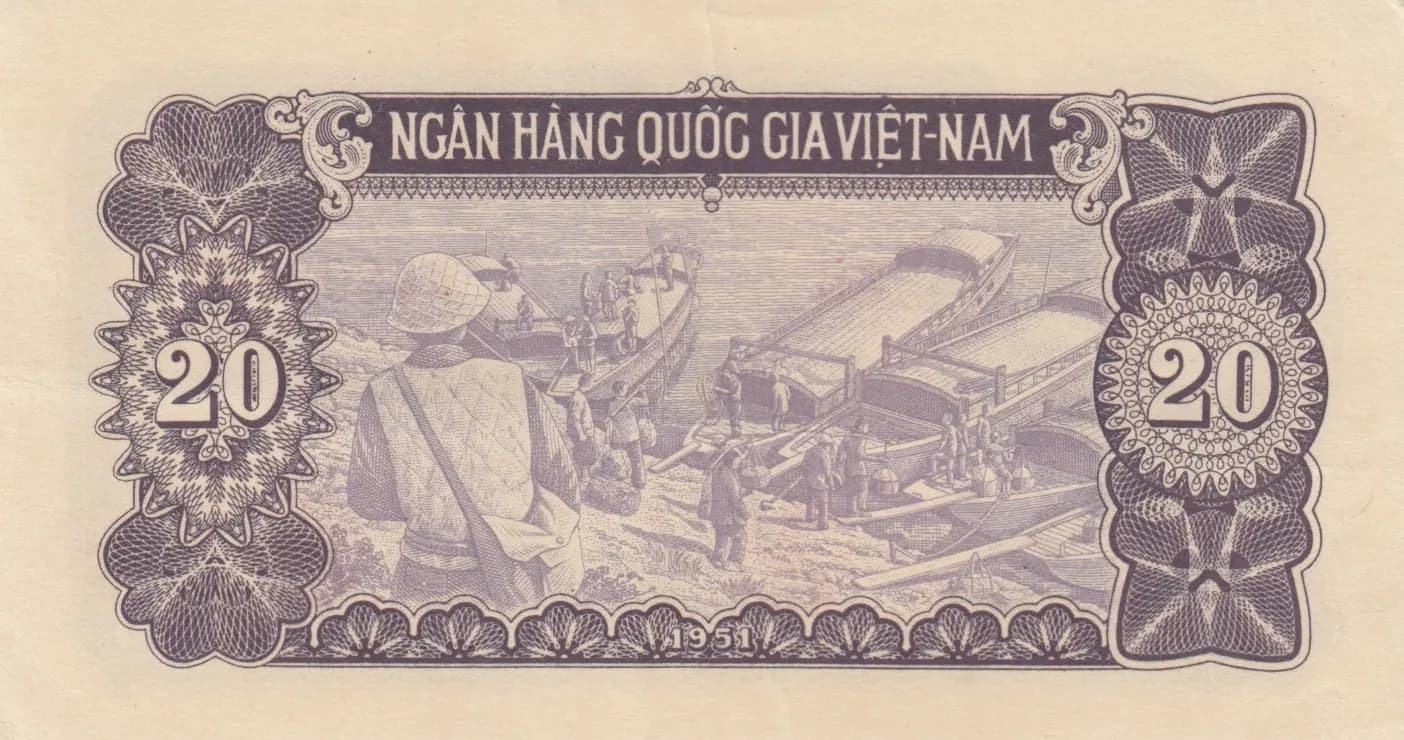
An exceptional example of North Vietnam's 1951 20 Dong note (Pick P-66a) in EF condition, featuring a striking portrait of Ho Chi Minh in left profile on the front and a detailed labor/economic activity scene on the reverse. The note displays crisp, clear engraving throughout with vibrant purple and cream coloring, red seals, and bilingual Vietnamese-Chinese inscriptions—reflecting the transitional period of Vietnamese independence. This uncirculated-appearing specimen showcases the fine security printing characteristic of early DRV currency with no visible wear, creases, or fading.
Common. The 1951 20 Dong Pick P-66a is a standard denomination from the early post-independence series of the Democratic Republic of Vietnam. While these notes are no longer in circulation, they were produced in substantial quantities during 1951 and remain readily available in the collector market. Examples appear regularly at reasonable prices ($15-50 depending on condition), with EF specimens being neither particularly scarce nor commanding premium valuations. The high grade and apparent uncirculated state of this example contribute to its appeal but do not elevate the rarity classification beyond 'common' for the Pick number itself.
Issued by the National Bank of Vietnam (Ngân Hàng Quốc Gia Việt-Nam) in 1951, this note commemorates the early years of the Democratic Republic of Vietnam following independence from French colonial rule. The reverse depicts workers engaged in port/river commerce and cargo handling, symbolizing the nation's focus on economic reconstruction and labor-based development during the post-war period. The bilingual Vietnamese-Chinese inscriptions reflect Ho Chi Minh's government's alignment with the Chinese communist sphere during this critical Cold War era.
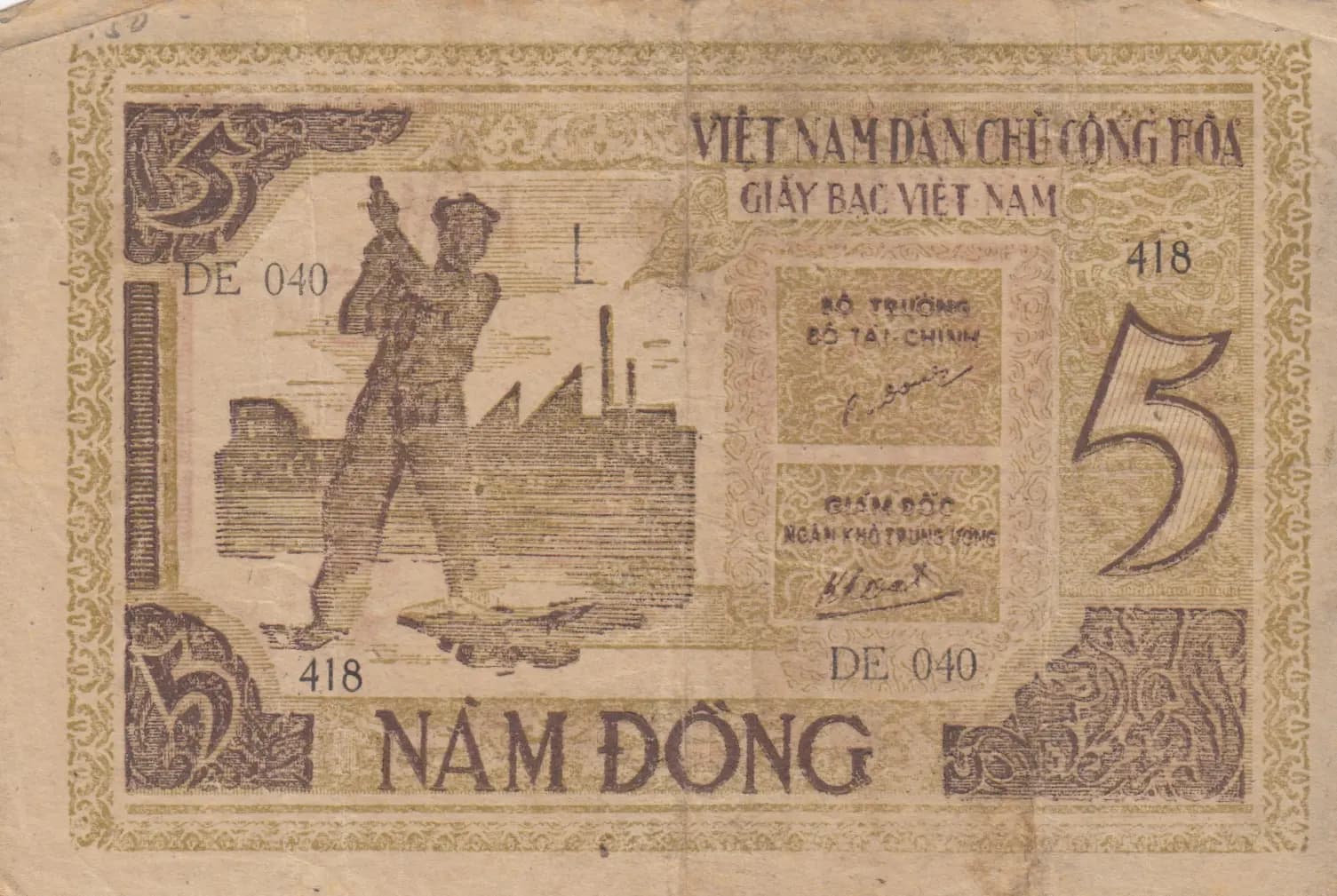
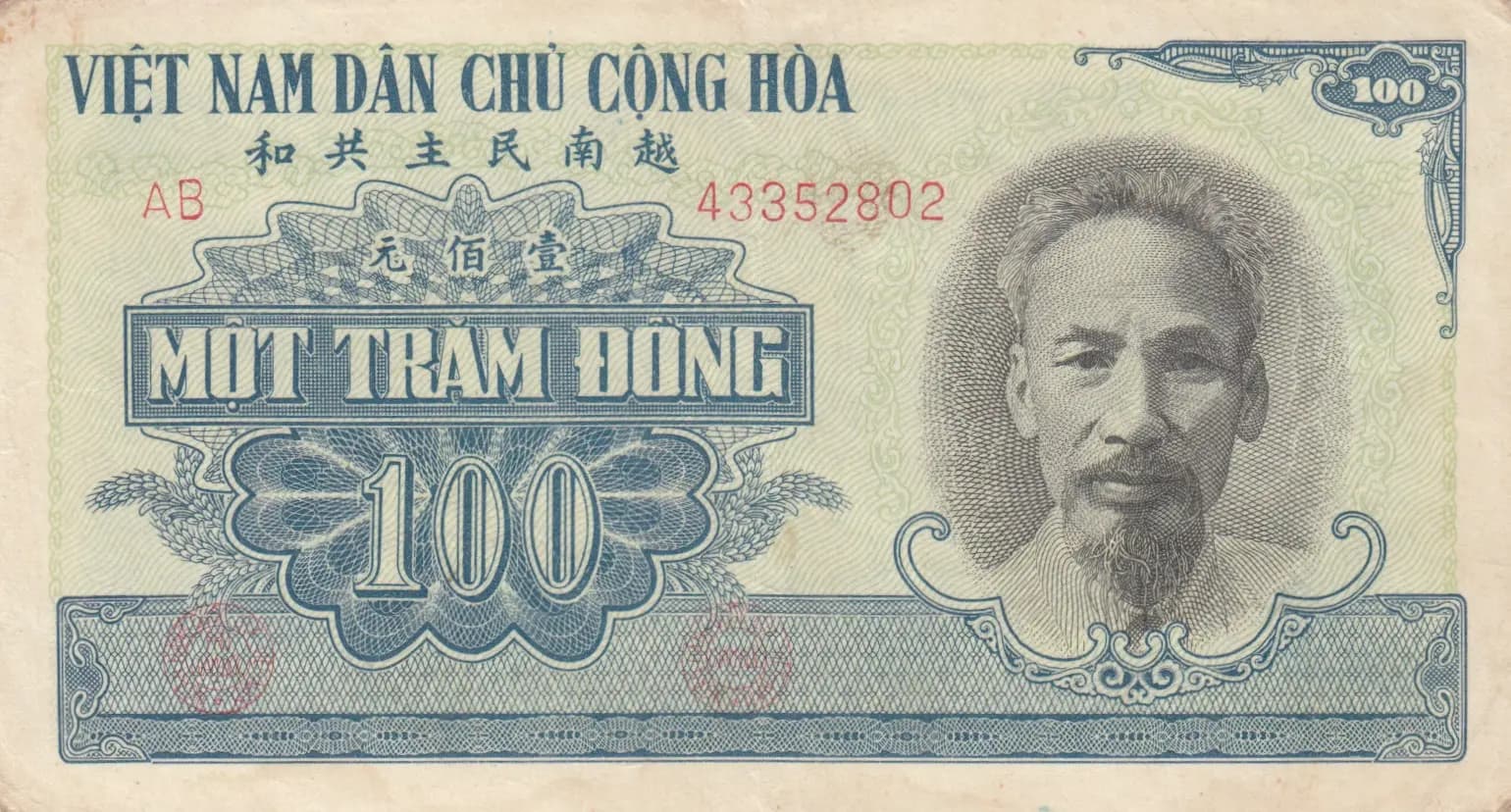
The front features Ho Chi Minh in formal left-facing profile, enclosed within an ornate circular medallion with elaborate decorative flourishes beneath—a standard iconographic treatment for early DRV currency. The portrait is rendered in fine intaglio engraving with meticulous line detail. Red circular seals appear on both left and right margins, with a star symbol in the upper left corner and lotus/flower-like emblems positioned in the corners. The denomination is prominently displayed in both Vietnamese ('Hải Mươi Đồng') and Chinese ('元拾贰') numerals. The reverse depicts an economic/labor scene showing multiple workers engaged in port activities with boats and cargo being loaded or unloaded along a waterfront, emphasizing the revolutionary government's commitment to collective labor and economic reconstruction. Ornate flower/lotus emblems occupy all four corners, with the denomination '20' enclosed in decorative circular frames at the lower corners. The entire design is framed by an elaborate scrollwork border with repeating patterns.
FRONT SIDE: 'Việt Nam Dân Chủ Cộng Hòa' (Vietnamese) = 'Democratic Republic of Vietnam'; '和共主民南越' (Chinese) = 'Democratic Republic of Vietnam'; 'Hải Mươi Đồng' (Vietnamese) = 'Twenty Dong'; '元拾贰' (Chinese) = 'Twenty (in Chinese numerals)'; 'Phủ Chủ Tịch' (Vietnamese) = 'Presidential Office/Seal'; 'Ngân Hàng Quốc Gia Việt Nam' (Vietnamese) = 'National Bank of Vietnam'; Serial prefix 'AB' and serial number '44802543'. BACK SIDE: 'Ngân Hàng Quốc Gia Việt-Nam' (Vietnamese) = 'National Bank of Vietnam'; Denomination '20'; Date '1951'.
Intaglio (steel engraving) printing, evidenced by the crisp, fine-line guilloche work visible throughout both sides, the intricate engraved portrait rendering with delicate line details, and the complex decorative border patterns with repeating security elements. The sharp definition of all elements and the precise color separation between the purple/violet primary color and cream/beige background indicate professional security printing. The printer for P-66a Vietnamese notes of this period was typically the National Bank of Vietnam's own printing facilities, though some early DRV notes of this era were printed with foreign technical assistance.
The observed serial prefix 'AB' and serial number '44802543' indicate this is from the standard printing series. P-66a is cataloged as a major variety distinct from P-66 (the 1951 issue without the 'a' designation typically reflecting minor design or security printing variations). No overprints, date variations, or signature variations are apparent on this example. The red seal impressions and bilingual inscription format are consistent with the standard P-66a specification for the 20 Dong 1951 denomination.