50 centesimos 1939
“serie J”
Market Prices
45 salesAbout This Note
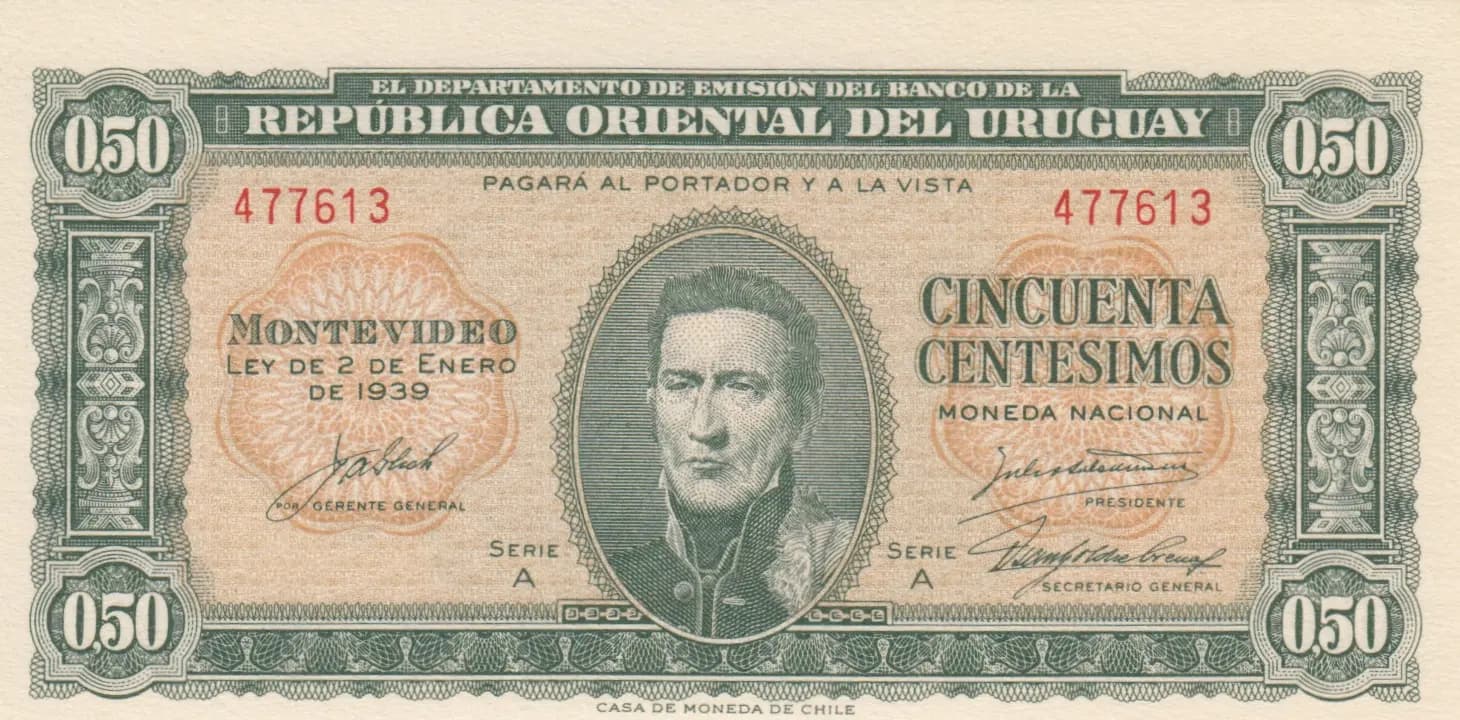
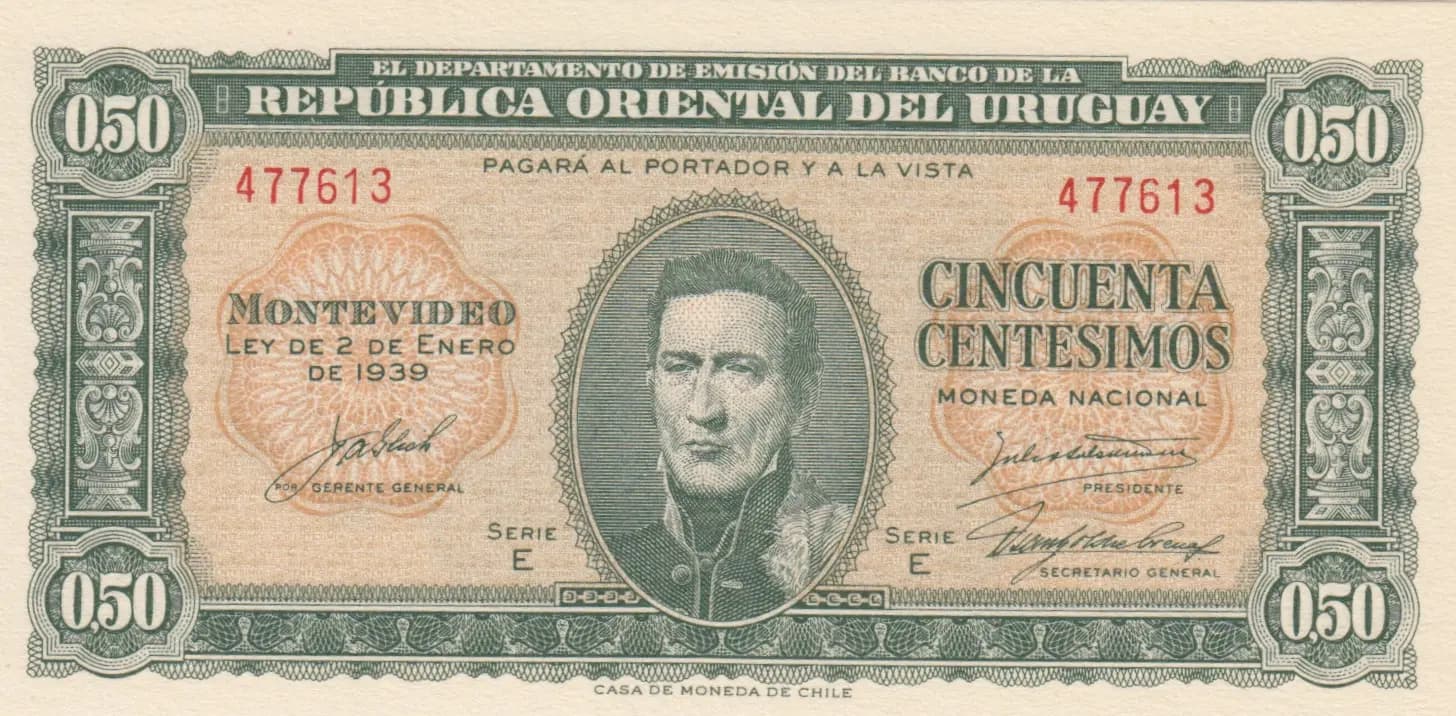
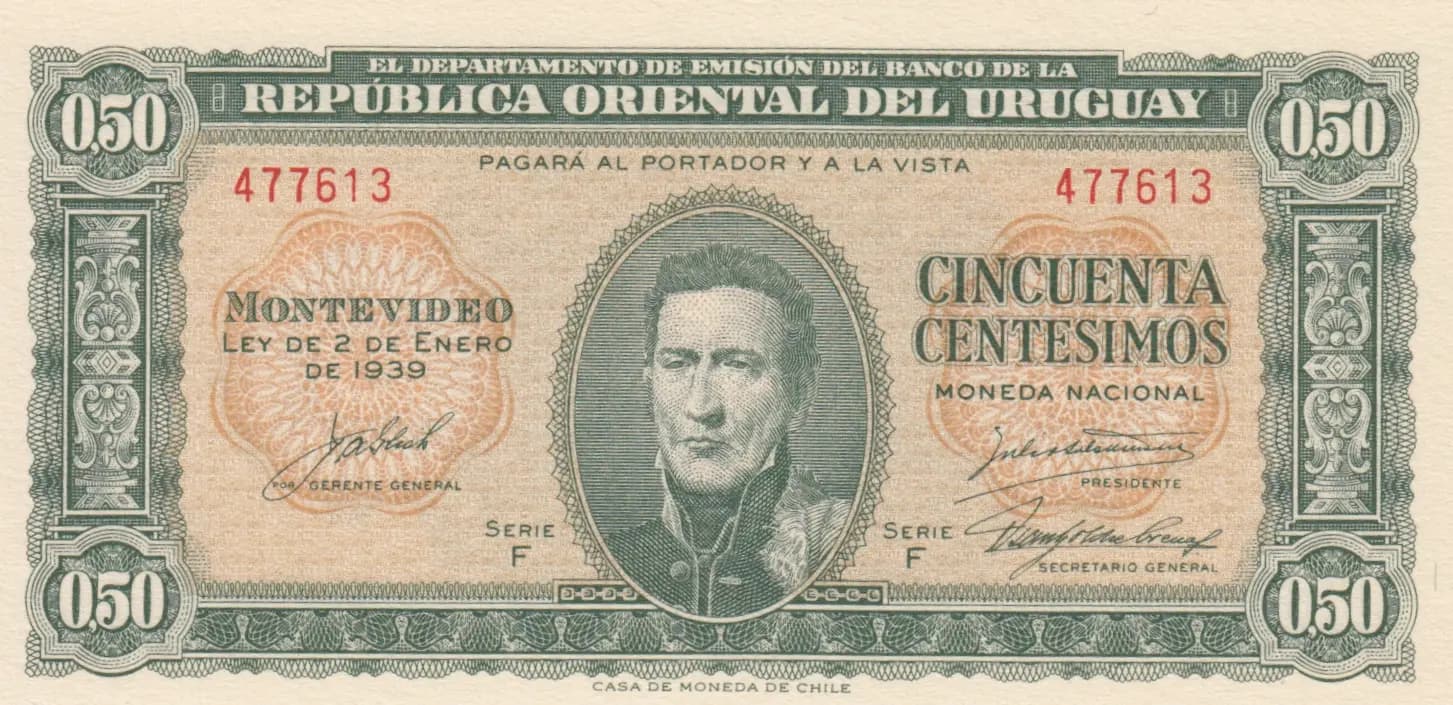
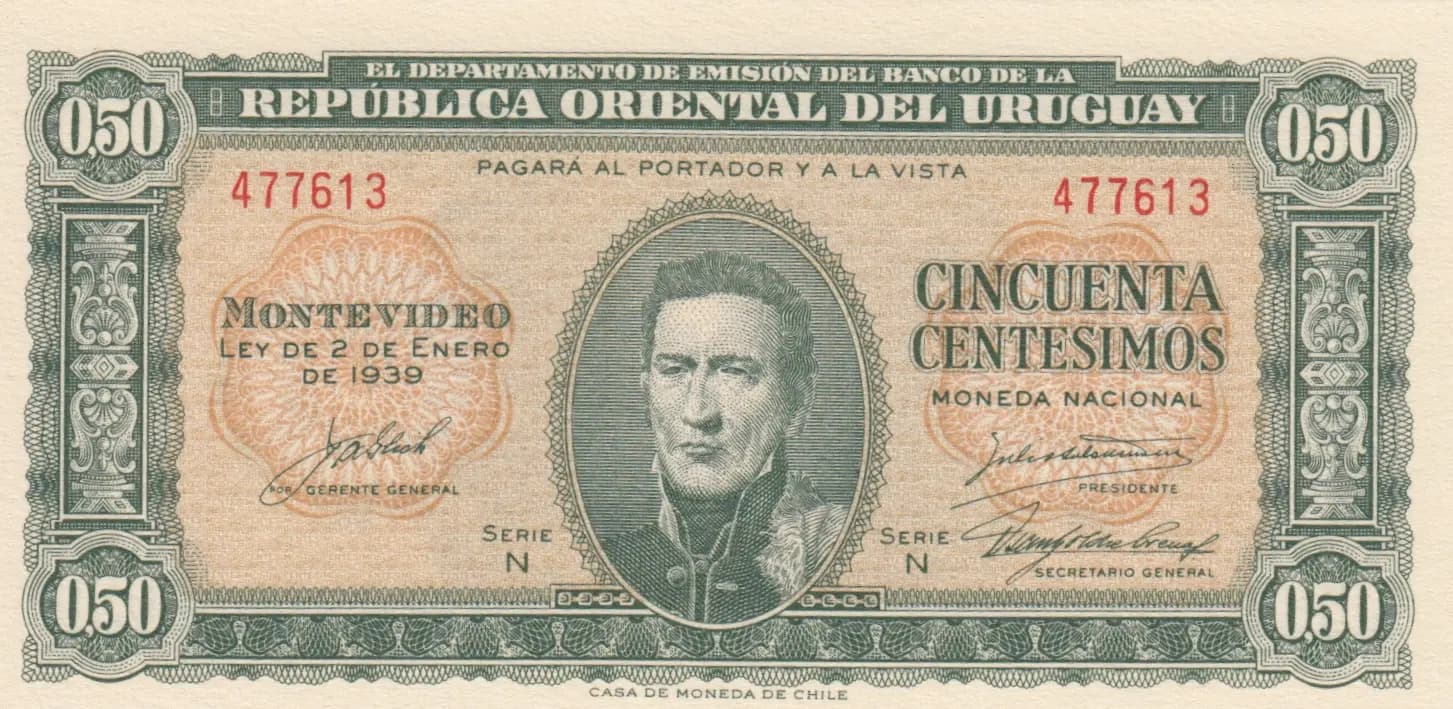
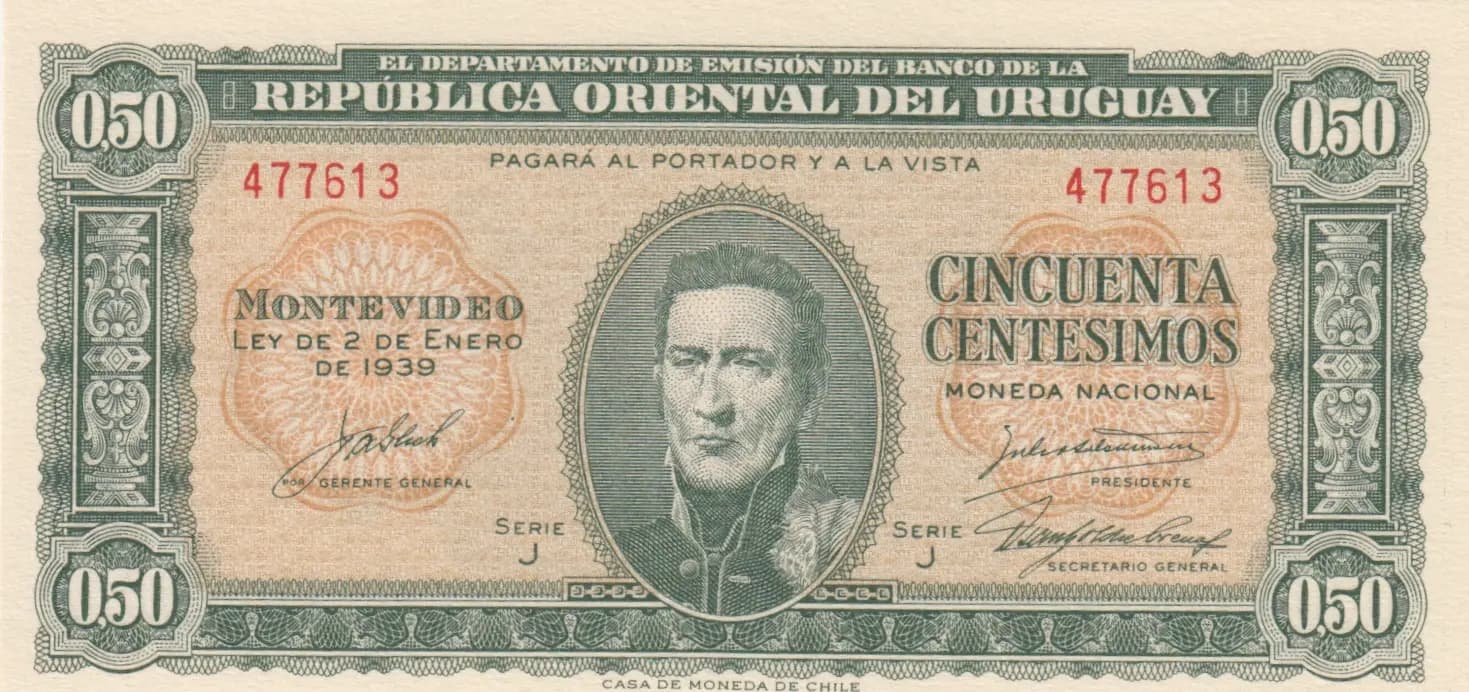
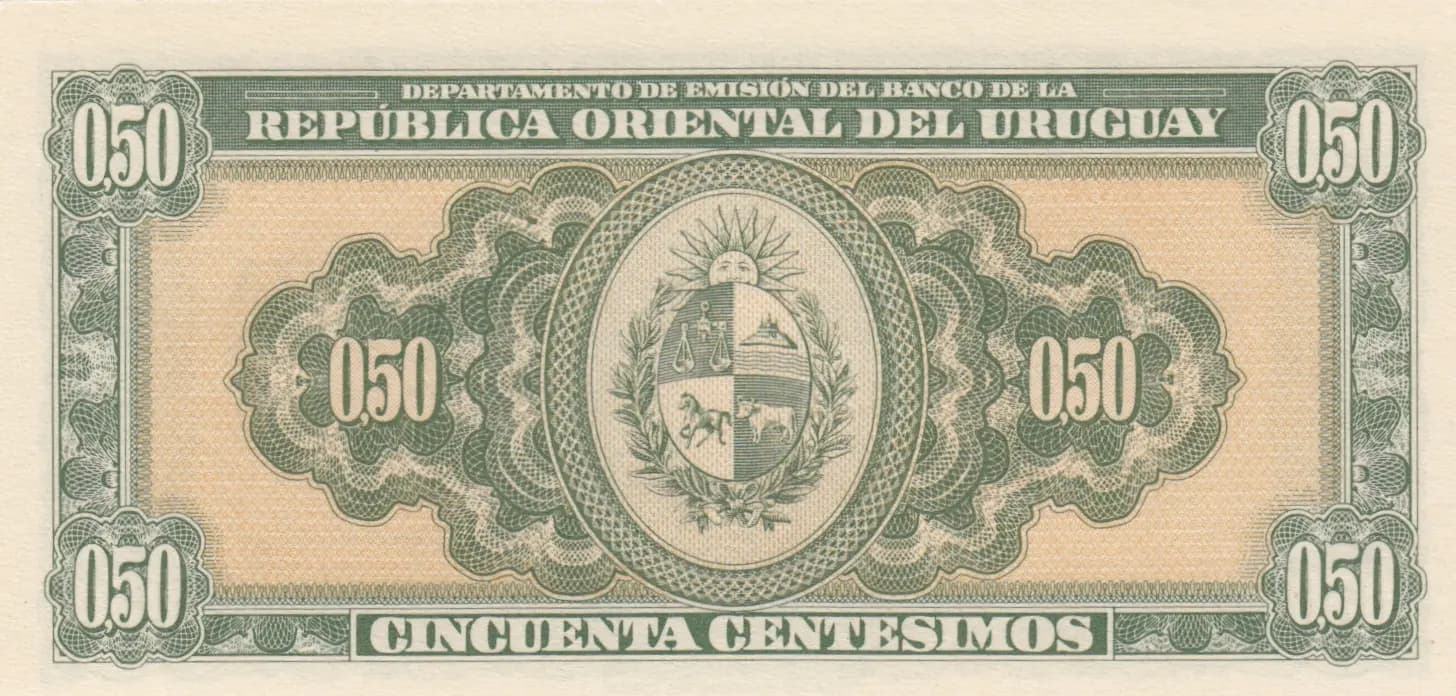
This is an exceptionally well-preserved UNC example of Uruguay's 1939 50 centesimos banknote (Pick P-34), featuring elegant green and orange/tan color printing with ornate period borders. The front displays a formal portrait of a dignitary in an oval frame, while the reverse showcases Uruguay's national coat of arms with radiating sun rays, representing the nation's sovereignty and natural resources. The note exhibits pristine condition with no visible wear, making it an attractive example of early 20th-century Uruguayan currency design from the series J issue.
Common. This is a standard circulation issue from a major central bank with no indication of limited print runs, recalls, or short-lived production. While the 1939 date and Uruguayan origin may make it moderately collected, the denomination (50 centesimos) and standard issuing circumstances indicate substantial production numbers. The UNC condition grade is desirable but does not significantly impact availability for this note type.
This note was issued under the Law of January 2, 1939, during a period of institutional reorganization in Uruguay's monetary system under the Banco de la República Oriental del Uruguay. The coat of arms depicted on the reverse—featuring the sun, scales of justice, horn of plenty, and wheat—reflects Uruguay's national identity and economic foundation during the pre-WWII era. The Chilean Mint credit (Casa de Moneda de Chile) indicates regional cooperation in currency production among South American nations during this period.
This banknote presents a classical design typical of 1930s South American currency. The obverse features a formal portrait of a Uruguayan dignitary or national figure rendered in profile within a decorative oval frame, flanked by official seals and signature blocks representing the President, General Manager, and General Secretary of the issuing authority. The reverse displays Uruguay's national coat of arms, a complex heraldic composition incorporating a golden sun at the top, scales representing justice, a cornucopia (horn of plenty) symbolizing abundance, wheat sheaves representing agriculture, and a central shield. The entire composition is surrounded by intricate scrollwork and radiating sun rays, emphasizing national pride and institutional authority. Ornamental corner designs with repeating geometric patterns frame all four sides of both obverse and reverse, executed in fine line engraving with a sophisticated color palette of green and orange/tan on a cream/beige background.
FRONT SIDE: 'El Departamento de Emisión del Banco de la República Oriental del Uruguay' (The Emission Department of the Bank of the Eastern Republic of Uruguay) / 'Cincuenta Centesimos' (Fifty Centesimos) / 'Moneda Nacional' (National Currency) / 'Pagará al Portador y a la Vista' (Will pay the bearer on sight) / 'Montevideo' / 'Ley de 2 de Enero de 1939' (Law of January 2, 1939) / 'Presidente' (President) / 'Gerente General' (General Manager) / 'Secretario General' (General Secretary) / Serial number: 477613 / '050' (denomination code). REVERSE SIDE: 'Departamento de Emisión del Banco de la República Oriental del Uruguay' (Emission Department of the Bank of the Eastern Republic of Uruguay) / 'Cincuenta Centesimos' (Fifty Centesimos) / 'Casa de Moneda de Chile' (Chilean Mint) / '050' (denomination code).
Intaglio engraving (line engraving), printed by Casa de Moneda de Chile (Chilean Mint), as credited on the note. The fine line work, intricate border patterns, and detailed rendering of the portrait and coat of arms are characteristic of high-quality intaglio production. The multi-color printing (green, orange/tan, and cream/beige) indicates either multi-pass intaglio printing or additional lithographic color layers, typical of premium banknote production standards of the 1930s.
This example is from Serie J as noted in the collector information. The serial number 477613 is documented. Varieties for Pick P-34 primarily relate to series designations (A through J and beyond were issued), signature combinations representing different officials in the roles of President, General Manager, and General Secretary, and potentially subtle engraving differences across production batches. The Casa de Moneda de Chile imprint is consistent for this issue and not a variety marker.