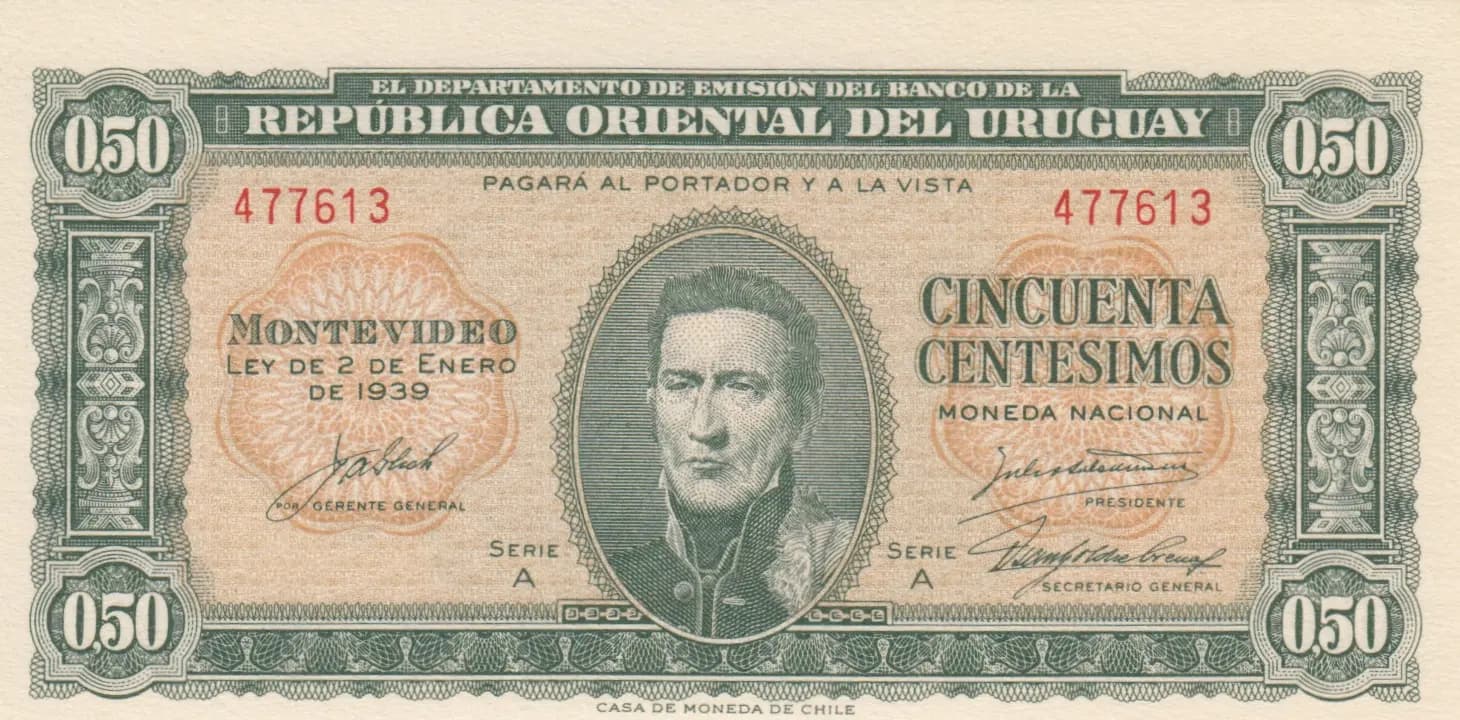
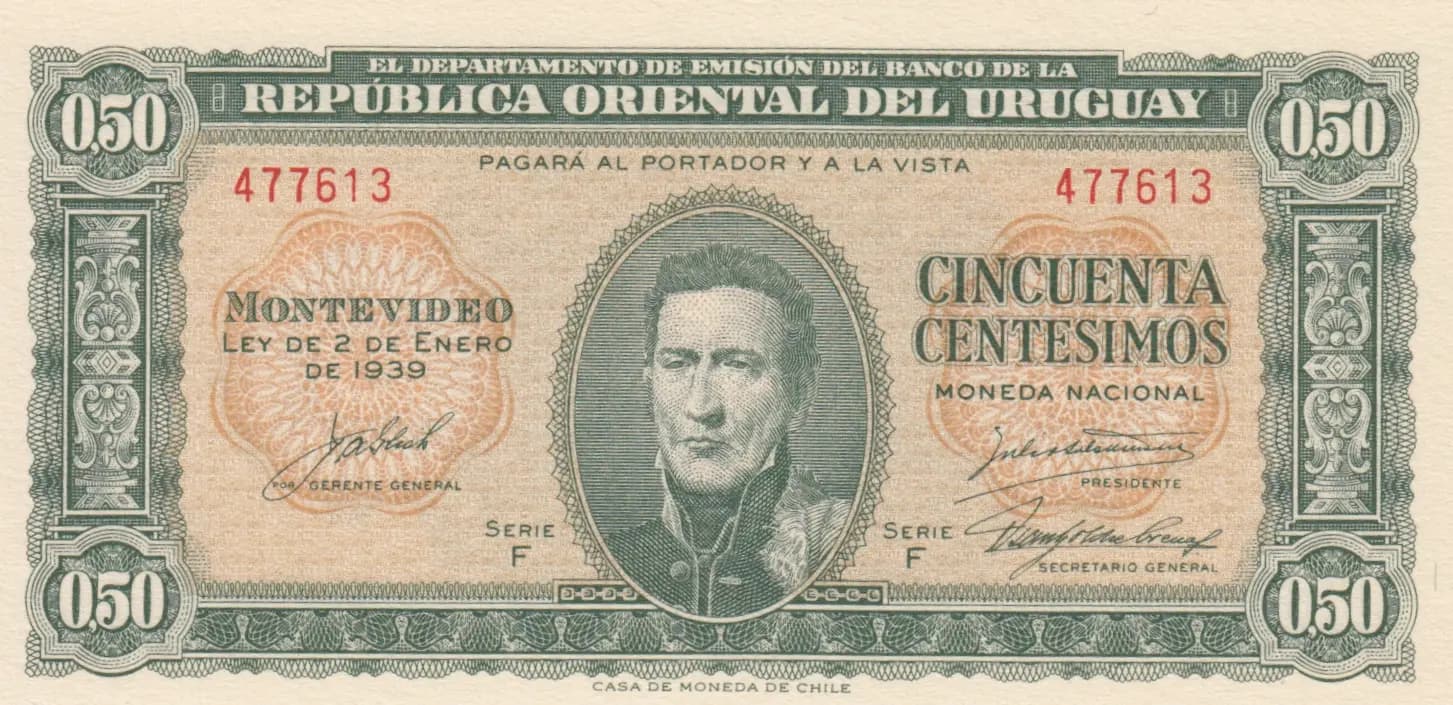
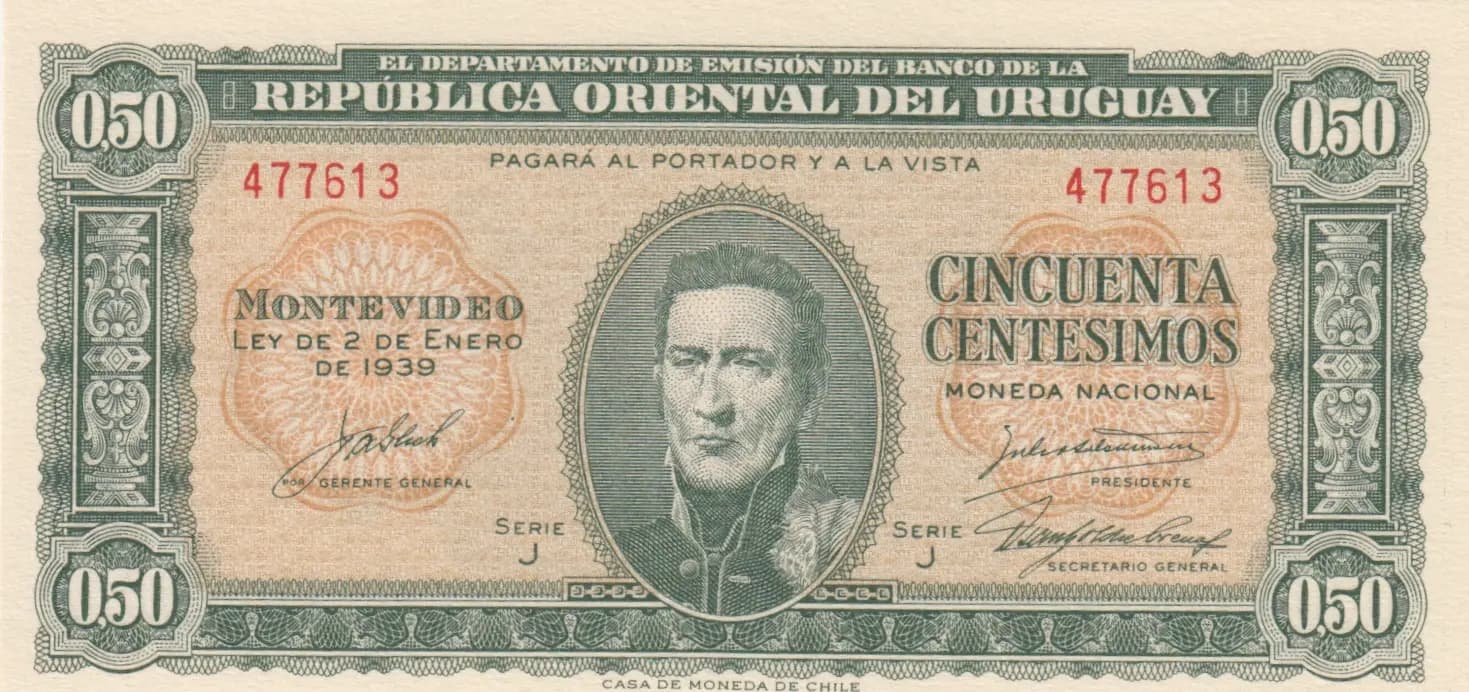
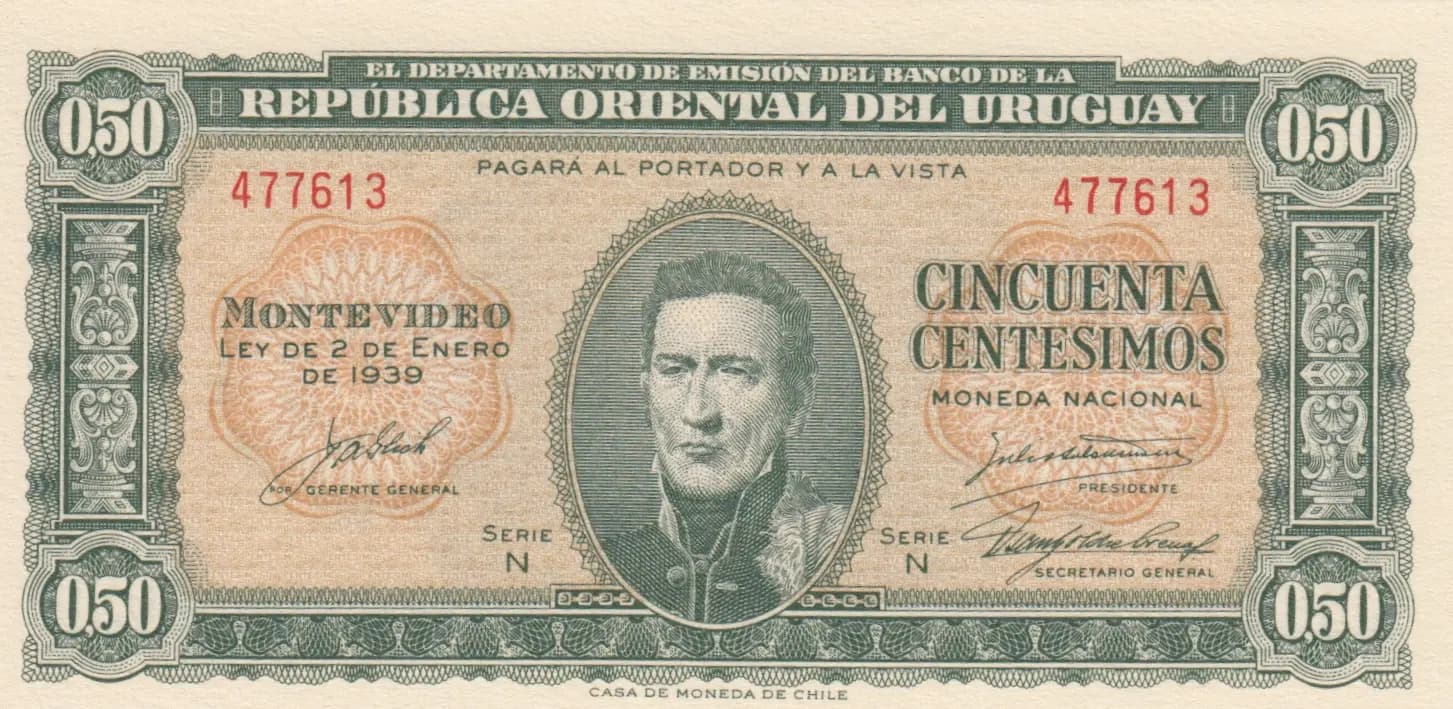
50 centesimos 1939
“serie E”
Market Prices
45 salesAbout This Note
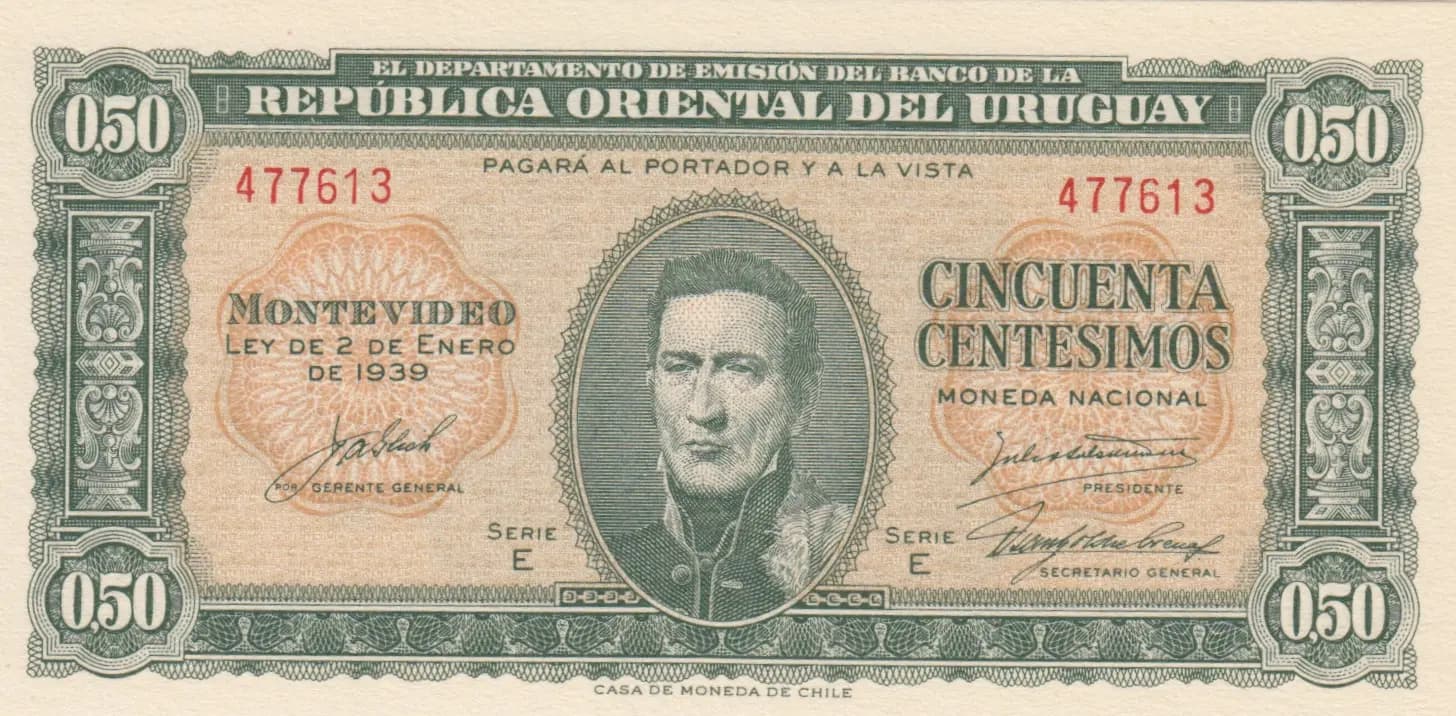
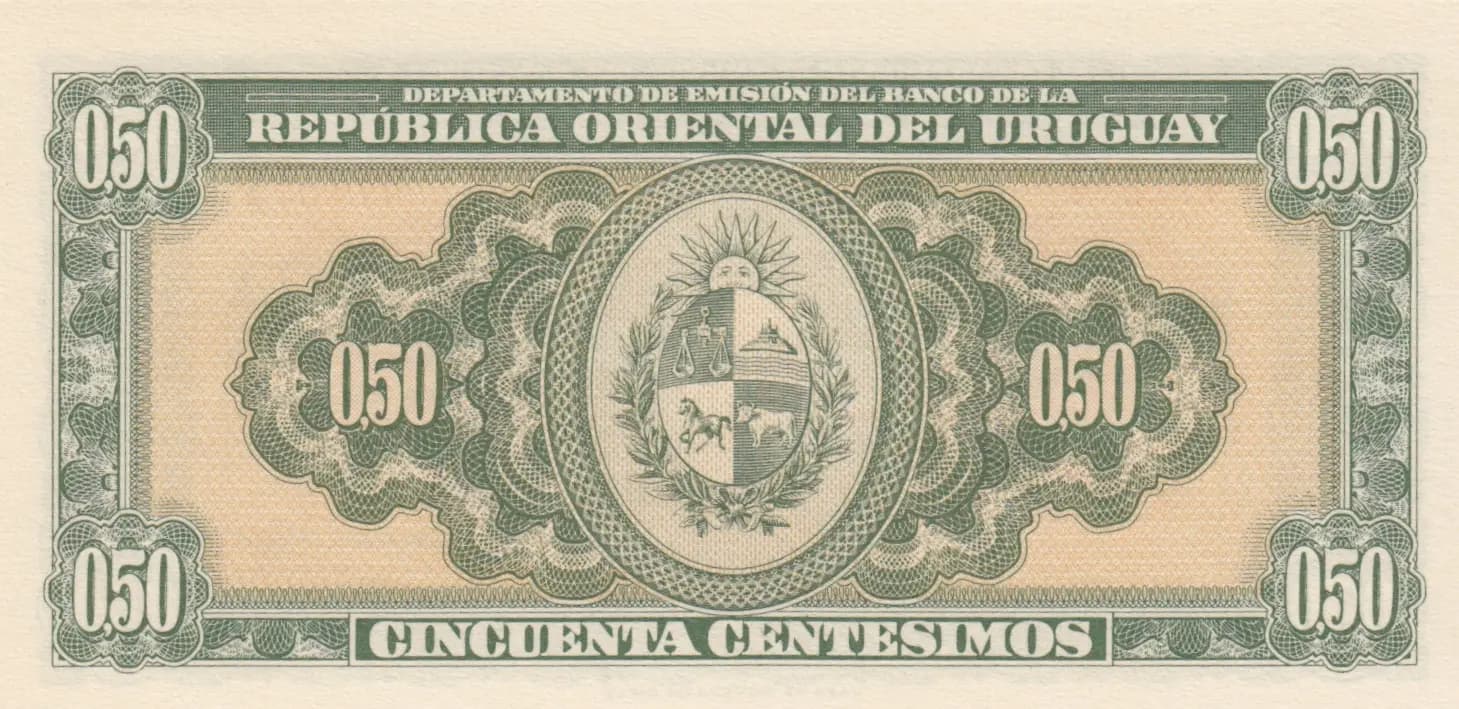
This is a Series E 50 centesimos note from the 1939 emission by Uruguay's Banco de la República Oriental, graded UNC. The note features exceptional condition with crisp printing, vibrant green and red inks, and intricate engraving throughout. The front displays a bearded gentleman in formal attire within a decorative oval, while the reverse showcases Uruguay's national coat of arms with its distinctive rising sun, making this an important early 20th-century example of Uruguayan currency design.
Common. The 1939 50 centesimos (Pick P-34) was part of a standard circulation emission by the Banco de la República Oriental del Uruguay with no known historical shortage or recall. Series E, as a lettered series designation, represents routine production variants. While UNC examples command modest collector premiums over circulated specimens, the overall issue size and survival rate indicate this is a standard, commonly available note in the numismatic market.
Issued under the Law of January 2, 1939, this note represents a significant modernization of Uruguayan currency during the interwar period. The prominence of the rising sun and fortified architectural elements on the reverse reflect Uruguay's national identity and institutional stability during a period of economic reorganization. The note was produced by the Chilean Mint House (Casa de Moneda de Chile), demonstrating regional cooperation in Central and South American currency production.
The obverse features a portrait of a distinguished bearded gentleman in formal 19th-century style dress, positioned centrally within an ornate oval frame with elaborate decorative borders. The reverse displays the coat of arms of the Oriental Republic of Uruguay, which prominently features a rising sun above a fortified architectural structure, surrounded by a laurel wreath—symbols of national sovereignty and constitutional strength. Both sides employ symmetrical ornamental borders with geometric and floral motifs, corner medallions displaying the denomination, and a light cream background with green and black printing. The overall design reflects the classical engraving standards of the 1930s, with particular emphasis on anti-counterfeiting security through intricate fine-line work and multi-color printing.
FRONT: 'EL DEPARTAMENTO DE EMISIÓN DEL BANCO DE LA REPÚBLICA ORIENTAL DEL URUGUAY' (The Emission Department of the Bank of the Oriental Republic of Uruguay) | 'PAGARÁ AL PORTADOR Y A LA VISTA' (Will Pay the Bearer on Demand) | 'CINCUENTA CENTESIMOS' (Fifty Centesimos) | 'MONEDA NACIONAL' (National Currency) | 'MONTEVIDEO' | 'LEY DE 2 DE ENERO DE 1939' (Law of January 2, 1939) | 'SERIE E' (Series E) | Signature blocks for 'GERENTE GENERAL' (General Manager), 'PRESIDENTE' (President), and 'SECRETARIO GENERAL' (General Secretary) | 'CASA DE MONEDA DE CHILE' (Chilean Mint House) | '050' (denomination) | Serial number '477613' | BACK: 'DEPARTAMENTO DE EMISIÓN DEL BANCO DE LA REPÚBLICA ORIENTAL DEL URUGUAY' | 'CINCUENTA CENTESIMOS' | '050' (denomination in corner medallions)
This note was produced using intaglio engraving and letterpress printing, as evidenced by the crisp, fine-line work visible in the ornamental borders, portrait rendering, and coat of arms detailing. The multi-color printing employs separate passes of green ink (for borders and decorative elements) and red ink (for serial numbers and signature areas), with black for primary text and portraiture. The printer is identified on the note itself as 'CASA DE MONEDA DE CHILE' (Chilean Mint House), which was a major regional security printer during this period.
This example is identified as Series E based on the visible 'SERIE E' designation on the obverse. The serial number 477613 in red ink indicates this is a mid-range note from the production run. Known varieties for P-34 include different series letters (A through E or beyond) and corresponding signature combinations for the three authorized signatories (President, General Manager, and General Secretary). No overprints or unusual variants are observed on this specimen.