5 silver dollars 1899
About This Note
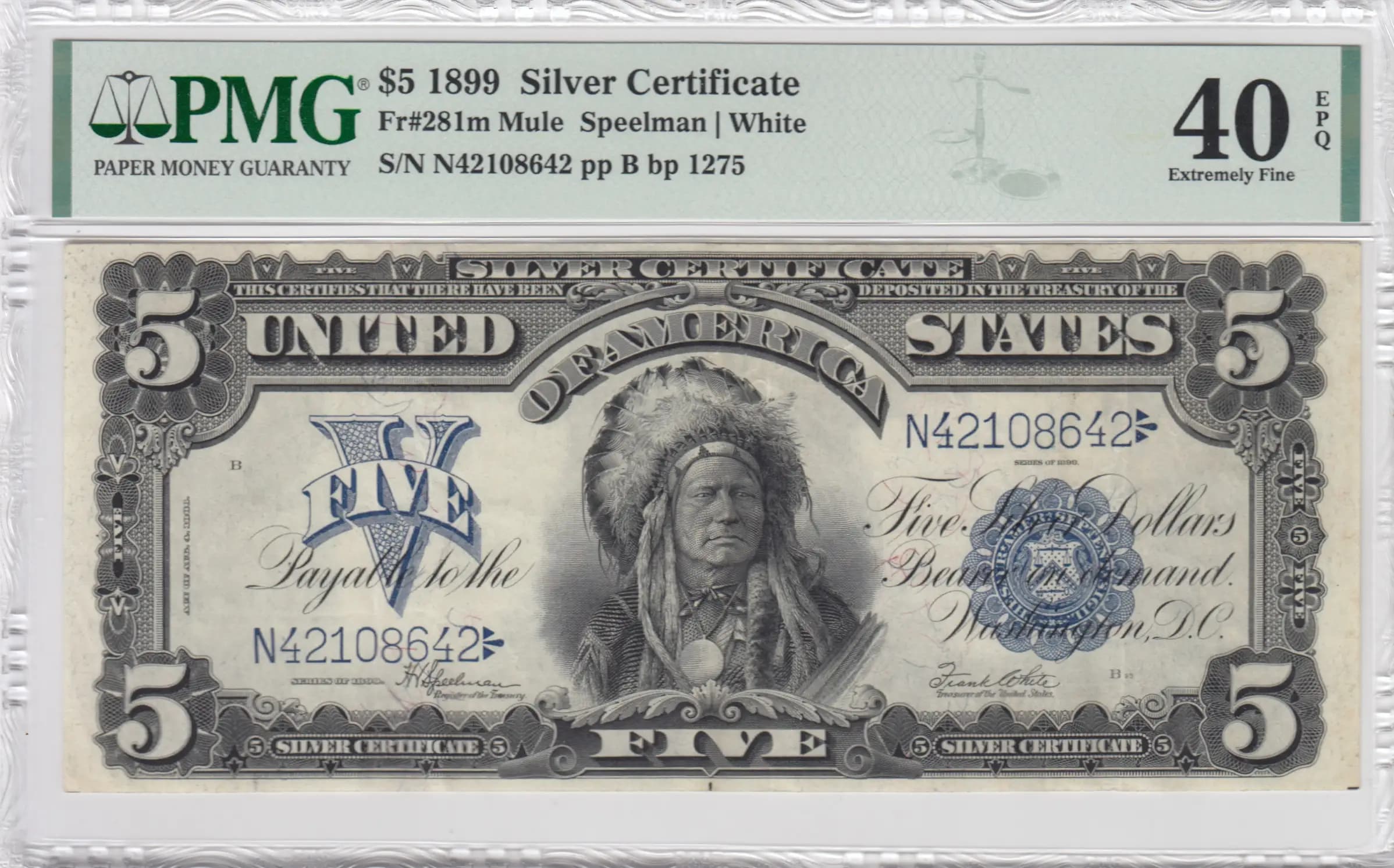
This is a PMG40 EPQ graded $5 Silver Certificate from 1899, featuring a striking central portrait of a Native American chief in full feathered headdress. The note exhibits the characteristic black ink front and green ink back design typical of this issue, with crisp ornamental borders and fine engraved detail work. Despite light aging, creasing, and minor foxing consistent with its 125-year age, the note remains well-preserved with no major damage, representing a solid mid-grade example of this iconic early Silver Certificate type.
Common. The 1899 $5 Silver Certificate is a widely issued note from a major denomination in the U.S. series, with substantial print runs. While specific series varieties exist, the basic 1899 issue remains common in the market, even in mid-grades like PMG40 EPQ. These notes were produced in large quantities and many survive today, making them readily available to collectors.
Issued in 1899, this Silver Certificate represents the height of the 19th-century U.S. currency design era, featuring a Native American chief—a common motif in American currency reflecting the nation's complex relationship with indigenous peoples during this period. The certificate's promise to pay 'the Bearer' Five Dollars in silver reflects the gold and silver standard monetary system that prevailed until the 1930s, making this note historically significant as a tangible record of pre-Federal Reserve currency design and backing.
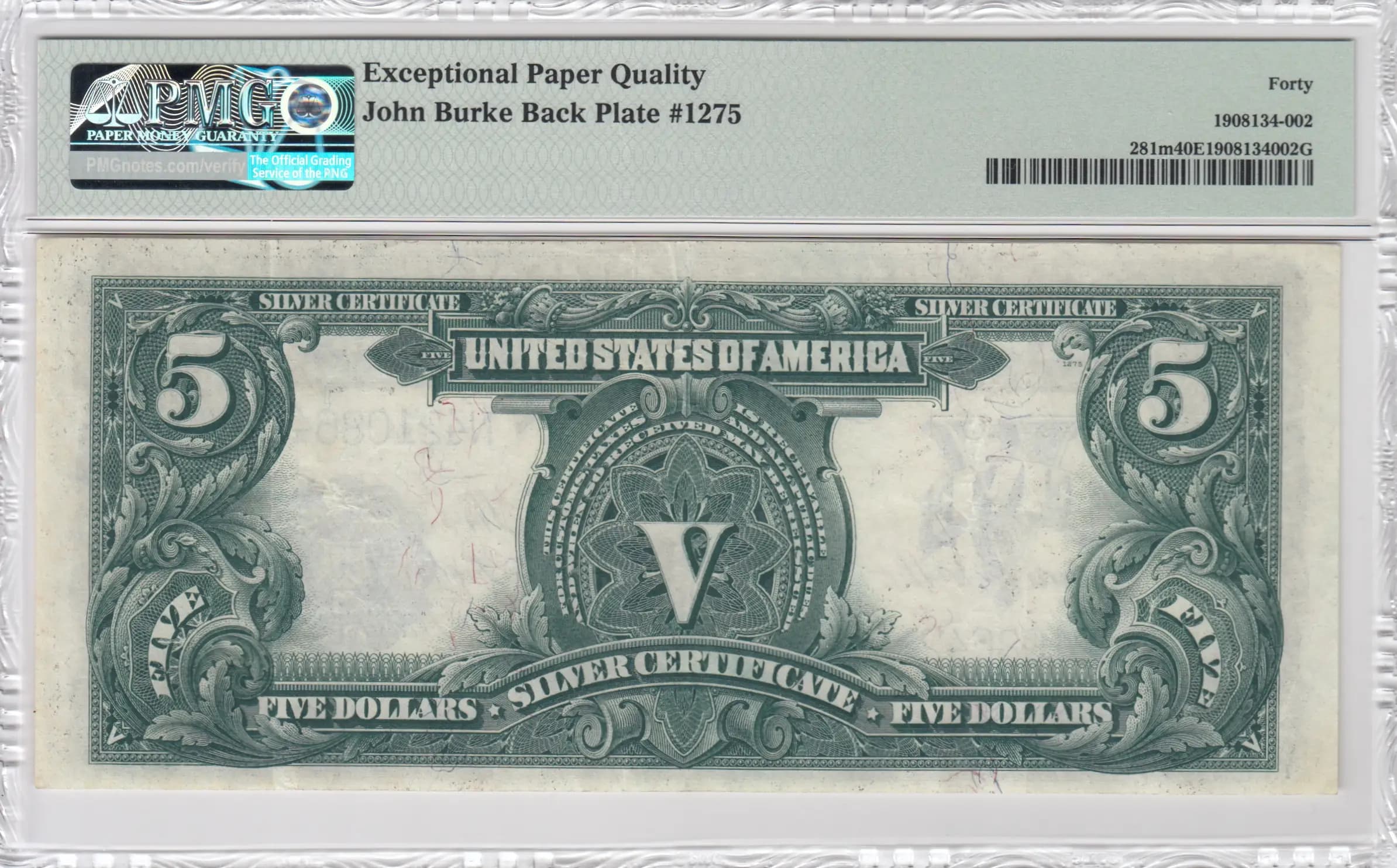
The front of this note features a central oval portrait of a Native American chief adorned with an elaborate feathered headdress, rendered in black ink on cream/beige paper. The design is surrounded by intricate ornamental scrollwork and rosette designs in the corners. A large decorative Roman numeral 'V' in blue appears on the left side, with a circular federal seal on the right. The back features a dominant ornate 'V' enclosed in an elaborate circular medallion, printed in green ink, with symmetrical scrollwork borders and corner denomination markers. The overall design exemplifies the Victorian-era aesthetic of late 19th-century U.S. currency engraving.
Front Side: 'SILVER CERTIFICATE' (printed designation); 'THIS CERTIFIES THAT THERE HAVE BEEN DEPOSITED IN THE TREASURY OF THE UNITED STATES OF AMERICA' (official certification language); 'Pay to the Bearer Five Dollars' (redemption promise); 'Back of the Demand' (reference to demand obligation); 'Washington, D.C.' (issuing location); Serial Number 'N42108642'; Signature of 'Frank White' (Treasury official). Back Side: 'SILVER CERTIFICATE' (repeated designation); 'UNITED STATES OF AMERICA' (issuing nation); 'FIVE DOLLARS' (denomination, printed twice); 'V' (Roman numeral denomination marker); 'FIVE DOLLARS' (denomination spelled out).
This note was produced using traditional steel plate engraving and letterpress printing, the standard security printing method for U.S. currency of this era. The fine line work, intricate border designs, and precision detail visible in both the black ink front and green ink back indicate production by the U.S. Bureau of Engraving and Printing. The complex denominational markers and security features reflect the anti-counterfeiting techniques standard to 1899 currency production.
This specific example is signed by Frank White, a Treasury official whose signature variants exist across the 1899 series. The serial number prefix 'N' and the reference to 'John Burke Back Plate #1275' noted in the visual analysis indicate this particular printing run. Collectors of this series should note signature combinations (pairs of Treasury officials) as a primary variety marker, along with back plate numbers, which vary throughout the 1899 issue.