20 dollars 1902
About This Note
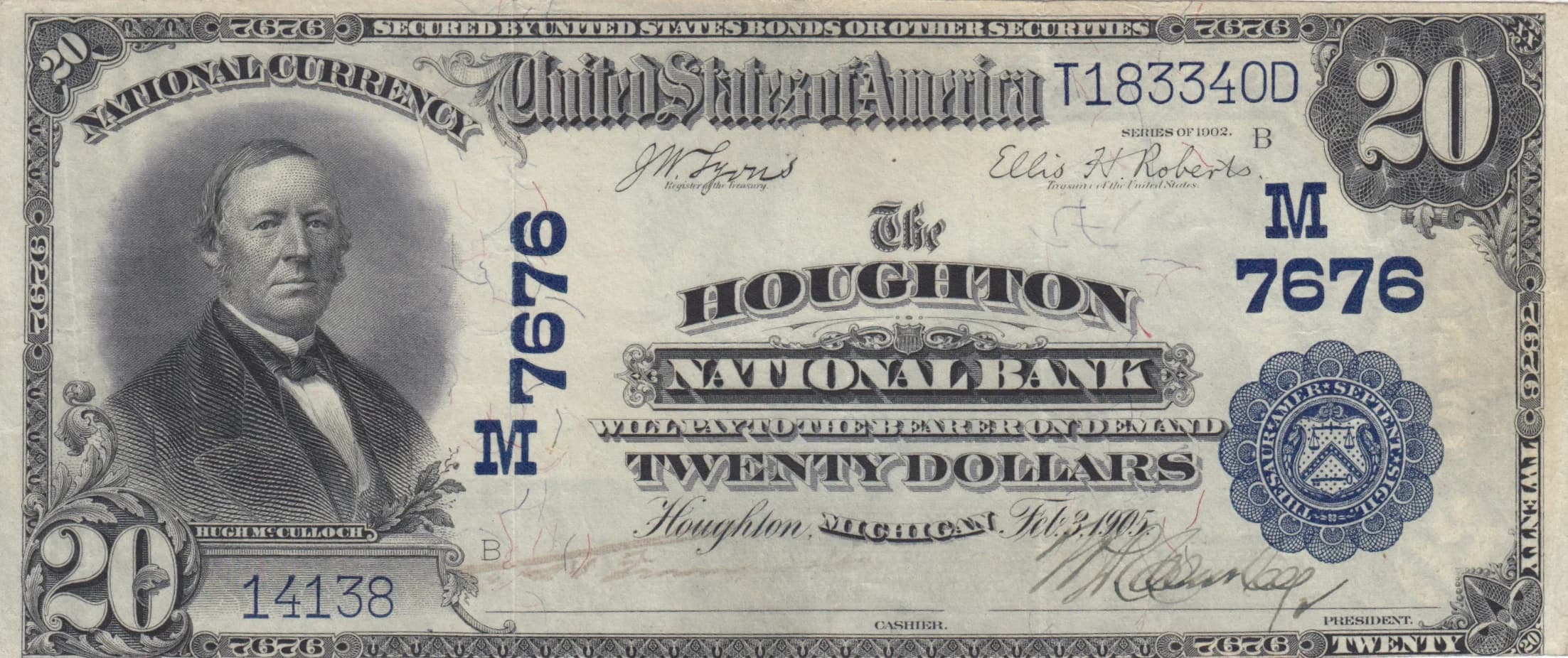
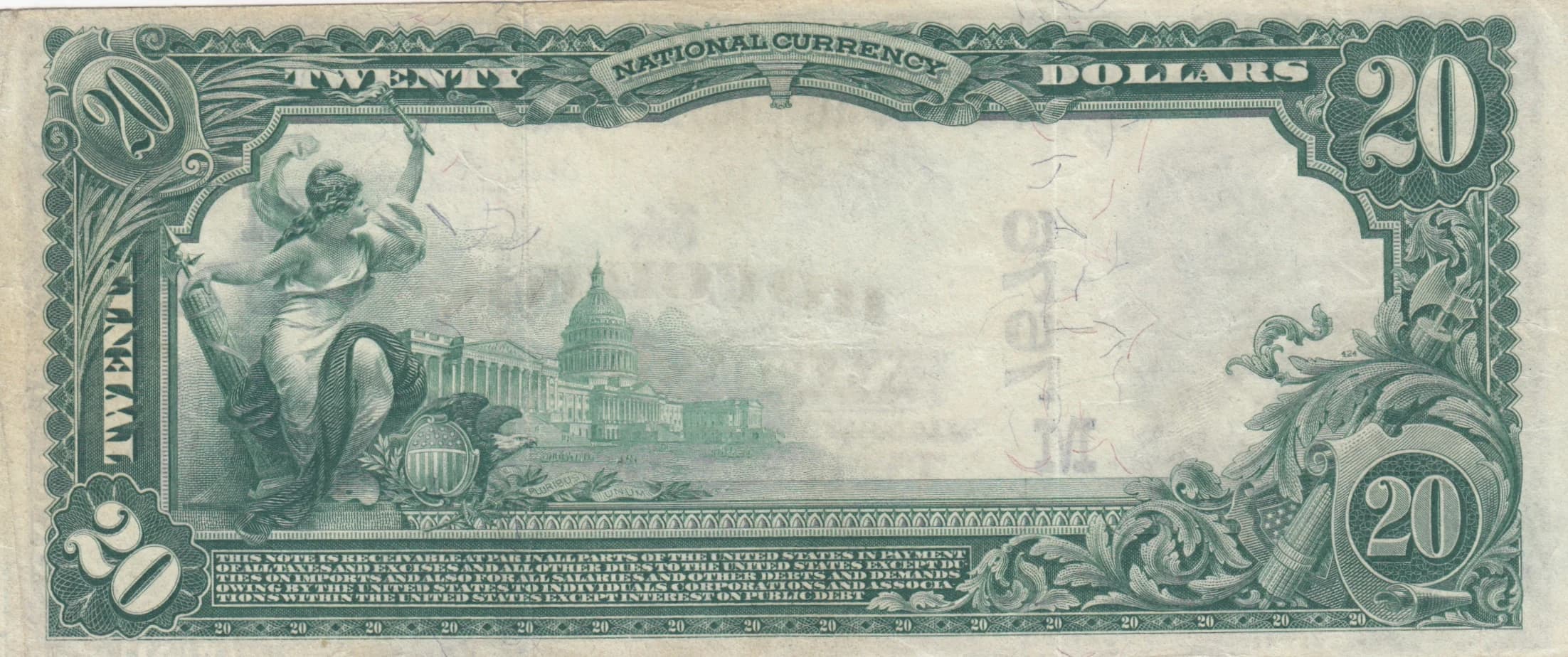
This is a Series of 1902 $20 National Currency note issued by The Houghton National Bank of Houghton, Michigan (Bank No. 14138), certified in VF condition. The note features a bearded gentleman in formal 19th-century attire on the obverse and classical allegorical figures flanking the U.S. Capitol on the reverse, both rendered in fine Victorian engraving. While showing expected signs of circulation—creasing, slight discoloration, and faded inks—the note retains strong visual appeal with crisp impressions of its ornate security features, making it a desirable example of early 20th-century national currency from a regional issuer.
Common. Series 1902 $20 National Currency notes from The Houghton National Bank, while from a regional issuer, were part of standard circulation during the note's issued period (1905) and numerous examples survive. National Bank notes from this series appear regularly in the numismatic market. The VF grade specimen observed shows typical circulation wear consistent with notes from this era that have been well-preserved but not rare in availability. Regional bank notes from Michigan's Upper Peninsula, while perhaps less common than Eastern metropolitan bank issues, do not command significant premiums in the current market.
The Series of 1902 national currency represents a transitional period in American banking, issued after the Aldrich-Vreeland Act had stabilized the national currency system. The Houghton National Bank's issuance in 1905 reflects the expansion of regional banking into Michigan's resource-rich Upper Peninsula, while the classical allegorical imagery and Capitol building on the reverse symbolize the democratic ideals and federal oversight that legitimized the national banking system.
The obverse features a portrait of an unidentified bearded gentleman in formal 19th-century dress with bow tie, positioned within an oval frame on the left side, representative of the patronage style common to national currency notes. The reverse displays two classical allegorical female figures—Liberty or similar personification on the left in flowing robes and another figure on the right—flanking the U.S. Capitol building as the central focal point. This Capitol imagery was a standard element on higher denominations of Series 1902 national currency, symbolizing federal authority. Both sides feature elaborate ornamental borders with repeated denomination numerals (20) in corners, decorative scrollwork, shield designs, and eagle or heraldic elements typical of the late Victorian engraving aesthetic employed on national notes of this era.
FRONT SIDE: 'NATIONAL CURRENCY' (designation of note type); 'United States of America' (issuing nation); 'SERIES OF 1902' (series designation); 'T183340D' (serial number); 'M 7676' (charter number indicator); 'The HOUGHTON NATIONAL BANK' (issuing institution); 'WILL PAY TO THE BEARER ON DEMAND' (legal promise clause); 'TWENTY DOLLARS' (denomination in words); 'Houghton, Michigan, Jul 2, 1905' (location and date of charter); '14138' (bank charter number); 'M. Fassett' (cashier signature); 'Elis H. Roberts' (treasurer signature). BACK SIDE: 'TWENTY' and 'DOLLARS' (denomination indicators); 'NATIONAL CURRENCY' (designation); '20' (denomination numerals in multiple locations); Fine print legal text regarding U.S. bonds and currency security provisions (not clearly legible in images).
Intaglio engraving (steel plate engraving), the standard security printing method for all U.S. national currency of the period. The fine line work, ornate scrollwork, and complex allegorical and architectural renderings are characteristic of Bureau of Engraving and Printing production methods from 1902-1905. The multiple layers of fine lines, decorative patterns, and detailed portraiture served both aesthetic and anti-counterfeiting functions through the difficulty of mechanical reproduction.
This specific note can be identified as Series of 1902, The Houghton National Bank (Bank Charter No. 14138), with signatures of M. Fassett (cashier) and Elis H. Roberts (treasurer), dated July 2, 1905. Serial number T183340D with charter number M 7676 indicates this is a first issue from this bank under the national currency system. Collectors should note the specific signature varieties; different cashiers and treasurers would create distinct signature combinations on notes from the same bank. The 1905 charter date post-dates the 1902 series designation, which is typical for notes printed and issued several years after the design series was established.