2 dollars 1953A
About This Note
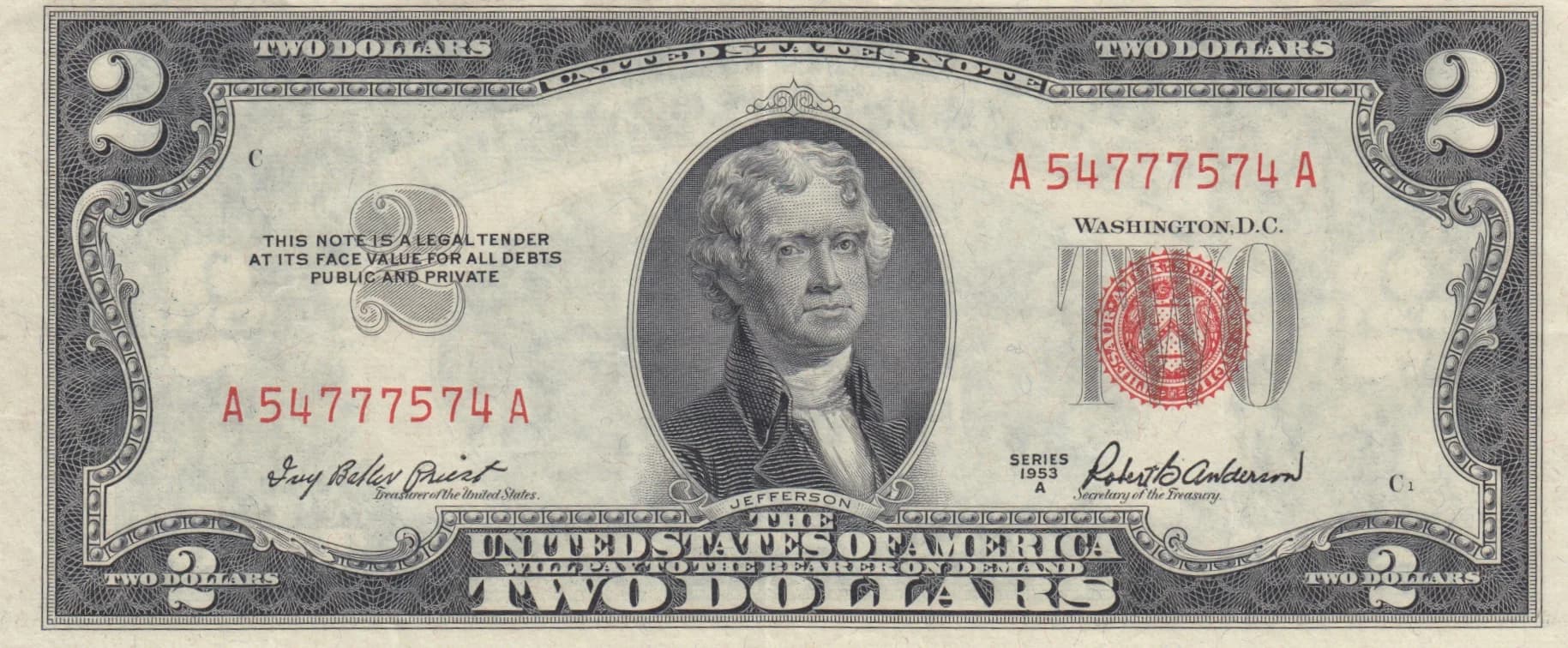
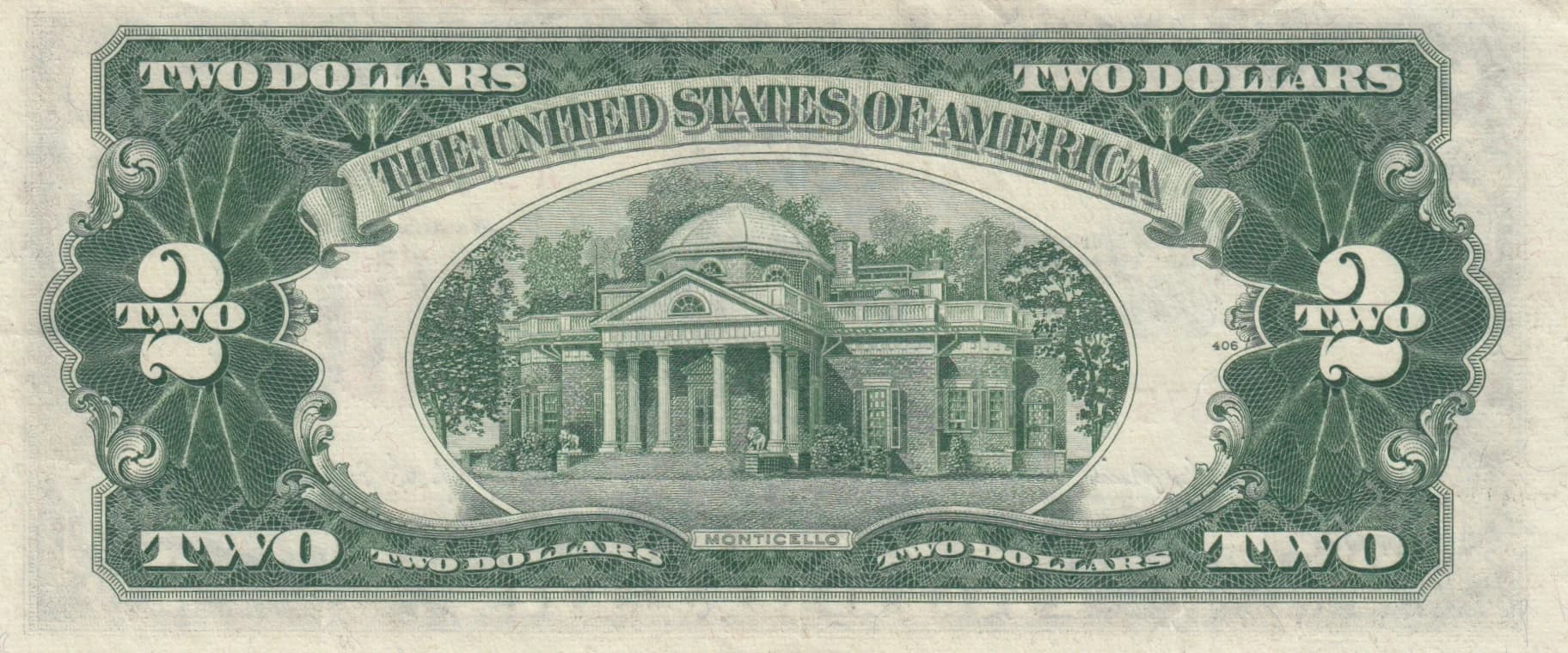
This is a VF-graded 1953A series $2 bill featuring Thomas Jefferson's portrait on the obverse and the iconic Monticello residence on the reverse. The note displays crisp printing with sharp detail throughout, characteristic of well-preserved mid-20th century U.S. currency, though minor circulation evidence consistent with VF grade is present. The 1953A series represents a notable period in $2 bill production, making this an attractive example for collectors seeking vintage U.S. currency with strong eye appeal.
Common. The 1953A series $2 bill was produced in substantial quantities by the U.S. Treasury, and examples in VF condition are regularly encountered in the numismatic market. While 1953A $2 bills are less common than many modern denominations, they do not command premium prices, typically trading well below $20 in comparable grades, indicating robust historical supply and continued availability.
The 1953A series $2 bill was issued during the post-World War II era under the Treasury of the United States, reflecting a period of economic stability and renewed confidence in American currency. The obverse features Thomas Jefferson, the nation's third president and primary author of the Declaration of Independence, while the reverse depicts Monticello, his neoclassical Virginia estate—both enduring symbols of American intellectual heritage and democratic ideals from the founding era.
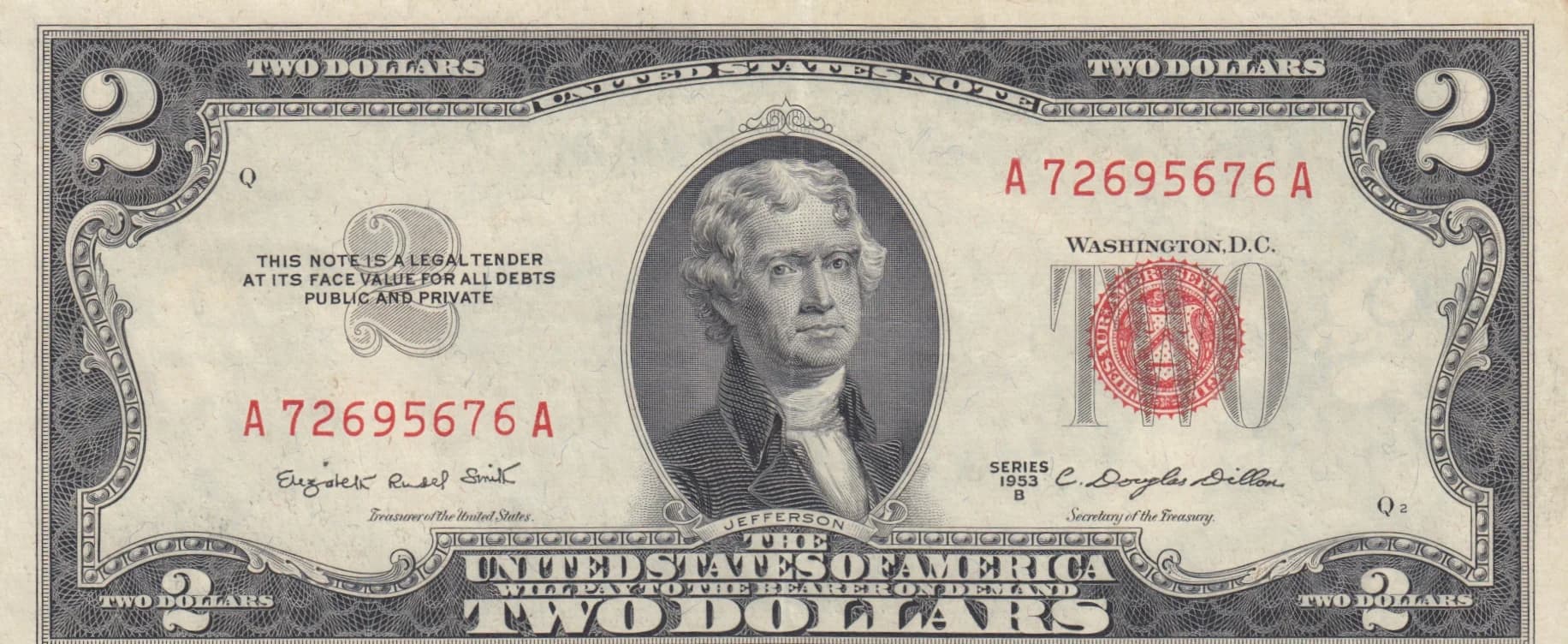
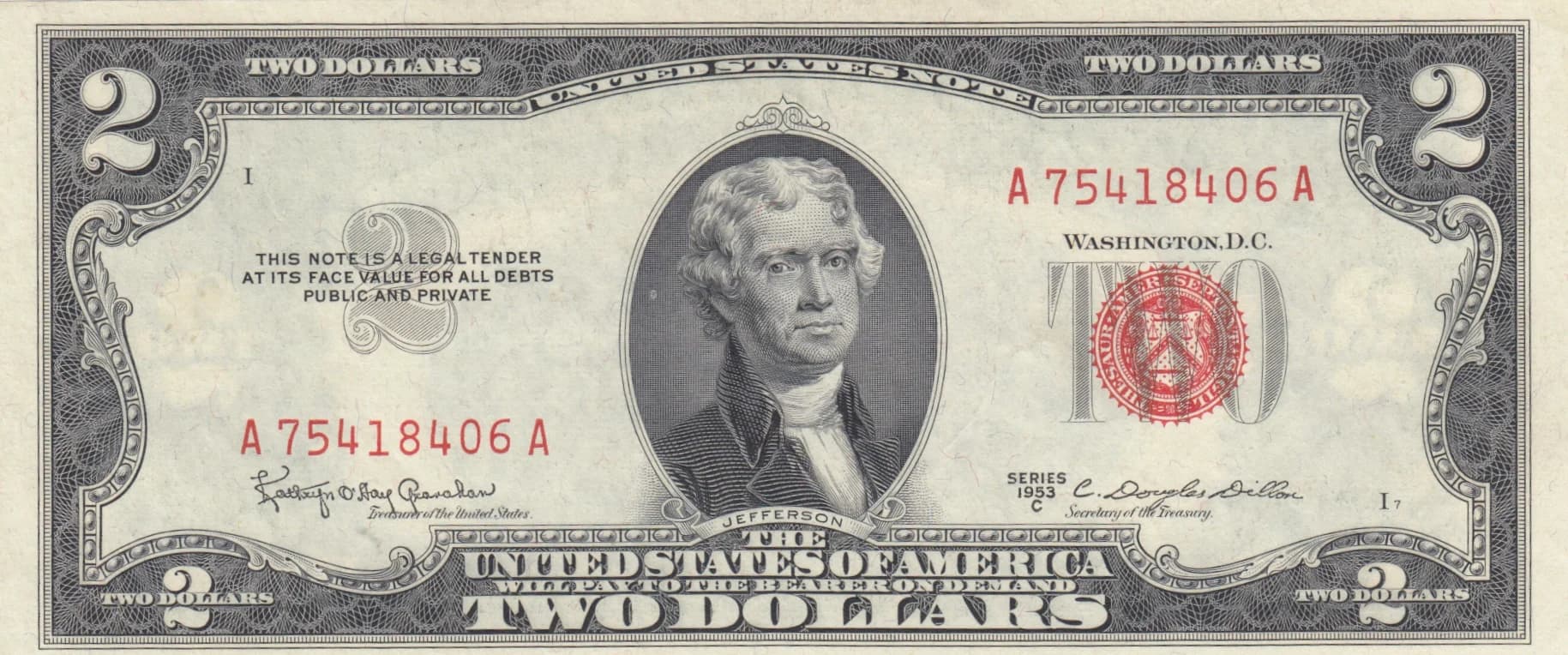
The obverse features a portrait of Thomas Jefferson, the third President of the United States, rendered in classical oval frame surrounded by ornate scrollwork and decorative borders in black and gray tones. The red circular Treasury seal with eagle emblem appears on the right side, accompanied by red serial numbers. The reverse displays an engraved architectural rendering of Monticello, Jefferson's neoclassical plantation house in Charlottesville, Virginia, characterized by its distinctive dome, columned portico, and manicured landscaping. The back is framed in green ornamental scrollwork with the denomination appearing in multiple locations around the design borders. Both sides exemplify the fine-line intaglio engraving characteristic of American currency from this era.
FRONT SIDE: 'TWO DOLLARS' (denomination); 'THIS NOTE IS A LEGAL TENDER AT ITS FACE VALUE FOR ALL DEBTS PUBLIC AND PRIVATE' (legal tender declaration); 'UNITED STATES OF AMERICA' (issuing nation); 'SERIES 1953 A' (series designation); 'WASHINGTON, D.C.' (issuing location); Serial number 'A 54777574 A'; Signatories: Ivy Baker Priest (Treasurer of the United States) and Robert B. Anderson (Secretary of the Treasury); 'C' (series letter); 'C1' (check letter and quadrant indicator). BACK SIDE: 'TWO DOLLARS' (denomination); 'THE UNITED STATES OF AMERICA' (issuing nation); 'TWO' (denomination text); 'MONTICELLO' (identified landmark); '40E' (plate position indicator).
Intaglio (engraved) printing on a cotton-linen substrate, executed by the Bureau of Engraving and Printing. The crisp detail, sharp line definition, and consistent ink saturation observed in the images are characteristic of high-quality intaglio production. The fine scrollwork, portrait rendering, and architectural detail reflect the advanced engraving techniques employed by U.S. currency printers during the 1953A period.
This note is identified as series 1953A with signatures of Ivy Baker Priest (Treasurer) and Robert B. Anderson (Secretary of the Treasury), the standard signatories for this series. Serial number A 54777574 A indicates the series letter prefix 'A' and check letter 'C1'. This represents the standard variety for the 1953A $2 bill issue without unusual overprints, color variants, or printing anomalies. Regional Federal Reserve Bank identifiers and check letters may vary among notes from this series, creating minor sub-varieties in collector terminology.