1 dollar 1923
About This Note
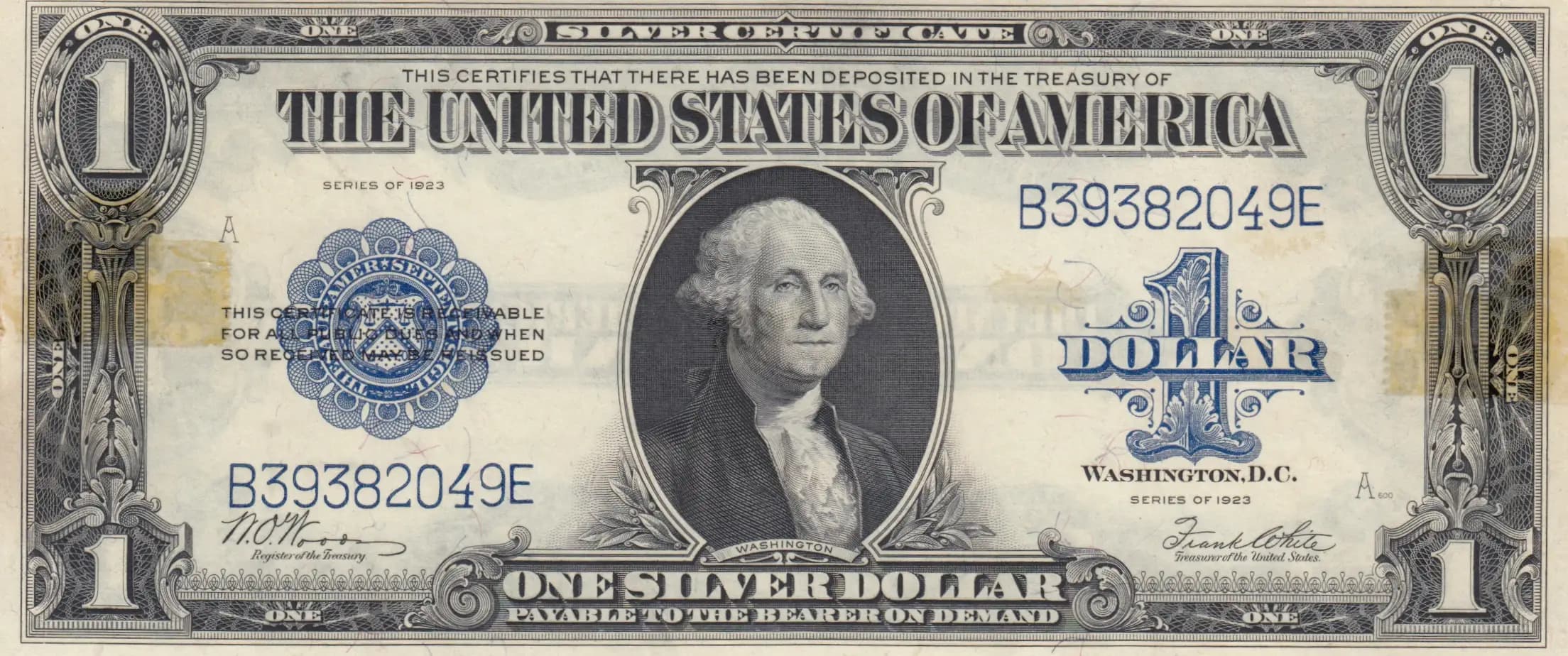
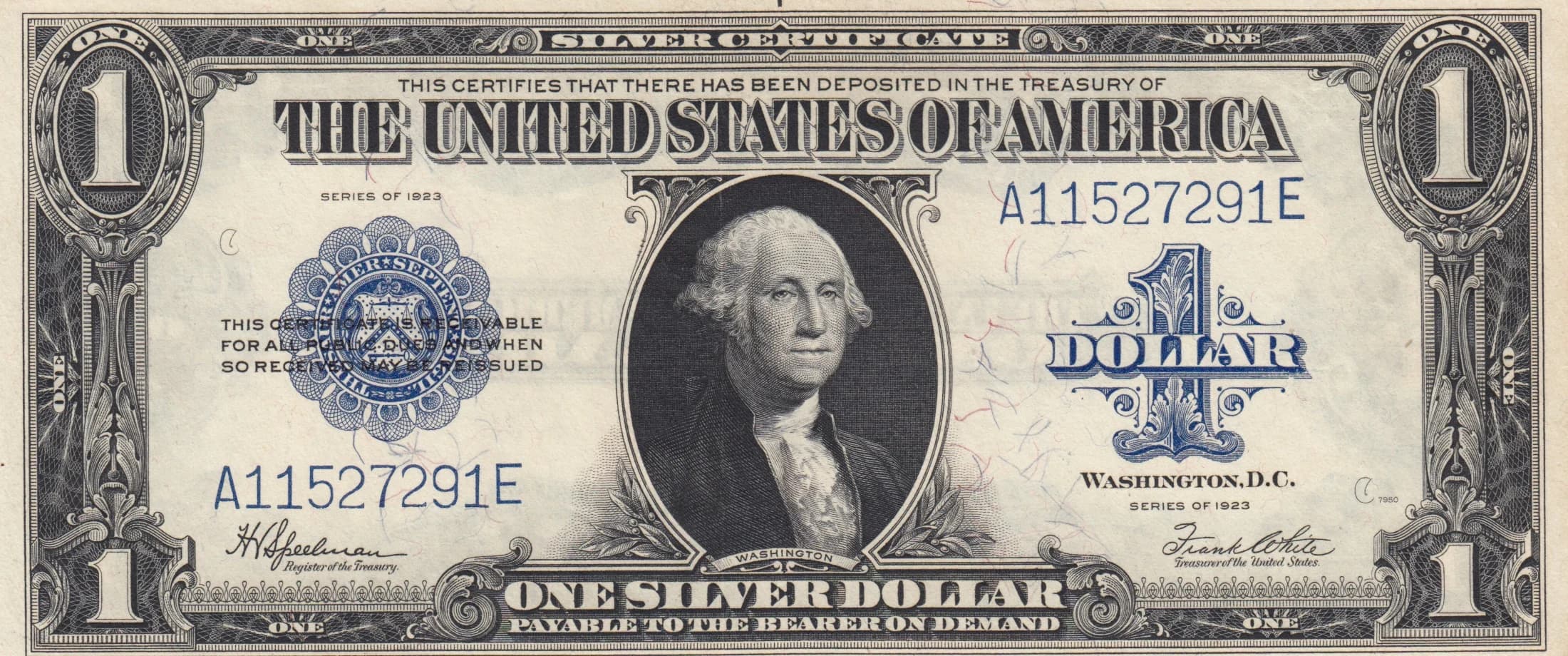
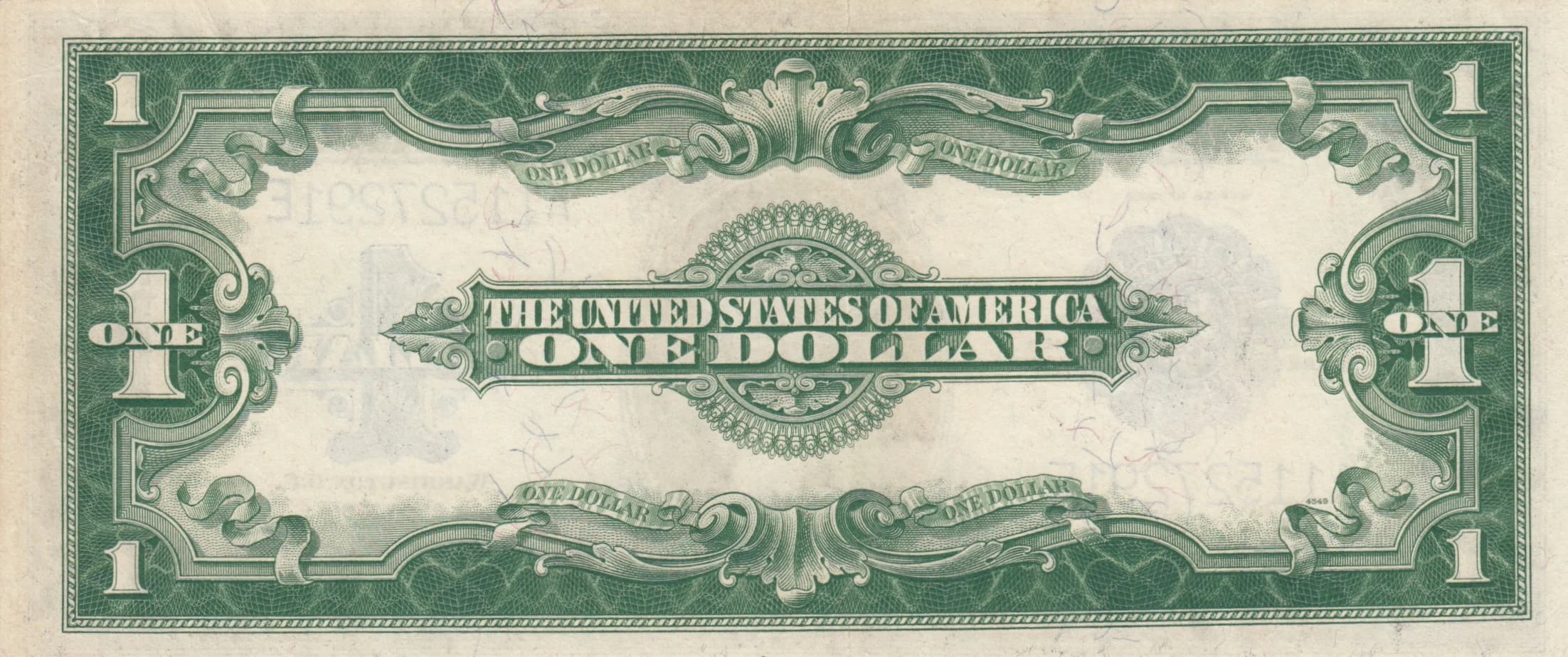
This is a 1923 Series United States Silver Certificate, Pick P-342(1), presented in About Uncirculated condition. The note displays the characteristic ornate design of early 20th-century U.S. currency with black and blue inks on the obverse and green on the reverse, featuring an elaborate portrait in an oval frame surrounded by decorative floral patterns and scrollwork. Age-related toning, foxing, and scattered marks are visible throughout, consistent with a century-old note that has seen light circulation and storage.
Common. The 1923 Series Silver Certificates were produced in substantial quantities and remain readily available to collectors today in varying grades. While AU examples command modest premiums over circulated specimens, they are not scarce. This particular note's estimated market value reflects typical pricing for AU-grade 1923 Silver Certificates, which generally trade in the $15-40 range depending on specific variety and eye appeal, well below the threshold that would indicate rarity.
The 1923 Series Silver Certificate represents a transitional period in U.S. currency design, issued during the post-World War I era when silver-backed certificates remained a significant component of American monetary circulation. These certificates assured the bearer that their face value in silver was held in the U.S. Treasury, as stated prominently on the face: 'This certifies that there has been deposited in the Treasury of the United States of America' one silver dollar. The ornate engraved design with Federal Reserve and Treasury Department seals reflects the security printing standards and artistic conventions of the early 1920s.
This Silver Certificate features a formal portrait of a man in period dress shown from the shoulders up in a forward-facing pose within an ornate oval frame, positioned centrally on the obverse. The portrait is surrounded by elaborate decorative corner ornaments with floral and scrollwork patterns characteristic of the Series of 1923. The obverse displays both a Federal Reserve seal (circular emblem with institutional text) and Treasury Department seal areas, positioned to left and right of the central vignette. The reverse presents a symmetrical, ornamental design dominated by a central rosette medallion with extensive scrollwork and geometric border frames throughout all four corners, printed in green ink. Dual serial numbers appear on the obverse (A11527291E visible), a standard security feature of the period.
FRONT SIDE: 'ONE SILVER ONE' / 'THIS CERTIFIES THAT THERE HAS BEEN DEPOSITED IN THE TREASURY OF THE UNITED STATES OF AMERICA' / 'SERIES OF 1923' / 'THIS IS REDEEMABLE FOR ALL DEBTS PUBLIC AND PRIVATE WHEN SO REQUESTED AND REISSUED' / Serial Number: 'A11527291E' / 'ONE DOLLAR' / 'WASHINGTON, D.C.' / 'ONE SILVER DOLLAR' / 'PAYABLE TO THE BEARER ON DEMAND' / 'Register of the Treasury' / 'Treasurer of the United States' — BACK SIDE: 'ONE DOLLAR' (appears four times) / 'THE UNITED STATES OF AMERICA' / Numeral '1' (denomination indicator).
Steel plate engraving and intaglio printing, the standard security printing method for U.S. currency of this era. The fine line work, intricate scrollwork, geometric borders, and detailed floral patterns visible throughout both sides reflect the high-security engraving standards employed by the Bureau of Engraving and Printing, which was the sole printer of U.S. currency. The sharp definition of the portrait and decorative elements, despite age-related wear, demonstrates the quality of the original steel plates and printing process used for Series of 1923 currency.
The observed serial number A11527291E with the 'A' prefix indicates a specific Federal Reserve Bank issue (likely Boston Federal Reserve Bank, which used the 'A' designation). The Pick catalog reference P-342(1) identifies this as the standard 1923 Series variety without significant overprints or unusual variations. No distinctive overprints, star notes, or other known varieties are apparent from the visual analysis. The signature positions and Treasury officials would require comparison to reference catalogs to identify the specific signature combination, but no signature varieties are noted in the visual assessment.