1 dollar 1957A
About This Note
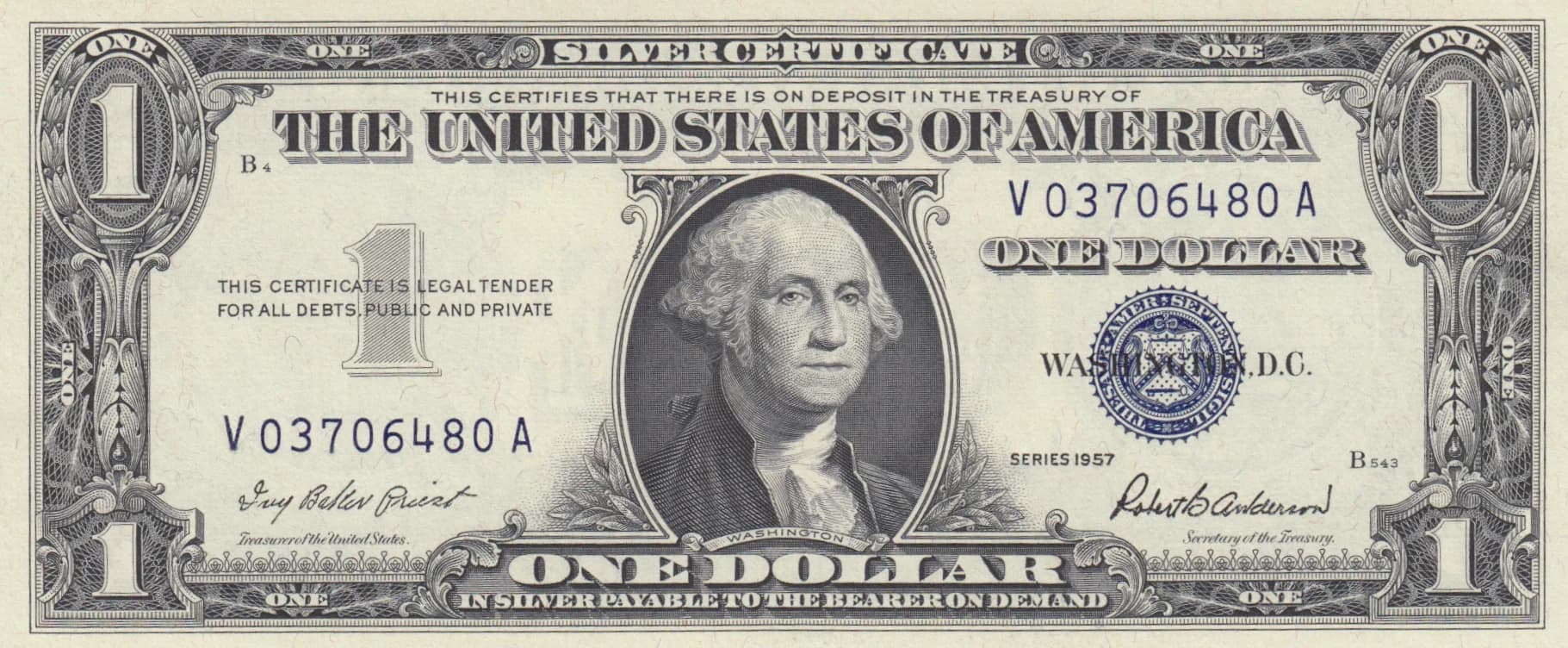
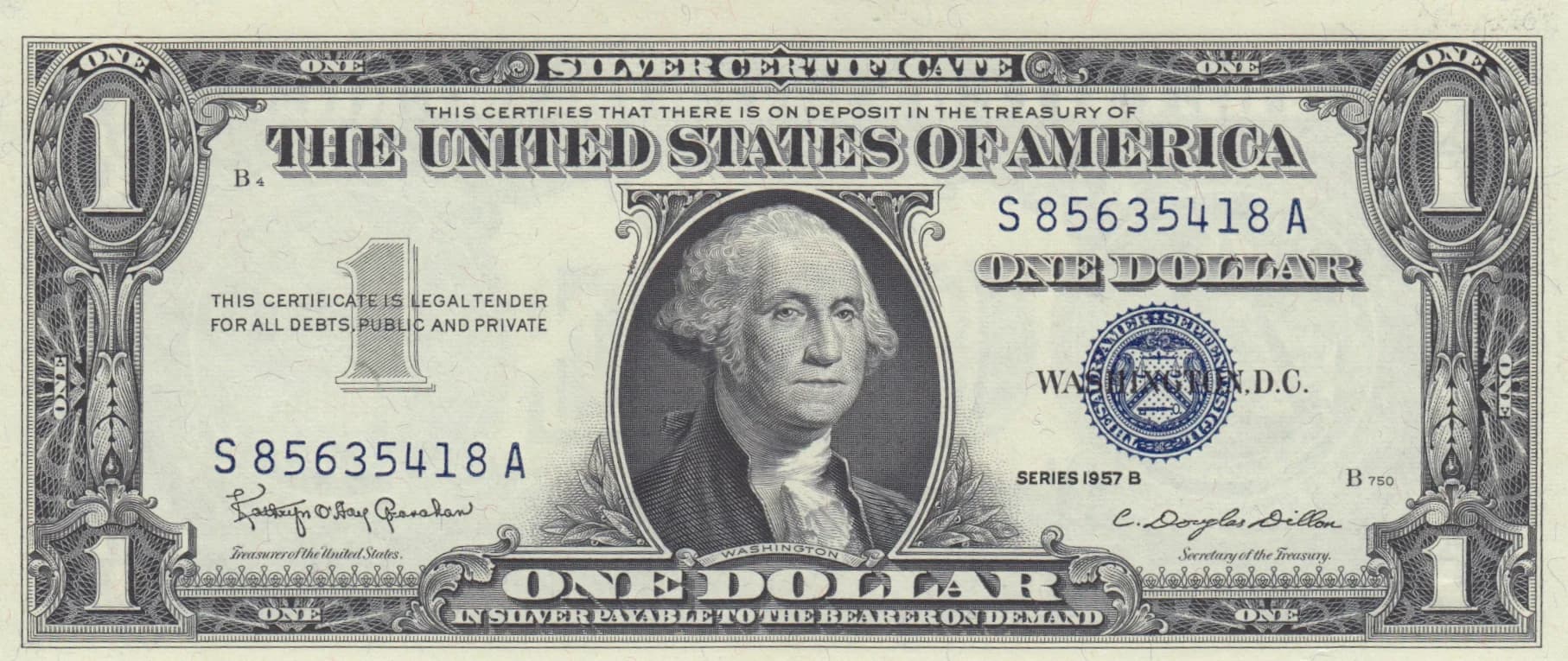
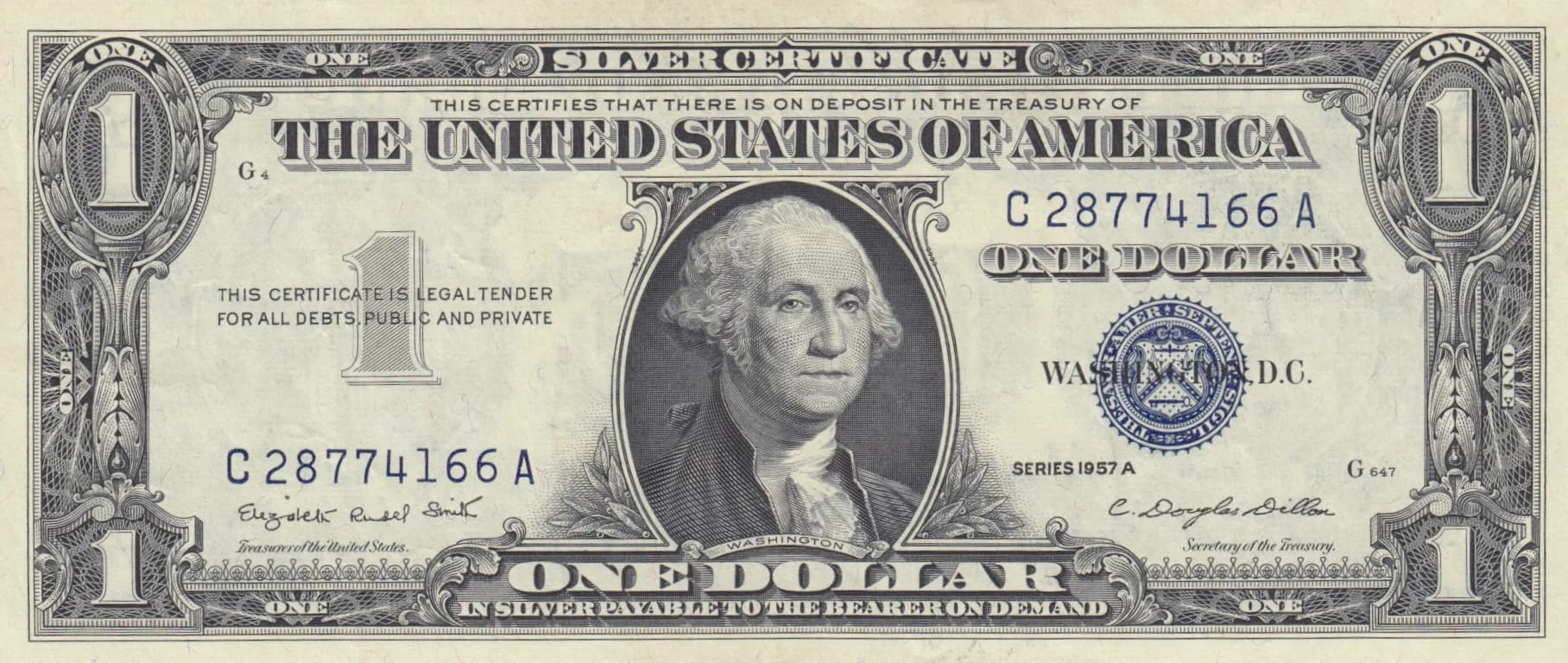
This is a 1957A Series $1 Silver Certificate in AU condition, featuring the classic portrait of George Washington in an ornate oval frame on the obverse. The note displays crisp, clear printing with excellent preservation, minimal wear, and no significant creases or damage. As a Silver Certificate from the mid-20th century, this represents an important transitional period in U.S. currency design before the shift to Federal Reserve Notes.
Common. The 1957A Series Silver Certificates were issued in large quantities for general circulation during the mid-to-late 1950s. While Silver Certificates are no longer issued and have numismatic interest, the 1957A Series in particular had substantial print runs and examples in AU condition are readily available in the collector market at modest premiums over face value. No significant print run restrictions, recalls, or short-lived issuing periods apply to this variety.
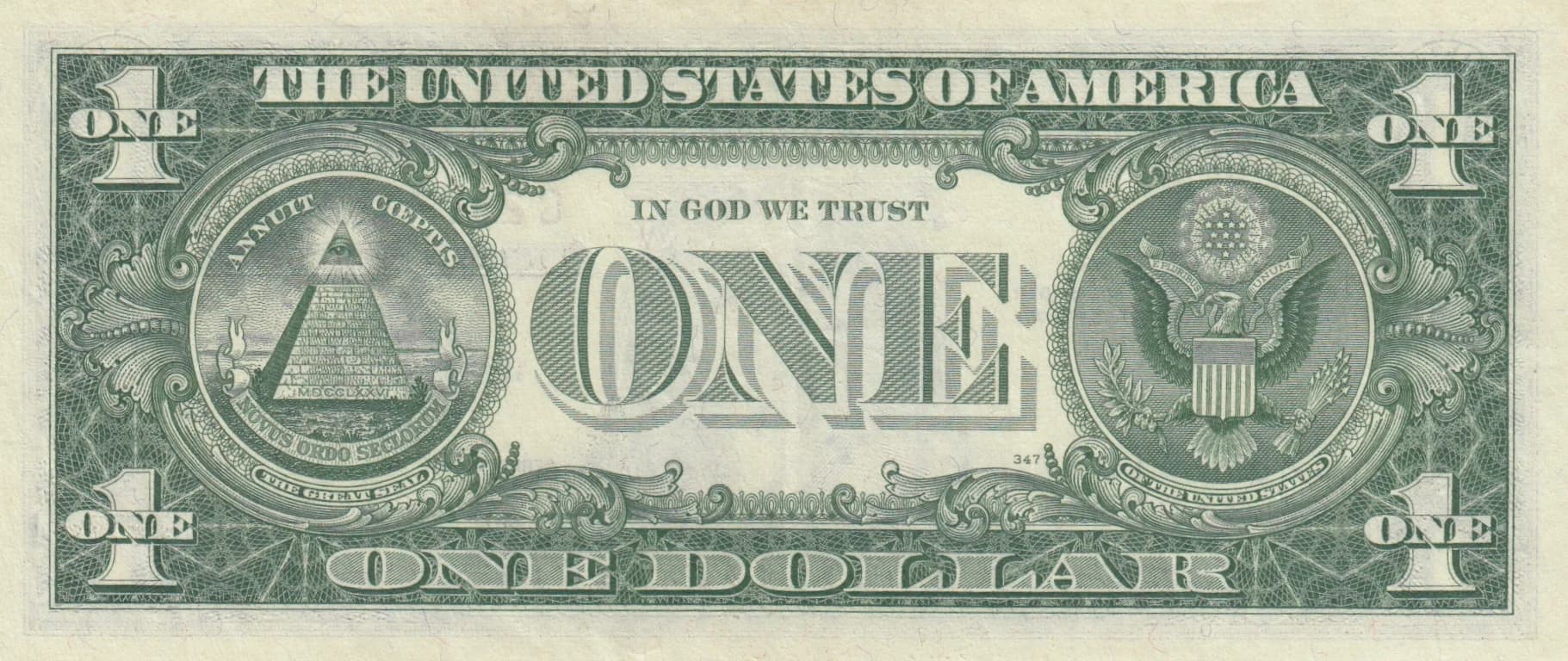
The 1957A Series Silver Certificate reflects the Cold War-era confidence in American monetary backing, explicitly certifying that silver was held in the U.S. Treasury as stated in the prominent inscription. The note features the iconic Great Seal symbolism on the reverse—the all-seeing eye within a pyramid and the eagle with shield—representing the foundational principles of the United States. This series was issued during the Eisenhower administration and represents the final widespread circulation of Silver Certificates before their gradual replacement with Federal Reserve Notes.
The obverse features a portrait of George Washington facing right in profile, positioned within an ornate oval baroque-style frame with elaborate scrollwork and decorative flourishes. The background is cream/beige with black and dark blue printing. Large ornamental numerals '1' appear in the top left and right corners, with decorative geometric border patterns framing the note. The Federal Reserve seal (circular with eagle and shield) is visible on the right side. The reverse displays the two components of the Great Seal of the United States in symmetrical circular designs: the reverse (all-seeing eye within an unfinished pyramid) on the left, and the obverse (eagle facing right with shield, olive branch, and arrows) on the right. Both sides employ intricate line work and baroque-style ornamental designs. The note is printed predominantly in green on the reverse with the cream/beige background maintained throughout.
FRONT SIDE: 'ONE' (denomination), 'SILVER OF THE UNITED STATES OF AMERICA' (certification of silver backing), 'THIS CERTIFIES THAT THERE IS ON DEPOSIT IN THE TREASURY OF THE UNITED STATES OF AMERICA' (warranty clause), 'THIS CERTIFICATE IS LEGAL TENDER FOR ALL DEBTS, PUBLIC AND PRIVATE' (legal tender declaration), 'ONE DOLLAR' (denomination), 'WASHINGTON, D.C.' (issuing location), 'SERIES 1957 A' (series designation), 'IN SILVER PAYABLE TO THE BEARER ON DEMAND' (redemption clause), 'Elizabeth Rudel Smith' (Treasurer of the United States signature), 'C. Douglas Dillon' (Secretary of the Treasury signature), 'G4' (Federal Reserve District - Chicago), 'G 647' (check number), Serial number 'C28774166A'. BACK SIDE: 'THE UNITED STATES OF AMERICA' (country identification), 'IN GOD WE TRUST' (national motto), 'ONE' (denomination), 'ONE DOLLAR' (denomination), 'ANNUIT COEPTIS' (Latin: 'He favors our undertakings'), 'NOVUS ORDO SECLORUM' (Latin: 'New order of the ages'), 'E PLURIBUS UNUM' (Latin: 'Out of many, one'), '347' (check number).
Intaglio engraving (steel plate engraving), which was the standard security printing method for U.S. currency during this period. The fine intricate line work, complex geometric patterns, and elaborate scrollwork visible throughout both sides are characteristic of high-security intaglio printing. The note was produced by the Bureau of Engraving and Printing, the official U.S. Government security printer.
This specific example features the signature combination of Elizabeth Rudel Smith (Treasurer) and C. Douglas Dillon (Secretary of the Treasury), which is characteristic of 1957A Series notes. The Federal Reserve District indicator 'G4' indicates this note was distributed through the Chicago Federal Reserve. The serial number prefix 'C' also corresponds to the Chicago district. Standard varieties for this series include different signature combinations and Federal Reserve district markings; this represents a standard circulation variety with no known printing anomalies or special varieties noted.