50 shaliv 1918
About This Note
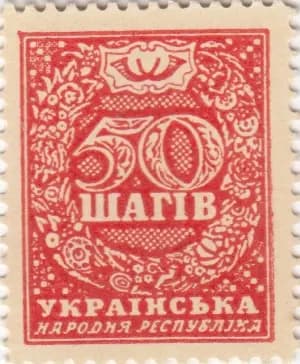
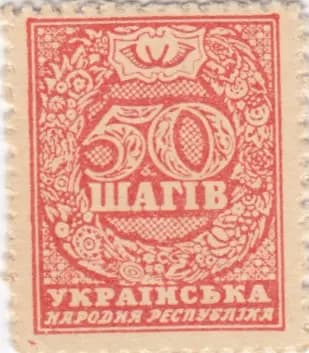
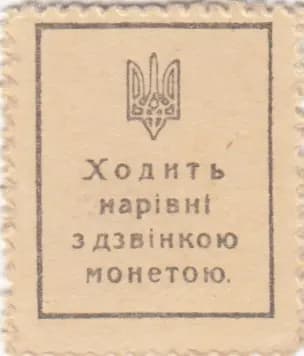
This 50 Shaliv note from 1918 represents an early emission of the Ukrainian People's Republic during a tumultuous period of independence. The note features a distinctive postage stamp-like design with ornate red/pink printing on a cream background, displaying intricate floral and geometric border patterns characteristic of early 20th-century Eastern European currency design. In UNC condition with only light aging and foxing, this note preserves the fine ornamental details and the reverse trident symbol that symbolized Ukrainian national sovereignty during this brief independent period.
Common. The 50 Shaliv P-11a(1) denomination was part of the standard emission series of the Ukrainian People's Republic's 1918 currency issue. While notes from this period are historically significant and less frequently encountered than 20th-century Soviet issues, they were printed in substantial quantities for circulation and survive in reasonable numbers in collections focused on Eastern European currency. The UNC condition grade is desirable but does not significantly alter the relative commonality of this denomination.
Issued during Ukraine's first declaration of independence (1917-1920) following the Russian Revolution, this note reflects the Ukrainian People's Republic's attempt to establish its own monetary system distinct from both Russian and Austro-Hungarian currencies. The prominent trident symbol on the reverse—Ukraine's national coat of arms—served as a powerful emblem of national identity and sovereignty during this period of political upheaval. The denomination in 'shaliv' (a Ukrainian currency unit) and inscriptions entirely in Ukrainian underscore the nation-building efforts of this short-lived state before Soviet incorporation.
The obverse features a highly ornamental postage stamp-inspired design with a central denomination cartouche surrounded by elaborate floral arabesques and geometric patterns in red/pink on cream paper. Crown-like ornamental elements appear at the top center, framing the design. The reverse presents a minimalist counterpoint: a centered Ukrainian trident (the national coat of arms of Ukraine), positioned above a simple rectangular text box containing the legal tender declaration. The sparse reverse design emphasizes the heraldic symbol as the primary authenticating element, a common feature of wartime emergency currency where printing capabilities were limited.
Front side: '50' (Arabic numerals indicating denomination), 'ШАЛІВ' (Ukrainian: 'Shaliv' - the denomination), 'УКРАЇНСЬКА НАРОДНА РЕСПУБЛІКА' (Ukrainian: 'Ukrainian People's Republic' - the issuing authority). Back side: 'Ходить нарівні з дзвінкою монетою.' (Ukrainian: 'Circulates equally with ringing coin.' - a statement of legal tender parity with metallic currency).
Letterpress or typography, with possible supplementary relief printing methods typical of 1918-era Ukrainian printing facilities. The sharp, clean lines of the ornamental border patterns and the crisp impression of the trident symbol suggest professional banknote printing, likely executed in Vienna or another Austro-Hungarian printing center given the period and geopolitical context. The red/pink color indicates single-color printing on pre-colored or tinted paper stock.
Pick catalog P-11a(1) designation indicates this is the first known variety of this design type. Potential varieties within this series may include differences in printer marks, serial number formats, or minor design variations, though without examination of multiple specimens, specific variety identification beyond the Pick number designation cannot be confirmed. The 'a' designation in P-11a suggests there are other related varieties (P-11b, etc.) of this denomination issued during the same period by the Ukrainian State authorities.