1000 karbovantsev 1918
Market Prices
40 salesAbout This Note
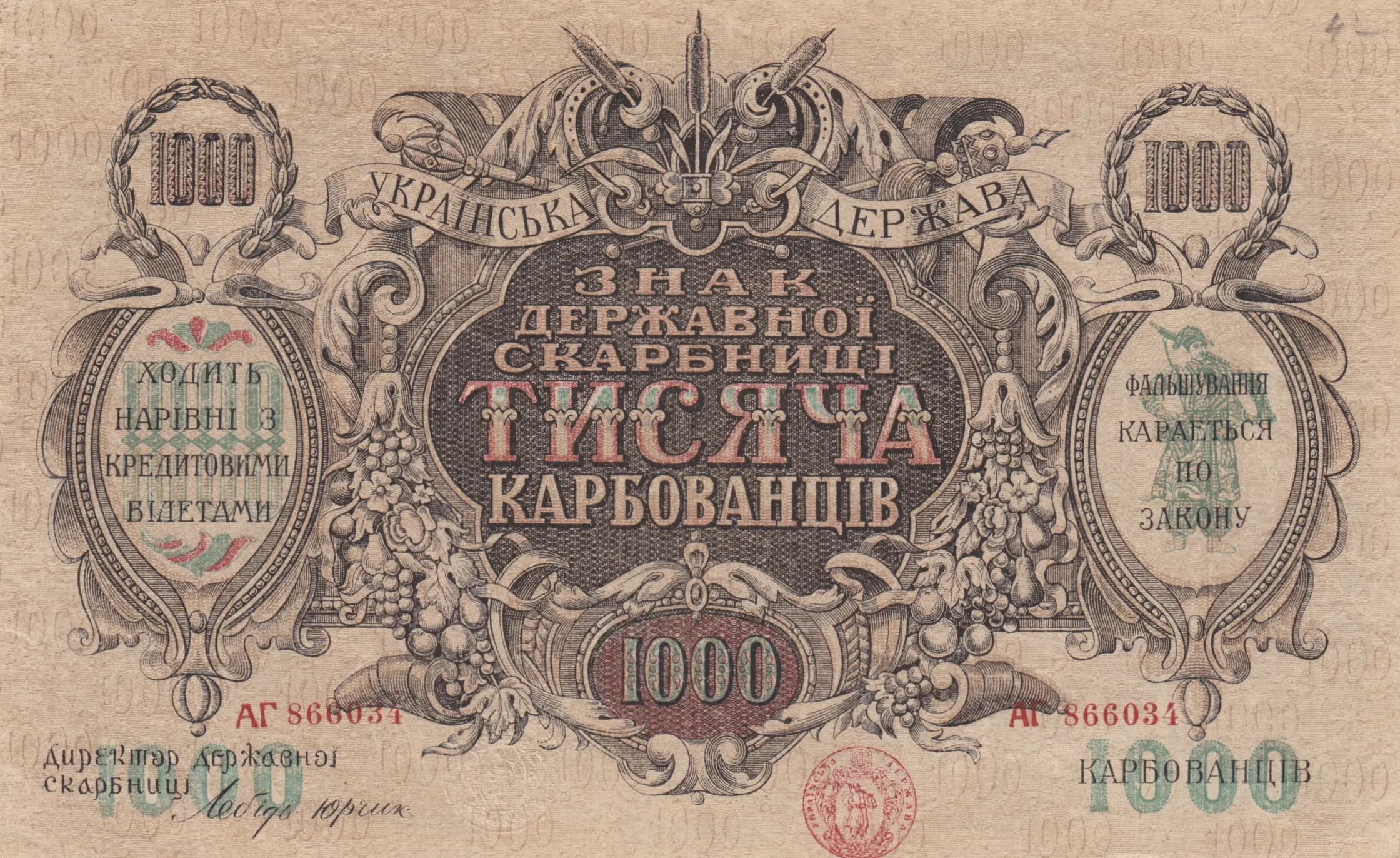
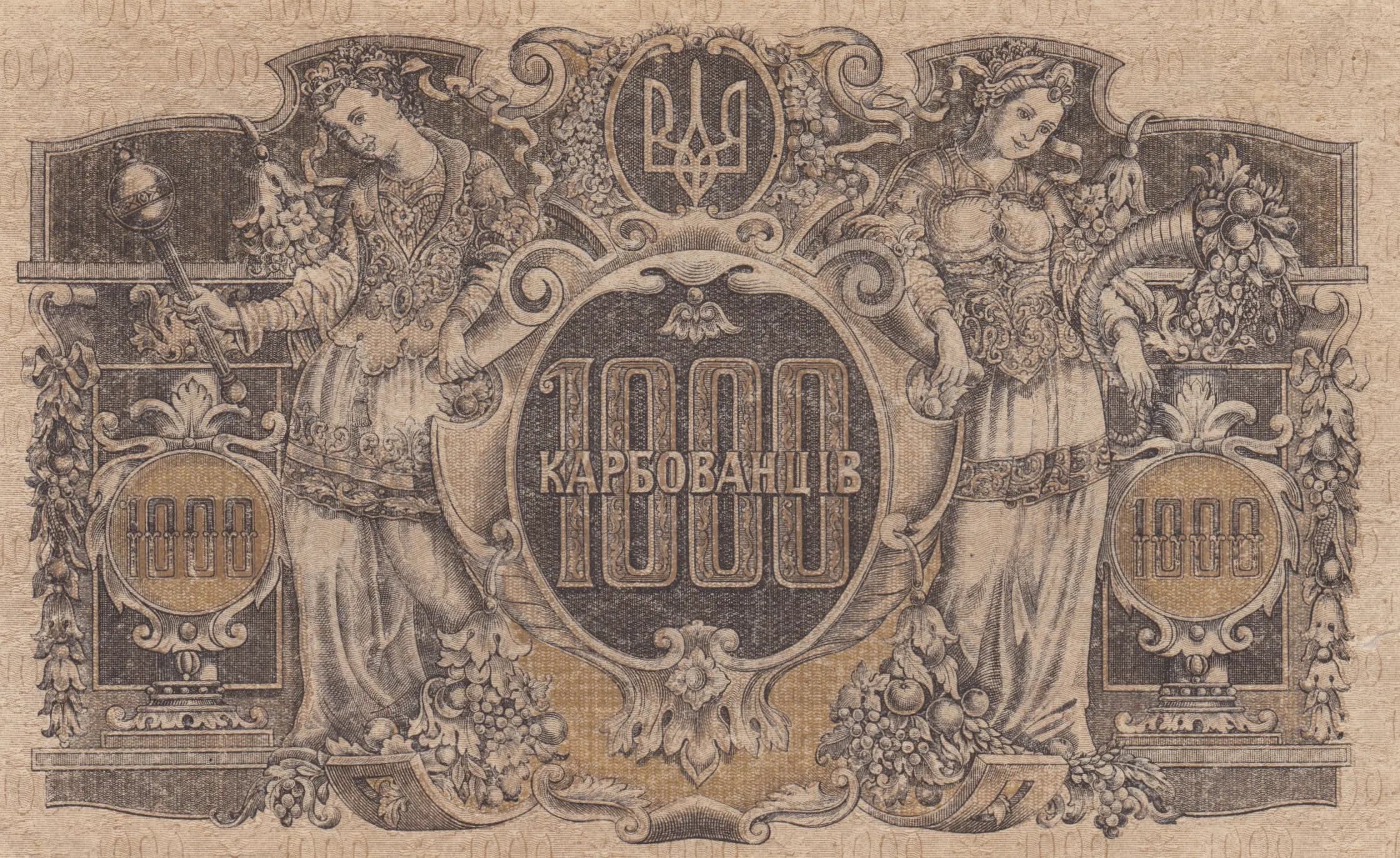
This is a striking example of the Ukrainian State's 1000 Karbovantsiv note from 1918, presented in AU condition with crisp, well-preserved printing throughout. The note showcases elaborate baroque-style engraving featuring two allegorical female figures flanking a central denomination cartouche, the Ukrainian trident national emblem, and extensive grape vine imagery symbolizing prosperity and agriculture. The rich tan and brown color scheme with red accents, combined with the exceptional preservation and fine detail work visible in both obverse and reverse, makes this an impressive example of early Ukrainian numismatic design during a brief but historically significant period of independence.
common. eBay auction data shows consistent, regular sales activity across multiple condition grades (VG through PMG 67), with typical price realizations ranging from $15-$150 depending on grade, and lower grades frequently selling below $50. The existence of multiple variants (P-35a, P-35b, P-35c) catalogued by PMG, combined with steady market availability, indicates these notes were issued in sufficient quantities to remain relatively common in the numismatic market today. While historically significant as part of a short-lived Ukrainian independence period, the note has not demonstrated the scarcity characteristics (limited print runs, recalls, or extreme rarity in certain conditions) that would classify it as scarce or rare.
This note was issued during the brief existence of the Ukrainian State (Ukrainska Derzhava) between 1917-1920, a tumultuous period of Ukrainian independence following the Russian Empire's collapse during World War I and the subsequent Russian Civil War. The allegorical imagery—particularly the agricultural prosperity symbols (grapes, fruits, and female figures representing abundance)—reflects the new nation's aspirations to establish itself as a sovereign state with its own stable currency and independent financial system. The prominent display of the Ukrainian trident and inscriptions in Ukrainian language underscore the nationalist character of this issuance, representing Ukraine's assertion of cultural and political identity during this brief interregnum before Soviet incorporation.
The obverse (front) presents a classically-proportioned baroque composition with a central ornate cartouche containing the '1000' denomination in decorative numerals, flanked by two standing allegorical female figures representing prosperity and state virtues. Above the central design sits the Ukrainian national trident (Tryzub), the heraldic symbol of Ukrainian statehood, positioned between ornamental flourishes. The composition is further enhanced by elaborate scrollwork, laurel wreaths in the upper corners, grape clusters and vine motifs throughout, and a formal state seal or circular red stamp in the lower center. The reverse (back) continues the allegorical theme with two female classical figures in flowing robes, the figure on the left holding grapes and the figure on the right holding fruits, supporting a large central medallion containing the denomination. A cherubic putto face appears among decorative elements at top center near the trident. Extensive grape vine imagery, flowering plants, and baroque scrollwork dominate the composition, all rendered in fine engraved line work. The design intentionally emphasizes Ukraine's agricultural wealth and the promise of prosperity under independent statehood.
FRONT SIDE: 'УКРАЇНСЬКА ДЕРЖАВА' (Ukrainian State); 'ЗНАК ДЕРЖАВНОЇ СКАРБНИЦІ' (State Treasury Note/Mark); 'ПТИЦЯ КАРБОВАНЦІВ' (appears to be a variant or corrupted text relating to Karbovanets); 'ХОДИТЬ НАРІВНІ З КРЕДИТОВИМИ БНЕТАМИ' (Circulates equally with credit notes); 'ФАЛЬШУВАННЯ КАРАЄТЬСЯ ПО ЗАКОНУ' (Counterfeiting is punishable by law); Denomination '1000' appearing in multiple locations; Serial number 'АГ 866034' (AG 866034); 'Директор державної скарбниці' (Director of State Treasury); Signature 'Дусь упник' (appears to be the treasury director's handwritten signature). BACK SIDE: 'КАРБОВАНЦІВ' (Karbovanets - currency unit) appearing multiple times; Denomination '1000' appearing in corner medallions and central cartouche.
Steel engraving (intaglio printing) executed with exceptional precision, as evidenced by the fine line work, detailed cross-hatching in background patterns, subtle tonal gradations, and sharp reproduction of intricate baroque flourishes visible in both obverse and reverse. The multiple color impression (brown on tan underprint with red accents) indicates a multi-pass printing process typical of currency production during this era. The security printing techniques include repeating background patterns, fine line repeats, and intricate engraved detail work designed to deter counterfeiting. While the specific printer is not definitively identified in available catalog data, Ukrainian State notes of this period were typically produced by the State Printing Works (Державна друкарня) in Kyiv, or possibly by contract with external security printers given the sophisticated technical execution.
This note is catalogued as Pick P-35a, part of a three-variant series (P-35a, P-35b, P-35c) all representing the 1000 Karbovantsiv denomination from 1918. The visual analysis shows serial number AG 866034, which would be consistent with identifying the specific printing run and variety. Variants within this Pick number likely differ in signature authorities, text variations, or serial number prefix designations reflecting the various treasury officials or printing runs during the Ukrainian State period (1918-1920). Without direct comparison imagery of P-35b and P-35c, the precise distinguishing characteristics between varieties cannot be definitively stated, but collectors should note that variant identification is important for cataloguing purposes, as different varieties may have different rarity levels.