100 griven 1918
Market Prices
24 salesAbout This Note
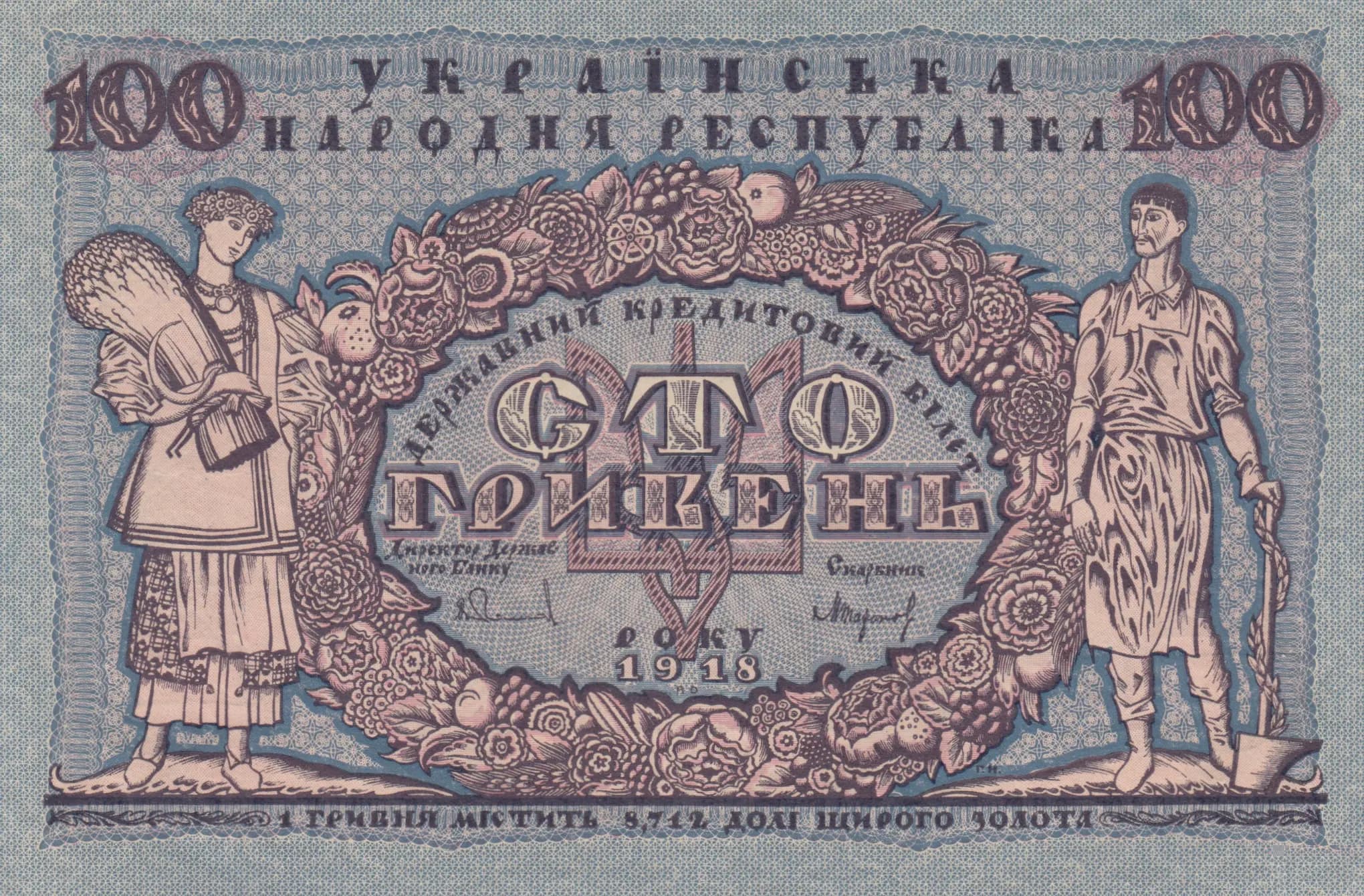
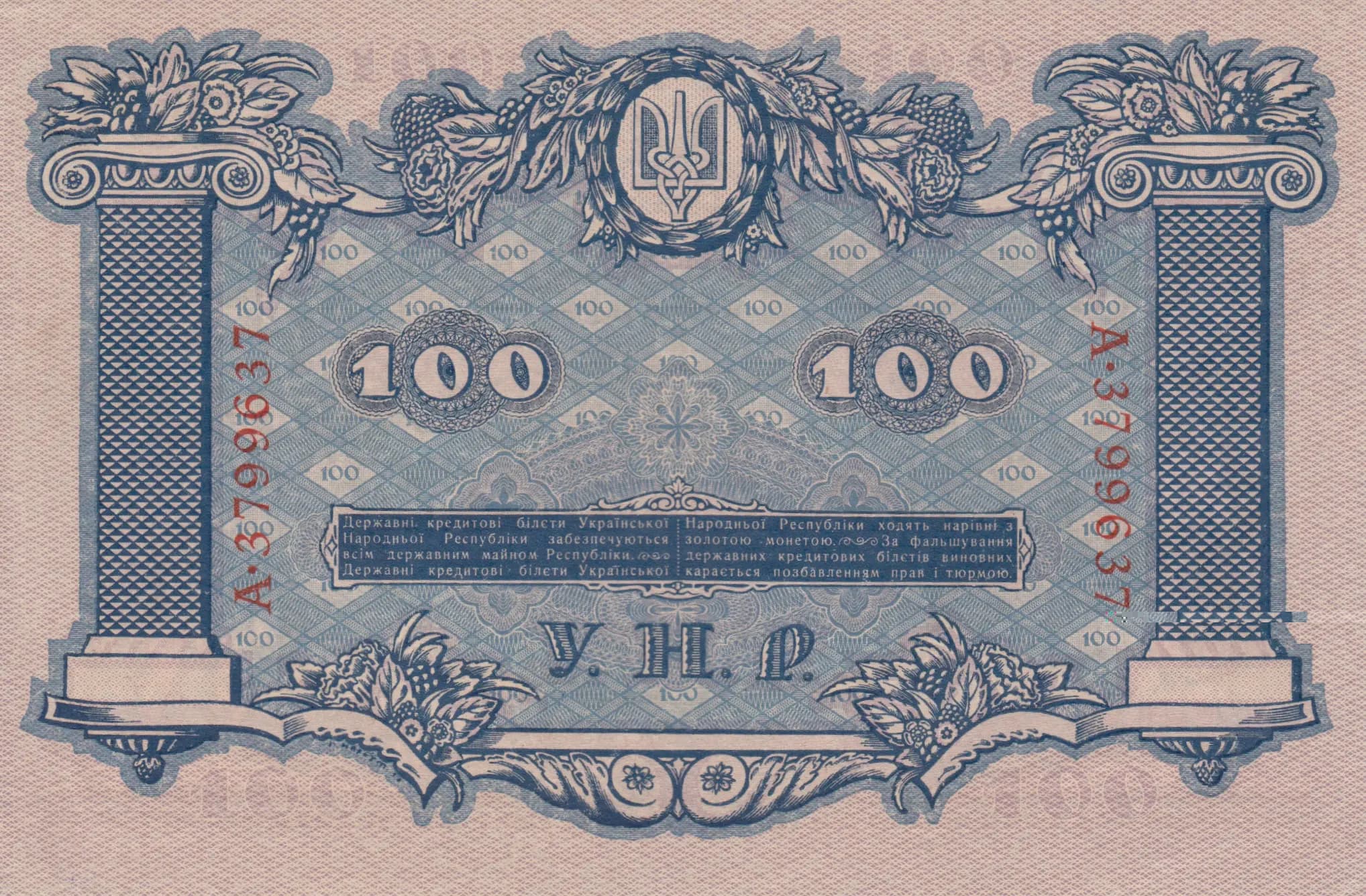
This is an exceptional example of the Ukrainian People's Republic 100 Hryvnias from 1918 (Pick P-22a), presenting in AU condition with virtually no signs of circulation wear. The note features striking ornamental design work with traditional peasant figures in embroidered dress flanking a decorative wreath on the obverse, while the reverse displays classical architectural elements and the distinctive trident symbol within a winged wreath. The sharp printing, vibrant color palette of purple, blue-gray, and cream tones, and pristine paper quality make this an attractive example of early Ukrainian monetary design during the tumultuous independence period.
Common. Despite the note's historical significance as a product of the brief 1918 Ukrainian independence period, eBay market data shows examples in various grades consistently selling for modest amounts, with AU/UNC examples ranging from approximately $28-57 over the past decade. The 2016 catalog value of $50 for UNC reflects accessible pricing. No evidence of restricted print runs or recalls exists for this Pick number. The note's common classification is confirmed by PMG population data showing multiple graded examples in circulation among collectors, and the consistent supply of examples appearing in the secondary market.
Issued by the Ukrainian People's Republic (Українська Народна Республіка) in 1918, this note represents a critical moment when Ukraine briefly achieved independence following the Russian Revolution and the collapse of the Austro-Hungarian Empire. The iconography—featuring peasants in traditional Ukrainian dress and the trident symbol (the national emblem)—deliberately asserts Ukrainian national identity and sovereignty. The reverse's reference to gold coin backing reflects the note's attempt to establish monetary credibility during a period of extreme political and economic instability.
The obverse features two standing figures in traditional Ukrainian folk dress—the left figure in a long decorative coat and the right in embroidered Slavic clothing—positioned as sentries flanking a central ornamental wreath. The wreath is composed of classical fruit and grape clusters with birds integrated throughout, surrounding the denomination and issuer text. Denomination numerals appear prominently in the upper corners. The reverse abandons figurative elements for classical architectural symbolism: paired Corinthian columns frame the central design, with the Ukrainian national trident symbol (appearing within a winged wreath at top center) serving as the heraldic focal point. Multiple instances of '100' are positioned within decorative circular medallions, and fine geometric patterns and anti-counterfeiting linework fill the background throughout both sides.
FRONT: 'Україньська Народна Республіка' (Ukrainian People's Republic) | 'СТО ГРИВЕНЬ' (One Hundred Hryvnias) | '1918' (year of issue) | 'Державна Касса' (State Treasury). BACK: '100' (denomination, repeated twice in circular medallions) | 'У.П.Р.' (U.P.R. - abbreviation for Ukrainian People's Republic) | Extended warning text stating: 'State credit notes of the Ukrainian People's Republic are in circulation equal to notes of the People's Republic and are secured by gold coins. For counterfeiting state credit notes [legal penalties follow]' - text asserting the note's legitimacy and warning of consequences for forgery.
Intaglio engraving, as evidenced by the deep, crisp line work visible in the geometric patterns, the ornamental details, and the fine background hatching described in the visual analysis. The complexity of the security engraving—particularly the intricate geometric borders, architectural elements, and the density of fine lines used for anti-counterfeiting purposes—indicates professional security printing typical of European banknote production of the era. The specific printer for Ukrainian notes of this period has not been definitively identified in standard catalogs, though Austrian and German printers were known to produce Ukrainian currency during this transitional period.
Pick P-22a represents the standard variety of this 100 Hryvnia denomination from 1918. The visual analysis does not reveal distinctive serial number prefixes, signature variants, or overprints that would indicate sub-varieties. PMG cataloging lists only one variant (P-22a) for this base Pick number, suggesting no major recognized sub-types exist for collectors to distinguish. Standard cataloging conventions for Ukrainian 1918 issues do not identify significant printing variations for this denomination that would create separate collectible varieties.