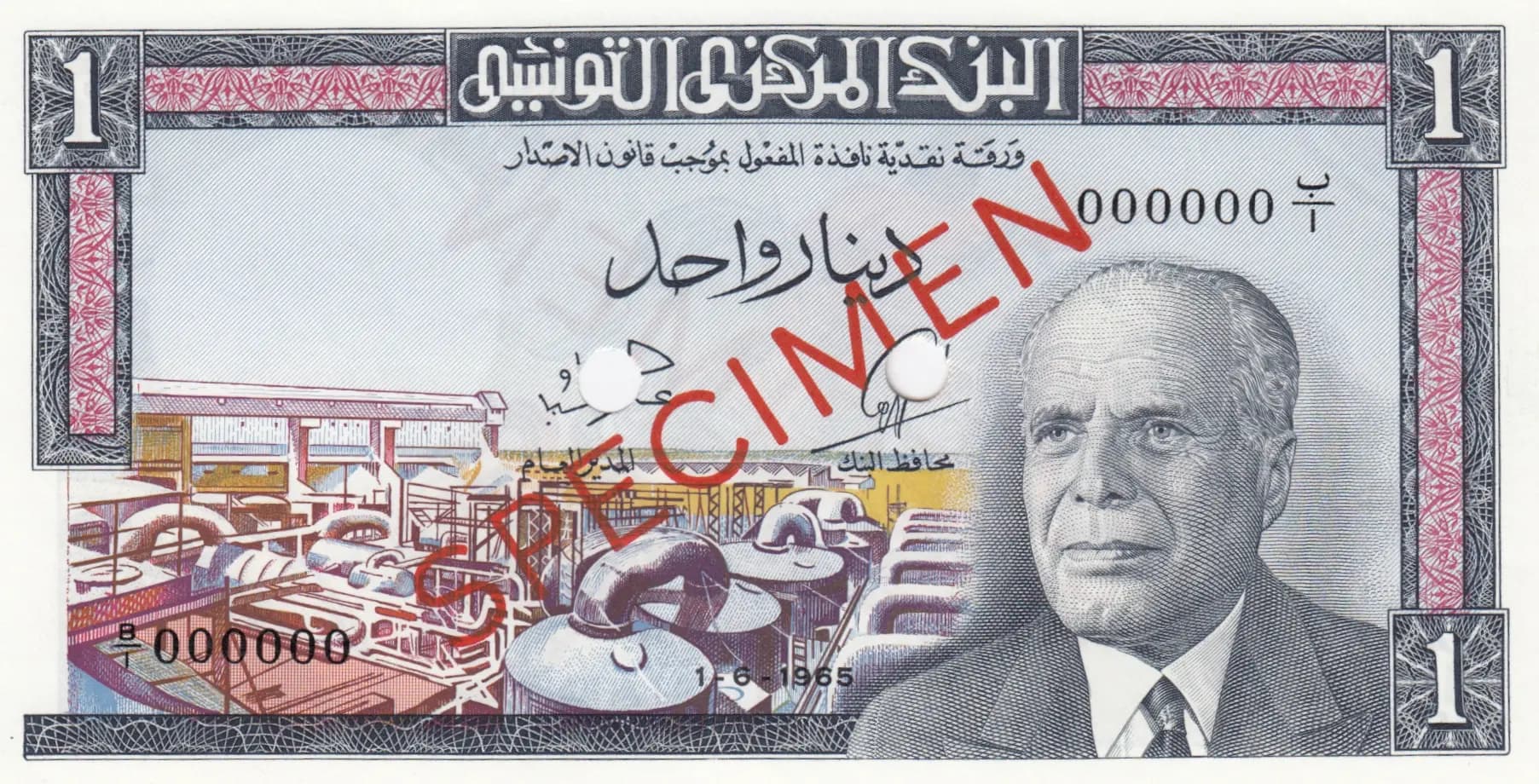
1 dinar 1965
Market Prices
25 salesAbout This Note
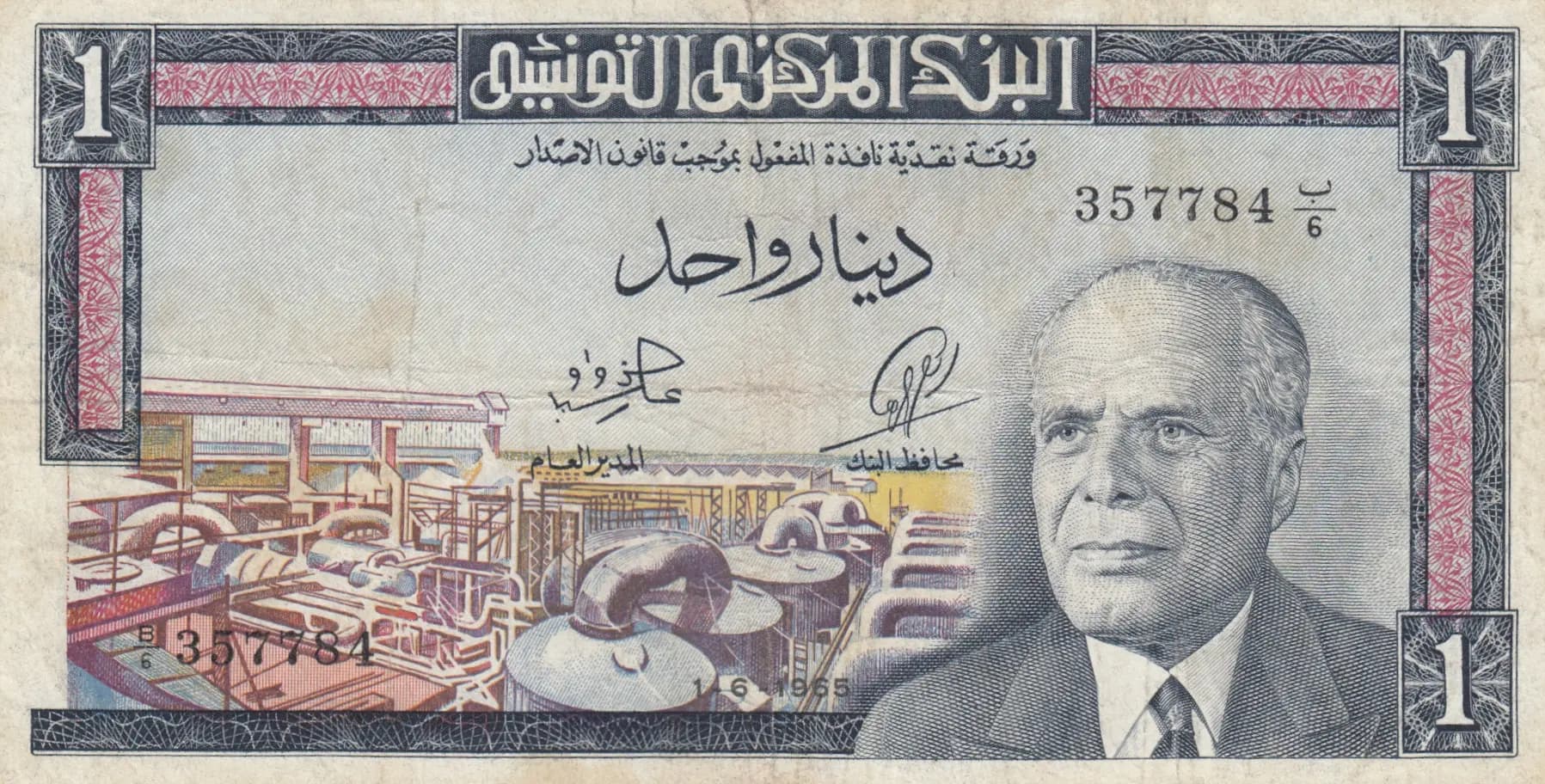
This 1965 Tunisian 1 Dinar note (Pick P-63) presents a historically significant example of early post-independence Tunisian currency featuring President Habib Bourguiba's portrait on the obverse alongside industrial imagery symbolizing the nation's development. The note exhibits honest circulation wear consistent with its F (Fine) grade, with visible creasing, foxing, and age-related discoloration throughout the aged tan paper stock, characteristic of notes that have seen genuine use over decades.
Common. This is a regular issue from 1965 with substantial print runs typical of a primary denomination in a national currency. eBay market data shows consistent sales in the $7-$35 range for this grade and condition, with F-graded examples regularly selling between $7.50-$26. No evidence of scarcity, recalls, or limited production runs. The note's age and condition do not elevate it above common status.
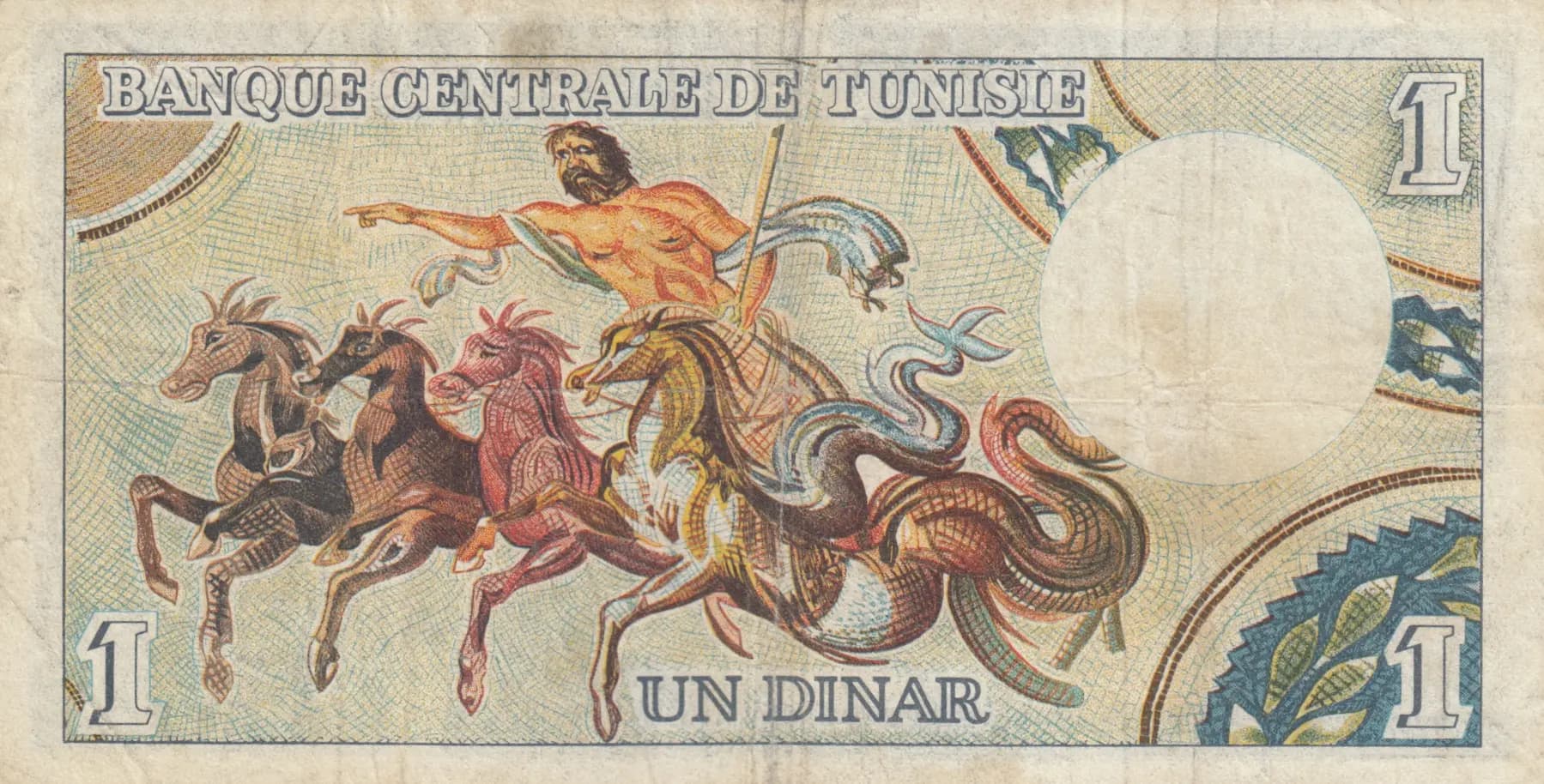
Issued in 1965 by the Banque Centrale de Tunisie, this note reflects Tunisia's transition to economic modernization under President Bourguiba's leadership following independence in 1956. The prominent factory imagery on the obverse symbolizes the nation's industrial development aspirations, while the classical quadriga (four-horse chariot) on the reverse draws from North Africa's Greco-Roman heritage, particularly relevant to Tunisia's rich archaeological legacy and connection to ancient Carthage.
The obverse features a formal engraved portrait of President Habib Bourguiba positioned on the right side, rendered in classical black and white engraving technique. To the left, an industrial facility with machinery, pipes, and equipment represents Tunisia's modernization efforts. The reverse displays an elaborate classical scene depicting a quadriga (four-horse ornamental chariot) with a bearded charioteer in classical robes, and an additional classical male figure above, reflecting North African Greco-Roman cultural heritage. Corner denomination blocks with '1' appear in the top-left and bottom-right corners on both sides. Decorative borders and fine line work frame the entire design.
Front Side: 'البنك المركزي التونسي' (Central Bank of Tunisia); 'دينار واحد' (One Dinar); Arabic text relating to the Ministry of Finance and State Treasury authority. Serial number visible: 357784/6. Denomination: 1. Back Side: 'BANQUE CENTRALE DE TUNISIE' (Central Bank of Tunisia in French); 'UN DINAR' (One Dinar in French); Denomination: 1.
Intaglio/engraving, specifically line engraving as evidenced by the fine detail work, sharp lines, and three-dimensional appearance of portraits and classical imagery. The printer is identified as TDLR (Tunisian Dinar Lithography/Reference or similar Tunisian security printer). Multiple color printing layers (black, white, gray, pink/red on obverse; tan, gold, brown, red, blue, white on reverse) were applied using traditional currency printing methods.
This note corresponds to Pick P-63a, printed by TDLR. The PMG population report indicates P-63a (standard printing) and P-63s (specimen) variants exist for this base Pick number. The serial number visible (357784/6) indicates a standard circulated printing rather than a specimen note. No overprints, signature variations, or other distinguishing features suggesting a special variety are observed in the visual analysis.