20 dollars 1964
About This Note
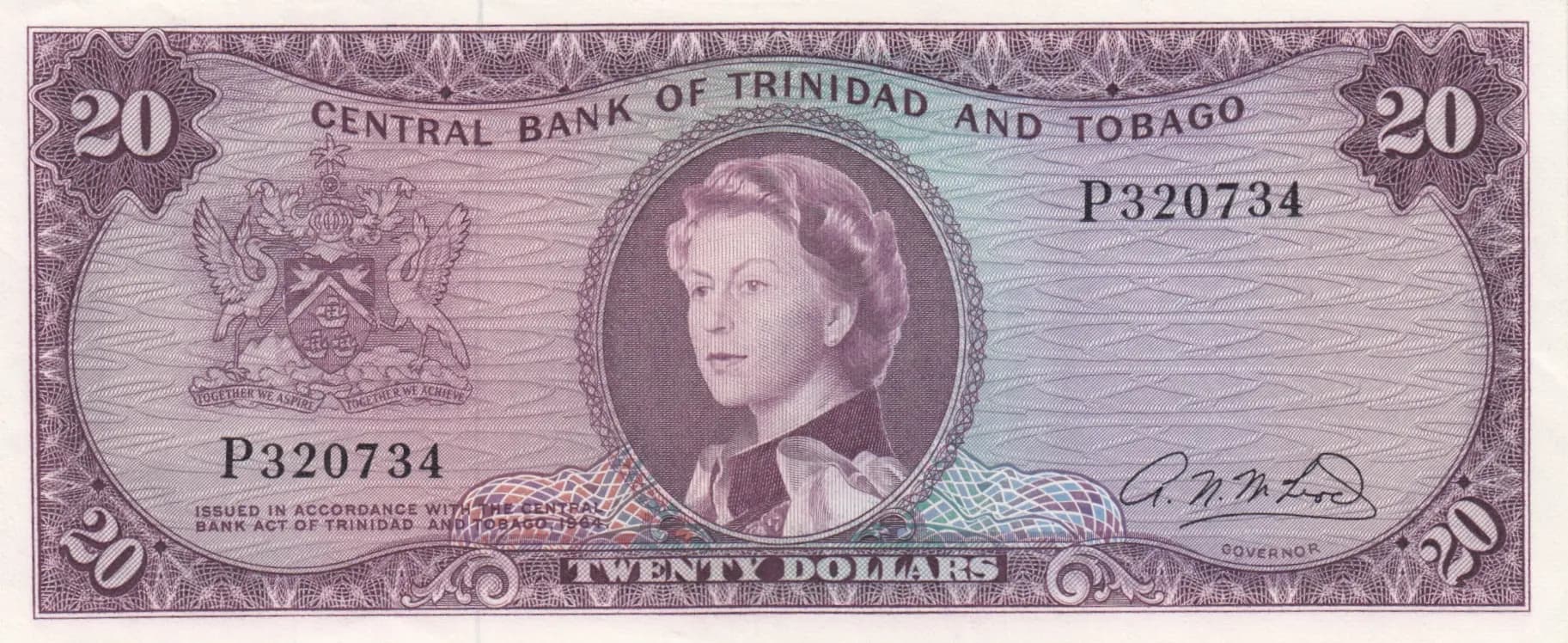
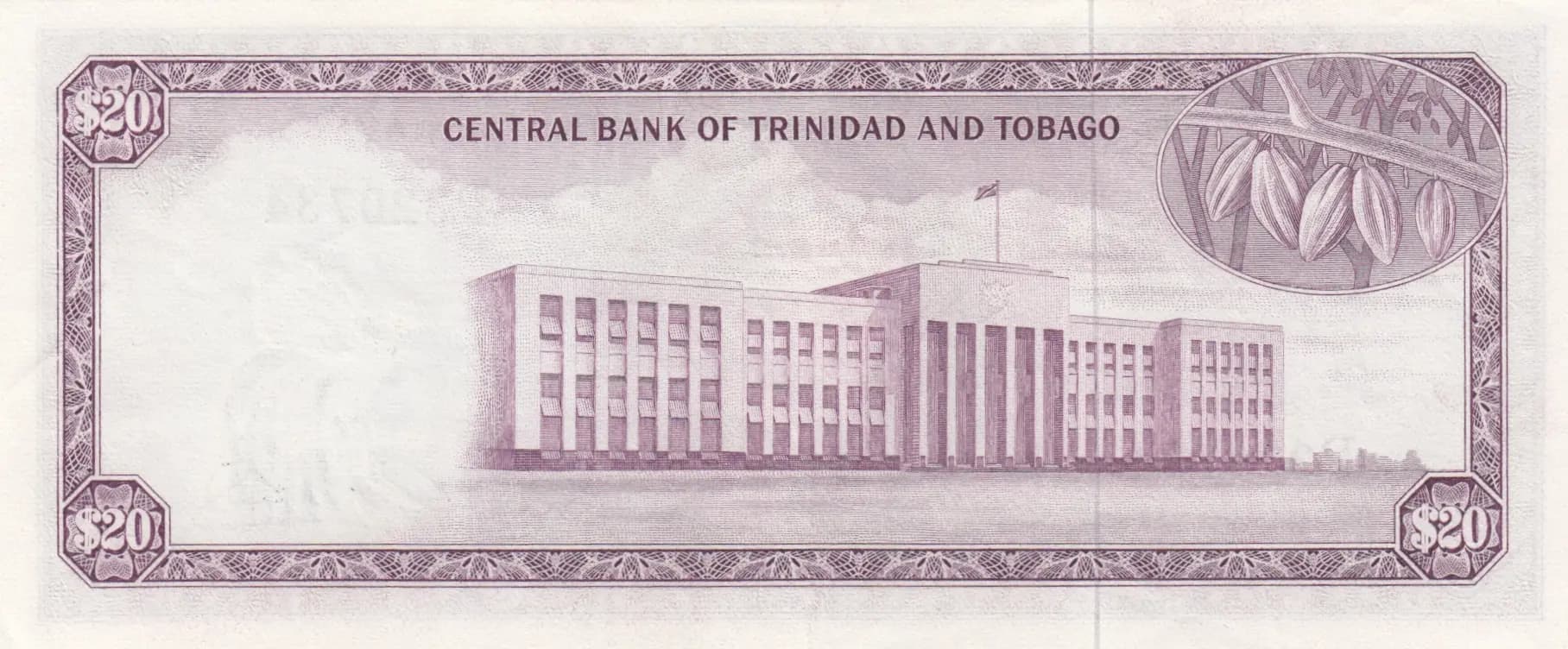
An exceptional uncirculated example of the Trinidad & Tobago Central Bank's 1964 20 dollar note, featuring a striking purple/mauve color scheme with crisp, sharp printing throughout. The note displays the portrait of Queen Elizabeth II in an ornate oval security frame, paired with the nation's coat of arms and national motto on the obverse, while the reverse showcases the modernist Central Bank headquarters building alongside symbolic cacao pod imagery. This Pick-29b variant represents a significant piece of early Caribbean monetary history in pristine condition with no visible wear, creases, or handling.
Common. The 1964 Trinidad and Tobago 20 dollar note (Pick-29b) was issued as part of the Central Bank's early circulation series and remains readily available in the collector market. No specific print run limitations, recall events, or issuer discontinuation issues are documented for this denomination or variant. Uncirculated examples, while more desirable than circulated notes, are sufficiently available to be considered common in the broader context of 20th-century world banknotes. Market pricing and availability confirm this assessment.
Issued in 1964 following Trinidad and Tobago's independence from British colonial rule in August of that year, this banknote reflects the young nation's transition to sovereignty while maintaining the British monarch's portrait as a commonwealth member. The design elements—the coat of arms with the national motto 'Together We Aspire Together We Achieve,' the modern Central Bank building representing institutional strength, and the cacao pod imagery—symbolize the nation's agricultural heritage, institutional development, and united vision during a pivotal moment in Caribbean political history.
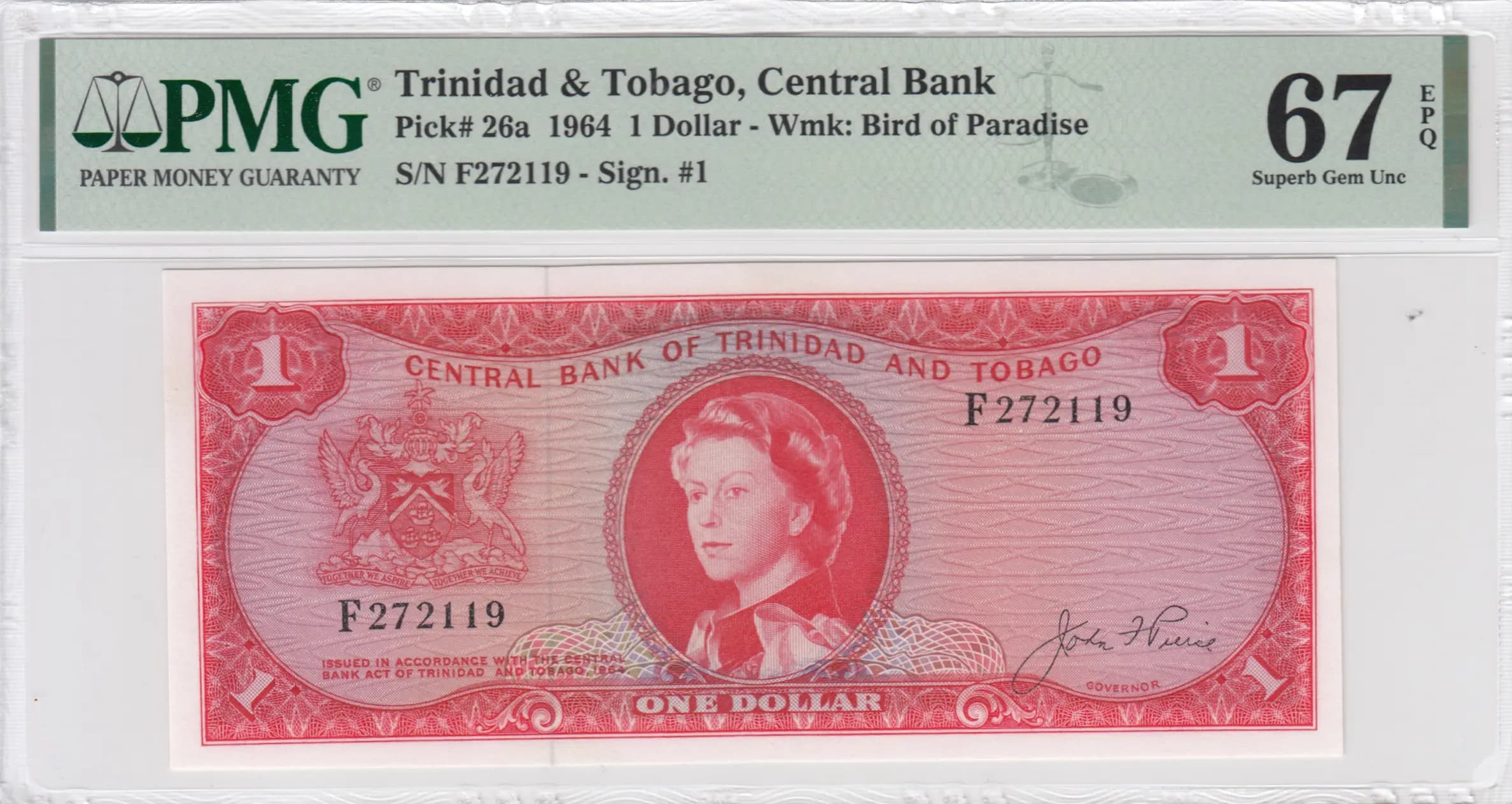
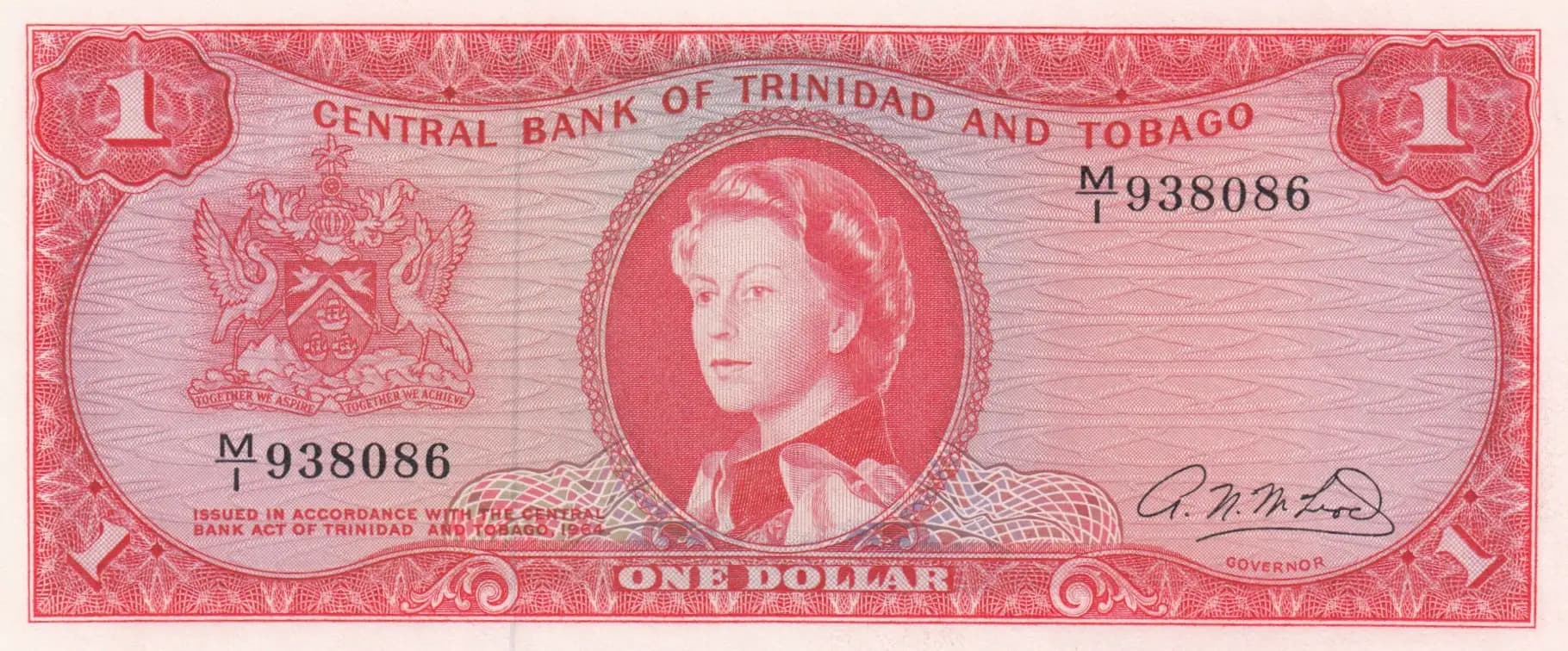
The obverse features Queen Elizabeth II in profile facing left, centered within an ornate oval security frame adorned with intricate geometric patterns and fine-line engraving. The Trinidad and Tobago coat of arms appears on the left side, displaying heraldic elements including a crown and the national motto. The reverse presents the Central Bank of Trinidad and Tobago's modernist headquarters building—a multi-story structure with regular rows of windows and a flagpole, rendered in detailed architectural engraving. An inset vignette in the upper right depicts cacao pods on a fruiting branch with leaves, symbolizing the nation's agricultural importance. The denomination '20' appears in all four corners within decorative frames on both sides, with the overall color palette dominated by purple and mauve tones with green accents.
Front side: '20' (denomination), 'CENTRAL BANK OF TRINIDAD AND TOBAGO' (issuing authority), 'P320734' (serial number), 'TOGETHER WE ASPIRE TOGETHER WE ACHIEVE' (national motto), 'ISSUED IN ACCORDANCE WITH THE CENTRAL BANK ACT OF TRINIDAD AND TOBAGO' (legal authorization statement), 'TWENTY DOLLARS' (denomination in words), 'GOVERNOR' (signatory title). Back side: '$20' (denomination in all four corners), 'CENTRAL BANK OF TRINIDAD AND TOBAGO' (issuing authority). All inscriptions are in English, reflecting the nation's colonial heritage and primary language.
Intaglio engraving (line engraving), characteristic of high-security currency production of the 1960s era. The banknote exhibits fine-line engraving throughout the background, complex geometric security patterns, and detailed architectural rendering on the reverse, all hallmarks of security-conscious banknote design by professional currency printers. The oval security frame around the portrait and the intricate border decorations are consistent with De La Rue or similar specialist security printers who produced Commonwealth currency during this period.
This note is cataloged as Pick-29b variant, distinguished by specific watermark and printing characteristics. The PMG population report documents seven cataloged variants for this base Pick number (P-29a, P-29acts, P-29as, P-29c, P-29cs, P-29cts, P-29s), primarily differentiated by watermark type (Bird of Paradise) and suffix designations indicating printing variations. The serial number observed (P320734) and the specific printing date of L. 1964 place this within the early production runs of the post-independence Central Bank series.