1 dollar 1977
About This Note
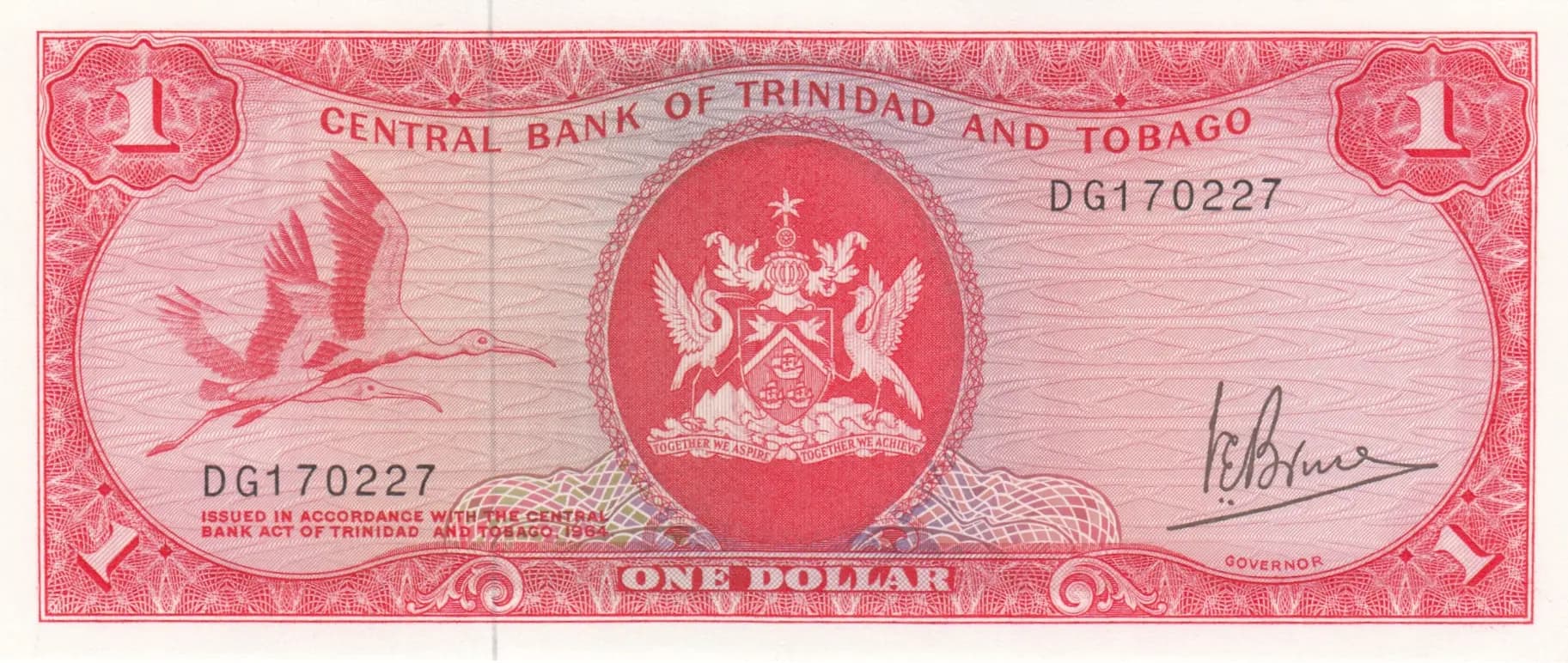
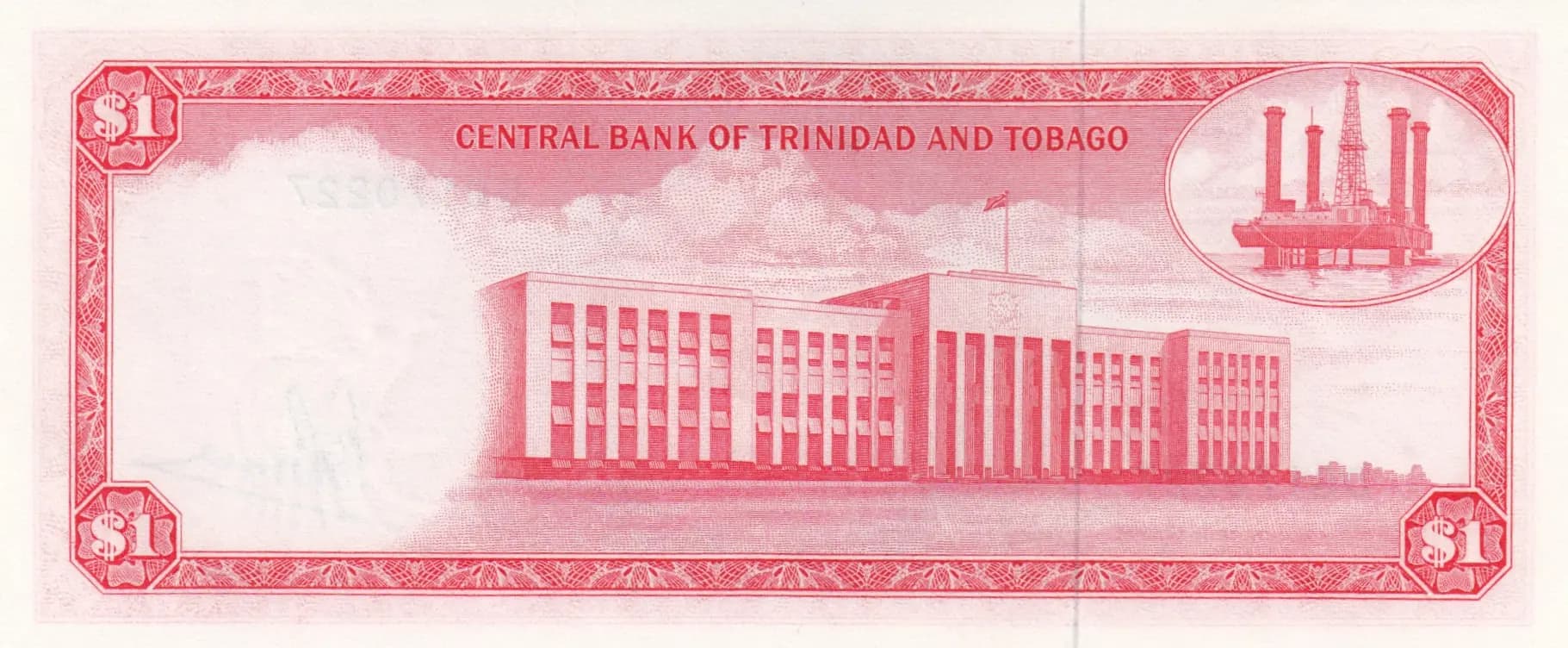
A visually striking 1 Dollar note from Trinidad and Tobago's 1977 issue, presented in uncirculated condition with excellent eye appeal. The note features a predominantly pink-red color scheme with the national coat of arms prominently displayed on the obverse, flanked by stylized birds, while the reverse showcases the Central Bank building and an oil platform—reflecting the nation's economic foundations. Minor aging consistent with its age is visible, but the note displays no creasing, tears, or circulation wear, making it an attractive specimen for collectors interested in Caribbean currency.
Common. The 1977 series of Trinidad and Tobago 1 Dollar notes (P-30a) represents standard-issue currency with substantial print runs typical of a nation's primary circulating denomination. No historical evidence suggests limited production, early recall, or short-lived issuing authority. The note's value in the numismatic market remains modest, consistent with common mid-20th century Caribbean banknotes.
Issued under the Central Bank Act of 1964, this 1977 note reflects Trinidad and Tobago's mid-1970s economic strength, particularly the oil boom that was transforming the island nation. The deliberate inclusion of an offshore oil platform on the reverse symbolizes the petroleum industry's critical importance to the national economy during this period of prosperity. The choice to feature both the seat of central banking authority (the Treasury building) and industrial infrastructure underscores the government's identification with modernization and resource-driven development.
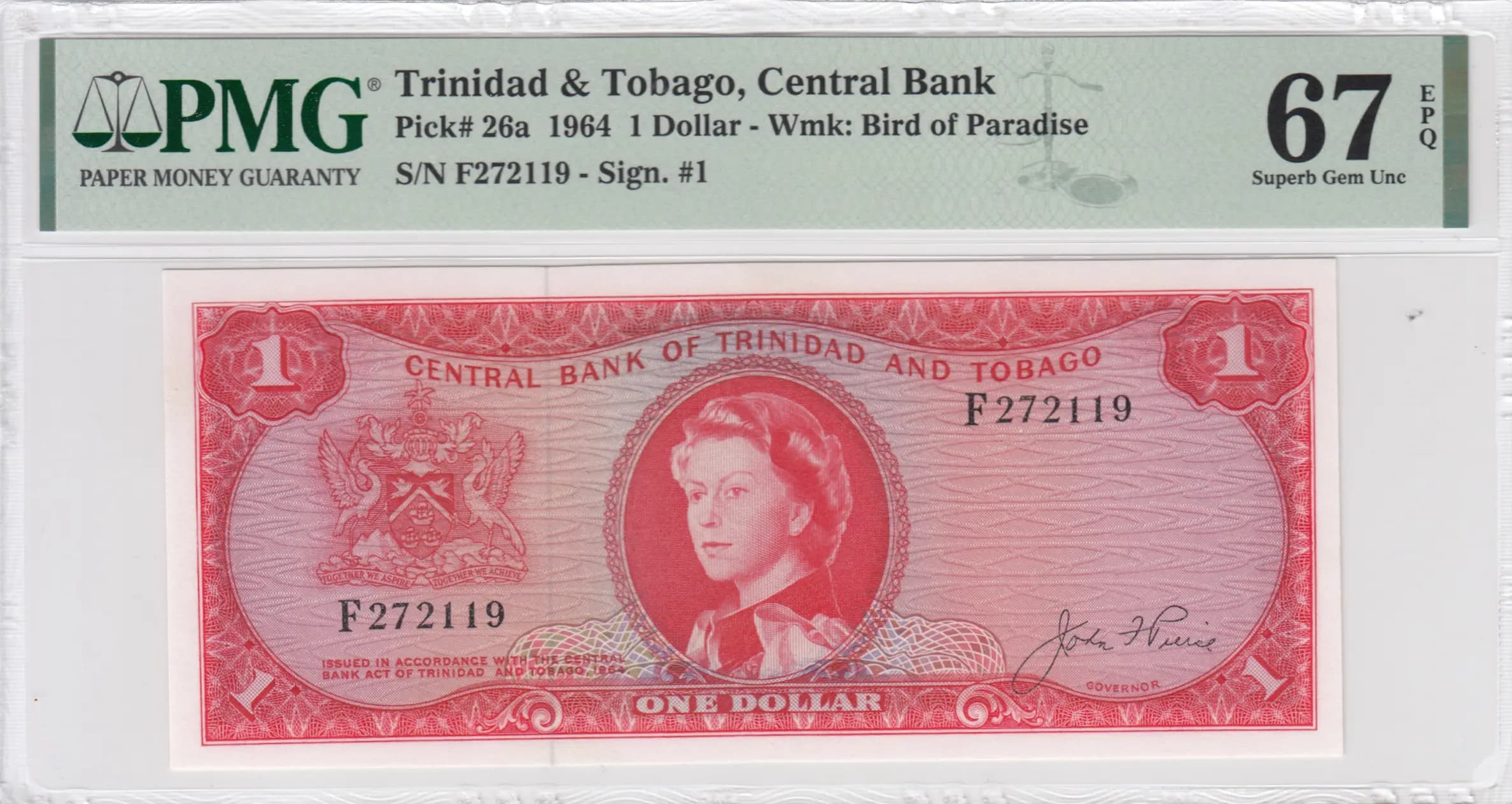
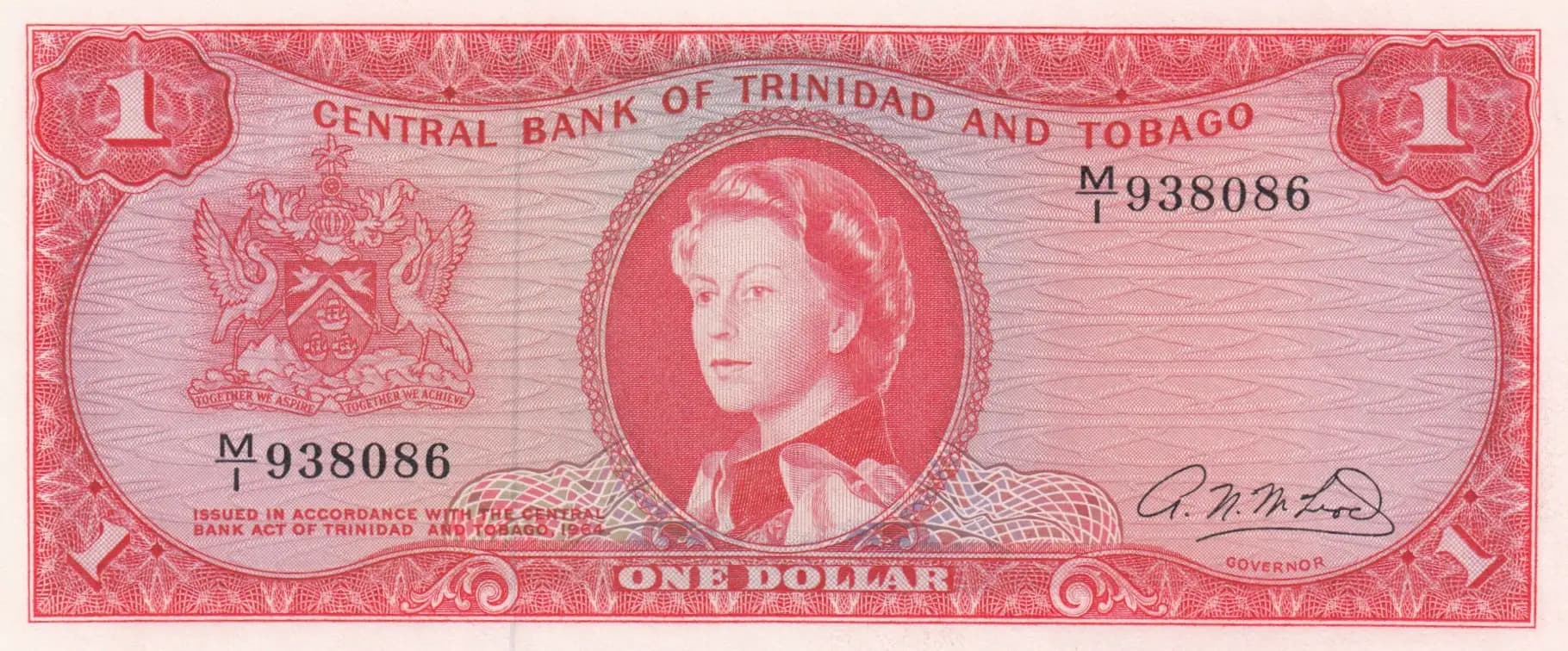
The obverse features the national coat of arms of Trinidad and Tobago as the central focal point, set within an ornate oval medallion and flanked by two heraldic birds with spread wings. To the left, three birds in flight (representing the scarlet ibis, Trinidad and Tobago's national bird) provide a naturalistic counterpoint to the formal heraldry. The reverse presents two key national symbols: the Central Bank's headquarters building (a modern, multi-story institutional structure occupying the center-lower portion) and an offshore oil drilling platform depicted in a circular inset in the upper right, symbolizing the petroleum industry. Decorative numerals '1' and '$1' appear in all four corners in ornate frames. The entire design is rendered in fine-line engraved style with sophisticated cross-hatching and geometric border patterns.
Front: 'CENTRAL BANK OF TRINIDAD AND TOBAGO' (issuing authority); 'ONE DOLLAR' (denomination); 'ISSUED IN ACCORDANCE WITH THE CENTRAL BANK ACT OF TRINIDAD AND TOBAGO, 1964' (legal authorization); 'GOVERNOR' and signature of K. Blume (Chief Executive authority); Serial number 'DG170227' appearing twice. Back: 'CENTRAL BANK OF TRINIDAD AND TOBAGO' (issuing authority); '$1' (denomination in decorative corner frames). All text in English.
Intaglio engraving (line engraving and recess printing), evidenced by the fine line work, precise cross-hatching patterns, ornate decorative borders, and the overall crisp definition characteristic of Central Bank note production from this era. The printer for Trinidad and Tobago Central Bank notes of this period was typically De La Rue or similar security printers, though specific attribution to this individual note requires additional documentation.
This note is identified as P-30a per the Pick catalog. The PMG population report indicates three catalogued variants exist for this base Pick number (P-30a, P-30p, P-30s), likely representing different signing authorities or minor design variations. The observed note bears the signature of Governor K. Blume and serial number DG170227. To definitively classify the specific variety, comparison with known signature sequences and serial number prefixes would be required; however, the P-30a designation (standard note, not specimen or presentation) appears appropriate for this uncirculated circulation note.