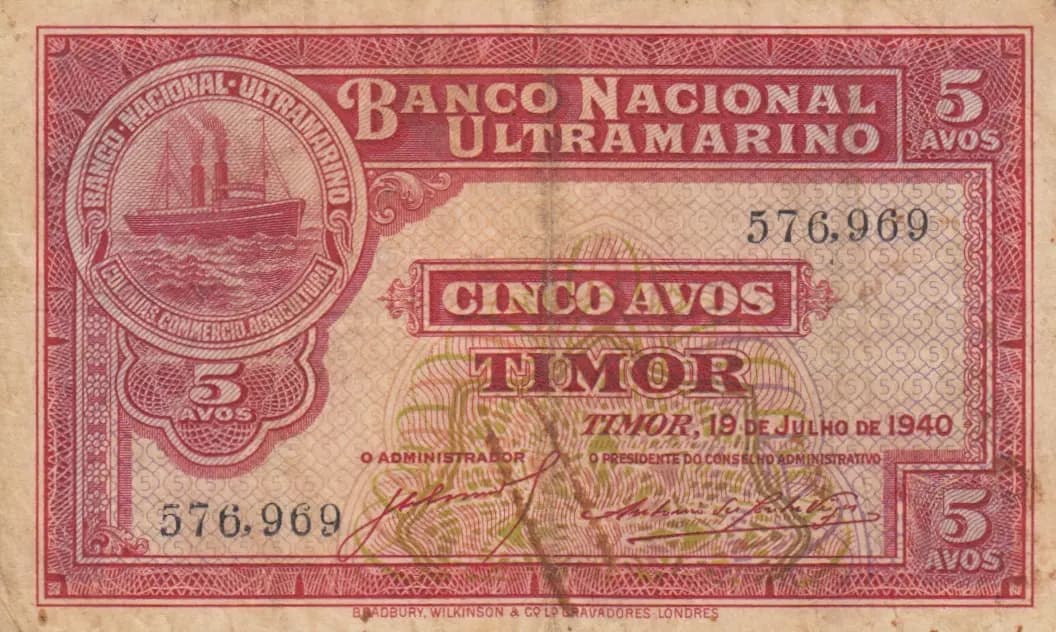
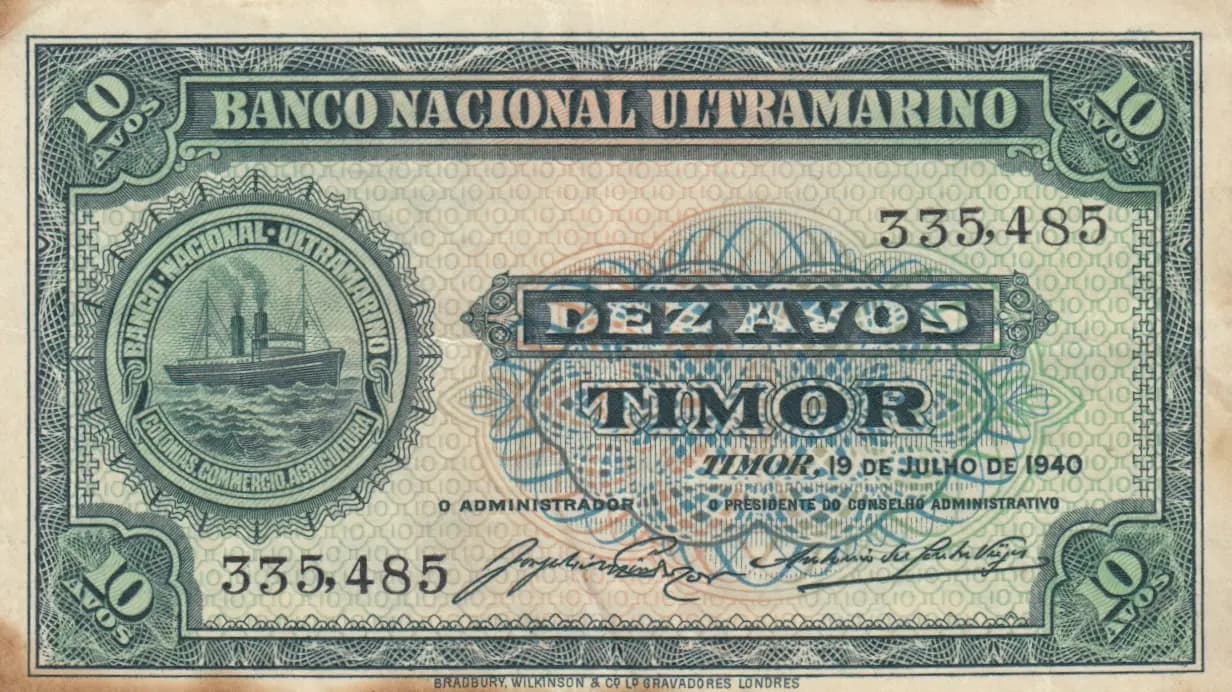
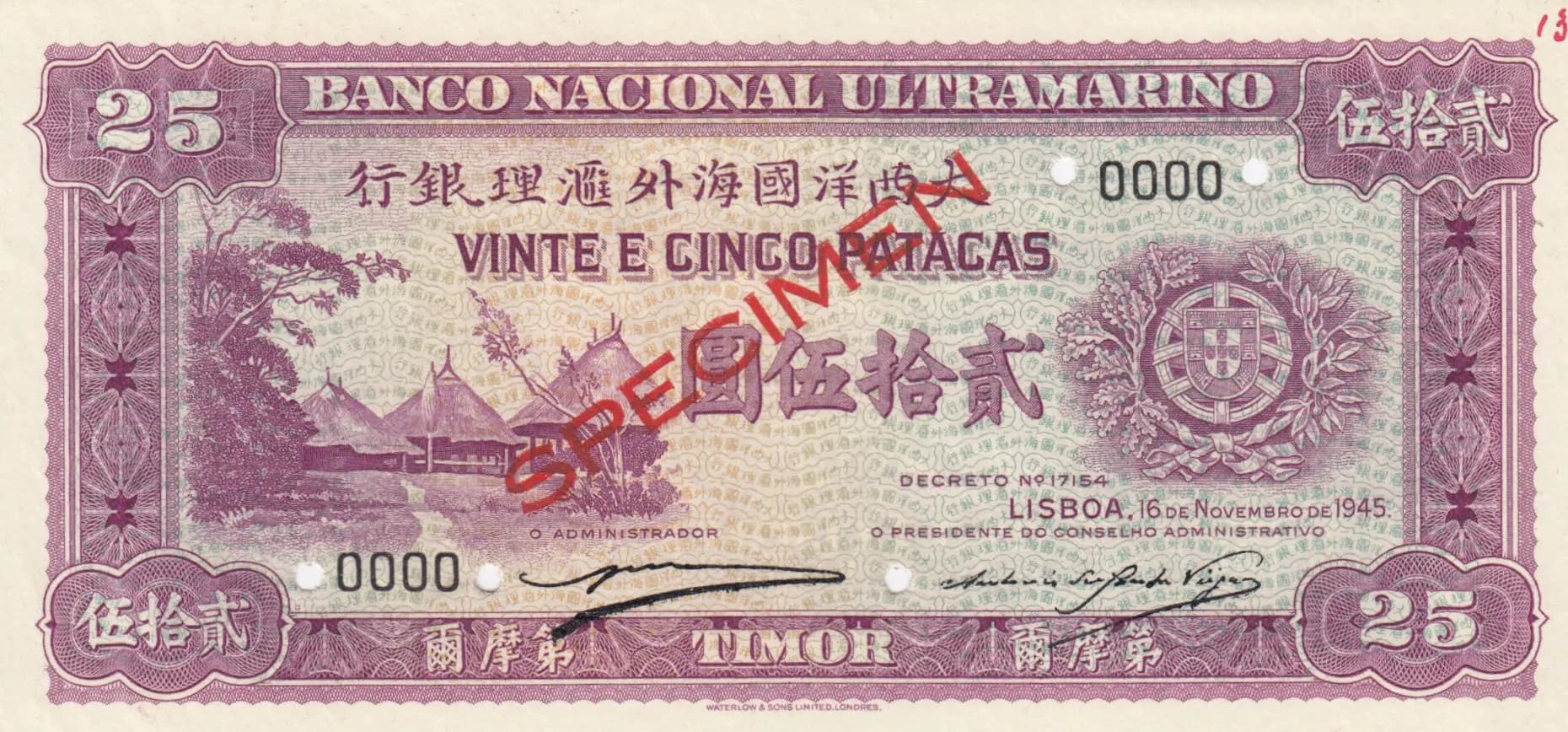
30 escudos 1959 specimen
Market Prices
About This Note
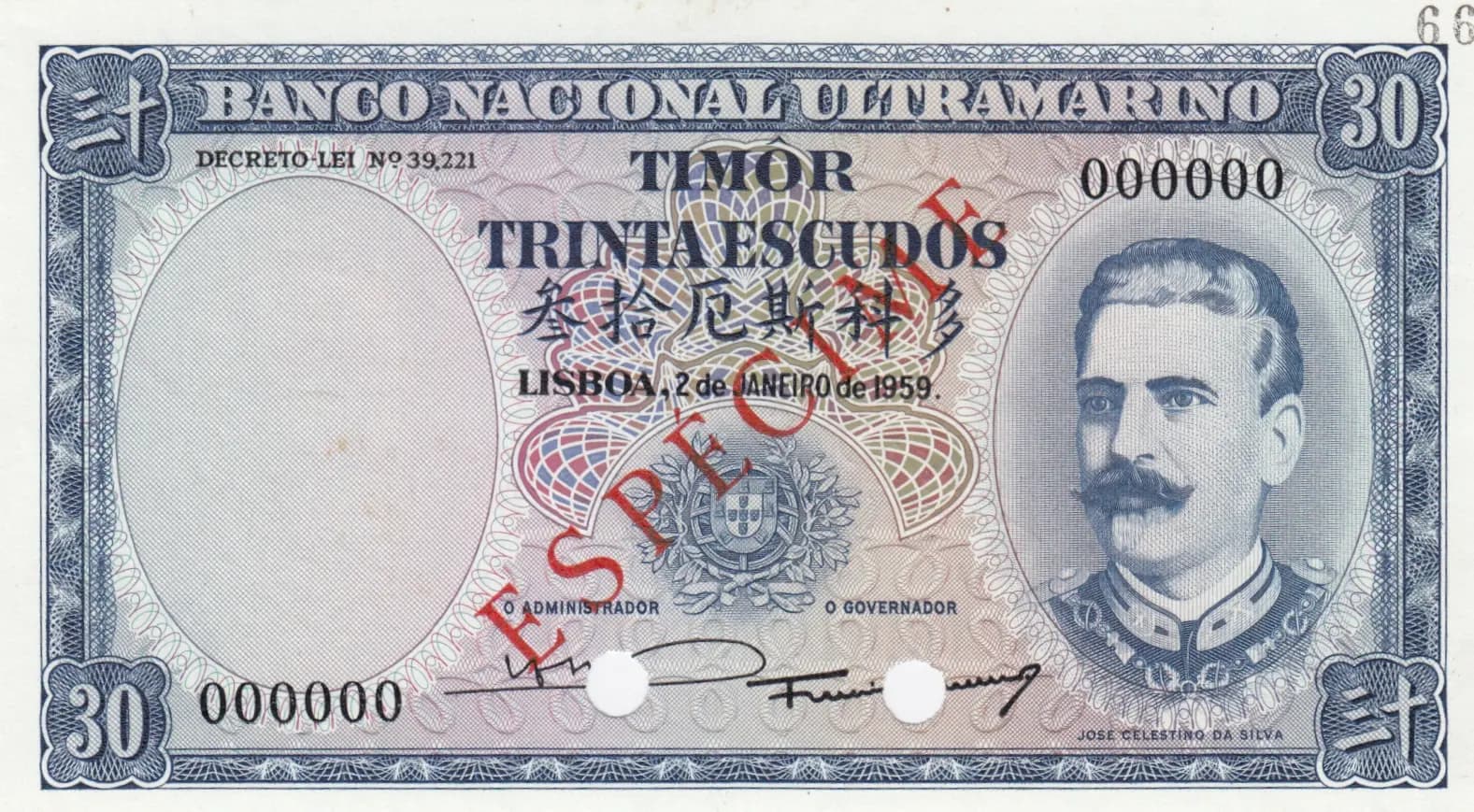
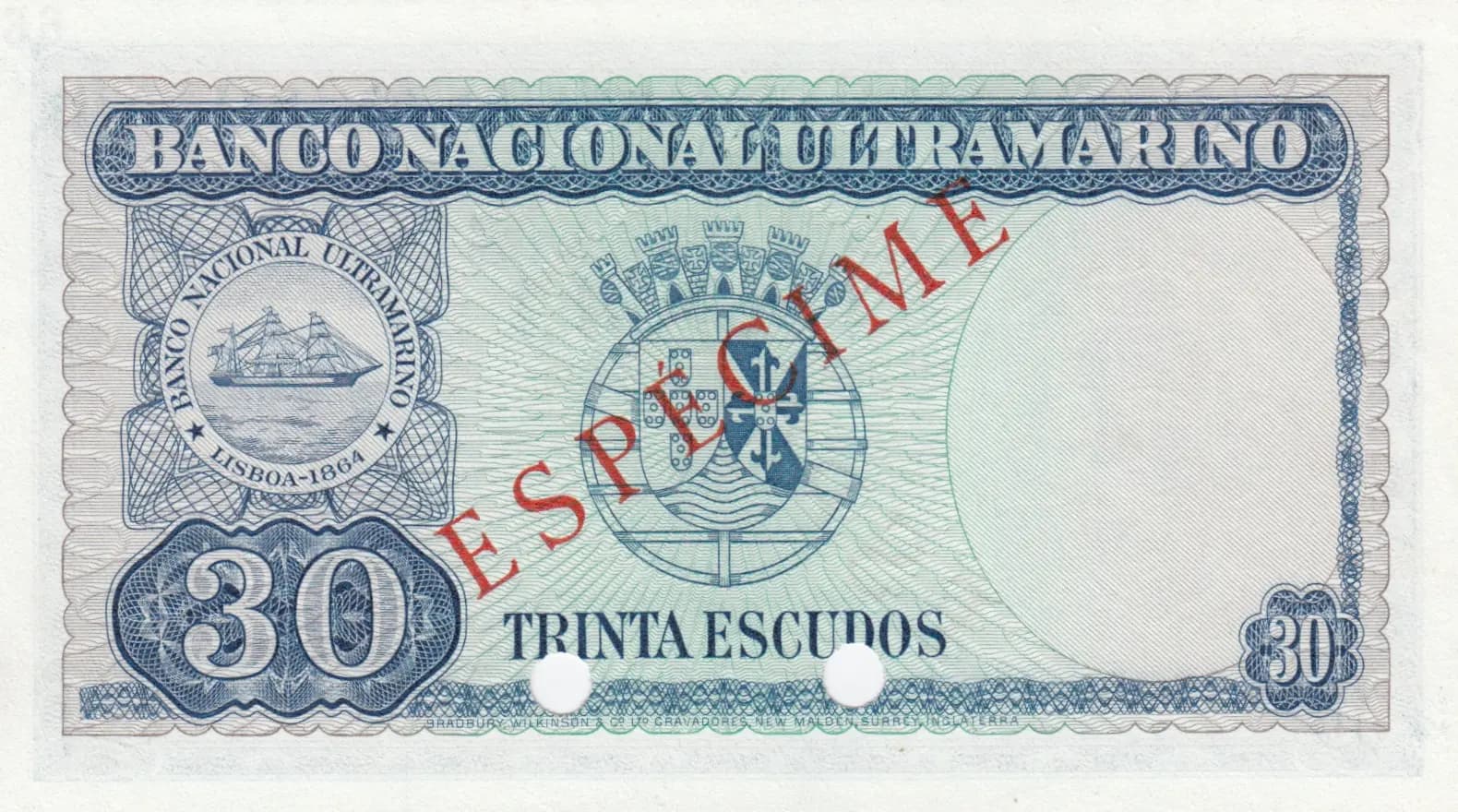
This is an uncirculated specimen note of the 1959 Timor 30 escudos issued by Banco Nacional Ultramarino, featuring a striking portrait of José Celestino da Silva on the obverse and a maritime caravel emblem on the reverse—both characteristic of Portuguese colonial-era currency design. The note displays excellent condition despite specimen cancellation holes and the diagonal red 'ESPECIMEN' overprint, with intricate blue and multicolor printing and decorative heraldic elements throughout. Specimen notes from this series are moderately collected, particularly when found in uncirculated condition as shown here.
Common. While specimen notes command a premium over circulated examples, this particular denomination and series saw sufficient production for specimen preservation. Secondary market eBay listings show highly variable pricing ($4.99 to $290.00 USD), but multiple UNC specimens have sold in the $8–$40 range, indicating reasonable availability among collectors. The 2016 catalogue value of $100 for UNC specimens appears inflated relative to current market activity; the note is not scarce in collector circles.
Issued on January 2, 1959, this note reflects Portugal's continued administration of the Timor territory during the colonial period, with the Banco Nacional Ultramarino serving as the central issuing authority for Portuguese overseas territories. The ship emblem dated 'Lisboa-1864' on the reverse commemorates the bank's founding and maritime heritage, while the Portuguese coat of arms and heraldic symbolism reinforce the colonial connection. The decree-law reference (Nº 39.221) anchors this issue within the formal Portuguese legal framework governing overseas currency circulation.
The obverse features a formal portrait of José Celestino da Silva, identified as a colonial administrator, positioned at right and rendered in three-quarter profile with distinctive facial hair (mustache and beard) and formal high-collar attire typical of late 19th/early 20th-century Portuguese officialdom. The center displays an ornamental Portuguese coat of arms flanked by laurel wreaths, indicating official state authority. The reverse showcases a caravel—the iconic Portuguese sailing vessel historically associated with maritime exploration—enclosed in a circular wreath frame on the left, with the crowned Portuguese coat of arms in a circular frame on the right. Both sides employ decorative rosette patterns in corners and intricate guillochéd border work characteristic of security printing of the era. The specimen cancellation is marked by two punch holes and a diagonal red overprint, standard practice for non-circulating presentation pieces.
FRONT SIDE: 'Banco Nacional Ultramarino' (National Overseas Bank), 'Decreto-Lei Nº 39.221' (Decree-Law No. 39,221), 'Timor' (colony name), 'Trinta Escudos' (Thirty Escudos), 'Lisboa, 2 de Janeiro de 1959' (Lisbon, 2nd of January 1959), 'O Administrador' (The Administrator), 'O Governador' (The Governor), 'José Celestino da Silva' (named individual/authority), '30' (denomination), 'Especimen' (Specimen). BACK SIDE: 'Banco Nacional Ultramarino' (repeated in header, center, and footer), 'Trinta Escudos' (Thirty Escudos), 'Especimen' (Specimen), 'Lisboa-1864' (Bank founding reference), '30' (denomination in corners).
This note was produced using intaglio (engraved line) printing by BWC (Bradbury, Wilkinson & Company, a renowned British security printer), evidenced by the fine, crisp line work, precise guillochéd patterns, and multi-color registration visible throughout. The intricate geometric borders, decorative rosette designs, and portrait rendering all display the hallmarks of steel-plate engraving characteristic of mid-20th-century Portuguese colonial currency production.
This specimen represents Pick catalog number P-22s (the 's' suffix denoting specimen status). The PMG population report identifies two base variants for this Pick number: P-22a and P-22cts, both printed by BWC. The visual analysis indicates this example displays the blue-on-multicolor design with the characteristic 1959 issue date and carries the standard specimen markings (punch cancellation and diagonal overprint). The presence of two signature varieties mentioned in catalog data suggests this could be either signature variant, though the image resolution does not permit definitive identification of which signing officials' signatures appear on this specific specimen.