20 escudos 1967 specimen
Market Prices
About This Note
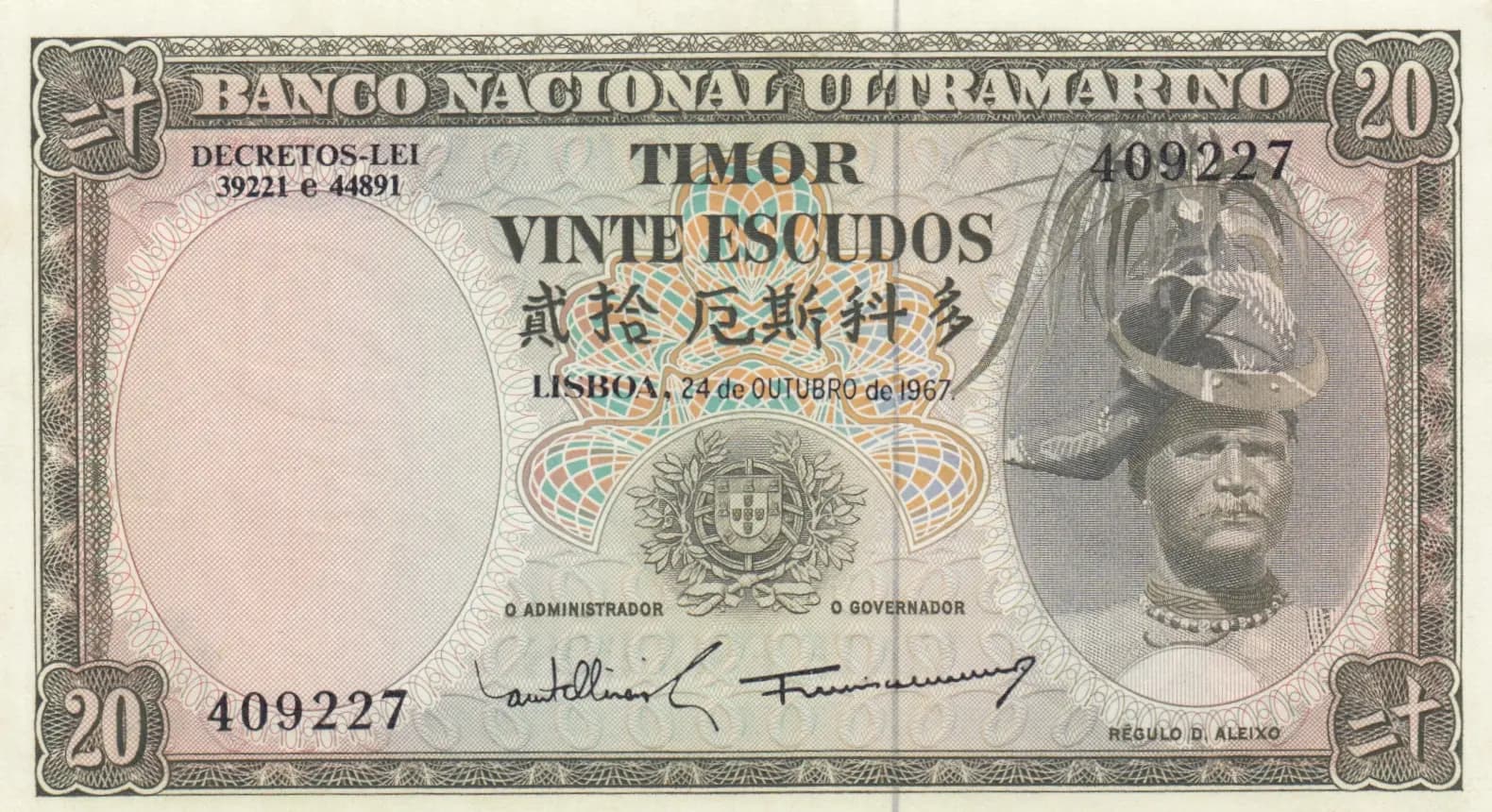
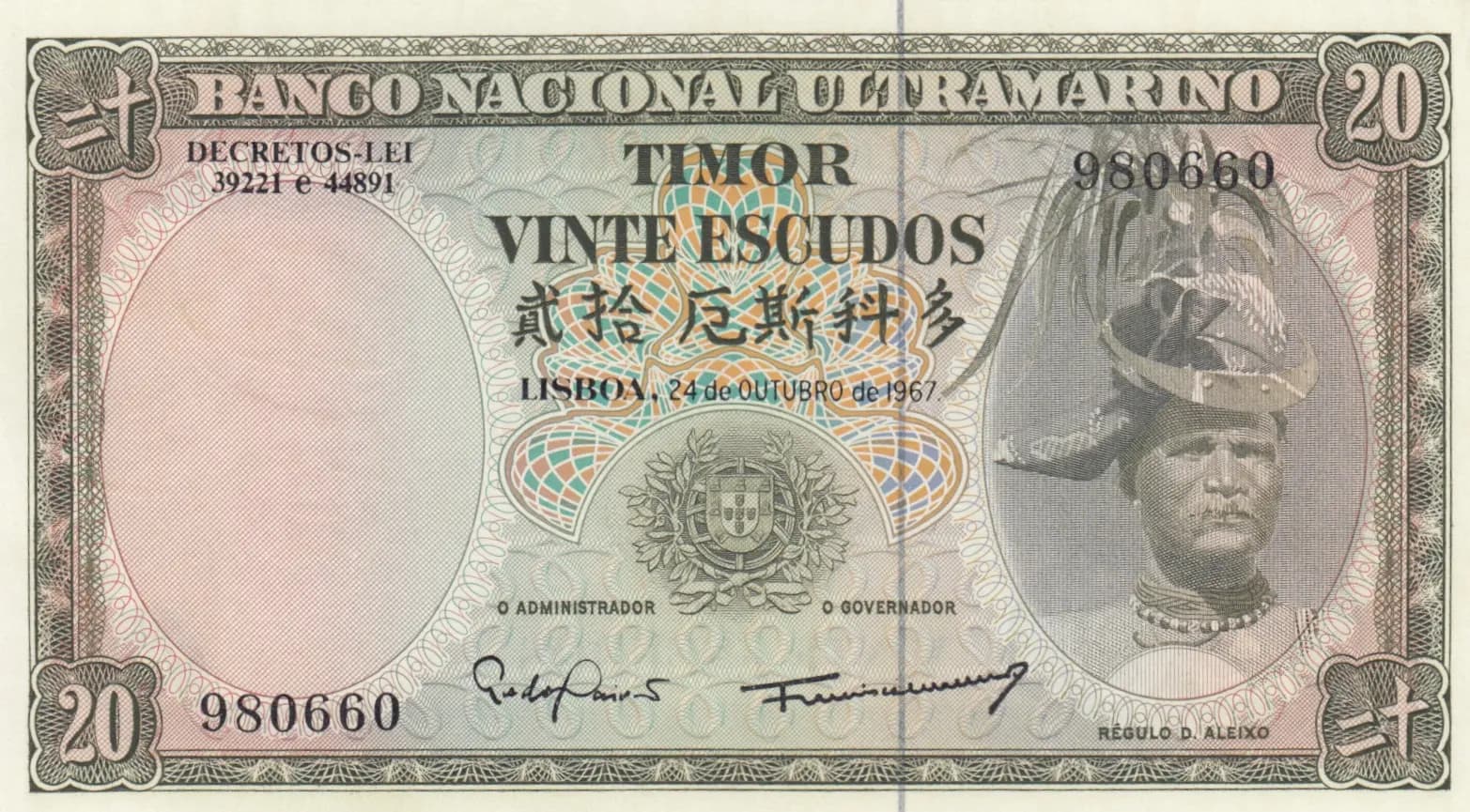
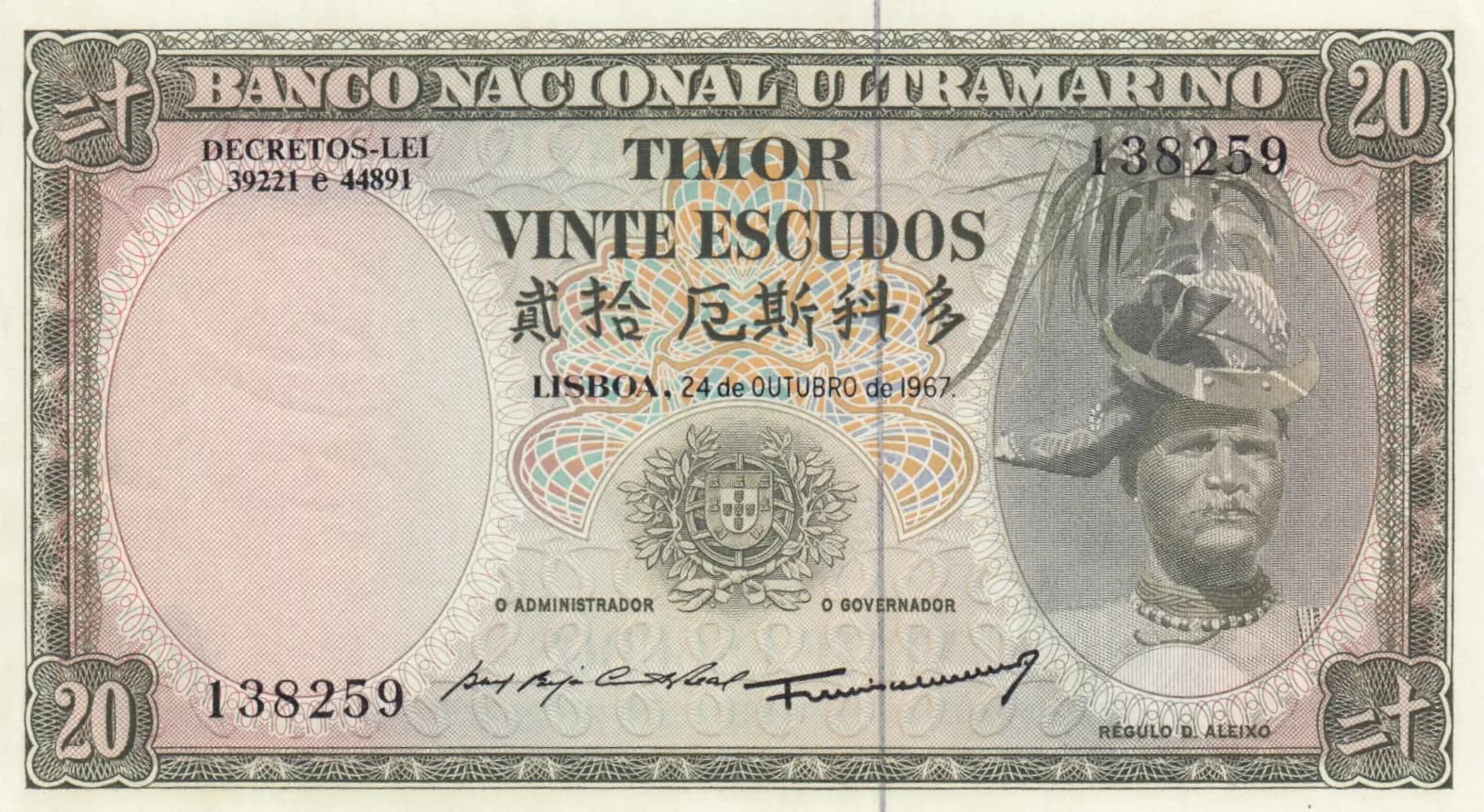
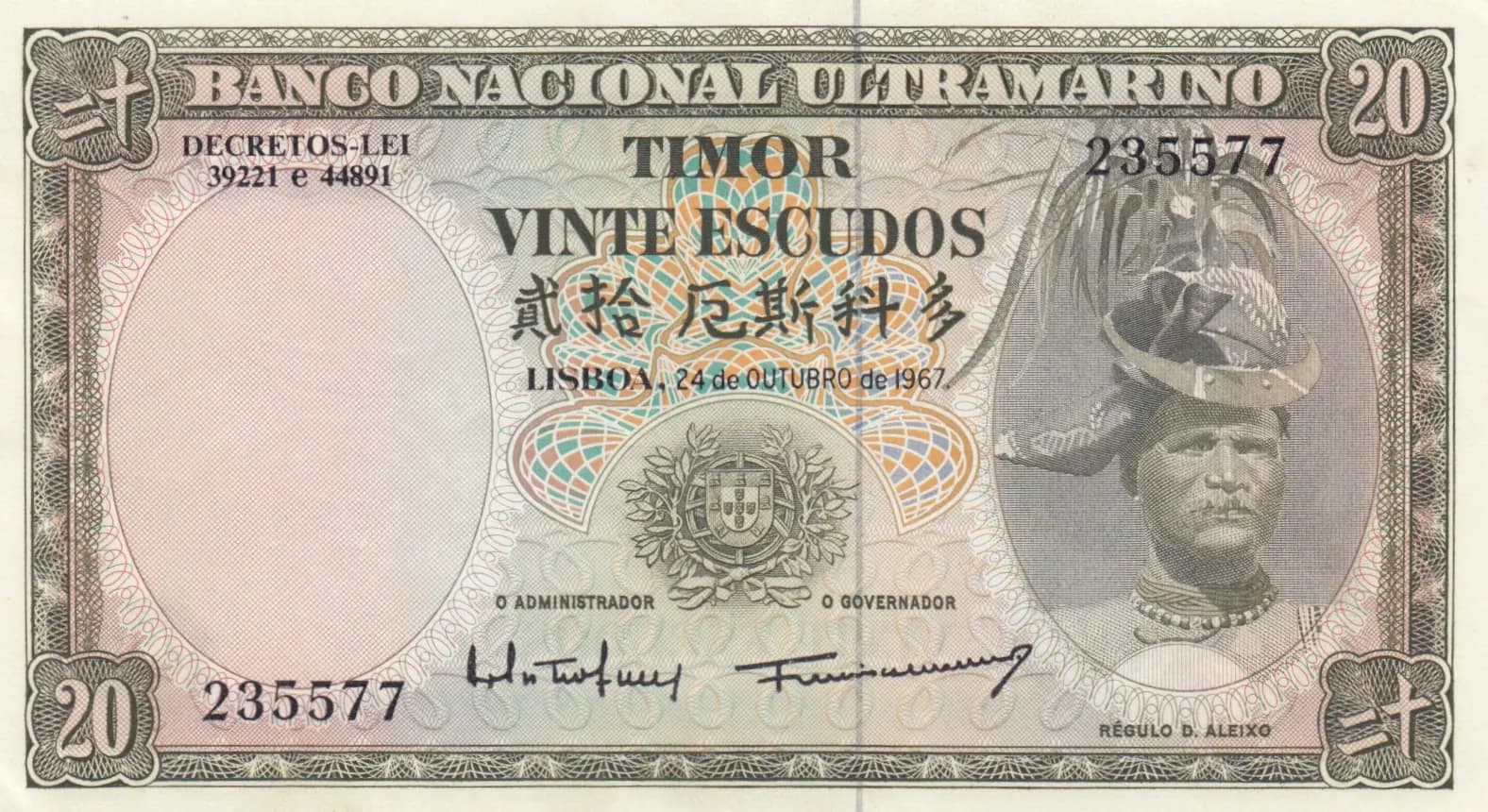
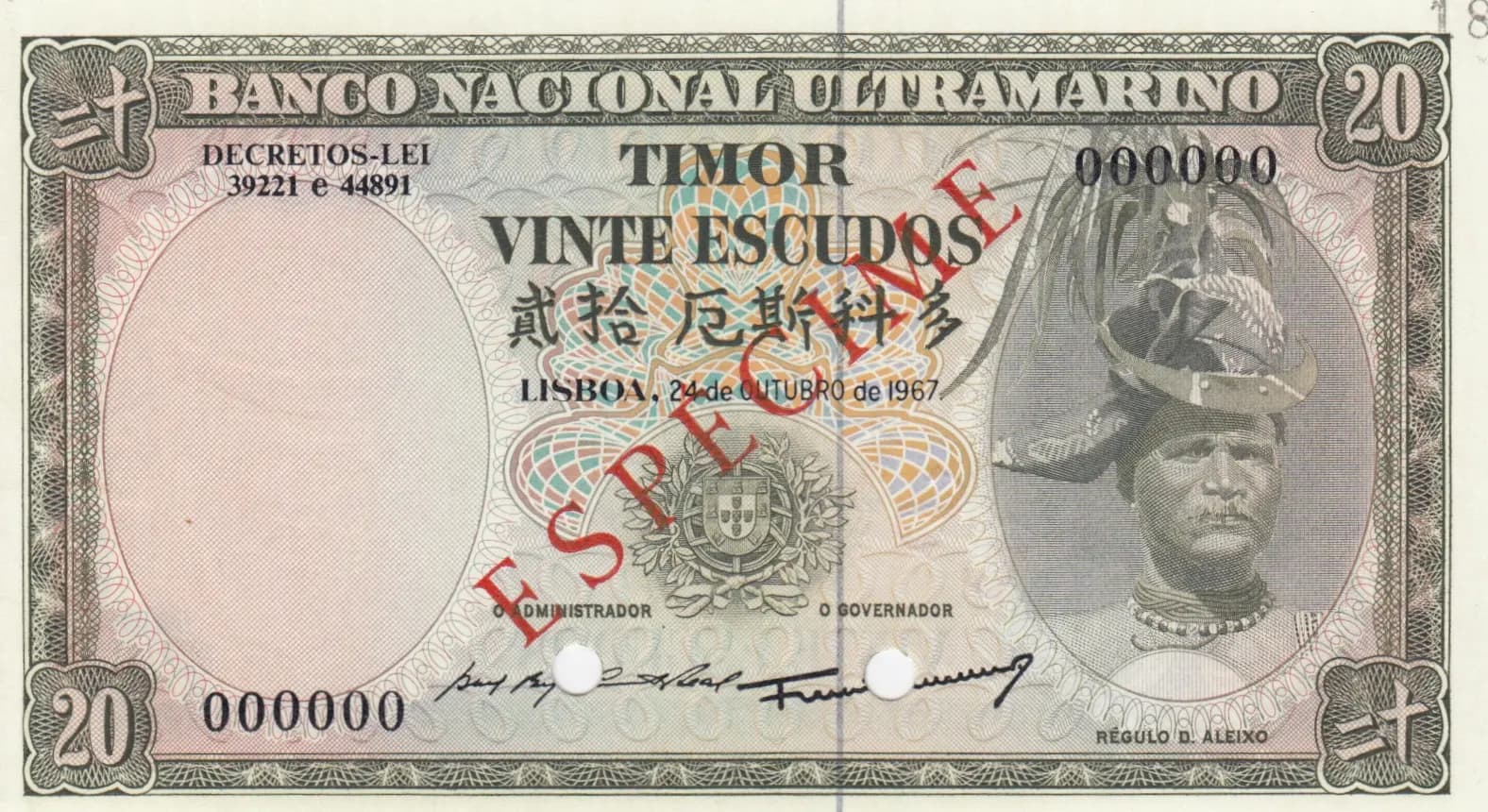
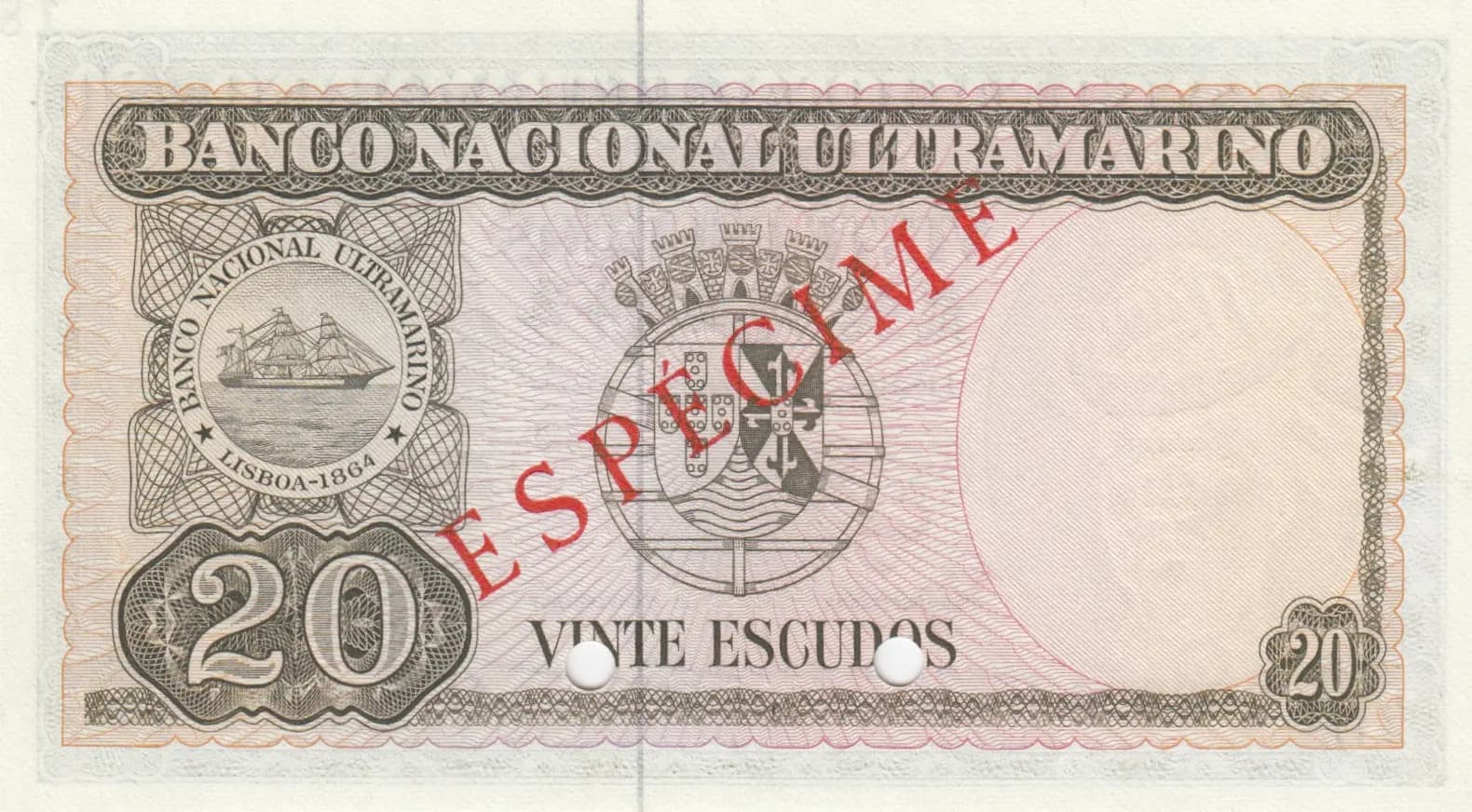
This is a 1967 Timor 20 Escudos specimen note issued by the Banco Nacional Ultramarino, presented in uncirculated condition. The note features a portrait of Regulo D. Aleixo on the obverse and a historical sailing ship on the reverse, both rendered in fine olive-brown and multicolored tones. As a specimen note, it bears the characteristic diagonal red 'SPECIMEN' overprint and two punch-hole cancellations, making it a collectible variant that represents the currency of Portuguese Timor during the colonial period.
Common. This specimen note's market value ranges from approximately $4.99 to $9.99 USD based on eBay transaction data, with one outlier at $55.77 USD. The typical UNC market price hovers around $6–$9 USD, indicating widespread availability in the numismatic market. Specimen notes from the Banco Nacional Ultramarino's Timor issues were produced in sufficient quantities to satisfy institutional and collector demand. The note is not from a recalled issue, and the Portuguese colonial administration issued currency regularly until decolonization in 1975. No evidence suggests an unusually restricted print run for this specific Pick number.
This note was issued on October 24, 1967, during the final decade of Portuguese colonial rule in Timor (which lasted until 1975). The Banco Nacional Ultramarino, established in the 19th century, was Portugal's primary issuer for colonial territories. The reverse depicts a carrack-type sailing ship dated Lisboa-1864, symbolizing Portugal's maritime heritage and colonial legacy, while the obverse portrays Regulo D. Aleixo, a Timorese ruler, reflecting the hierarchical colonial administrative structure.
The obverse features a right-facing profile portrait of Regulo D. Aleixo, a Timorese administrative ruler, positioned on the right side wearing formal headgear. The center displays the Portuguese coat of arms with heraldic shield elements. Decorative cross emblems and rosette designs occupy all four corners, with the denomination '20' displayed prominently. The reverse showcases a detailed engraved sailing ship (carrack) within a circular decorative frame on the left side, dating from Lisboa-1864, symbolizing Portugal's maritime colonial expansion. The Portuguese coat of arms appears again in a central oval medallion on the reverse. The entire design is framed by ornate guilloche border patterns and fine-line decorative work typical of high-security currency engraving.
Front: 'BANCO NACIONAL ULTRAMARINO' (Overseas National Bank), 'TIMOR' (Timor), 'VINTE ESCUDOS' (Twenty Escudos), 'DECRETOS-LEI 39221 e 44891' (Decrees-Law 39221 and 44891), 'LISBOA, 24 de OUTUBRO de 1967' (Lisbon, October 24, 1967), 'SPECIMEN', 'O ADMINISTRADOR' (The Administrator), 'O GOVERNADOR' (The Governor), 'REGULO D. ALEIXO' (Ruler D. Aleixo), serial number '000000'. Back: 'BANCO NACIONAL ULTRAMARINO' (Overseas National Bank), 'VINTE ESCUDOS' (Twenty Escudos), 'SPECIMEN', 'LISBOA-1864' (Lisbon-1864), denomination '20'.
This note was produced using intaglio (engraved) printing by Bradbury Wilkinson & Company (BWC), a premier British currency printer. The fine line work visible in the borders, the detailed rendering of the portrait and sailing ship, and the complex heraldic elements are characteristic of intaglio engraving. The specimen overprint was applied as a separate red overprint, and the two punch holes were mechanically applied as part of specimen cancellation protocols.
This is catalogued as Pick 26s (the 's' denoting specimen status). The note is the BWC printing variant (P-26cts per PMG population data). As a specimen note, it bears the diagonal red 'SPECIMEN' overprint and two punch-hole cancellations through the note face. The serial number displays '000000', typical of specimen notes that were not intended for circulation. No significant sub-varieties of signatures or date variations are noted for this specimen issue.