20 escudos 1967
Market Prices
48 salesAbout This Note
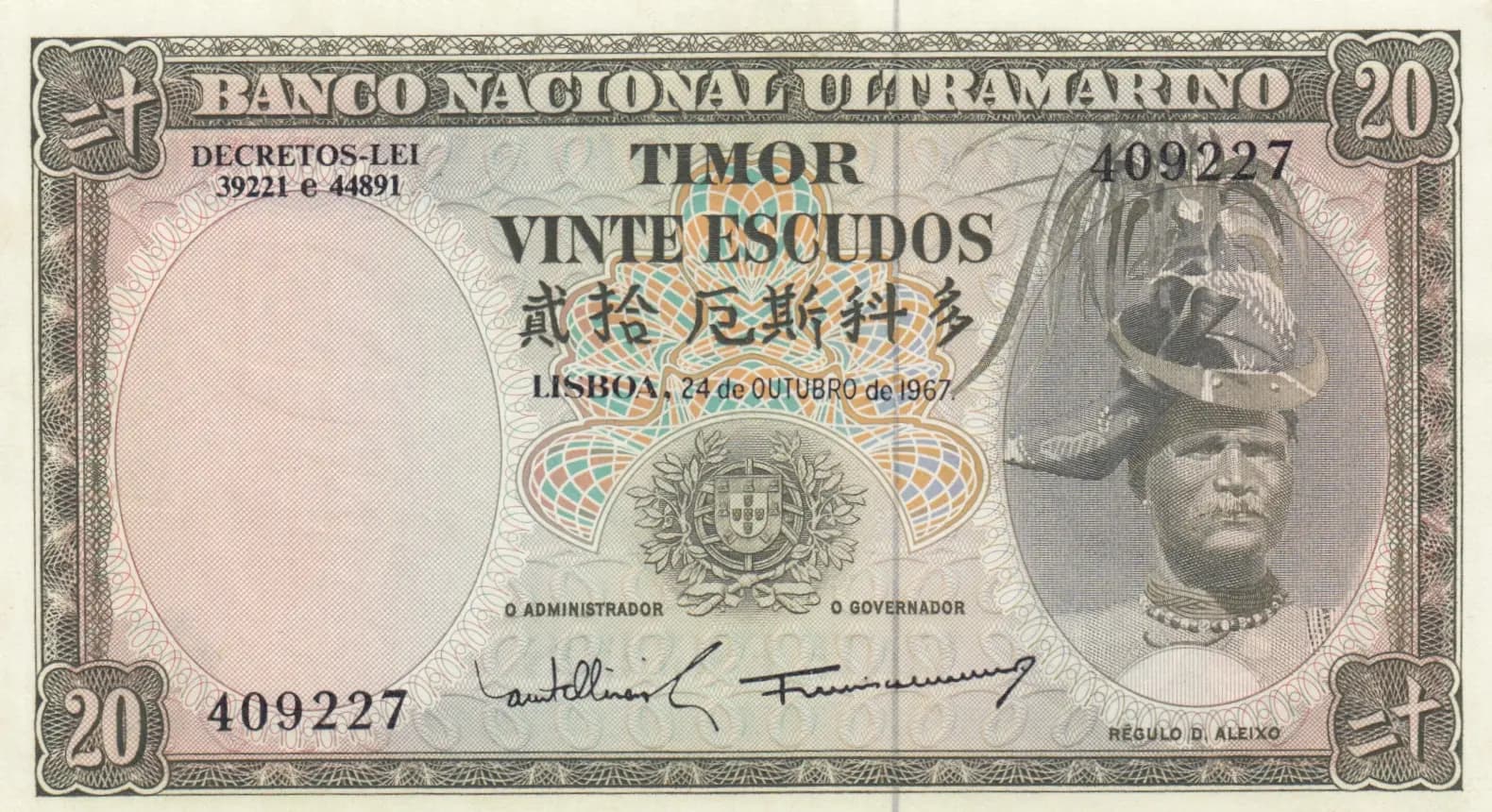
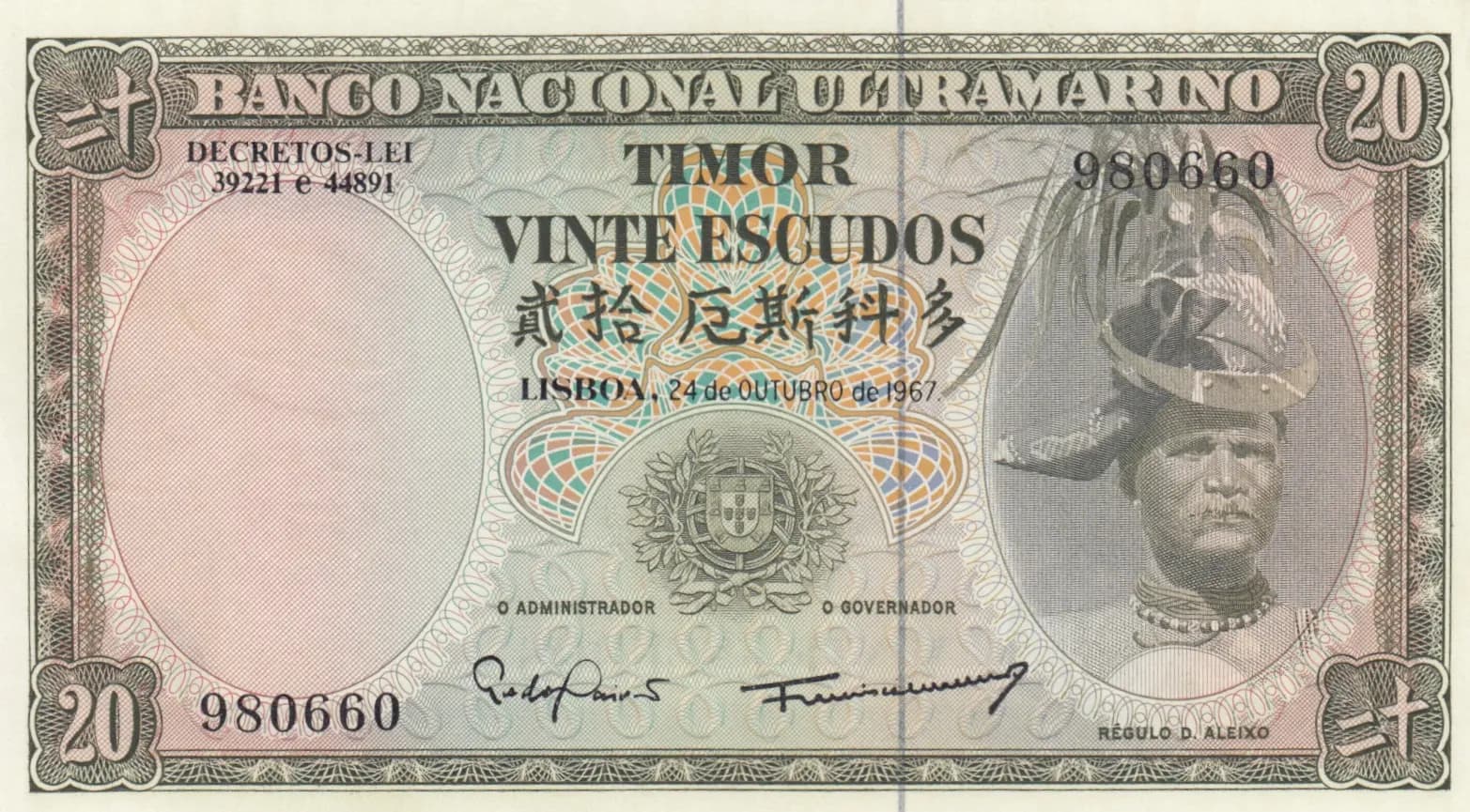
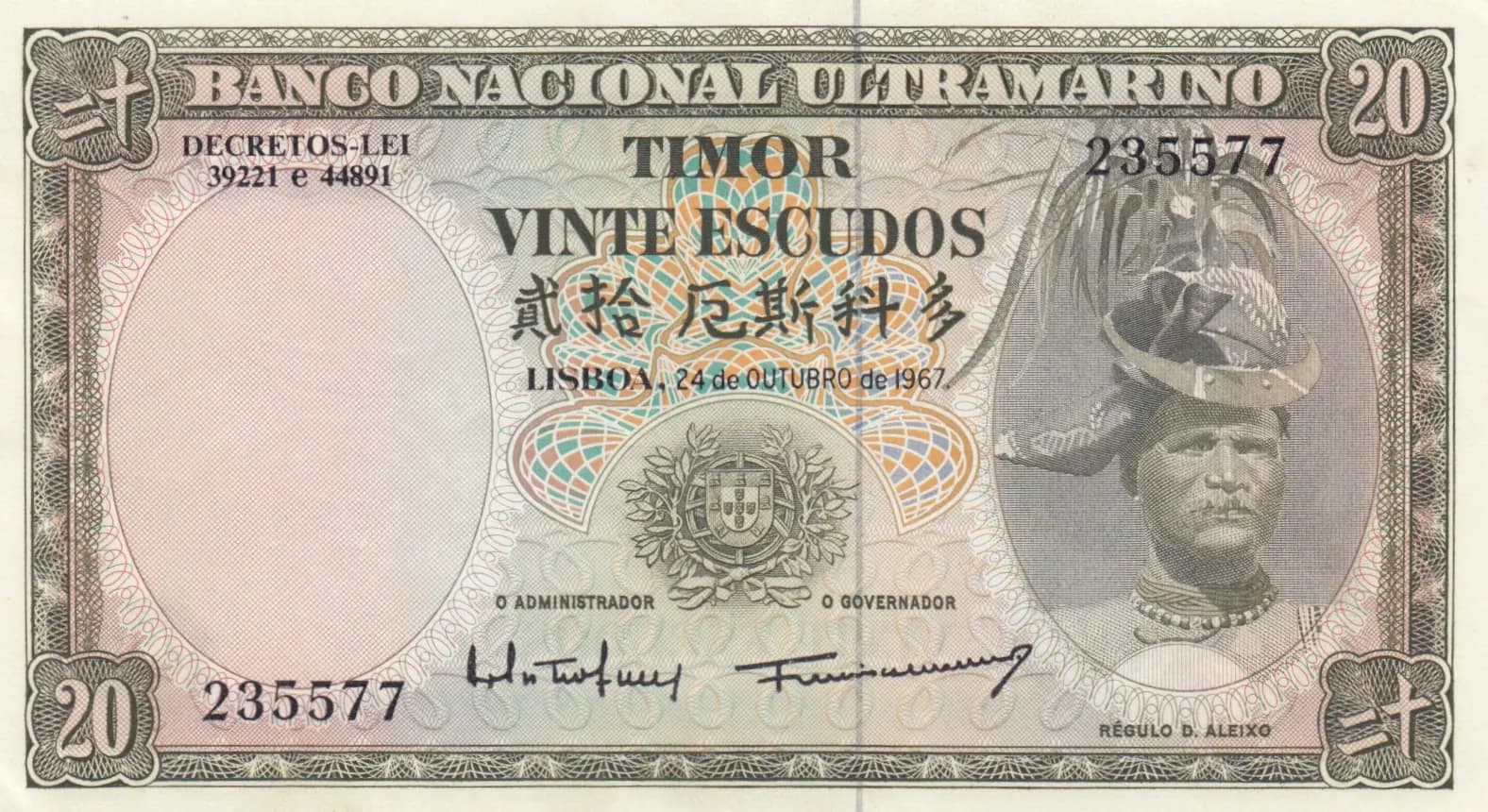
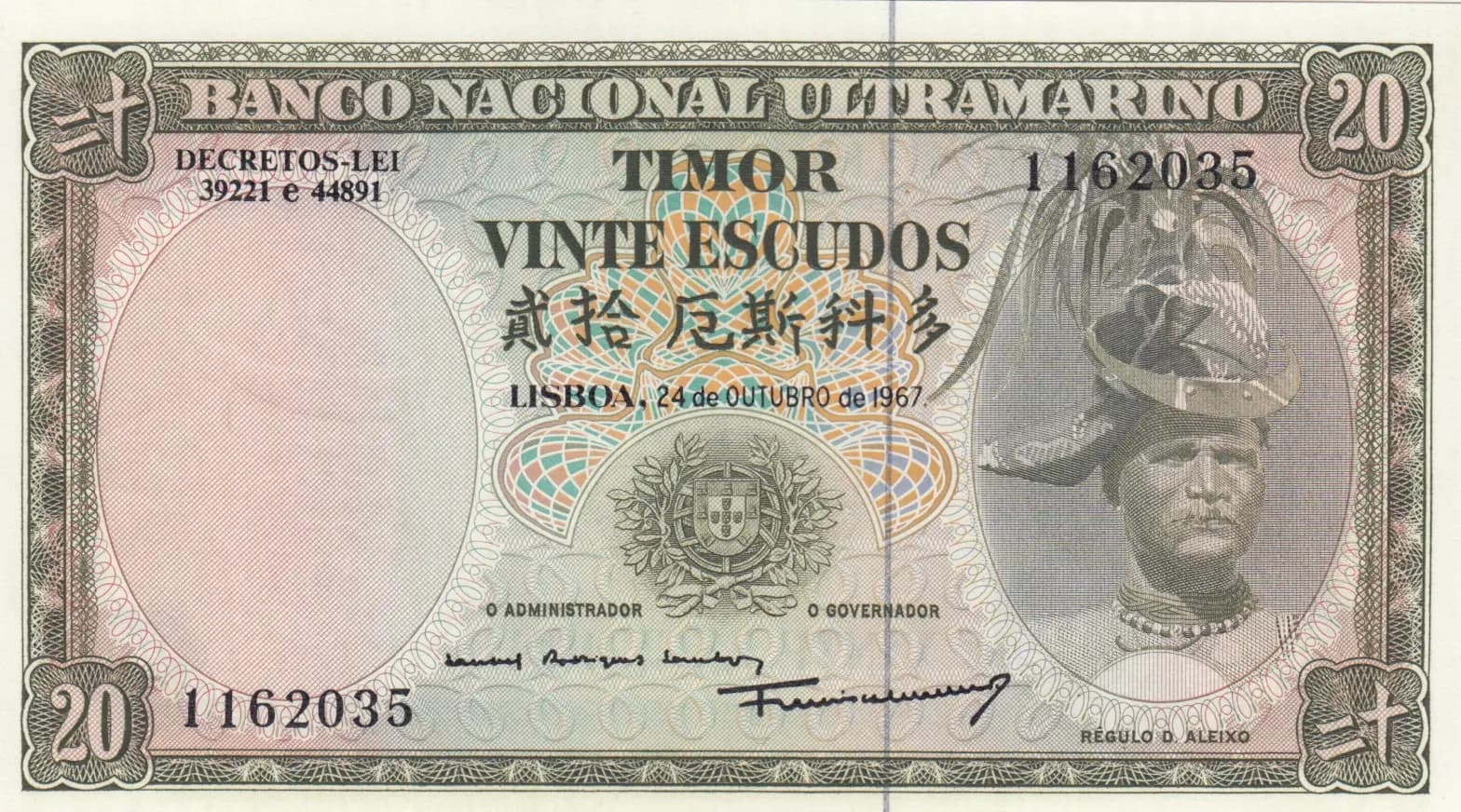
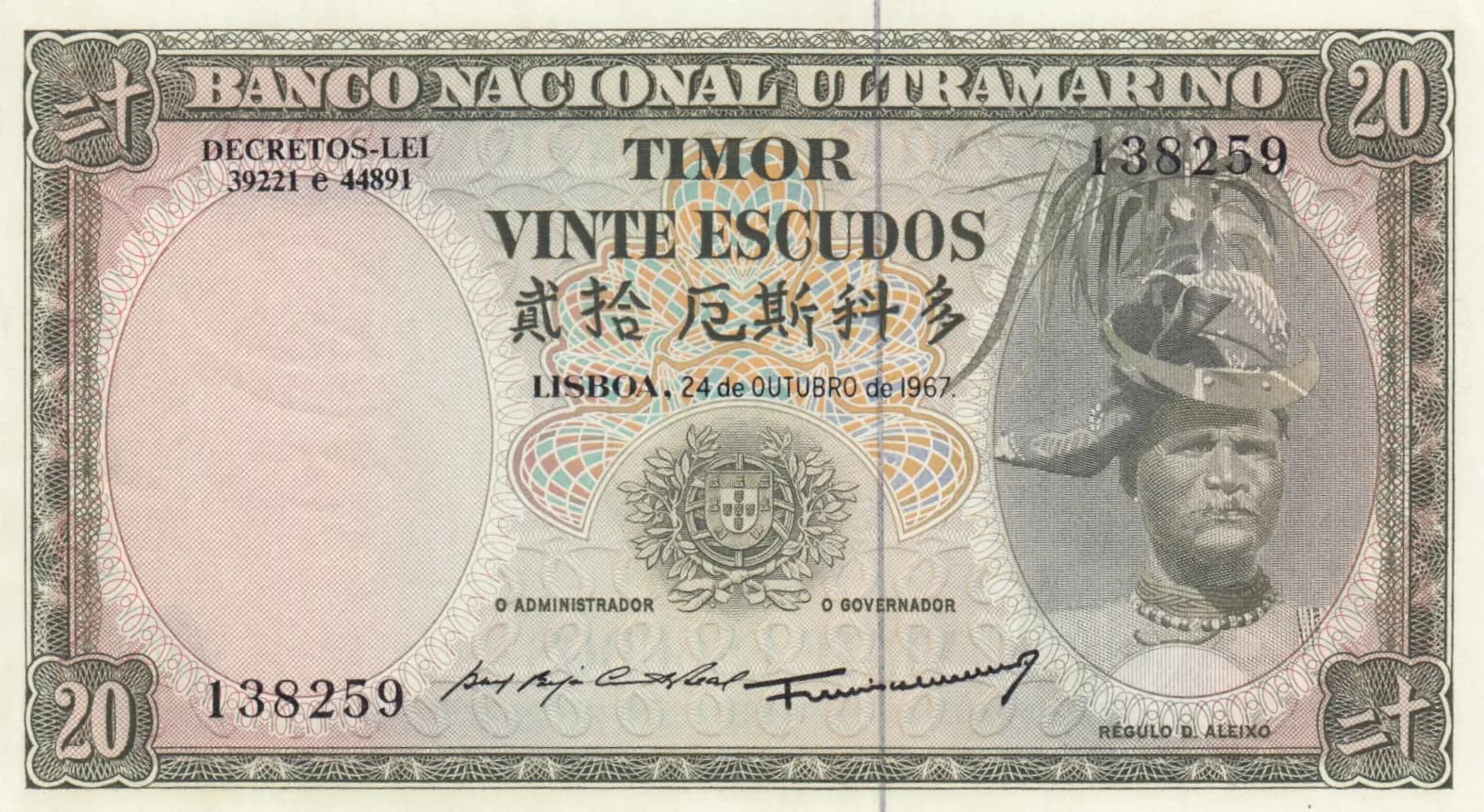
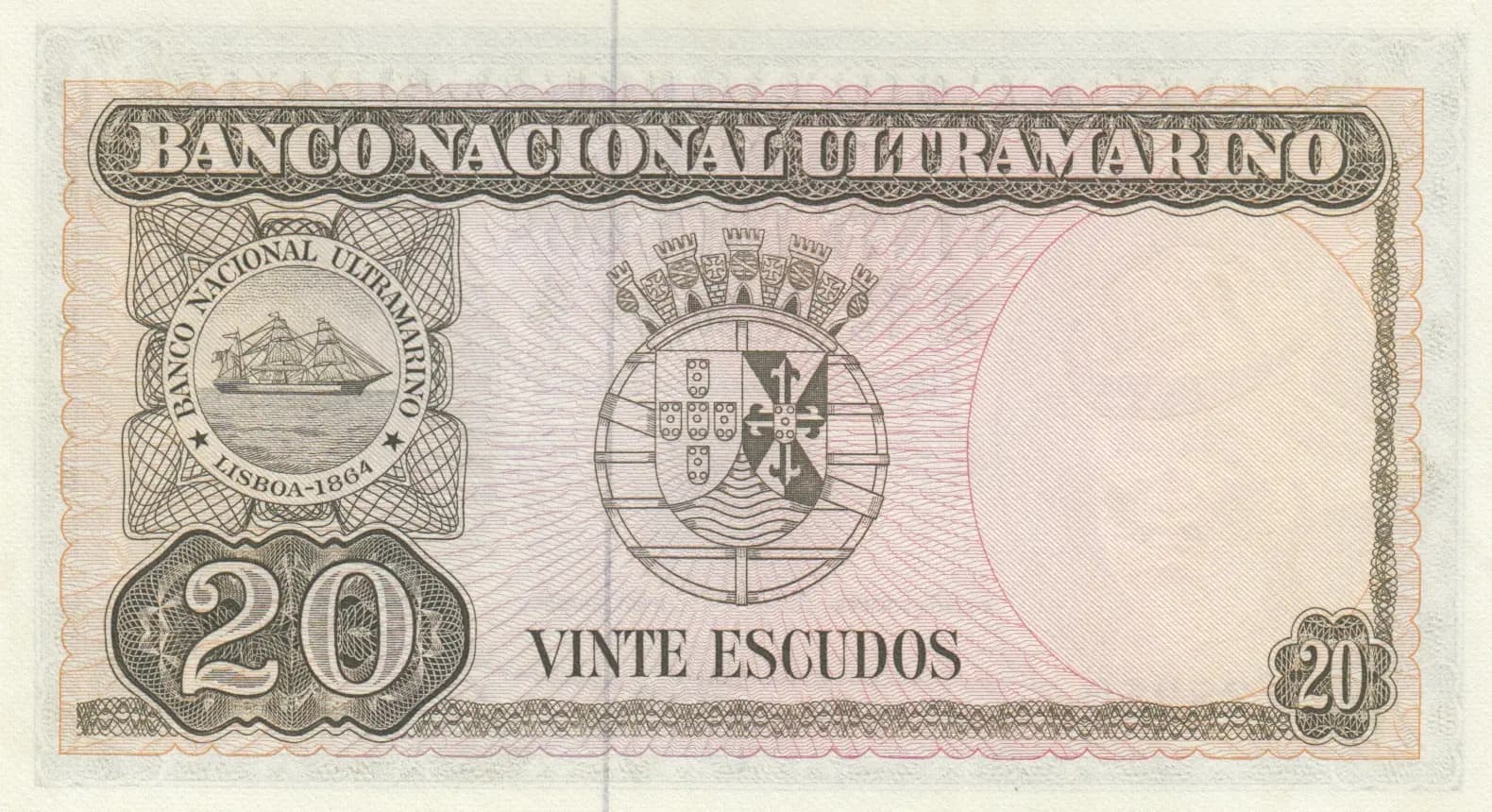
This is a 1967 Timor 20 Escudos note (Pick P-26) issued by Banco Nacional Ultramarino, presented in circulated condition showing typical aging characteristics of a note from this era. The note features an attractive multicolored design with olive-brown and pink tones, displaying a portrait of Regulo D. Aleixo in traditional regional dress on the obverse and the iconic bank ship seal on the reverse. Despite visible creasing, a central fold line, and cream-colored discoloration consistent with age, the note retains good legibility and detail clarity, making it an interesting example of Portuguese colonial currency from Timor.
Common. The eBay price history clearly indicates this note is commonly encountered in the collector market, with numerous sales across multiple condition grades ranging from Fine to PMG 67. UNC examples have sold for $4.75 to $10.50 in recent years, and even professionally graded PMG examples rarely exceed $50-90. The consistent availability of examples across a wide range of conditions, combined with catalog valuations of $7.50 for UNC, confirms this is a regularly traded colonial-era note without supply constraints. The relatively high print run by Banco Nacional Ultramarino for this denomination during 1967 further supports its common classification.
Issued on October 24, 1967, this note represents the currency of Portuguese Timor during the twilight of the Portuguese colonial empire, nearly a decade before Indonesia's invasion in 1975. The Banco Nacional Ultramarino, headquartered in Lisbon since 1864 as shown on the reverse's ship vignette, managed currency for Portugal's overseas territories. The portrait of Regulo D. Aleixo and the bilingual Portuguese-Chinese inscriptions reflect Timor's cultural and commercial ties, with the Chinese characters indicating the significant trading relationships maintained in this strategic Southeast Asian territory.
The obverse features an ornately engraved design with decorative cross motifs in all four corners and geometric circular patterns in the upper center. The primary focal point is a portrait of Regulo D. Aleixo positioned at right, depicted in profile wearing traditional Timorese headgear, representing local leadership and cultural identity. The left side displays a large blank oval area designed as a watermark space, while the center showcases the Portuguese coat of arms (featuring shield, crosses, and castles) flanked by laurel wreaths, emphasizing Portugal's colonial authority. The reverse presents the Banco Nacional Ultramarino's emblematic sailing ship in a circular vignette at left, depicting the institution's maritime trading heritage since its 1864 foundation in Lisbon. The center-right features a more elaborate coat of arms surrounded by a globe or world map design with navigational crown elements, symbolizing the bank's overseas dominion. The '20' denomination appears in the bottom left and upper right corners of both sides.
FRONT SIDE: 'BANCO NACIONAL ULTRAMARINO' (National Overseas Bank) | 'TIMOR' (Timor) | 'VINTE ESCUDOS' (Twenty Escudos) | 'DECRETOS-LEI 39221 e 44891' (Decree-Laws 39221 and 44891) | '貳拾葡幣紙幣' (Twenty Portuguese Monetary Paper Currency - Chinese) | 'LISBOA, 24 de OUTUBRO de 1967' (Lisbon, October 24, 1967) | 'O ADMINISTRADOR' (The Administrator) | 'O GOVERNADOR' (The Governor) | 'REGULO D. ALEIXO' (Regulo D. Aleixo - signature/name) | Serial number '850858'. BACK SIDE: 'BANCO NACIONAL ULTRAMARINO' (National Overseas Bank) | 'VINTE ESCUDOS' (Twenty Escudos) | 'BANCO NACIONAL ULTRAMARINO - LISBOA-1864' (National Overseas Bank - Lisbon-1864) | Denomination numeral '20'.
Intaglio engraving (line engraving), executed by Bradbury Wilkinson and Company (BWC), a renowned security printer. The visual analysis confirms the characteristic fine line engraving, intricate cross-hatching patterns, and detailed parallel line work throughout that typify high-security intaglio production. The elaborate border designs, complex geometric patterns, and fine detail reproduction in both the portrait and architectural elements are consistent with BWC's expertise in banknote security printing during the mid-20th century.
The observed serial number '850858' and signatures present in this example are consistent with the standard 1967 printing by BWC. The visual analysis identifies this as the cts (current type series) variant cataloged in PMG's population report as P-26cts. No overprints, date variations, or signature variants are evident in this specimen. The note represents the regular issue type with standard Portuguese and Chinese bilingual inscriptions typical of Timor's colonial currency during this period.