25 srang 1941
Market Prices
12 salesAbout This Note
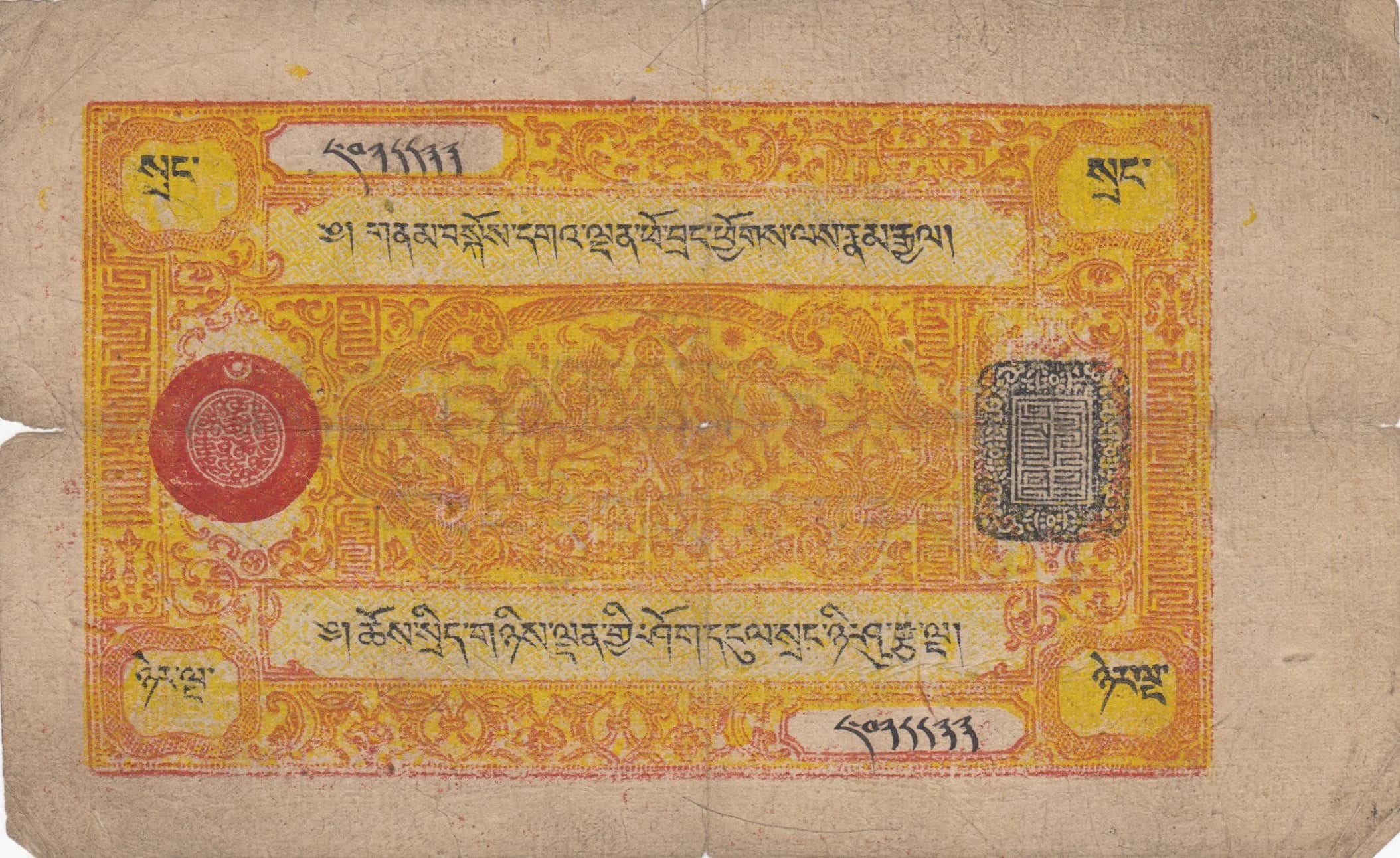
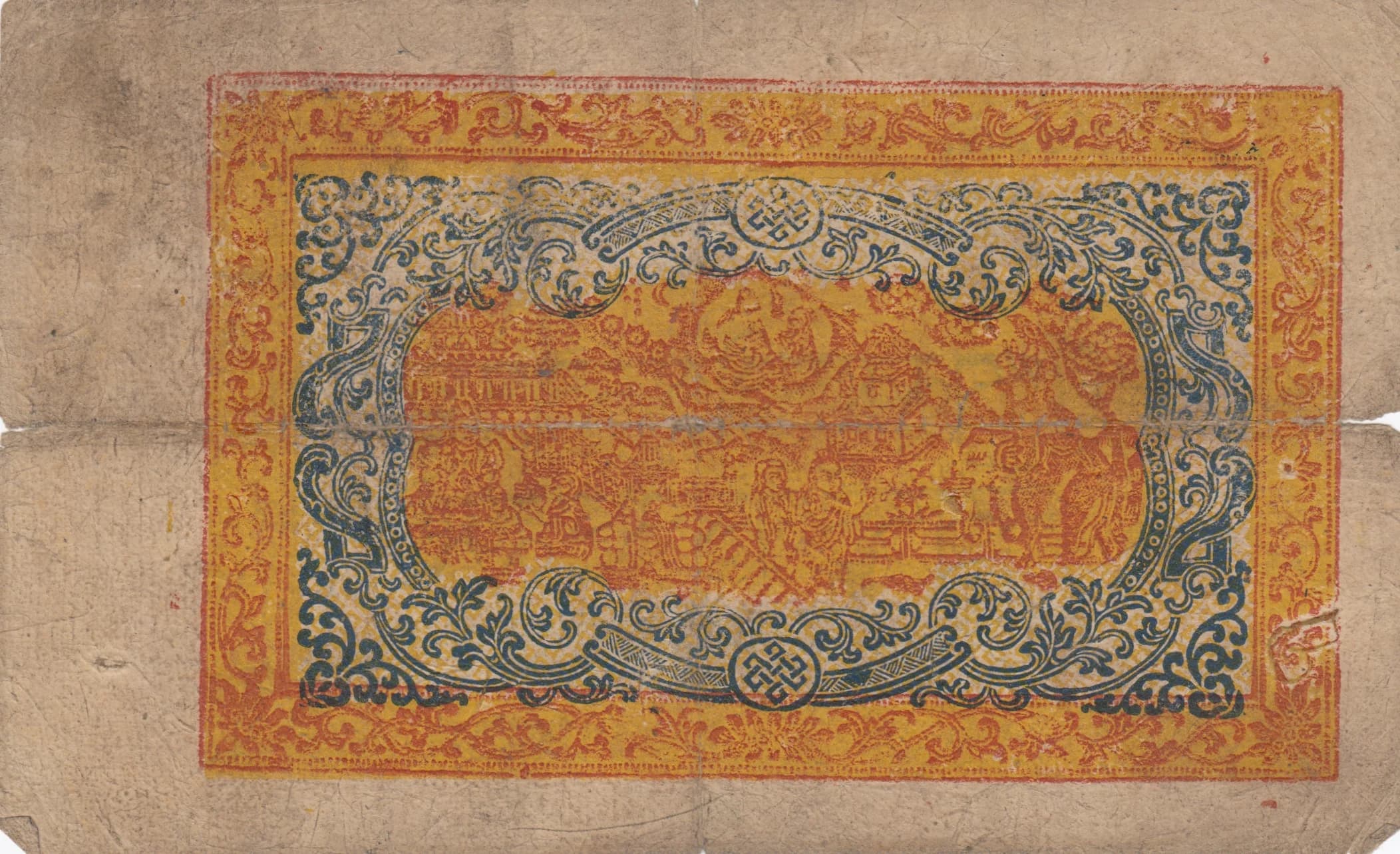
This is a 25 srang note from the 1941 Government of Tibet issue (Pick P-10a), featuring the distinctive aesthetic of Tibetan currency from this period. The note displays a rich golden-yellow background with ornate orange and red decorative borders in traditional Tibetan artistic style, complemented by intricate blue-green scrollwork on the reverse. In Fine condition, this note shows expected aging characteristics including foxing, discoloration, and fold creases consistent with an 80+ year old historical artifact, yet retains vibrant colors and no significant tears.
Common. Market data strongly supports this assessment: eBay sales records show F-graded examples selling for $16.50 to $44.46 across multiple transactions from 2010-2021, with the 2016 catalog value for F grade at only $15. The denomination (25 srang) and the hand-pasted construction method suggests moderate to large production runs for this issue period. No evidence of short print runs, recalls, or restricted circulation exists in the available record. This is a historically significant but frequently encountered Tibetan banknote.
This 1941 Tibetan banknote was issued during a critical period when Tibet maintained de facto autonomy under the 13th Dalai Lama's government, prior to the 1950 Chinese invasion. The extensive use of Tibetan script and religious/cultural symbolism—including repeated references to 'Sangha' (the Buddhist monastic community) and 'Three Virtues'—reflects the deep integration of Buddhist philosophy and monastic authority in Tibetan governance and financial systems. The ornate traditional artistic conventions employed in the design underscore Tibet's distinct cultural identity and the religious foundation of its administrative institutions during this era.
The obverse features a golden-yellow field with a prominent red circular seal/emblem positioned at the left-center, likely representing official Tibetan government authority, paired with a rectangular ornamental cartouche on the right-center containing geometric patterns characteristic of Tibetan artistic traditions. Decorative corner medallions in each corner display Tibetan script characters within ornamental frames. The reverse presents an elaborate ornamental border of blue-green scrollwork with symmetrical floral and geometric patterns arranged around all four edges, with a central field rendered in orange and red tones. The composition throughout adheres strictly to traditional Tibetan design conventions with balanced, symmetrical layouts and religiously-significant iconography referencing the Buddhist Sangha.
Front side: The note features multiple Tibetan script inscriptions arranged in four corner medallions reading 'དགེ་འདུན།' (Sangha), repeated four times. Two horizontal text bands across the central decorated area contain 'བརྒྱ་གཅིག་དགེ་འདུན་དངོས་གཞི་དགེ་བའི་དུས།' (One hundred and one sangha, the substance of virtue time), appearing twice. Additional inscriptions read 'དགེ་གསུམ།' (Three virtues), also appearing twice. Back side: No readable inscriptions noted in the visual analysis; the reverse is dominated by ornamental patterns without identifiable text.
This note was produced using multi-color letterpress printing with hand-pasted construction: three separate sheets were physically pasted together, with the middle sheet bearing a two-line security legend printed upon it. This labor-intensive production method reflects the limited technological capabilities of Tibet's printing facilities in 1941 and was likely executed at a mission press or local printing establishment sympathetic to Tibetan independence. The vibrant multi-color registration visible in the ornate borders (orange, red, blue-green, and yellow) indicates careful sequential printing and significant hand-finishing work.
Pick P-10a is specifically designated as a variety, suggesting the existence of at least one other variant (likely P-10 without the 'a' designation). The distinguishing characteristic of P-10a appears to be related to the three-sheet pasted construction with the security legend on the middle sheet. Without visible serial numbers, signature variations, or date markings in the visual analysis, the specific variety cannot be further differentiated from images alone, but collectors should note the characteristic pasted-sheet construction is a defining feature of this particular variety designation.