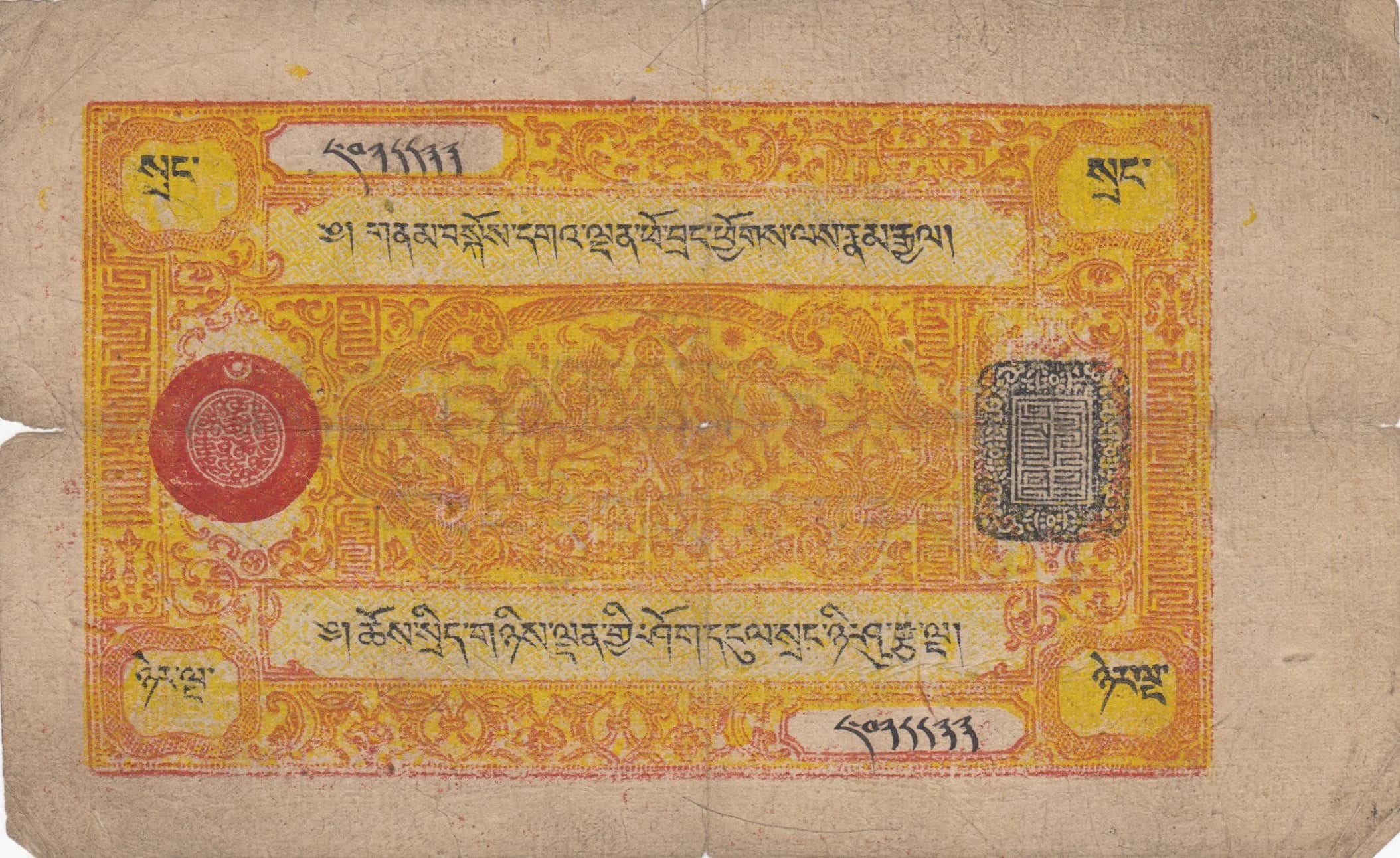
100 srang 1942
Market Prices
48 salesAbout This Note
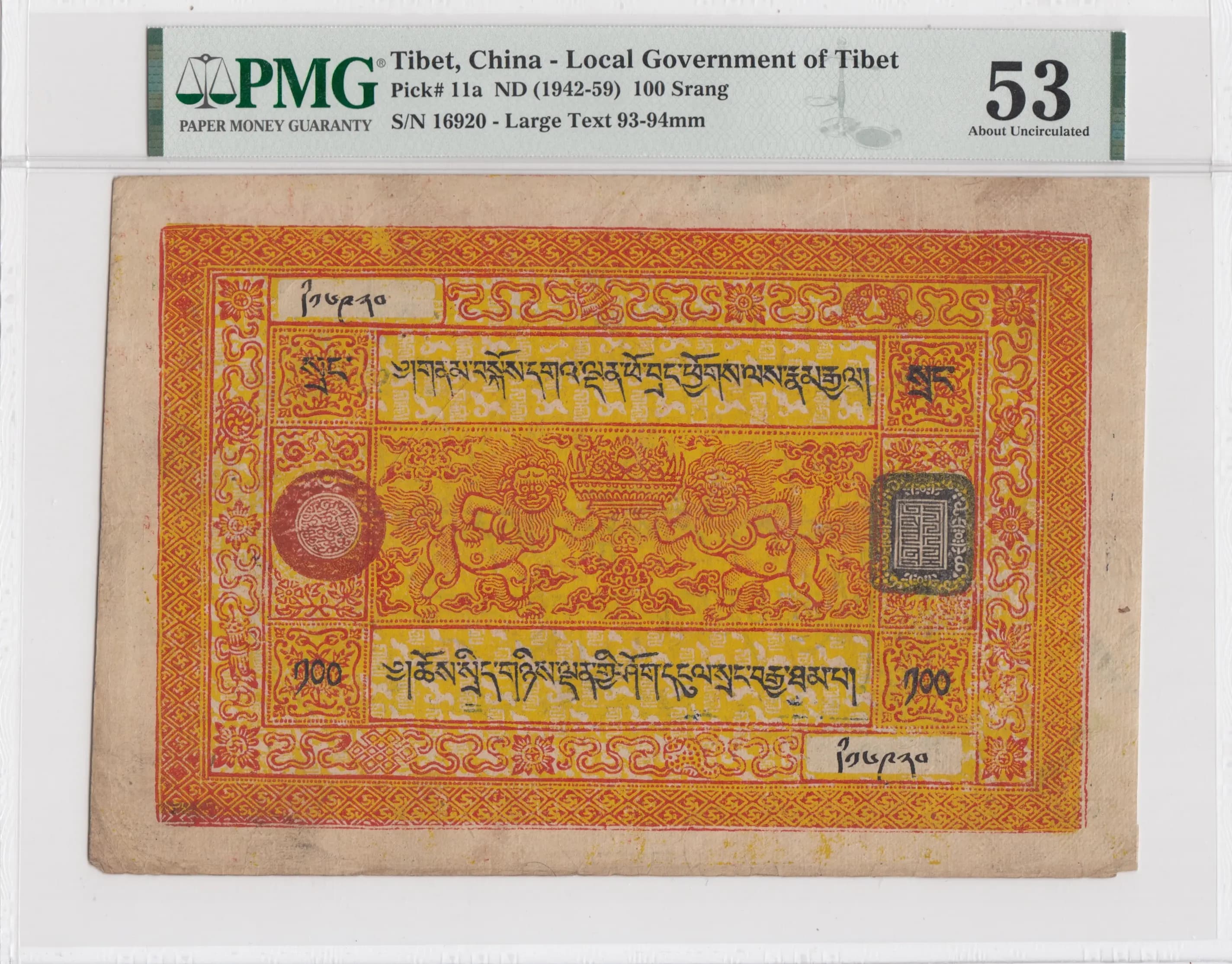
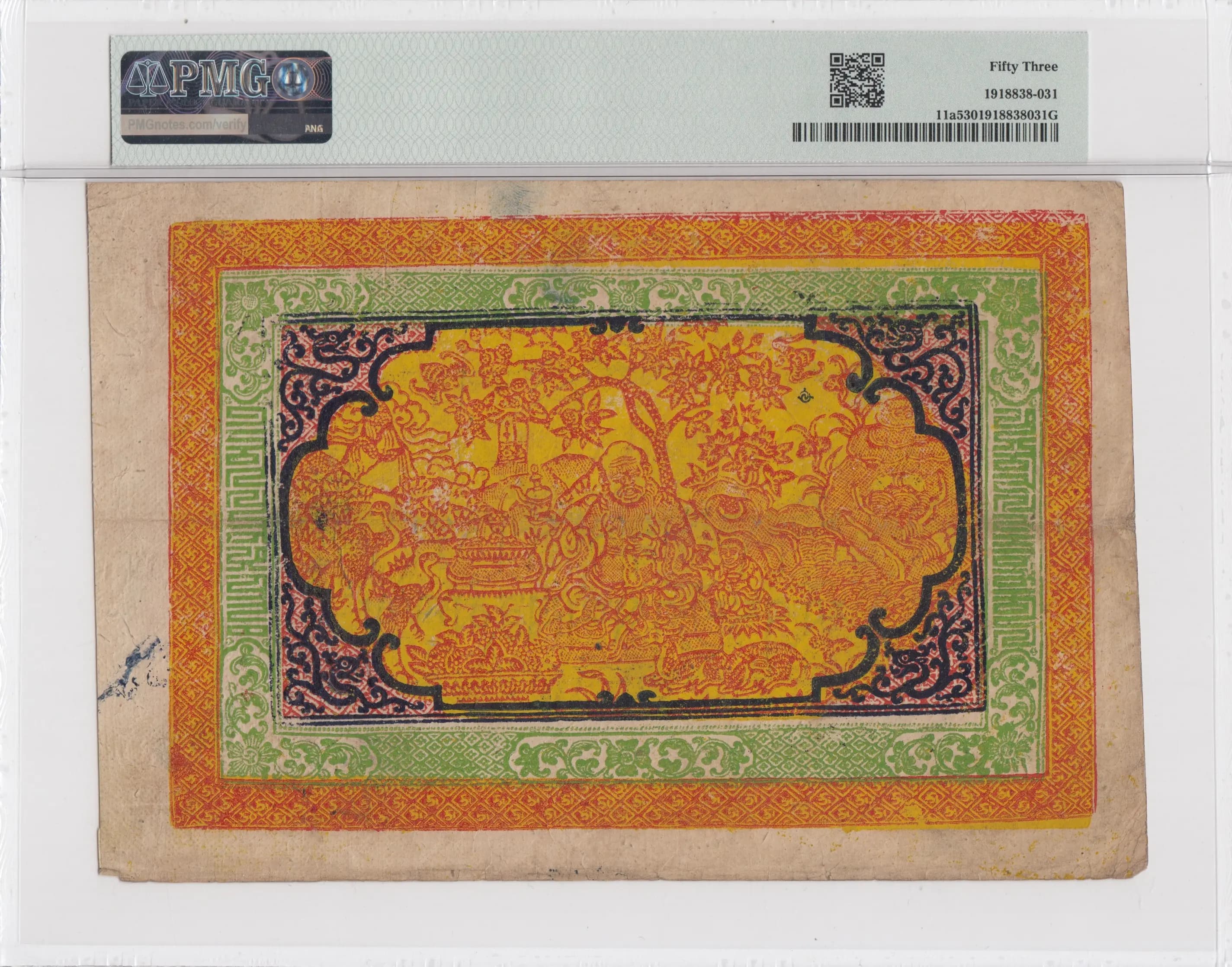
This 1942 Tibetan Government 100 srang note (Pick 11a) presents a stunning example of traditional Tibetan artistic expression in currency design, featuring ornate red and gold decorative borders with intricate geometric and floral patterns on both sides. The note exhibits light circulation wear consistent with a PMG 50 grade, with visible foxing and age-related patina on the tan paper stock, yet the vibrant colors and crisp impressions of the official seals remain well-preserved. This historically significant note from Tibet's independent monetary period represents an important artifact from a brief window of Tibetan financial autonomy before the geopolitical changes of the mid-20th century.
Common. Despite its historical significance and appeal to collectors of Asian and specialized currencies, this note remains relatively available in the market. The eBay price tracking data shows consistent sales over multiple decades (2011-2025) across various condition grades, with PMG 50 specimens regularly achieving sales prices in the $70-170 range. The 2016 catalog values ($1.50 in G, $5 in F, $15 in EF) suggest modest collector demand compared to truly scarce issues. The consistent availability across multiple auction platforms and the steady—rather than escalating—price history indicate this is a standard issue within Tibetan currency collecting, not a low-mintage or recalled note.
Issued by the Government of Tibet in 1942, this banknote represents a period of relative Tibetan autonomy in monetary affairs during the pre-1951 era, before the region's political status fundamentally changed. The traditional Tibetan script inscriptions and elaborate Buddhist-influenced artistic motifs reflect Tibet's distinct cultural identity and administrative independence at the time. The use of formal seals—including the red wax impression and official rectangular stamp visible on the obverse—demonstrate the ceremonial and bureaucratic importance the Tibetan government placed on its currency as a symbol of state authority.
The obverse features a carefully balanced composition with traditional Tibetan decorative elements framing a central medallion area. The red and gold ornamental borders contain intricate geometric and floral patterns characteristic of Tibetan manuscript illumination traditions. On the left side is a prominent red circular wax seal impression, serving as an authenticity and authorization marker, while a dark rectangular official stamp with geometric patterning appears on the right, representing governmental authority. The reverse displays an even more elaborate decorative scheme with multiple layered borders in red, yellow, green, and navy/black, featuring traditional Asian artistic motifs including dragons and cloud designs in the central yellow and red field. This entirely symbolic design—with no portrait or landscape elements—reflects the Tibetan government's preference for abstract, culturally-rooted artistic expression rather than personification.
Front side inscriptions in Tibetan script appear in horizontal bands across the upper and lower portions. The specific inscriptions recorded include references to Buddhist monastic governance (དགེ་འདུན་ - 'sangha/monastic community') and administrative terminology related to secular governance (སྲིད་པ - 'government/rule'), though complete translation of all text bands would require specialized Tibetan paleographic expertise. The numeral '100' appears in both lower corners, clearly indicating the denomination in srang currency units. Back side: No inscriptions are visible on the reverse, which is entirely dedicated to decorative design elements.
The note exhibits characteristics consistent with multi-block woodblock printing, a technology that was still in use for Tibetan currency production in 1942. The visible registration of the multiple color layers (red, yellow, orange, green, and black), combined with the hand-crafted appearance of the seal impressions and the noted construction method (three sheets pasted together with security legend on the middle sheet), indicates a semi-traditional production process rather than modern offset lithography. The distinct color separations and the handmade quality of the seals are consistent with early 20th-century Tibetan printing practices, likely produced locally in Lhasa rather than by a Western security printer.
This note is cataloged as Pick 11a, indicating there may be variant denominations or subtypes within the 1942 Tibetan Government series. Based on the visual analysis showing three-sheet construction with security legend on the middle sheet, this represents the standard production method for this series. No signature varieties, date variations, or significant overprints are noted in the visual examination. The consistent design elements and seal impressions suggest this is a standard emission from the 1942 issue, with the 'a' designation likely referring to the primary or base variety of the 100 srang denomination in that year's release.