100 baht 1968
Market Prices
24 salesAbout This Note
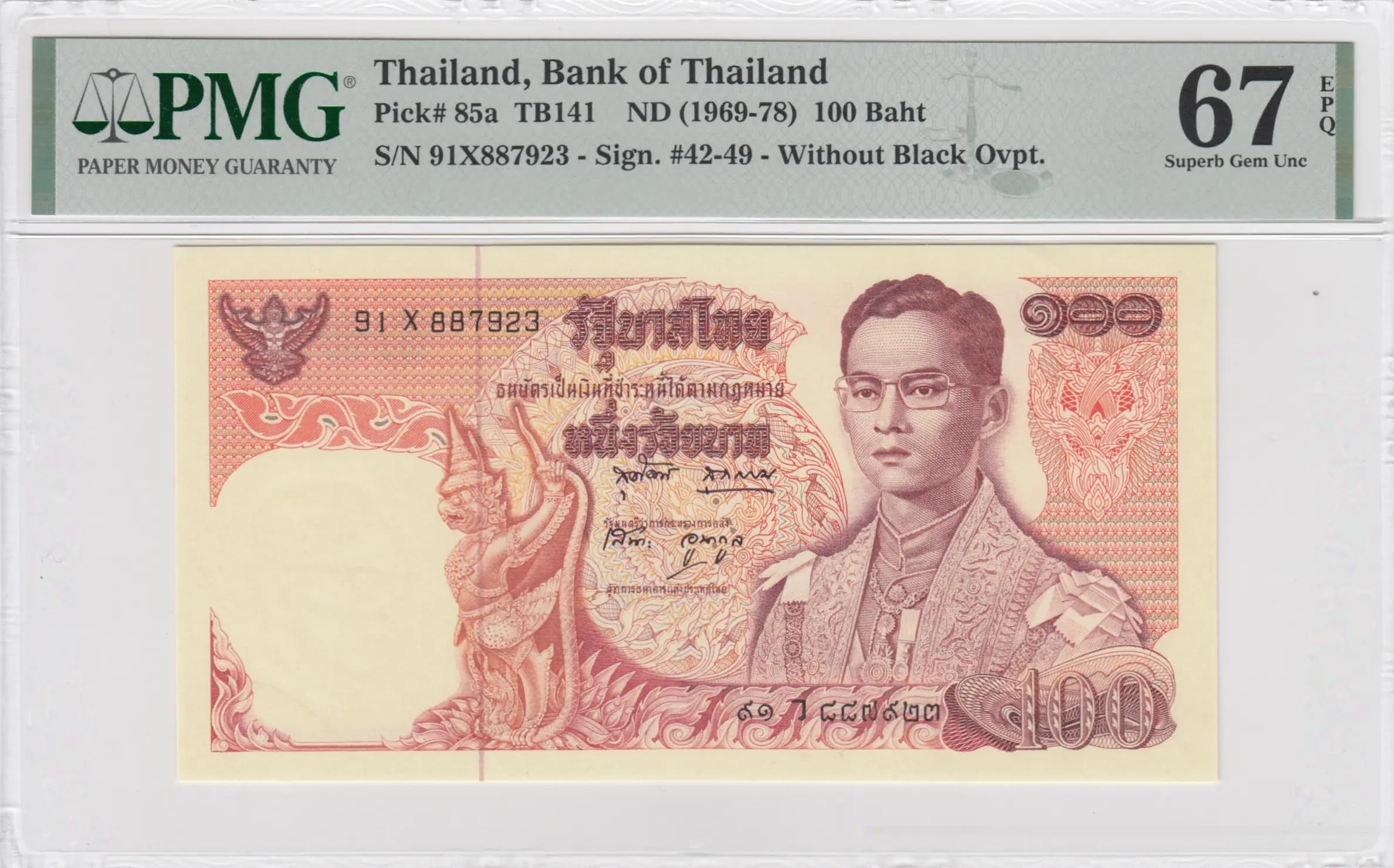
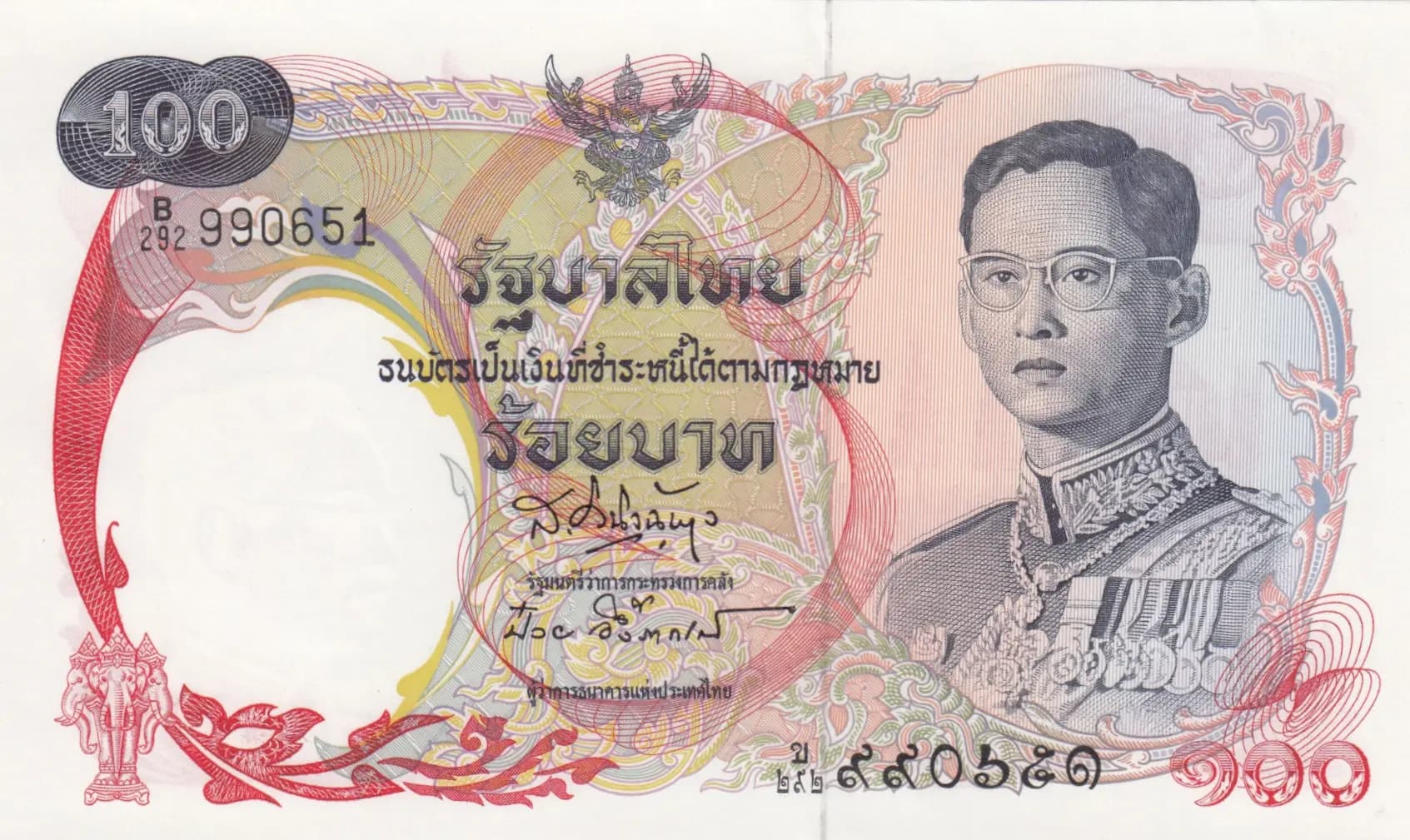
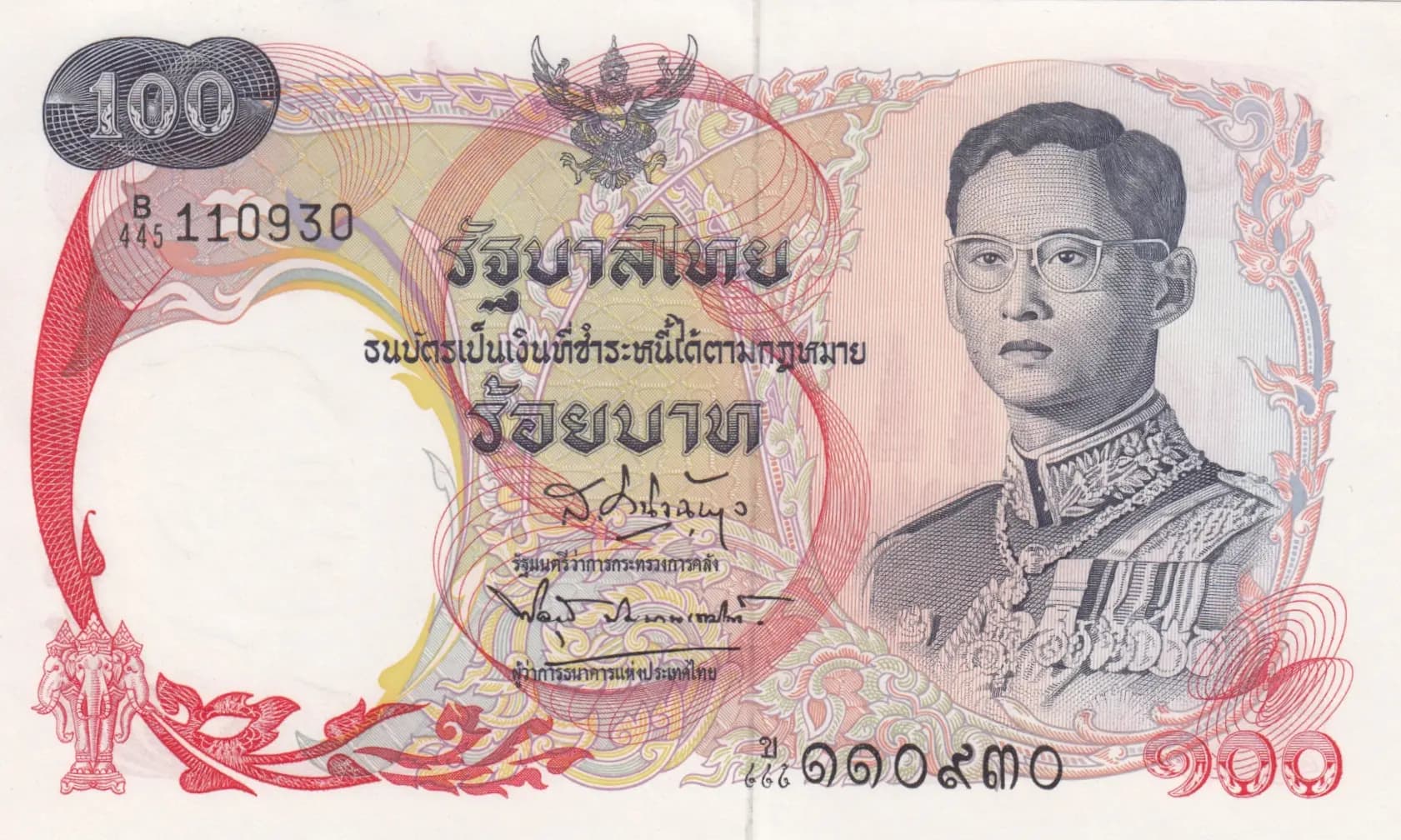
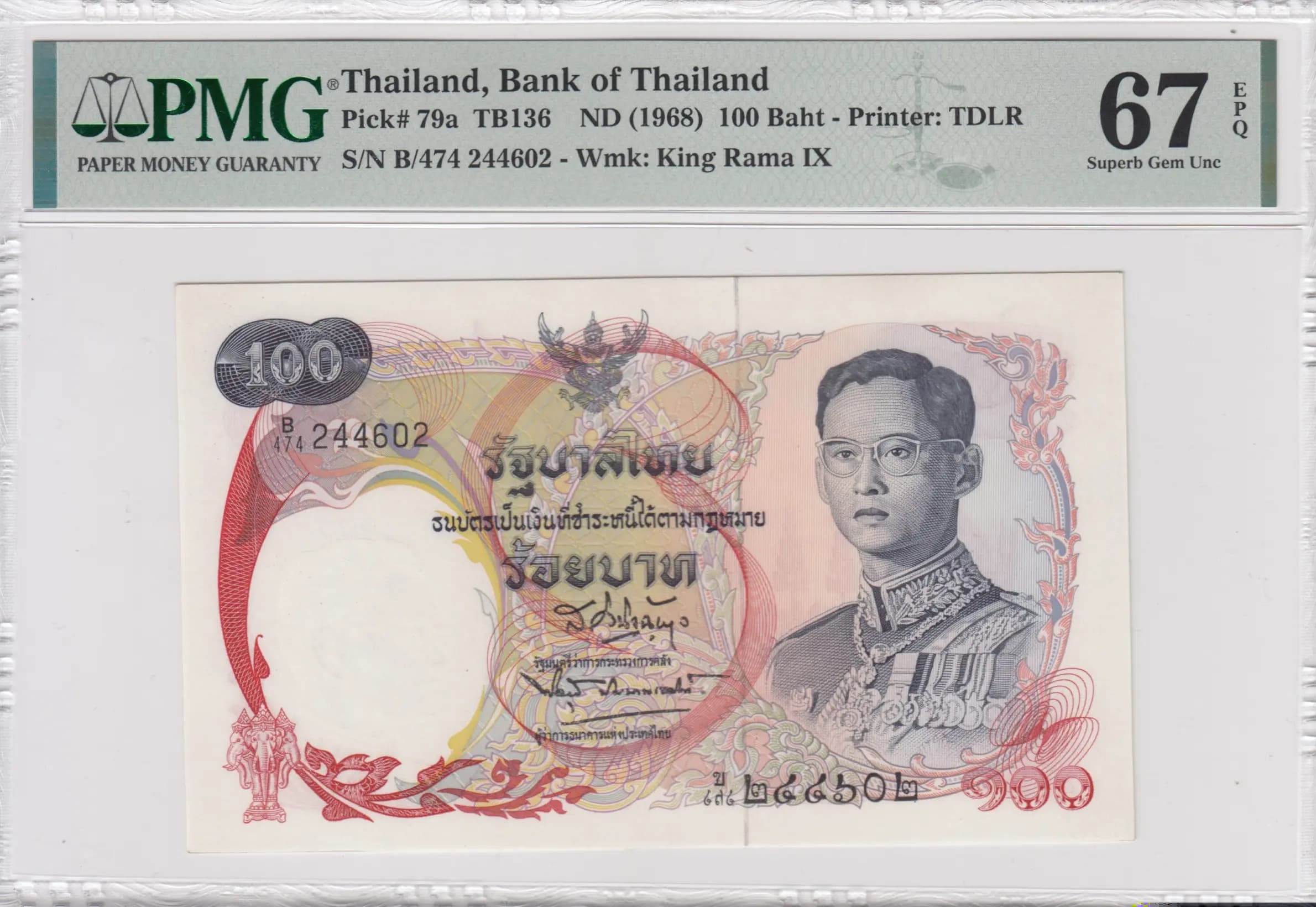
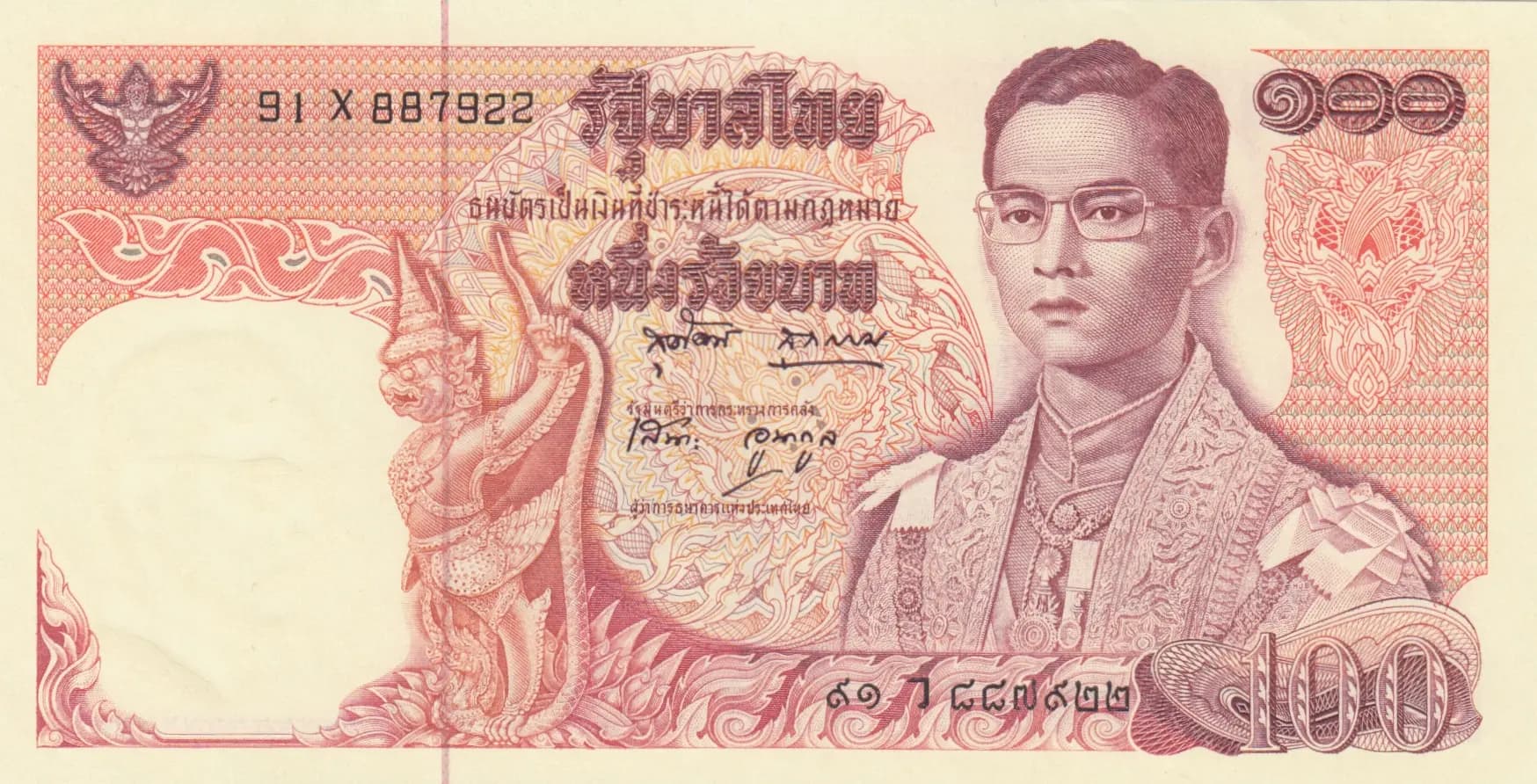
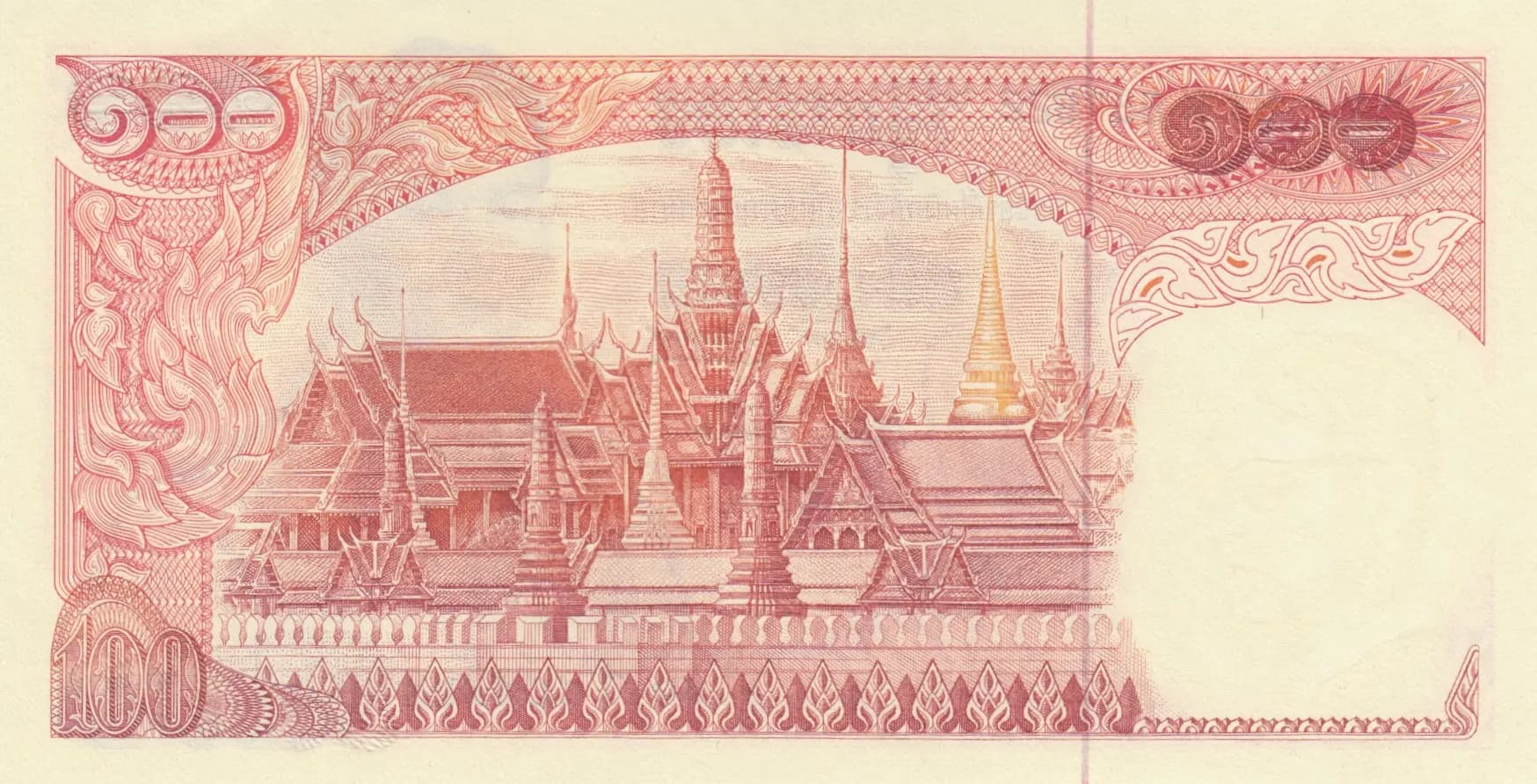
An excellent uncirculated example of Thailand's 1968 Bank of Thailand 100 baht note (Pick-85), featuring a striking portrait of King Rama IX in traditional Thai ceremonial dress on the obverse and an intricate engraving of the Grand Palace's Emerald Buddha temple complex on the reverse. The note displays crisp, well-preserved printing in red-brown and multicolor with no visible circulation wear, retaining its original color vibrancy and fine engraved detail characteristic of Thai Banknote Printing Works production.
Common. This is a regular issue note from Thailand's standard circulation series with substantial print runs across 1969-1978. Secondary market data from eBay indicates consistent pricing in the $18-40 range for UNC examples, with catalogue values listed at $8 UNC (2019 estimates), clearly establishing this as a common collectible rather than a scarce or rare variant. The consistent availability and affordable pricing across multiple sales confirm widespread circulation and production.
Issued during the reign of King Bhumibol Adulyadej (Rama IX), who ascended in 1946 and became the world's longest-reigning monarch, this note commemorates the monarchy through the prominent portrait of the young king in formal Thai royal dress. The reverse depicts the Emerald Buddha chapel within the Grand Palace complex in Bangkok, one of Thailand's most sacred Buddhist sites and a symbol of national cultural and religious identity. This design reflects the post-1968 period following Thailand's political transitions, emphasizing both the stability of the monarchy and the nation's Buddhist heritage.
The obverse features a carefully engraved portrait of King Bhumibol Adulyadej (Rama IX) positioned at right, depicted as a young man wearing glasses and formal Western-style dress beneath ornate traditional Thai royal ceremonial robes and regalia. The left side is dominated by an elaborate Thai mythical creature motif (likely a garuda or celestial bird, associated with Thai heraldry) rendered in decorative scrollwork. The top left contains the Thai national emblem. The reverse showcases a detailed architectural engraving of the Emerald Buddha chapel section of the Grand Palace complex, featuring multiple golden chedis (stupas), pointed roofs with traditional Thai upturned eaves, and symmetrical temple structures characteristic of major Thai Buddhist sanctuaries. Both sides employ elaborate ornamental Thai border patterns with scrollwork and floral elements in cream, red-burgundy, pink, and gold tones.
Front: Serial number 91 X 887922 (printed in Arabic numerals); ร้อยบาท (One hundred baht); 100 (denomination in Arabic numerals); ธนาคารแห่งประเทศไทย (Bank of Thailand). Back: 100 (denomination numerals in ornate circular frames at top left and bottom left corners).
Intaglio engraving (line-based security printing method), executed by Thai Banknote Printing Works. The note exhibits the hallmark characteristics of high-quality engraving from this period: intricate fine-line work throughout the ornamental designs, detailed portrait rendering with security-conscious line-based techniques in the facial features, and complex architectural detailing with fine cross-hatching and scrollwork that would be extremely difficult to counterfeit with period technology.
The Pick catalog identifies one variant (P-85a) for the base 100 baht 1968 type. No specific overprints or special designations are noted on this particular example. The serial number prefix format (91 X) is consistent with regular issue examples from this series. No replacement note prefix (S-(W)) is visible on this example, confirming it as a standard regular-issue note rather than a replacement note variant.