1 pound 1978
Market Prices
22 salesAbout This Note
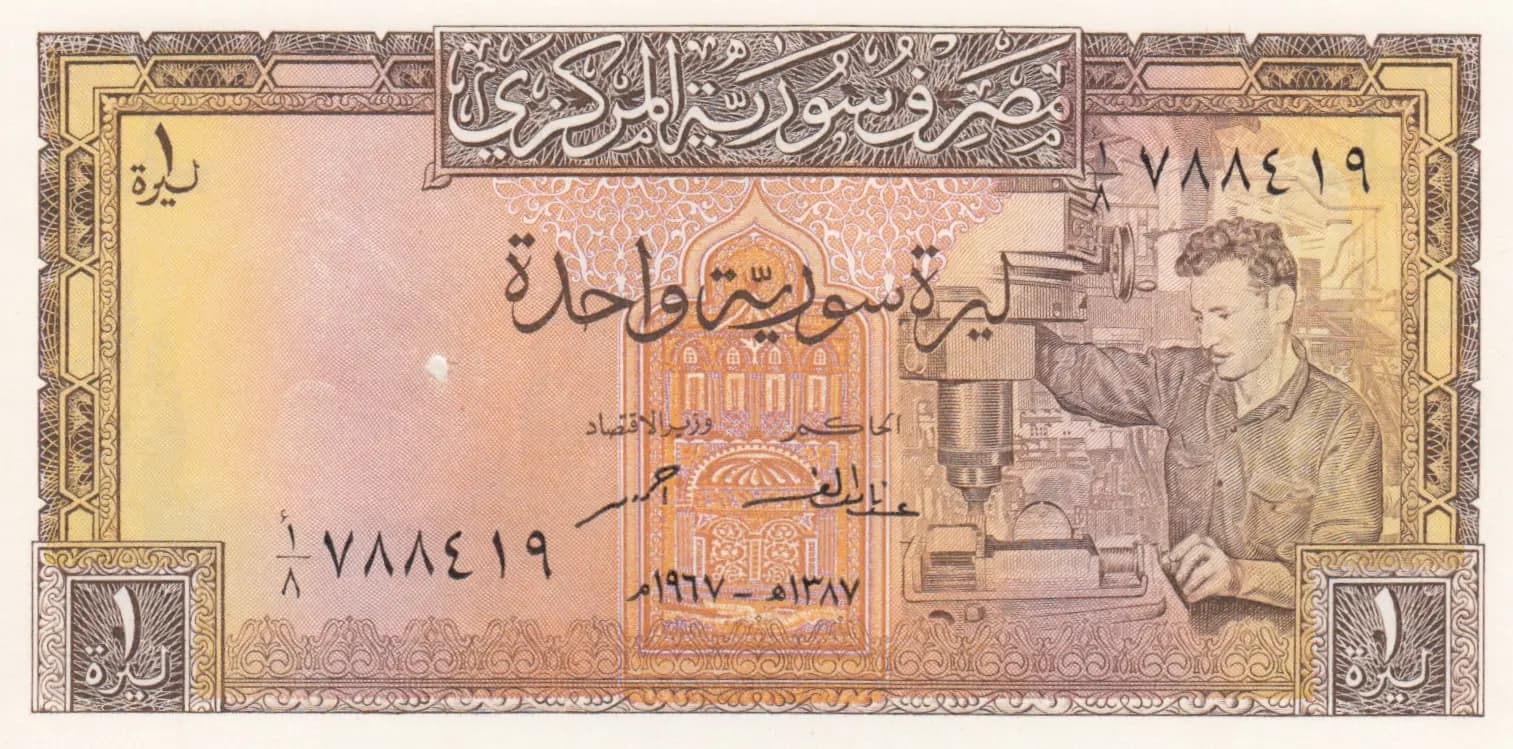
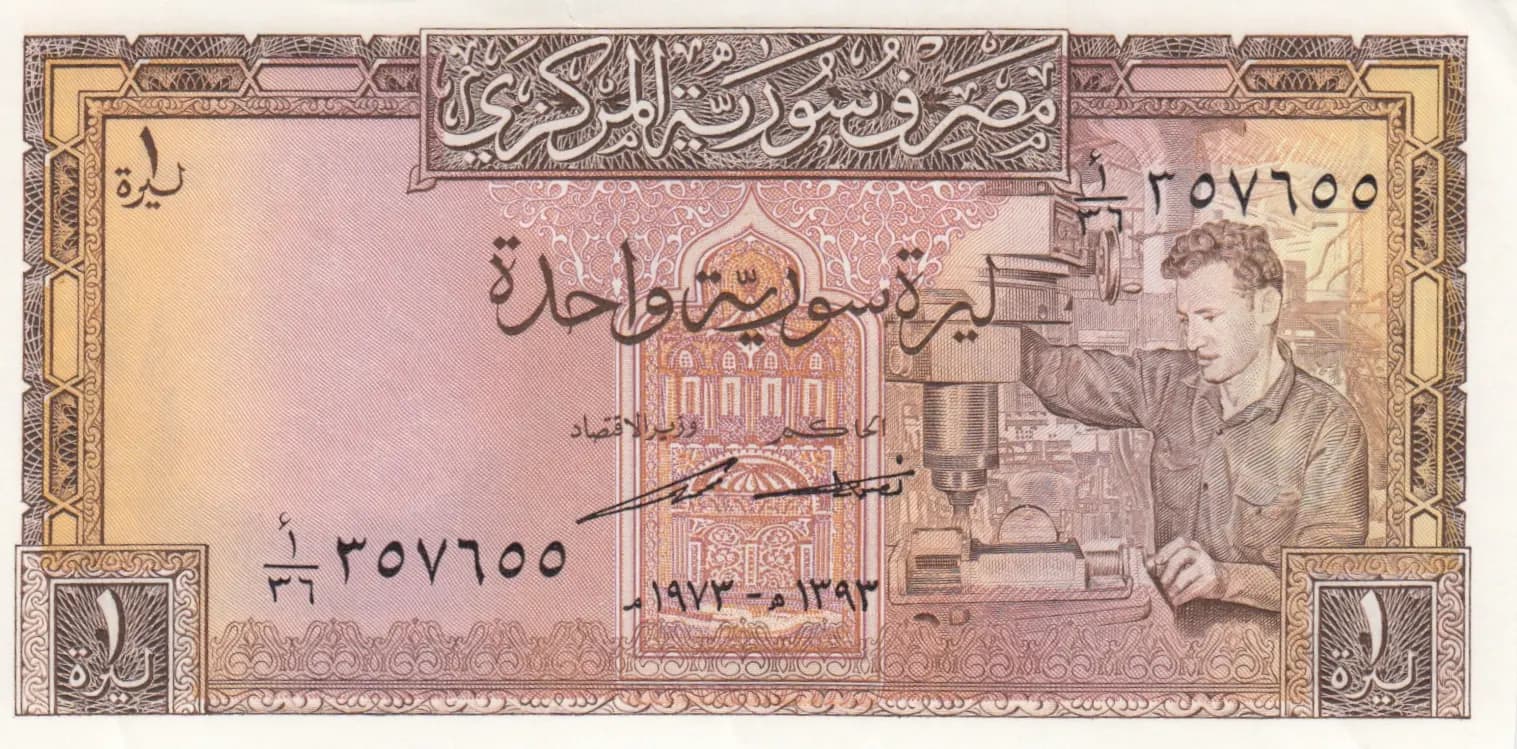
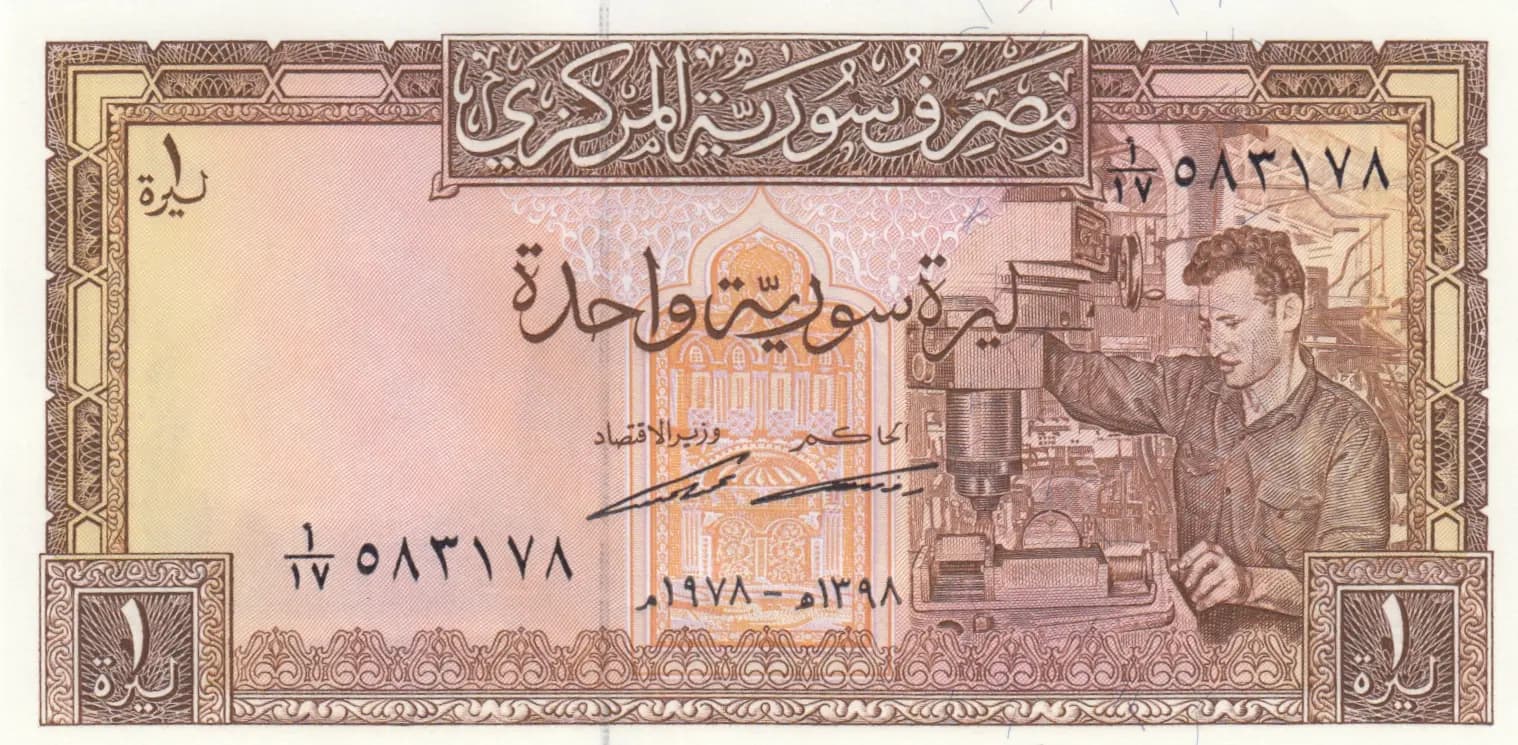
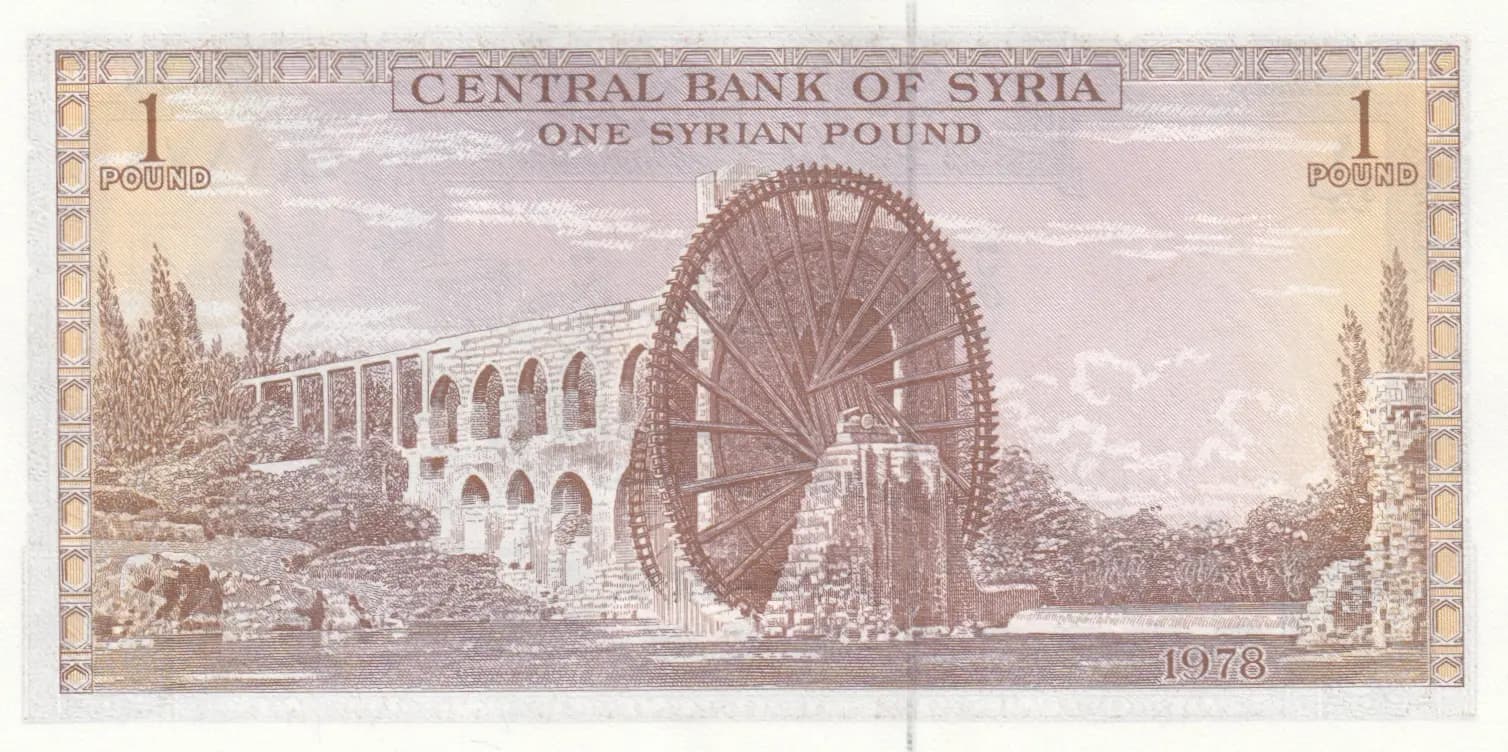
This is a Syrian 1 Pound note from 1978 (AH 1398), issued by the Central Bank of Syria and cataloged as Pick P-93d. The obverse features a portrait of a worker in profile against an institutional building with Islamic architectural elements, rendered in warm brown and sepia tones on a light pink underprint. The reverse displays the iconic Wheel of Hama (noria) water wheel beside a stone structure with poplar trees, a symbol of Syria's historical irrigation heritage. While the front shows signs of circulation with visible creases and handling marks, the back remains well-preserved with crisp engraving detail, suggesting light to moderate use consistent with the UNC grade assigned.
Common. The eBay market data demonstrates consistent and frequent sales across multiple condition grades (VF through PMG 67) with prices ranging from $1.25 to $42 USD, and 2019 catalogue values listing UNC examples at $8. The consistent availability and modest pricing indicate this is a widely available note with no supply constraints. The 1963-1982 issue period was lengthy, suggesting substantial print runs. This specific Pick number (P-93d) shows multiple cataloged variants (P-93b and P-93s noted in PMG records), further indicating common circulation and collection distribution.
Issued during the period 1963-1982 by the Central Bank of Syria, this note reflects the post-1963 Ba'athist era of Syrian governance and socialist ideological emphasis, as evidenced by the prominent portrayal of a 'Worker' on the obverse. The reverse's depiction of the Wheel of Hama—an ancient noria irrigation system on the Orontes River near Hama—celebrates Syria's agricultural heritage and historical engineering prowess. The inclusion of both Islamic architectural motifs and secular industrial imagery demonstrates the blend of traditional and modernist themes characteristic of Syrian banknote design during this period.
The obverse features a male worker depicted in left-facing profile, wearing casual collared attire, positioned against an institutional or industrial backdrop featuring a prominent Islamic dome and multi-level arched architecture in the Ba'athist socialist realist style. The design is framed by an ornate geometric and floral border pattern in tan and brown, with the composition utilizing a light pink-beige background that allows the sepia-toned central imagery to stand prominently. The reverse presents a detailed engraving of the Wheel of Hama (noria), a traditional water wheel used for irrigation along the Orontes River, positioned beside a stone building with characteristic Islamic arched openings. Poplar trees frame both sides of the structure, and the same decorative geometric border pattern frames the composition on a cream-beige background. The fine-line engraving work is executed with high technical precision, typical of mid-20th century central bank currency production.
FRONT: 'جمهورية سوريا الشعبية' (Syrian Arab Republic); '1398-1978' (Islamic year 1398 / Western year 1978); Arabic serial number visible. BACK: 'CENTRAL BANK OF SYRIA' (English); 'ONE SYRIAN POUND' (English); 'POUND' (English); '1978' (year of issue). The dual-language inscription reflects Syria's position as an Arabic-speaking nation conducting international financial communications in English.
Intaglio (engraved) printing, the standard security printing method for central bank currency during this period. The note exhibits fine-line engraving characteristics visible in the detailed border work, architectural elements, and portrait rendering. The multicolor underprint effect suggests the use of additional offset or lithographic color separations beneath the primary intaglio work. The printer for Syrian notes of this era was typically Bradbury Wilkinson & Co. or similar specialized currency security printers, though specific printer attribution would require reference to Central Bank of Syria records.
This note is cataloged as Pick P-93d, with known variants including P-93b and P-93s according to PMG population records. The 'P-93d' designation indicates this is the fourth documented variety of the 1 Pound note within the 1963-1982 issuance period. Varieties within this series likely differ by signature combinations (indicating different governorship periods of the Central Bank), serial number prefixes, or subtle printing variations. The visual analysis notes the presence of signature elements and a specific Arabic serial number (1٦۰۸٢٣١٨), which would be consistent with variety differentiation. The 1978/AH1398 date marking on the note confirms issue during the specified cataloged period. Collectors seeking to distinguish P-93d from related varieties (P-93a, P-93b, P-93c, P-93e, etc.) would need to cross-reference signature blocks and serial number characteristics with detailed Pick catalog annotations.