10 kronor 1968
Market Prices
15 salesAbout This Note
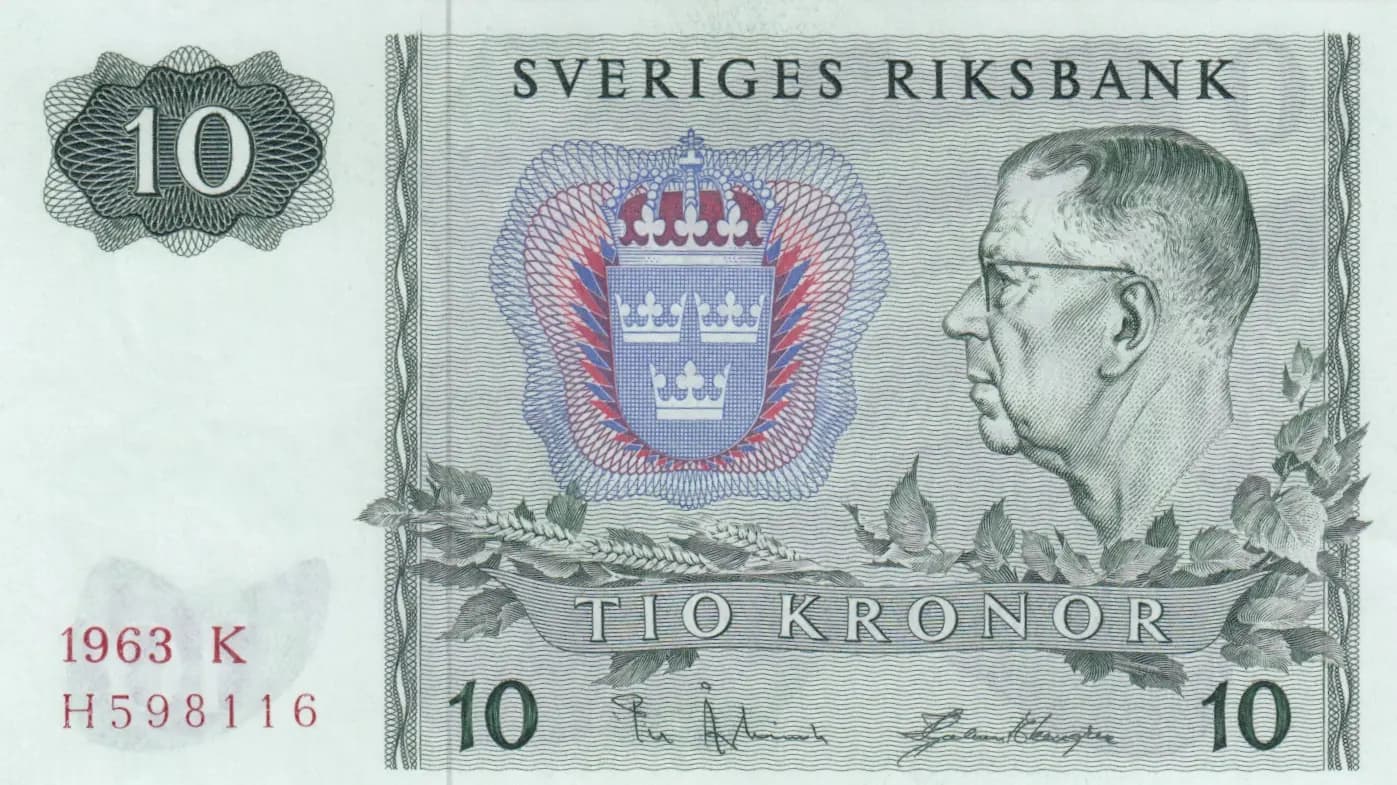
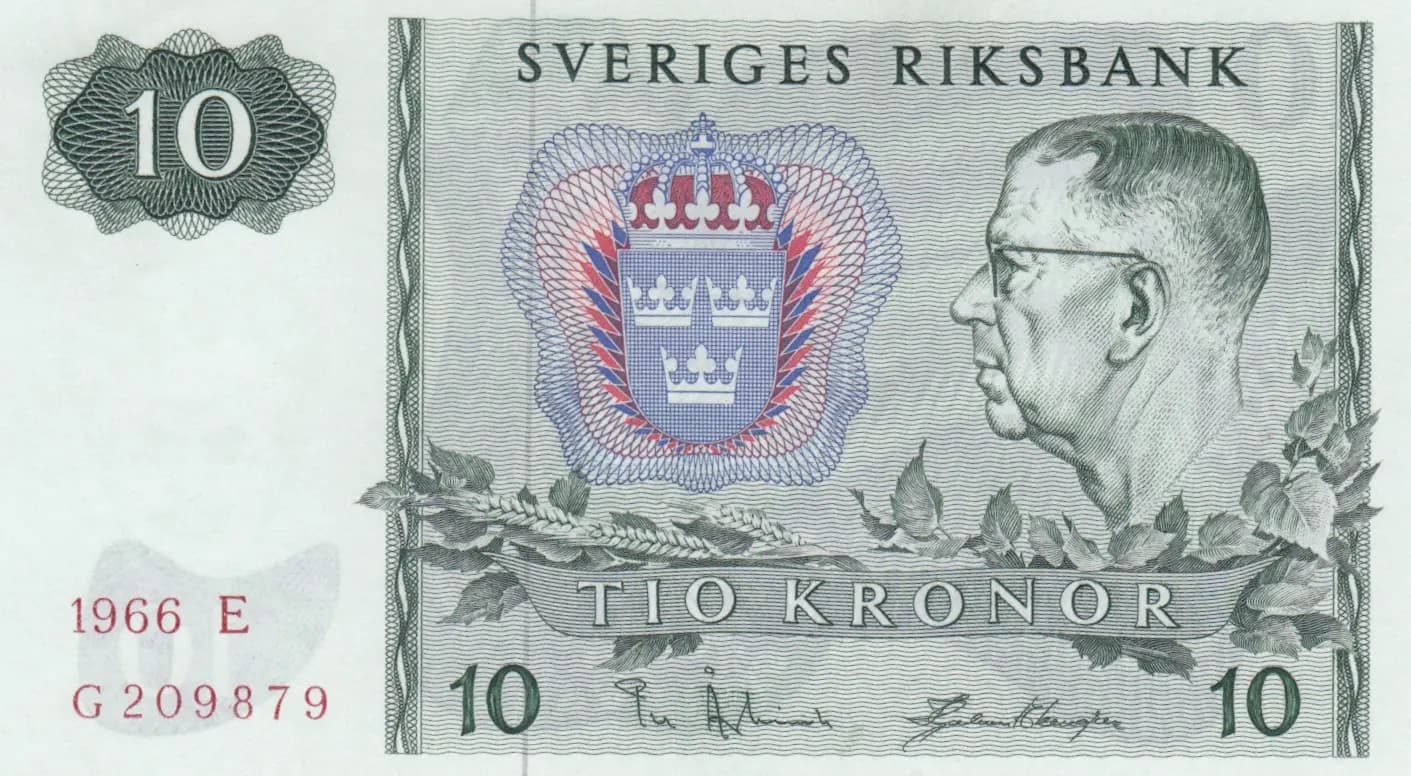
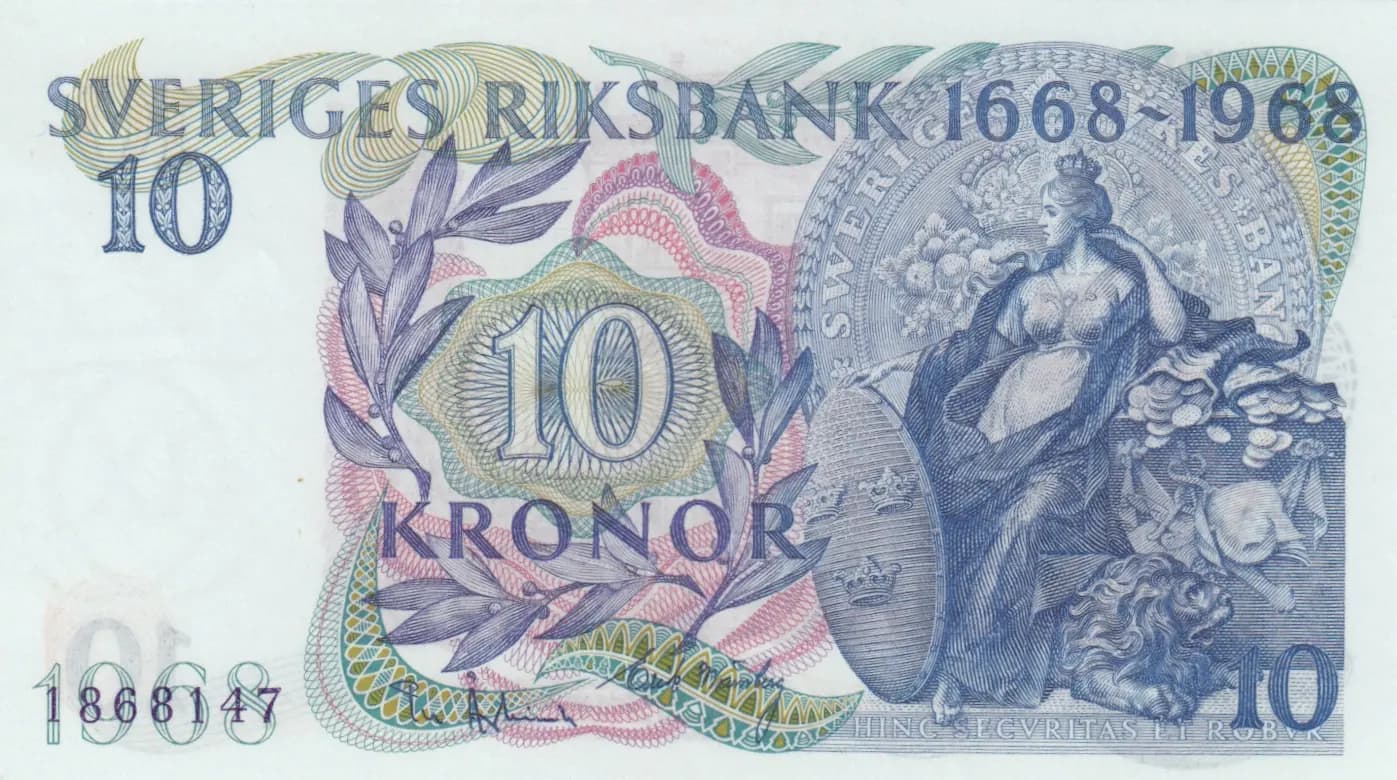
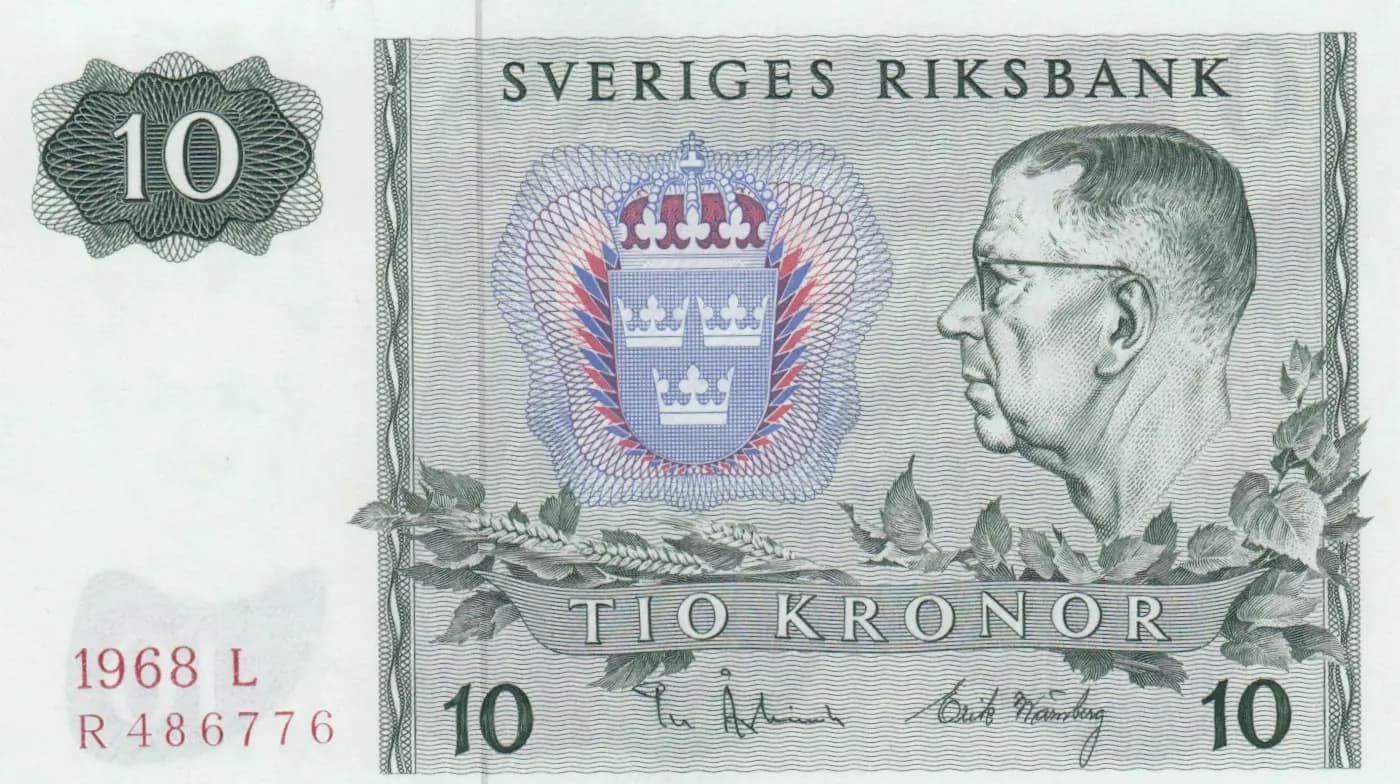
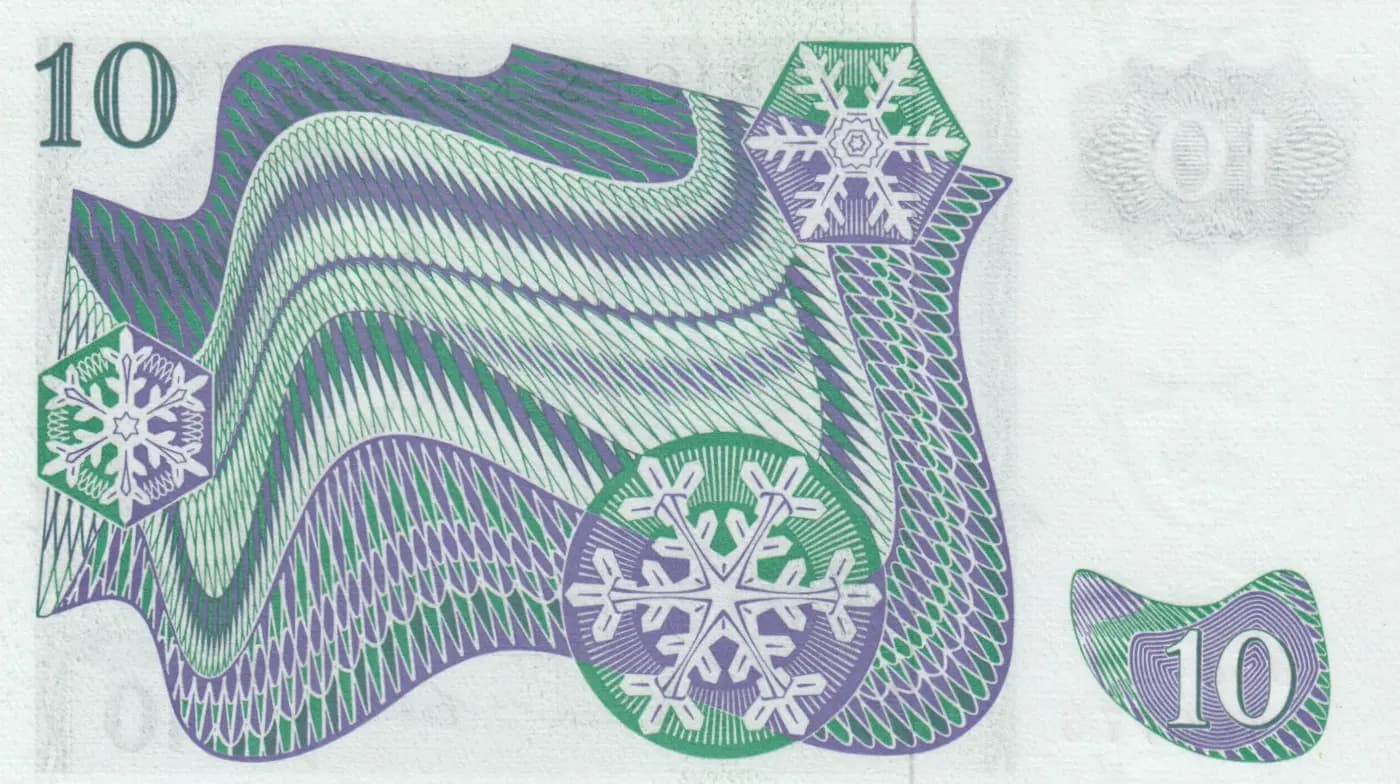
This is a Swedish 10 kronor banknote from 1968 in uncirculated condition, representing a classic example of mid-20th century Scandinavian currency design. The note features crisp, detailed engraving with vibrant multi-color printing—green and red on the obverse, green and purple on the reverse—and exhibits excellent preservation with no visible creases, tears, or wear. The combination of King Gustaf VI Adolf's portrait, the Swedish coat of arms, and the distinctive eagle with snowflake medallions on the reverse makes this a visually striking specimen that showcases the security printing standards of Sveriges Riksbank during this period.
Common. This 10 kronor note from 1968 (Pick P-52b) is a regular-issue banknote from a standard circulation series (1966-1990) with substantial print runs. Market data from realbanknotes.com confirms consistent availability, with numerous sales across multiple condition grades ranging from $1 to $18, the majority of UNC examples selling for $2-$5. These prices are well below the threshold indicating rarity. The note remains widely available in the numismatic market, making it a common item suitable for type sets rather than a rare collectible.
This 10 kronor note was issued during the reign of King Gustaf VI Adolf (1950-1973), whose portrait appears on the obverse facing right, positioned prominently at the note's center. The reverse design featuring a majestic eagle with spread wings and hexagonal snowflake medallions reflects Swedish national symbolism and Nordic imagery, while the note's circulation period (1966-1990) captures a era of relative economic stability in Sweden during the post-war decades. The dark green and red guilloche patterns on the front and the pale blue-green tones of the reverse are characteristic of Swedish currency design from this modernist period.
The obverse features King Gustaf VI Adolf in profile facing right, rendered in detailed engraved style typical of official portraiture. His image is framed by the Swedish coat of arms (featuring three crowns on a shield) positioned centrally at the top of the note. Decorative rosette and floral botanical elements appear at the bottom corners, while intricate guilloche patterns and ornamental frame borders create multiple layers of security design. The reverse presents a dominant central motif of an eagle with fully spread wings, executed with meticulous detail in the feather work. Flanking this are hexagonal medallions containing snowflake designs—a distinctly Nordic aesthetic choice. The overall layout uses geometric patterns and decorative borders throughout, with denomination markings repeated in opposite corners for design balance.
Front side: 'SVERIGES RIKSBANK' (Sweden's Central Bank), 'TIO KRONOR' (Ten Crowns), '10' (denomination), '1968 L' (year and printer's code), 'R 486776' (serial number), and two authorized signatures at bottom center. Back side: '10' appears in upper left and lower right corners as denomination markings. All inscriptions are in Swedish or numeric notation standard for Swedish currency of this period.
Intaglio engraving with offset lithography for color separation and layering. The note exhibits the characteristic crisp line work, detailed feather rendering on the eagle, and precise guilloche patterns that are hallmarks of intaglio printing. The multi-color effect—combining green, red, blue, and purple—indicates sequential color printing typical of high-security banknote production by Swedish security printers during this era. The watermark incorporating August Strindberg's portrait (repeated pattern) was integrated during paper manufacture, a standard anti-counterfeiting measure for Sveriges Riksbank notes of this period.
This specimen is identified as Pick P-52b based on the 1968 date and design characteristics. The visual analysis confirms the presence of the August Strindberg watermark (repeated pattern), which is the standard watermark for this Pick number. The serial number format 'R 486776' with the prefix 'R' and the printer's notation '1968 L' are consistent with regular-issue varieties. PMG cataloging notes the existence of variant P-52e (with A. Strindberg watermark designation) and P-52s, indicating minor sub-varieties exist, though the observed specimen appears to be a standard regular-issue note without special overprints or markings that would denote a specialized variant.