2 rupees 1960
About This Note
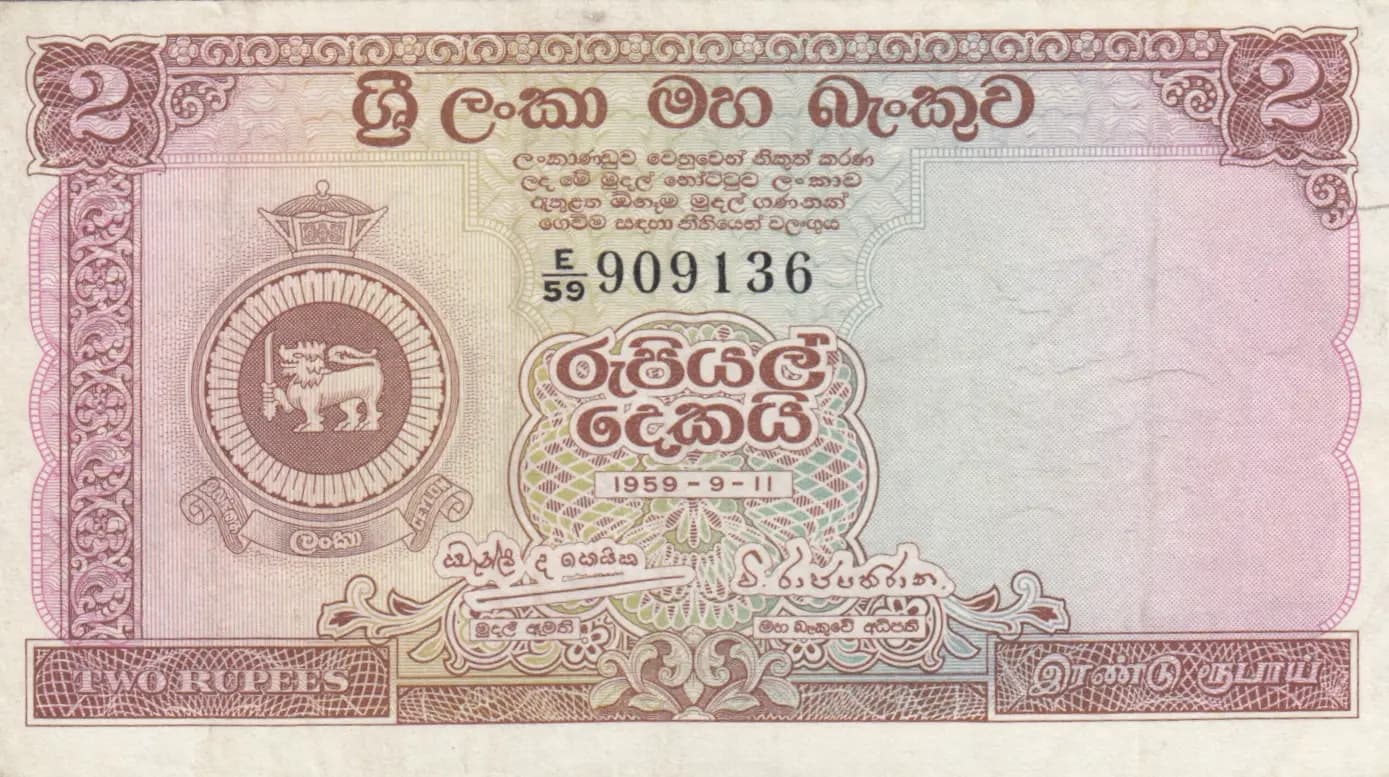
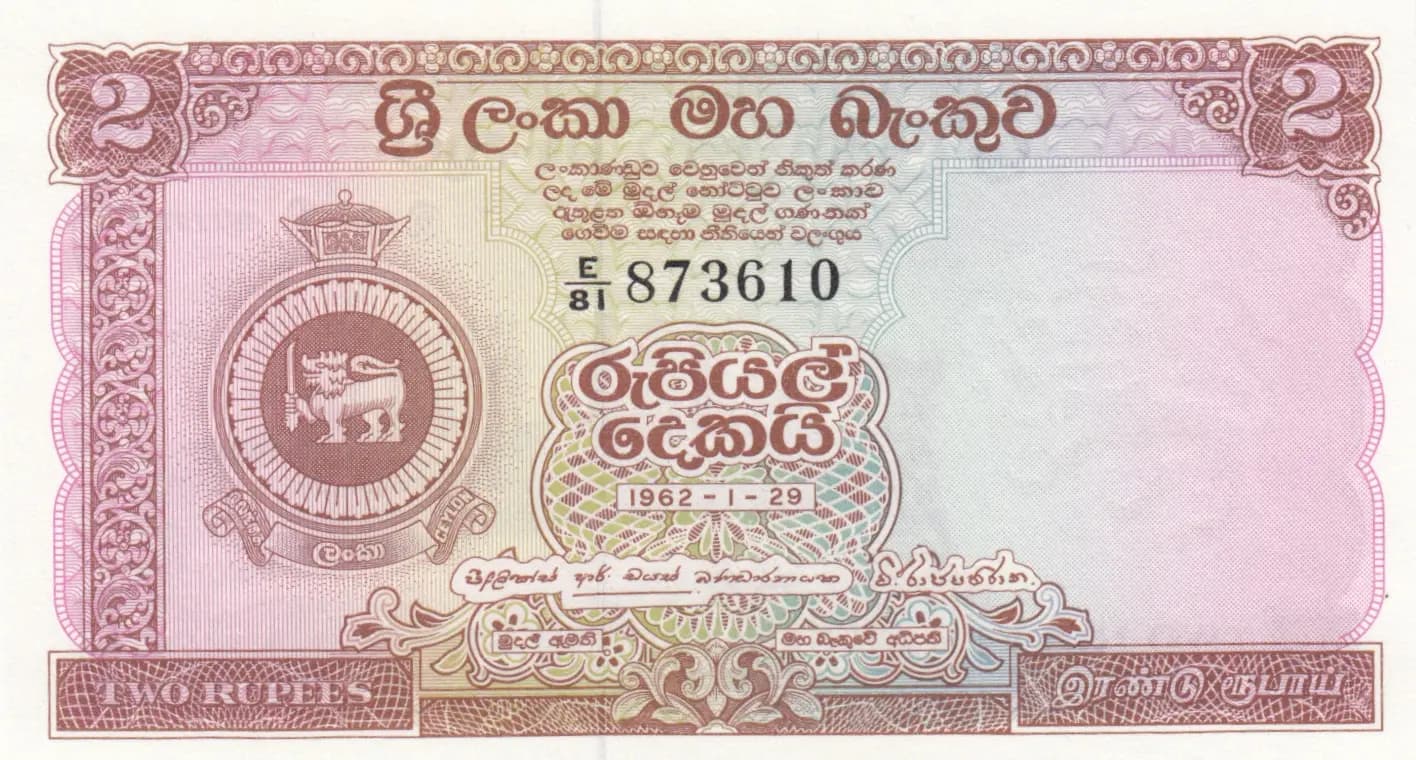
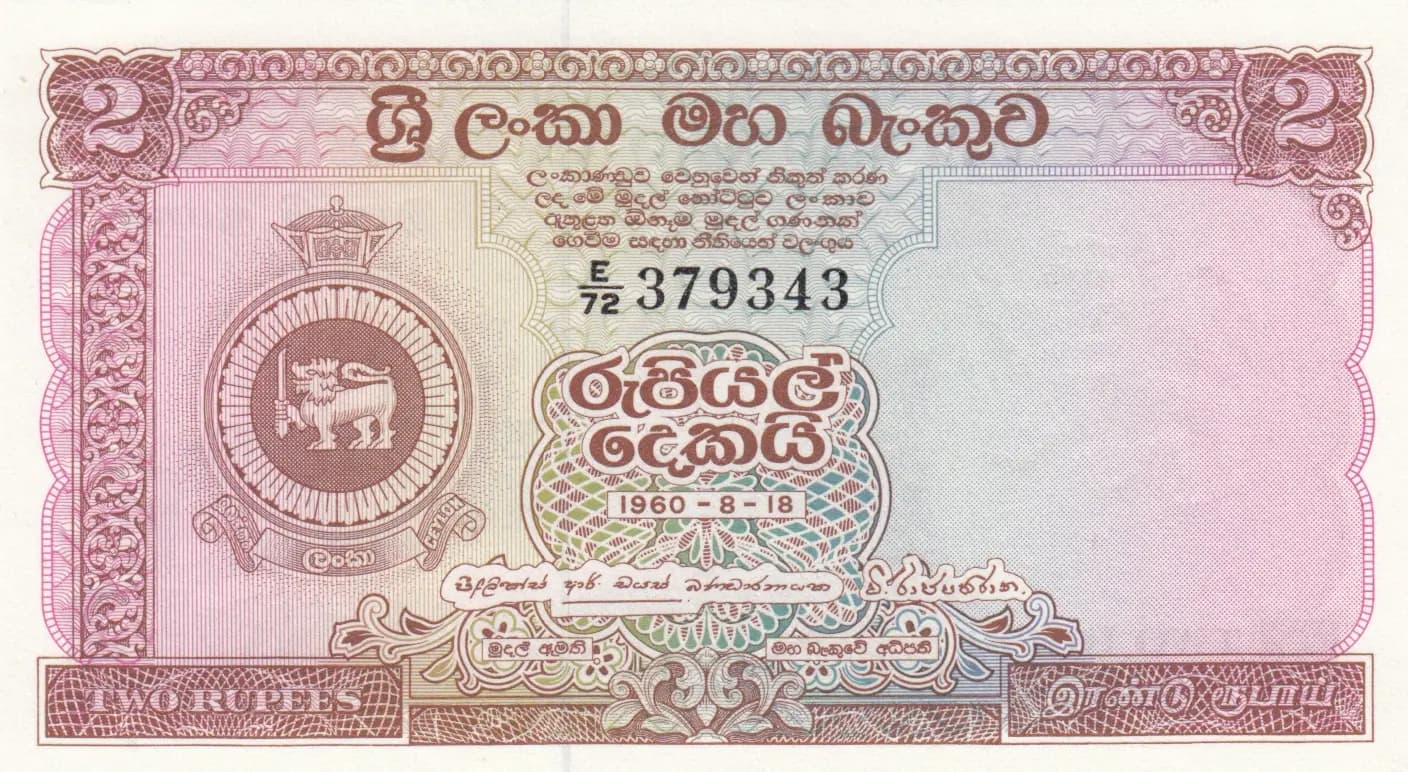
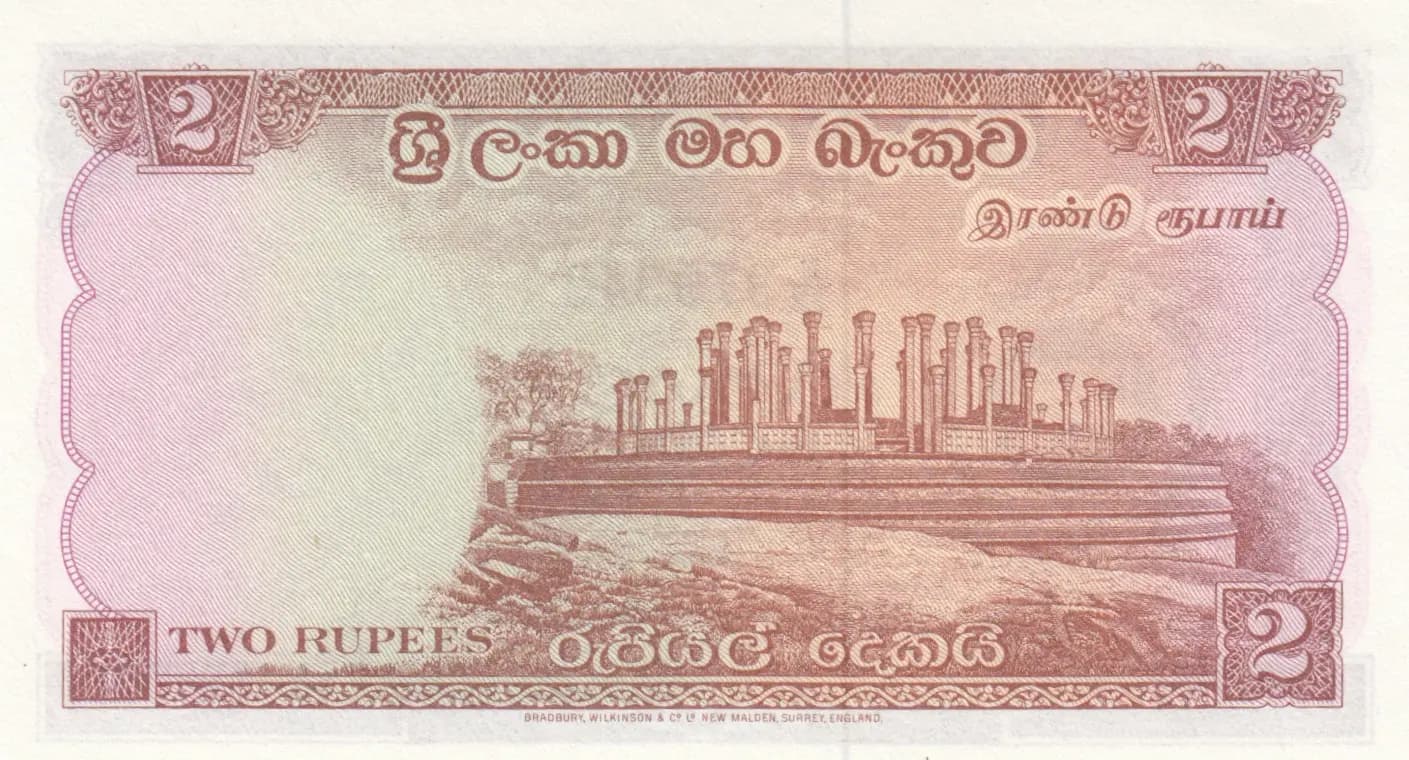
This is an uncirculated 1960 Central Bank of Ceylon 2 Rupees note (Pick P-57c) in exceptional condition with no visible wear, creases, or stains. The note features distinctive pink and brown ornate borders with a prominent lion emblem on the obverse and an engraved landscape depicting ancient ruins on the reverse, characteristic of Ceylon's cultural heritage imagery from this period. The crisp engraving, clear serial number (E 72 379343), and well-preserved coloration make this an attractive example of mid-20th century Ceylon currency.
Common. The 2 Rupees denomination from the 1956-1962 issue period of the Central Bank of Ceylon was produced in substantial quantities for everyday circulation. While this specific note (P-57c variant, dated 1960) in uncirculated condition is desirable to collectors, the note itself is not scarce. The Ceylon rupee notes from this era remain widely available in the collector market, particularly in grades below UNC. UNC examples command modest premiums over circulated specimens but do not approach rarity status.
Issued during the early independence period of Ceylon (1956-1962), this note reflects the newly sovereign nation's effort to establish its monetary identity under the Central Bank of Ceylon. The obverse features the lion emblem, a central symbol of Sri Lankan national identity derived from the country's historical coat of arms, while the reverse depicts the Medirigiriya Vatadage—an ancient Buddhist temple structure from Polonnaruwa—connecting the modern nation to its ancient Buddhist heritage and architectural legacy. The use of Sinhala, Tamil, and English inscriptions demonstrates the multilingual character of the post-independence Ceylon state.
The obverse features a formal design with a circular lion emblem positioned on the left side, surrounded by ornamental scrollwork and a decorative cartouche. The lion faces left and is enclosed in a circular border within the larger ornate frame. This lion emblem represents the coat of arms of Ceylon/Sri Lanka. The reverse depicts the Medirigiriya Vatadage (also spelled Vata Dage), an ancient Buddhist stupa structure located in Polonnaruwa, one of Ceylon's historical capitals. The engraving shows the distinctive circular temple with its multiple standing columns and surrounding landscape vegetation, situated on elevated terrain. The entire design employs pink, brown, cream, and beige tones with meticulous engraving patterns throughout, typical of the intaglio printing security standards of the era.
FRONT SIDE: 'ශ්රී ලංකා මහ බැංකුව' (Sinhala: Central Bank of Sri Lanka); 'රුපියල දෙකක්' (Sinhala: Two Rupees); Serial number 'E 72 379343'; Date '1960-8-18' (August 18, 1960). BACK SIDE: 'ශ්රී ලංකා මහ බැංකුව' (Sinhala: Central Bank of Sri Lanka); 'රුපියල දෙකක්' (Sinhala: Two Rupees); 'இராணுடு நுயாம்' (Tamil: Two Rupees); 'TWO RUPEES' (English); 'BRADBURY, WILKINSON & CO LTD NEW MALDEN, SURREY, ENGLAND' (Printer mark); Denomination '2' in corners.
Intaglio engraving (line engraving) executed by Bradbury, Wilkinson & Co Ltd of New Malden, Surrey, England, one of the world's premier security printers. The visual evidence of intricate engraved patterns, fine line work, decorative borders, and the printer's mark all indicate high-quality intaglio process. The crisp, detailed rendering of both the lion emblem and the architectural ruins reflects the precision and security features characteristic of Bradbury Wilkinson's work during this period.
This note is dated 1960-8-18 (August 18, 1960) within the broader 1956-1962 issuance period. The serial number prefix 'E 72' indicates a specific printing batch. The Pick catalog designates this as P-57c, which represents a particular state of the design within the 2 Rupees series. Minor variations in this series include different signature combinations and serial number prefixes, though such distinctions are primarily of interest to advanced collectors specializing in Ceylon currency rather than indicators of significant rarity or premium value.