20 kopeek 1961
About This Note
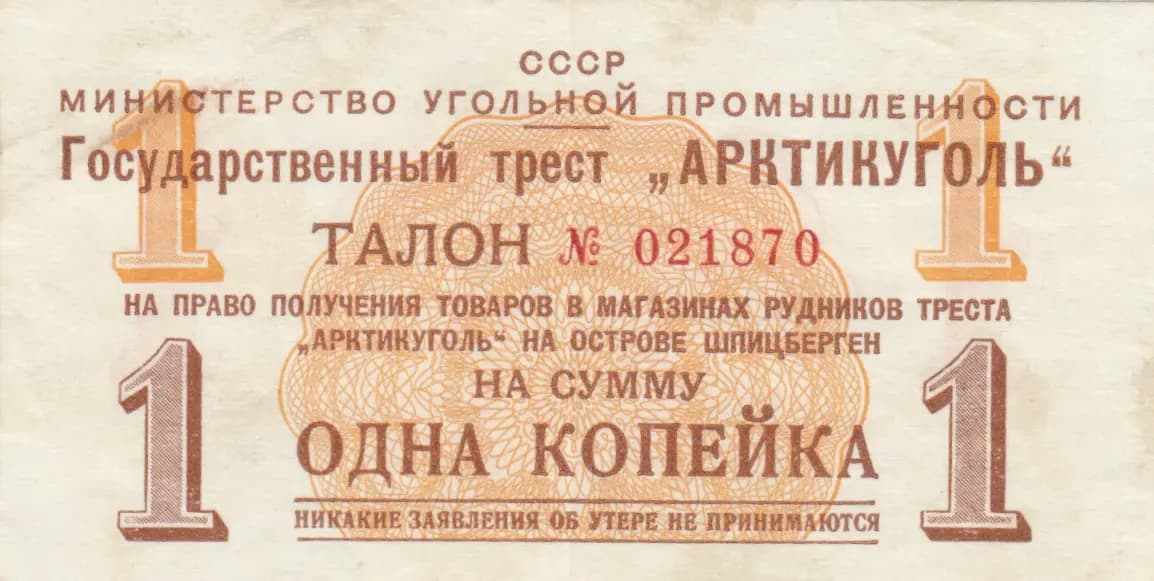
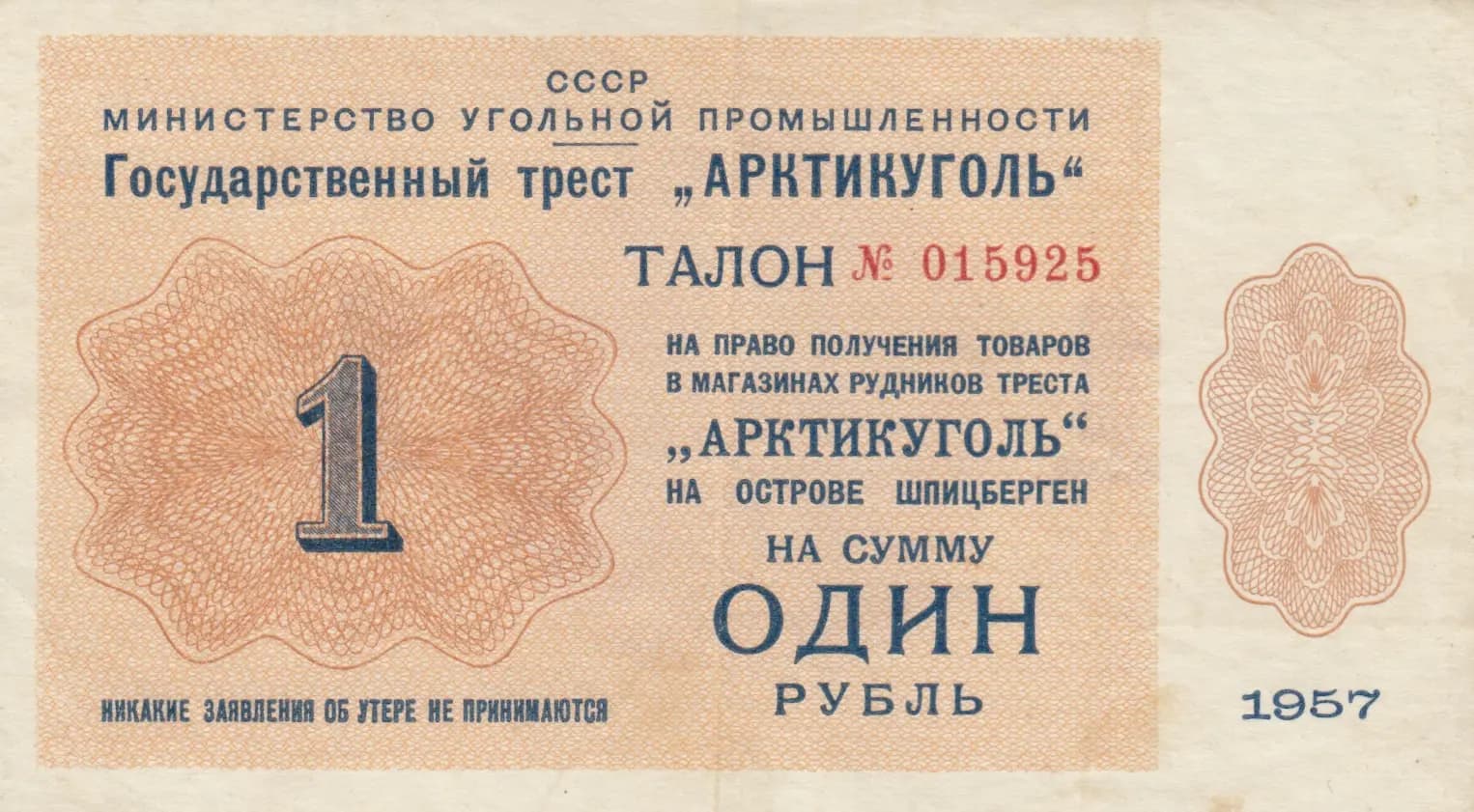
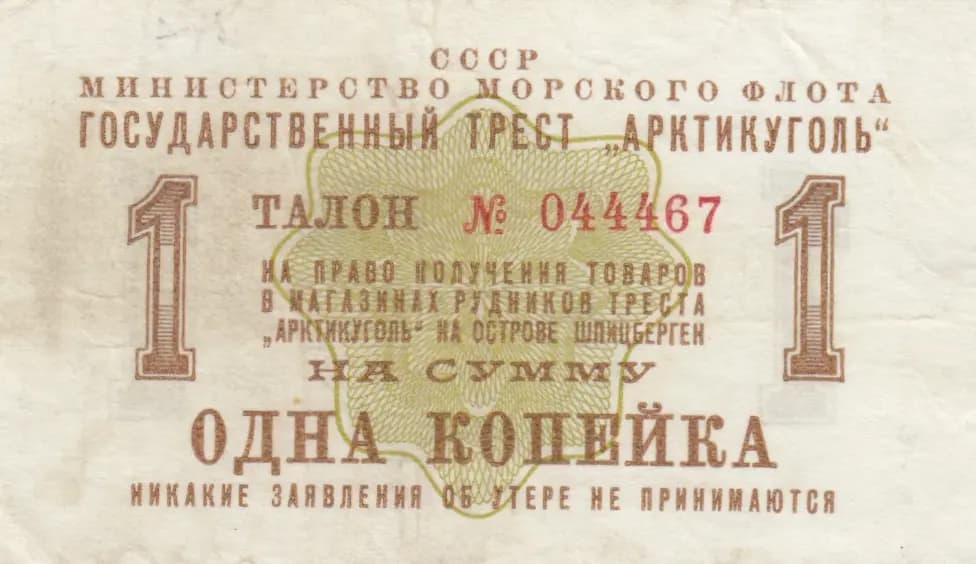
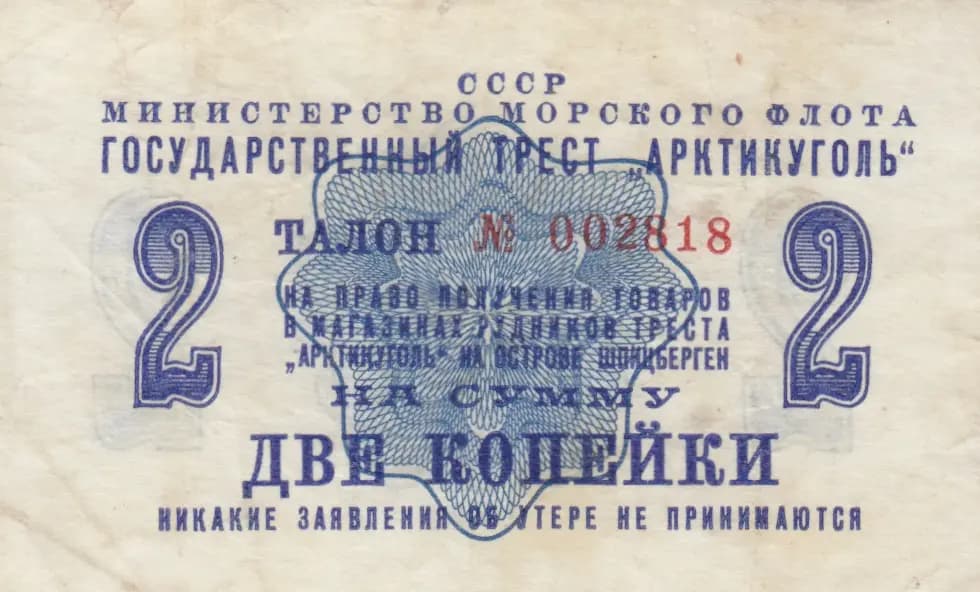
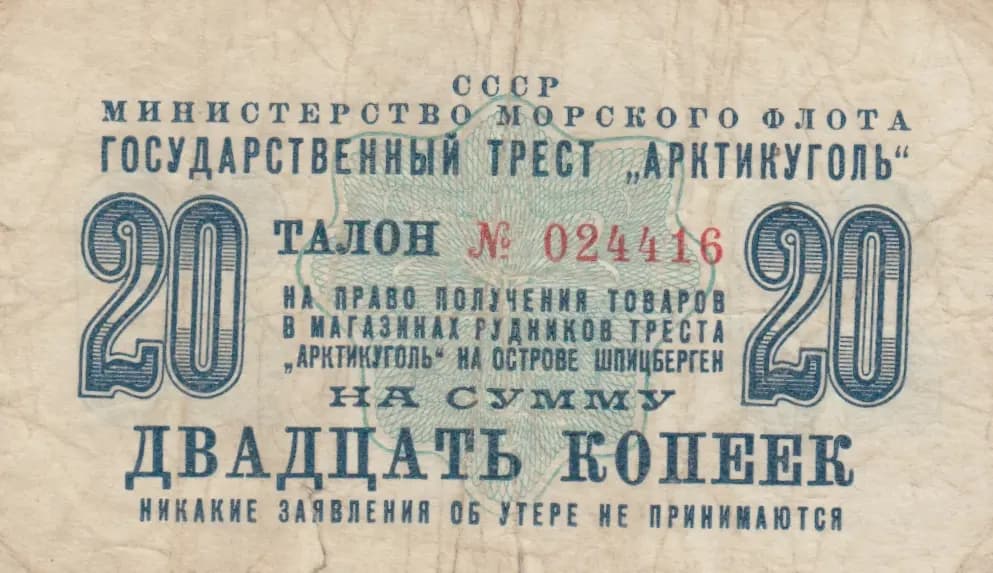
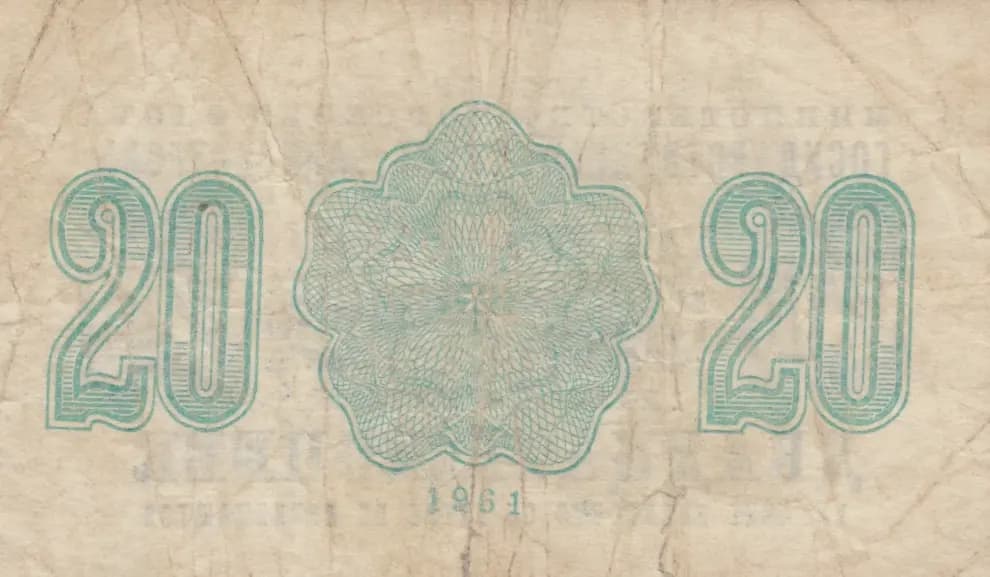
This is a 20 kopeek voucher from 1961 issued by the State Trust 'Arcticugol' for use in Spitsbergen, representing a fascinating example of Soviet occupational scrip. The note features blue text on the front and green ornamental design on the reverse, with decorative numerals '20' and an intricate central rosette pattern showing fine engraving work. In Fair condition, the note exhibits significant aging with visible creasing and yellowed patina throughout, yet maintains legible inscriptions and well-preserved decorative elements—a desirable artifact of Cold War-era Soviet Arctic operations.
Common. This is an occupational voucher from a Soviet-era enterprise with significant historical documentation. Spitsbergen notes from the 1961 period appear in multiple institutional and private collections, indicating reasonable print runs for workplace circulation. No evidence of rarity, recalls, or limited production runs exists. The Pick catalog listing as 'unlisted' reflects its specialized nature rather than rarity—unissued or emergency notes are cataloged differently. The Fair condition grade is typical for handled occupational scrip of this age.
This voucher documents Soviet economic activity in the Arctic archipelago of Spitsbergen during the height of the Cold War. Issued by the Ministry of Marine Fleet through the State Trust 'Arcticugol' (Arctic Coal), the note was exchangeable for goods at company stores serving workers in Soviet coal mining operations on the island, reflecting the USSR's strategic interest in Arctic resource extraction and territorial presence. The 1961 date places this during an active period of Soviet Arctic expansion, when such occupational scrip served as currency within isolated Soviet settlements in the Svalbard region.
The note features a classical occupational scrip design with no portraits or specific landmarks depicted. The front displays prominent decorative numerals '20' flanked by ornamental circular patterns and framing elements in blue ink, with administrative text arranged symmetrically. The reverse showcases an elaborate engraved rosette or flower-like central medallion with intricate geometric radial hatching and fine line work, surrounded by matching decorative numerals '20' in green. The design reflects Soviet official printing standards of the period, with emphasis on ornate security features through complex engraving rather than modern anti-counterfeiting elements. The cream-colored paper stock and aged patina are consistent with Soviet administrative vouchers of the early 1960s.
FRONT SIDE: 'СССР' (USSR) / 'МИНИСТЕРСТВО МОРСКОГО ФЛОТА' (Ministry of Marine Fleet) / 'ГОСУДАРСТВЕННЫЙ ТРЕСТ "АРКТИКУГОЛЬ"' (State Trust 'Arcticugol') / 'ТАЛОН' (Voucher/Token) / '№ 024416' (No. 024416) / 'НА ПРАВО ПОЛУЧЕНИЯ ТОВАРОВ В МАГАЗИНАХ СУННИКОВ-ТРЕСТА "АРКТИКУГОЛЬ" НА ОСТРОВЕ ШПИЦБЕРГЕЕН' (For the right to receive goods in stores of the Sunnikov-Trust 'Arcticugol' on the island of Spitsbergen) / 'НА СУММУ' (For the sum of) / 'ДВАДЦАТЬ КОПЕЕК' (Twenty kopecks) / 'НИКАКИЕ ЗАЯВЛЕНИЯ ОБ УТЕРЕ НЕ ПРИНИМАЮТСЯ' (No claims for loss are accepted). REVERSE SIDE: '20' (denomination numeral, repeated) / '1961' (year of issue).
Intaglio engraving (line engraving) on watermarked paper stock. The fine line work visible in the decorative numerals, circular patterns, and particularly the detailed geometric hatching of the central rosette pattern indicates professional security printer work typical of Soviet State Printing Works productions. The two-color printing (blue obverse, green reverse) was applied through separate engraved plates, a standard security measure for occupational scrip of this era. The precise registration and fine detail preservation despite 60+ years of aging suggests high-quality intaglio production.
Serial number observed: No. 024416. The specific issuing authority inscribed is 'Sunnnikov-Trust' (Сунников-Треста), suggesting this may represent a specific facility or depot variant within Arcticugol operations. Variants may exist based on different serial number ranges, dates within 1961, or different facility designations, though systematic variety documentation for this occupational scrip series is limited in standard numismatic catalogs. The unlisted Pick status indicates further research may reveal additional varieties or sub-types.