50 dollars 1986 specimen
Market Prices
About This Note
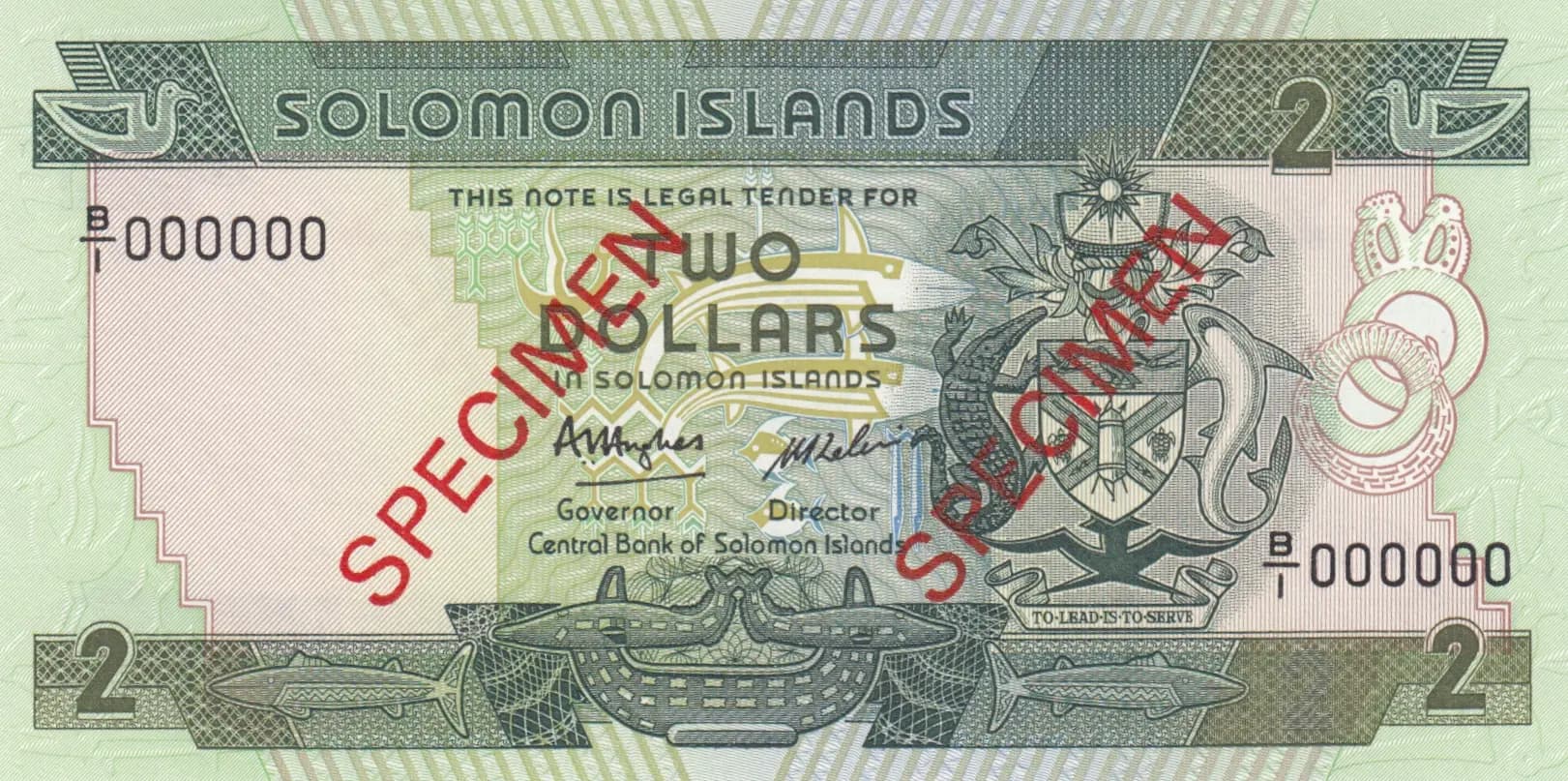
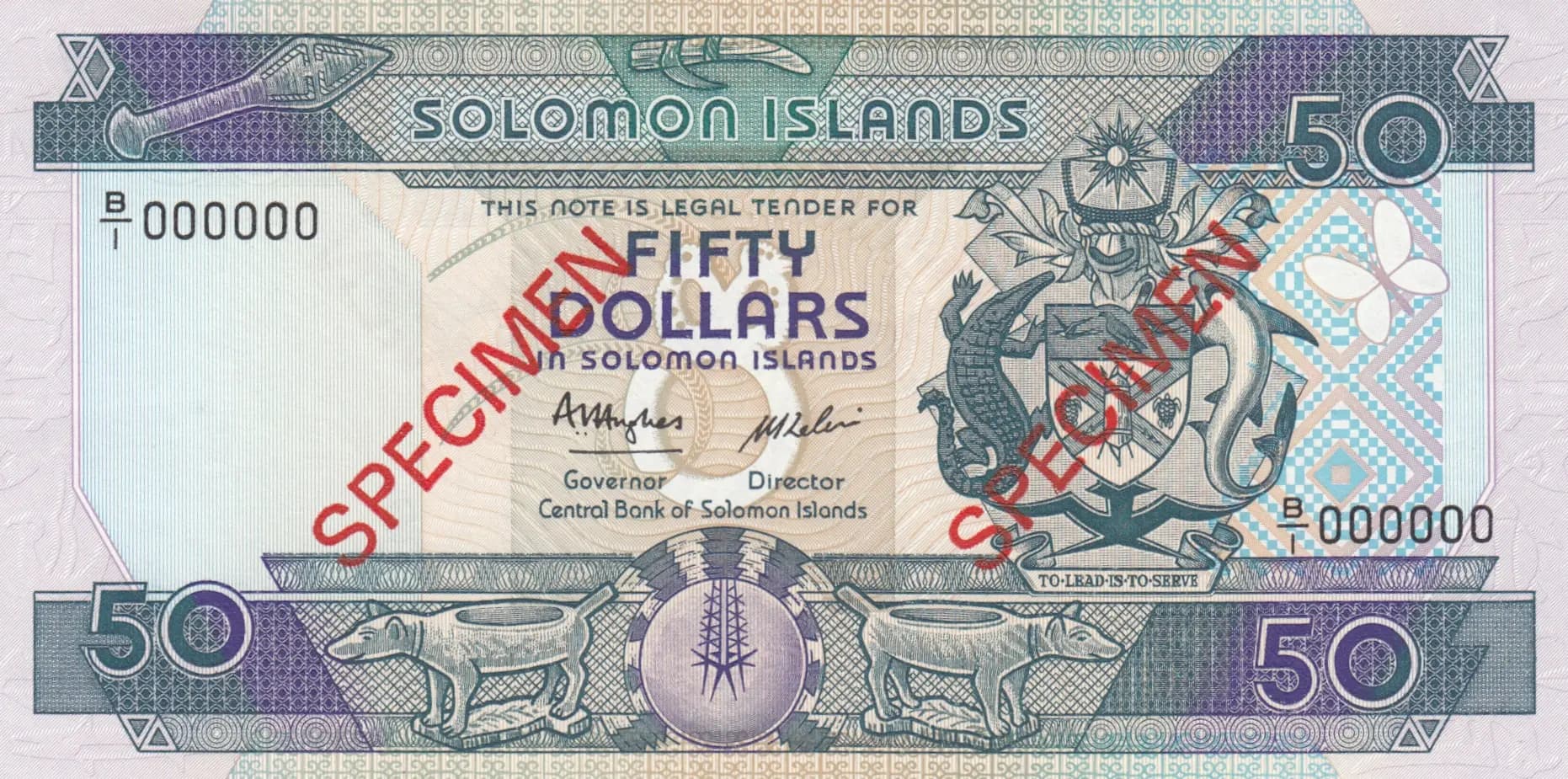
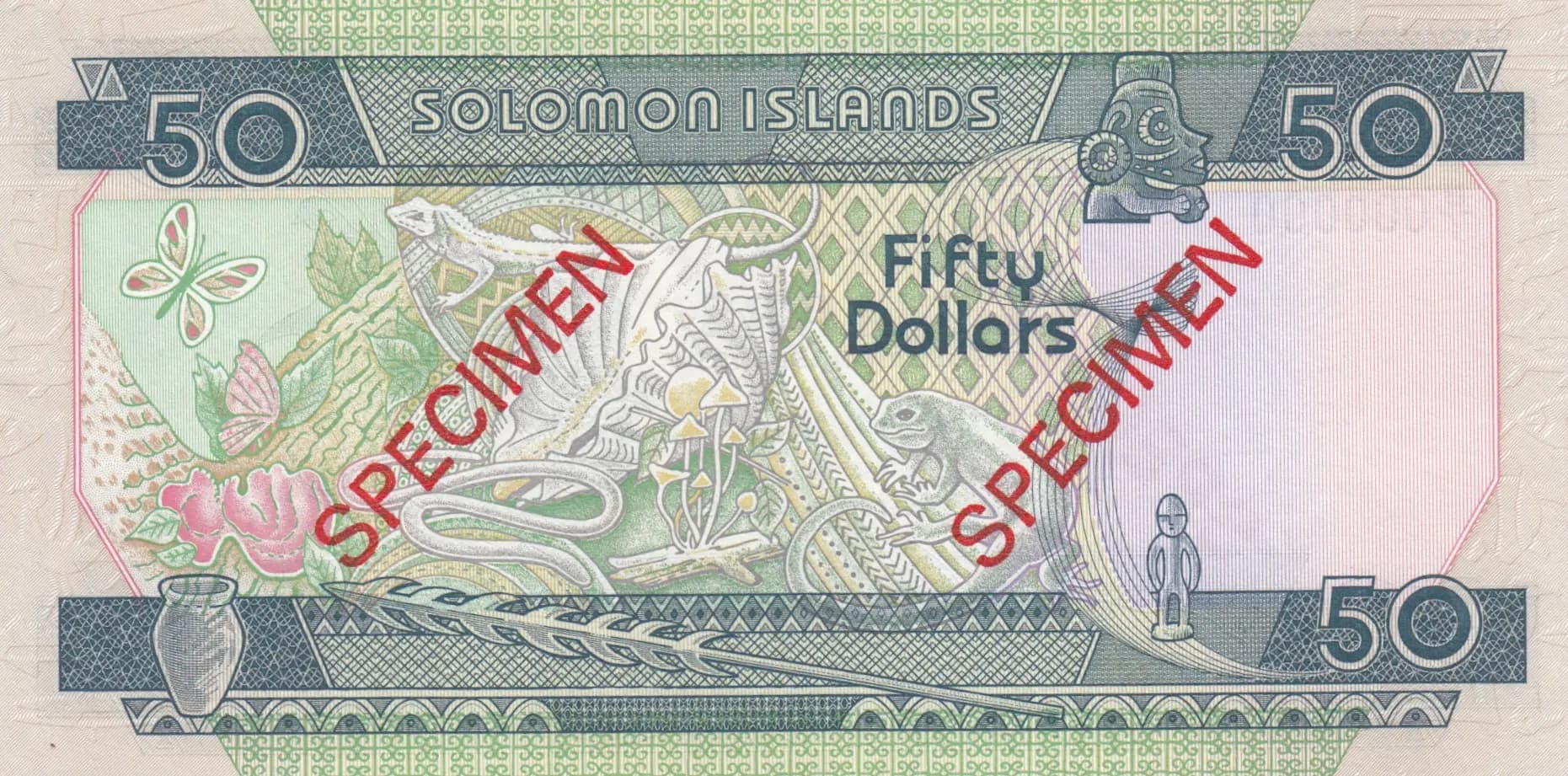
This is an uncirculated 1986 specimen note from the Central Bank of Solomon Islands, featuring the nation's coat of arms prominently on the obverse and traditional cultural imagery including butterflies, reptiles, and carved figures on the reverse. The note exhibits excellent preservation with no visible wear, creases, or damage, and is clearly marked as a specimen with red diagonal overprint text. The multicolor design in blue-green, purple, and cream tones showcases fine line engraving work typical of high-security currency production from this era.
Common. This is a specimen note from the 1986 issue of Solomon Islands currency. While specimen notes are generally less common than circulation notes, the eBay market data shows typical UNC prices ranging from approximately $3.70 to $78.00 USD with a median around $15-25, and a 2019 catalog value of $30 USD. These price points and the relatively broad availability in the secondary market indicate this is a common specimen variant. Specimen notes of modern currencies from established central banks are typically produced in sufficient quantities to be readily available to collectors.
Issued in 1986 during the early period of Solomon Islands' monetary independence, this 50 dollar denomination represents the nation's cultural identity through its design elements. The coat of arms on the obverse symbolizes the sovereignty of Solomon Islands, while the reverse's depiction of local fauna (butterflies and reptiles/geckos) and traditional carved figures reflects the cultural heritage and biodiversity central to the island nation's identity. This specimen note would have been produced for presentation and archival purposes by the Central Bank during the currency's initial circulation phase.
The obverse features the coat of arms of Solomon Islands positioned at right, consisting of a shield with traditional designs and a sun emblem above it, symbolizing national sovereignty. A crocodile illustration appears in the upper left corner, representing local fauna. The central area contains denomination information and legal tender text. Two signature lines are present for the Governor and Director of the Central Bank. The reverse depicts traditional Solomon Islands cultural and natural elements: butterflies and floral botanical designs on the left side, traditional curved tribal design elements throughout, a carved standing human figure (traditional Solomon Islands statue) in the upper right area, and what appears to be a pottery vessel illustration on the lower left. The denomination 'FIFTY Dollars' is prominently displayed in the center. Both sides feature intricate geometric and ornamental patterns reflecting Pacific Island artistic traditions.
Front side: 'SOLOMON ISLANDS' (country name), 'THIS NOTE IS LEGAL TENDER FOR FIFTY DOLLARS in SOLOMON ISLANDS' (legal tender declaration), 'Central Bank of Solomon Islands' (issuing authority), 'Governor' and 'Director' (signature titles), 'SPECIMEN' (specimen designation), '50' (denomination), 'B 000000' (specimen serial number format). Back side: '50' (denomination), 'SOLOMON ISLANDS' (country name), 'FIFTY Dollars' (denomination in words), 'SPECIMEN' (specimen designation).
Intaglio (line engraving) printing with multicolor offset lithography for the background. The note exhibits fine line work, detailed geometric patterns, and color gradients characteristic of high-security currency production. Multiple color layering and blending are evident throughout. Produced by TDLR (Thomas De La Rue) as indicated in PMG population data, a world-leading security printer.
This is specifically the P-17s variety (specimen note) as designated in the Pick catalog. The PMG population report indicates three variants for this base Pick number: P-17a (circulation note), P-17a* (replacement note with Y/1 prefix), and P-17s (specimen note). The visual analysis confirms this is the specimen variant through the prominent red 'SPECIMEN' diagonal overprint on both obverse and reverse. The serial number format shown (B 000000) is consistent with specimen note production standards. No ascending vs. equal size serial number variation is observable in the provided images, though the external reference notes that P-17 exists with equal size serials while similar notes like P-22, P-24, and P-29 may feature different serial number sizing.