5 dollars 1977
Market Prices
20 salesAbout This Note
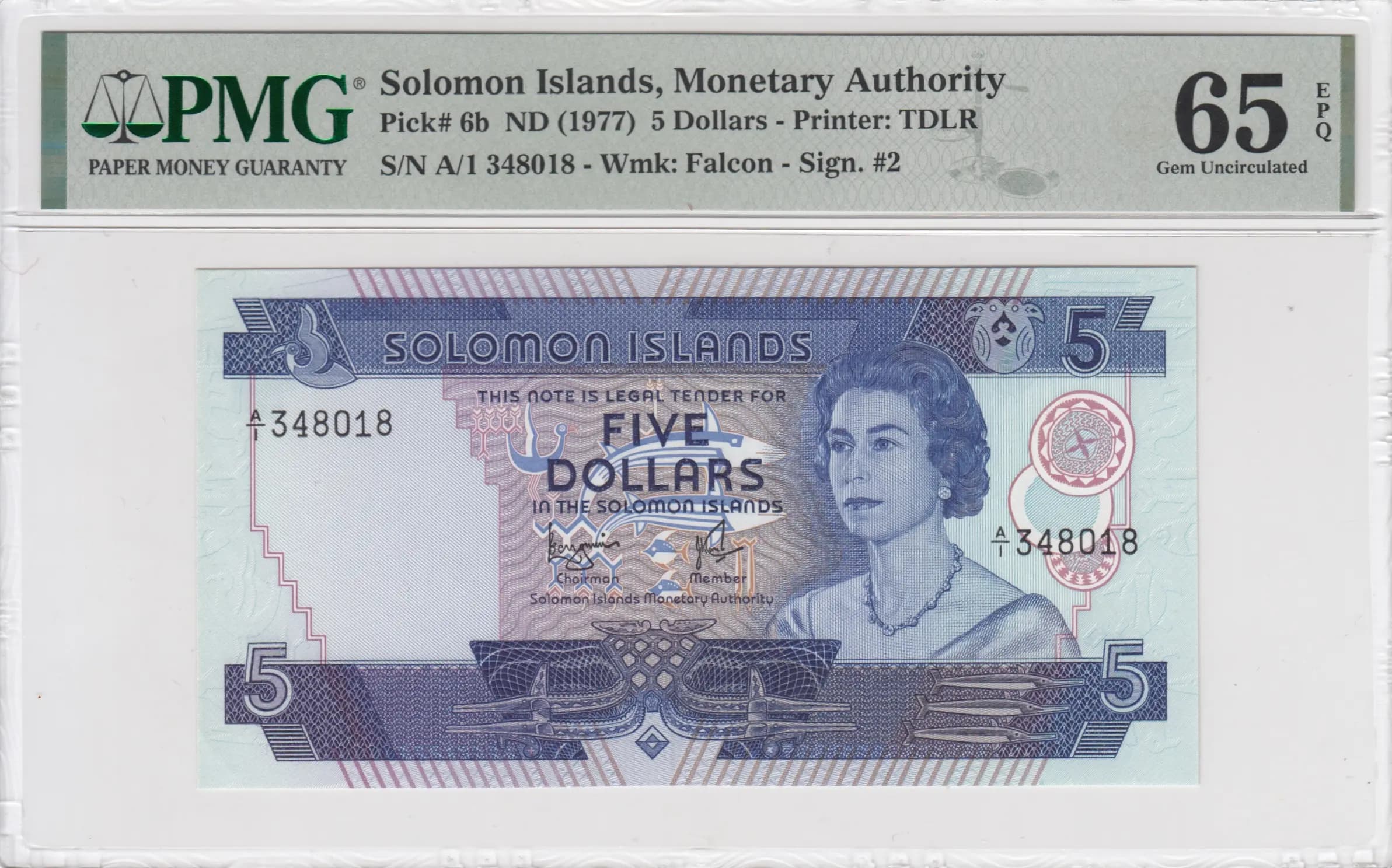
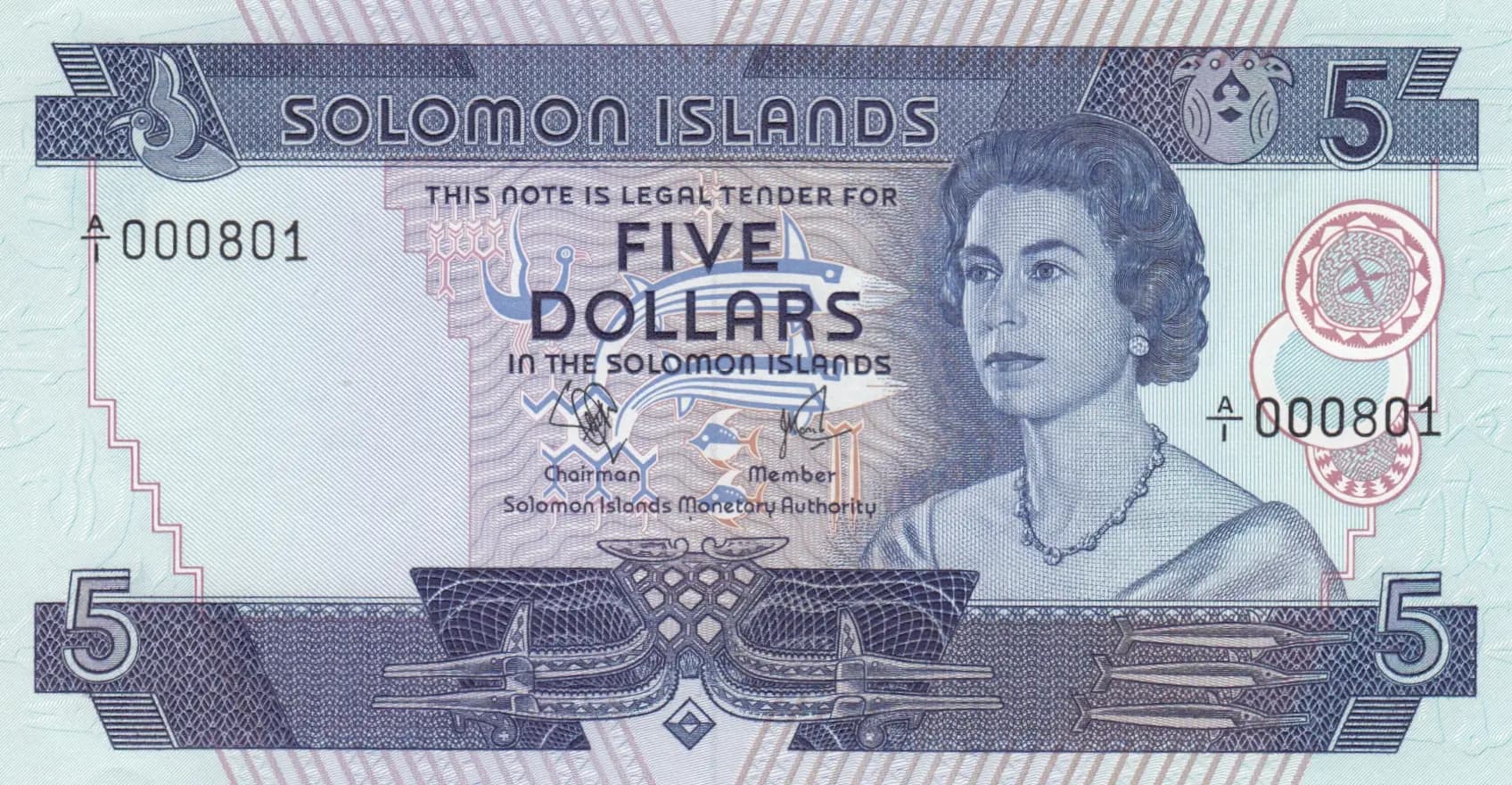
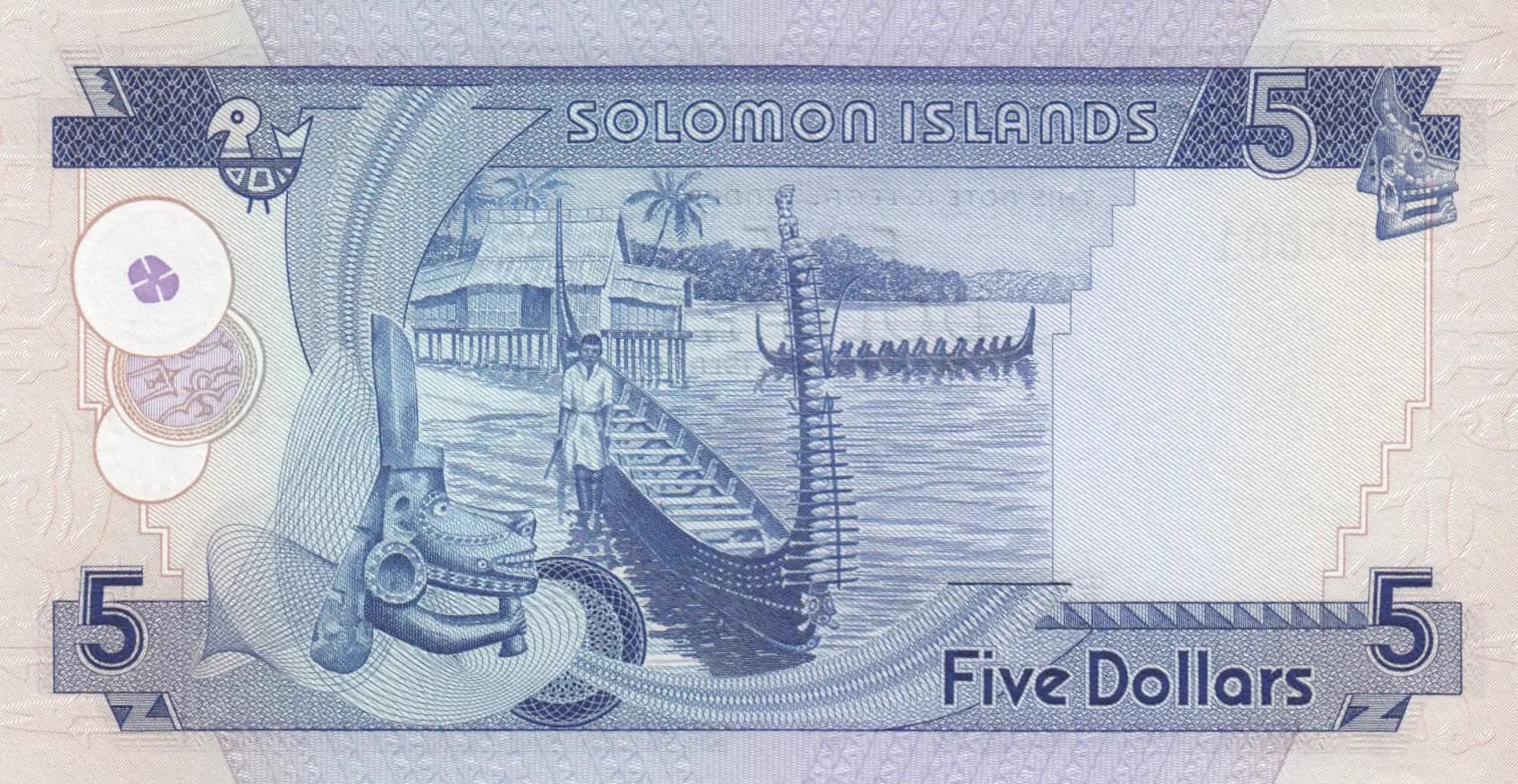
This is a pristine uncirculated example of the Solomon Islands Monetary Authority's inaugural 5 Dollar note from 1977 (Pick-6a), featuring Queen Elizabeth II in formal portrait on the obverse and a detailed maritime scene depicting traditional outrigger canoes and colonial-era dock activities on the reverse. The note exhibits exceptional condition with no wear, creases, or damage, and displays the characteristic blue and purple color scheme with red circular security seals. This early Commonwealth currency note represents an important piece of Solomon Islands numismatic history, with market values for UNC specimens consistently ranging from $26–$67 based on recent auction activity.
Common. The 1977 5 Dollar Pick-6a was the standard regular-issue denomination for the Solomon Islands Monetary Authority's inaugural series and remained in circulation for decades. eBay market data shows consistent availability with UNC specimens selling in the $26–$67 range over the past 15 years, indicating healthy supply. The note was produced in substantial quantities for a small island economy, and no evidence of limited print runs, recalls, or short-term issue exists. The lack of premium pricing relative to higher grades (PMG 68 specimens reaching ~$100) further confirms common status—rarity would command disproportionate grade-based premiums.
Issued in 1977 following Solomon Islands' independence from British colonial rule, this note commemorates the nation's transition to monetary sovereignty under the Solomon Islands Monetary Authority. The obverse portrait of Queen Elizabeth II reflects the country's continued Commonwealth ties, while the reverse's depiction of traditional long boats, outrigger canoes, sailing vessels, and coastal settlements celebrates indigenous maritime heritage and the subsistence economy central to Solomon Islands life. The note's design intentionally blends colonial institutional imagery with local cultural symbols, marking a pivotal moment in the nation's post-independence nation-building.
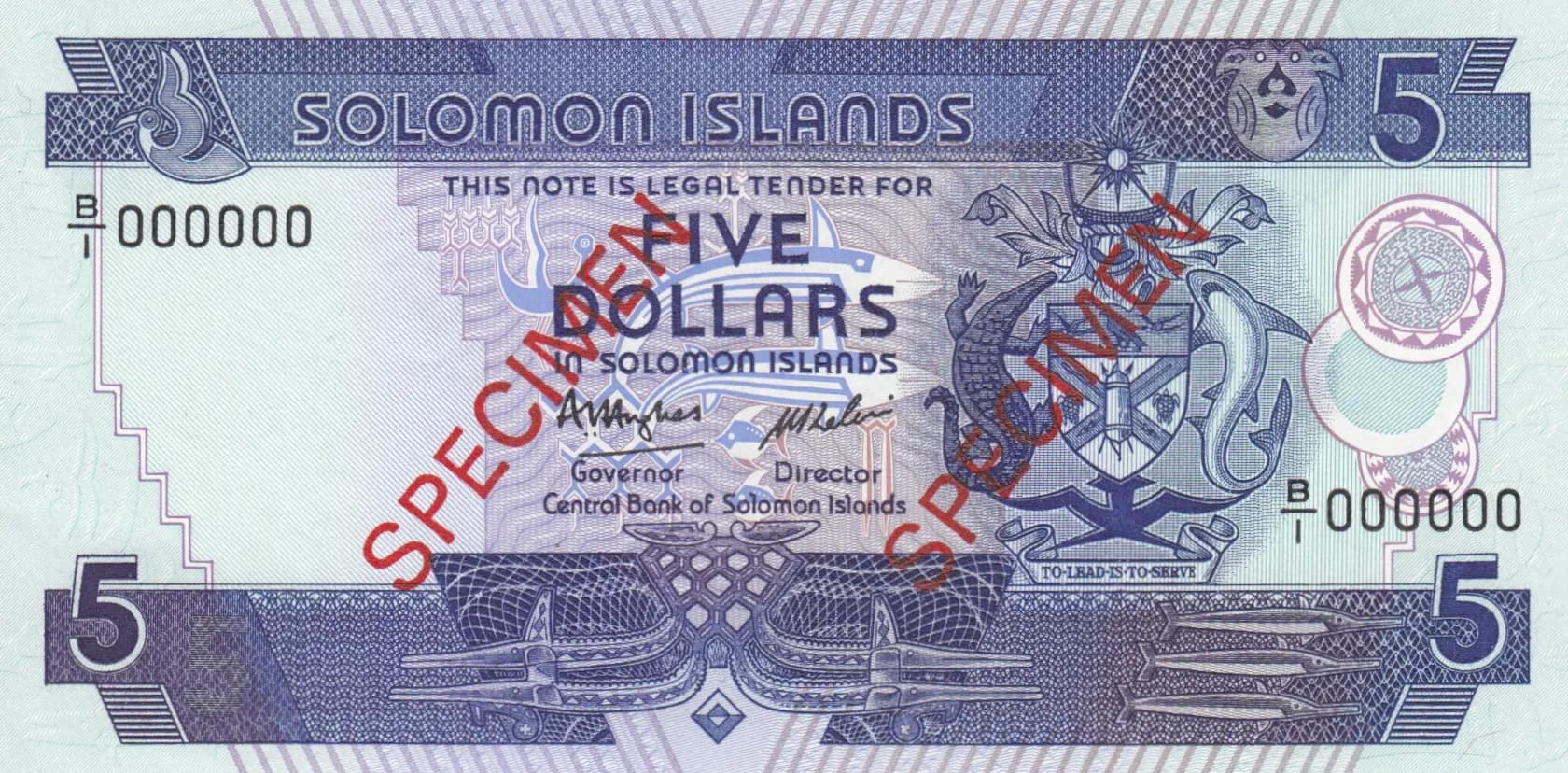
The obverse features Queen Elizabeth II in three-quarter profile facing left, positioned at right-center, wearing formal regalia with a distinctive necklace—a standard Commonwealth portrait used across multiple 1970s-era Pacific island currencies. The design is framed by ornate geometric guilloche borders with a decorative bird motif (likely representing local avifauna) in the upper left corner and symmetrical ornamental elements in the upper right. Two large red circular security seals with intricate geometric patterns flank the portrait at left and right. The reverse depicts a comprehensive maritime scene showing traditional Solomon Islands outrigger canoes (long boats), a colonial-era sailing vessel with visible masts, figures on a wooden dock or pier engaged in trading/fishing activities, palm trees, coastal landscape, and background structures. The color palette transitions from the blue-purple obverse to predominant blues and cream/beige tones on the reverse, with additional purple and red security elements. Fine-line engraving creates detailed texture throughout, particularly in the maritime scene's water, vegetation, and architectural elements.
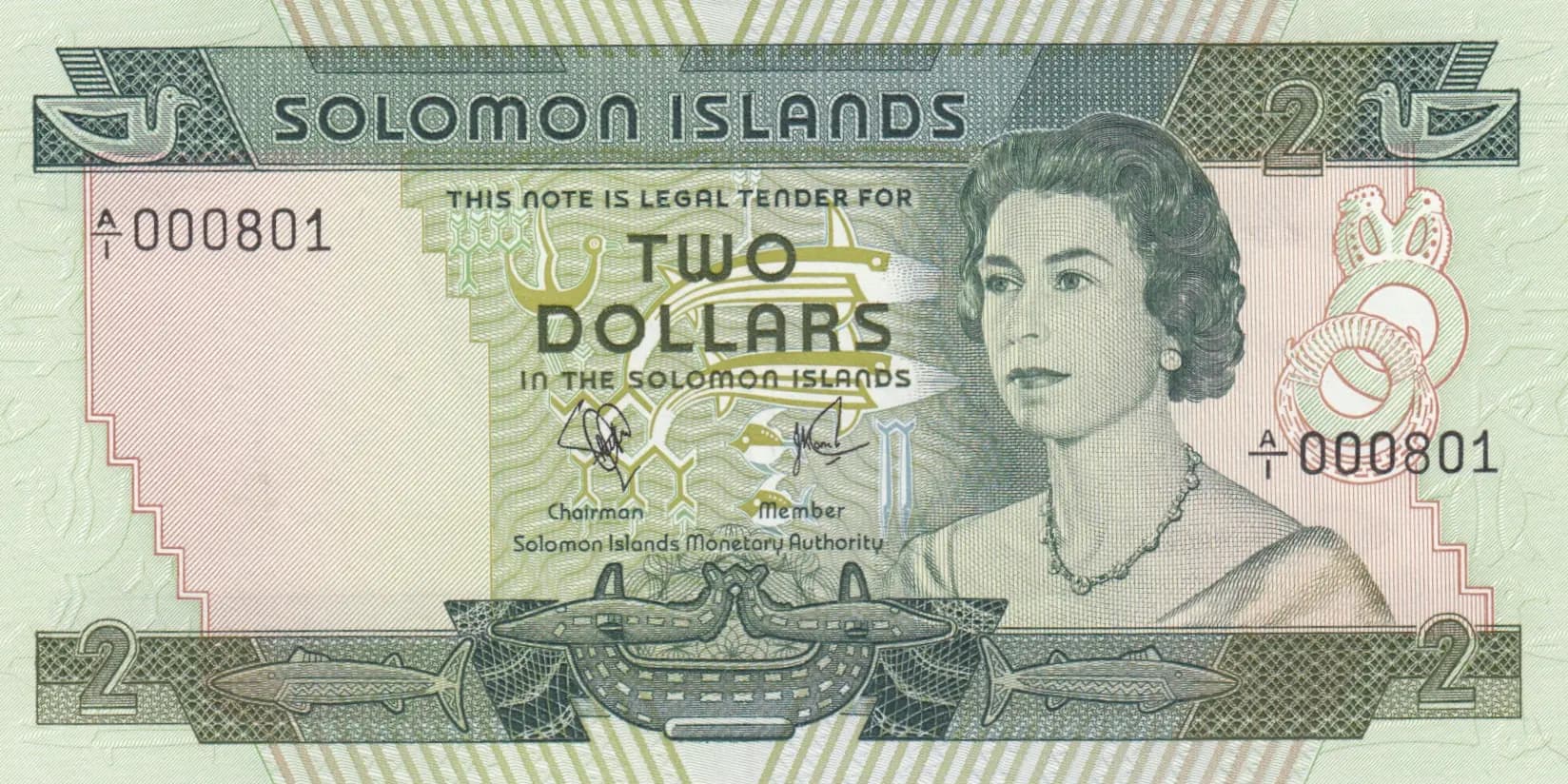
Front side: 'SOLOMON ISLANDS' (country name), '5' (denomination numeral), 'THIS NOTE IS LEGAL TENDER FOR FIVE DOLLARS IN THE SOLOMON ISLANDS' (legal tender declaration), 'Chairman' and 'Member' (signature titles), 'Solomon Islands Monetary Authority' (issuing institution), serial number 'A 000801' (appears twice). Back side: 'SOLOMON ISLANDS' (country name), '5' (denomination numeral), 'Five Dollars' (denomination in words). All inscriptions are in English, reflecting the official language of government and currency administration.
Intaglio (engraved) printing on cotton-fiber banknote stock, characteristic of 1970s Commonwealth currency production. The note was produced by TDLR (Thomas De La Rue), the primary Commonwealth security printer of the era, as confirmed by the Pick catalog notation and absence of printer's imprint on the note face—standard practice for De La Rue work of this period. Security features include fine-line guilloche patterns, multi-colored intaglio work (particularly the red circular seals), and careful color register demonstrating advanced offset-intaglio hybrid printing typical of premium banknote production.
This specimen is cataloged as Pick-6a, the standard regular-issue variety produced by TDLR without imprint. The PMG population report documents eight distinct varieties for the base 5 Dollar pick number: P-6CS1 (specimen), P-6a (regular issue), P-6a* (replacement notes with Z/1 serial prefix), P-6as (specimen of regular issue), P-6b (variant), P-6b* (replacement of variant), P-6bs (specimen of variant), and P-6s (specimen). The observed serial number prefix 'A' is consistent with P-6a regular-issue production. Replacement notes (P-6a* variety) carry the distinctive Z/1 prefix and command slight premiums among specialists. The specific variety can be definitively confirmed by serial number prefix: 'A' denotes P-6a; 'Z/1' denotes replacement P-6a*.