25 rupees 1979
Market Prices
6 salesAbout This Note
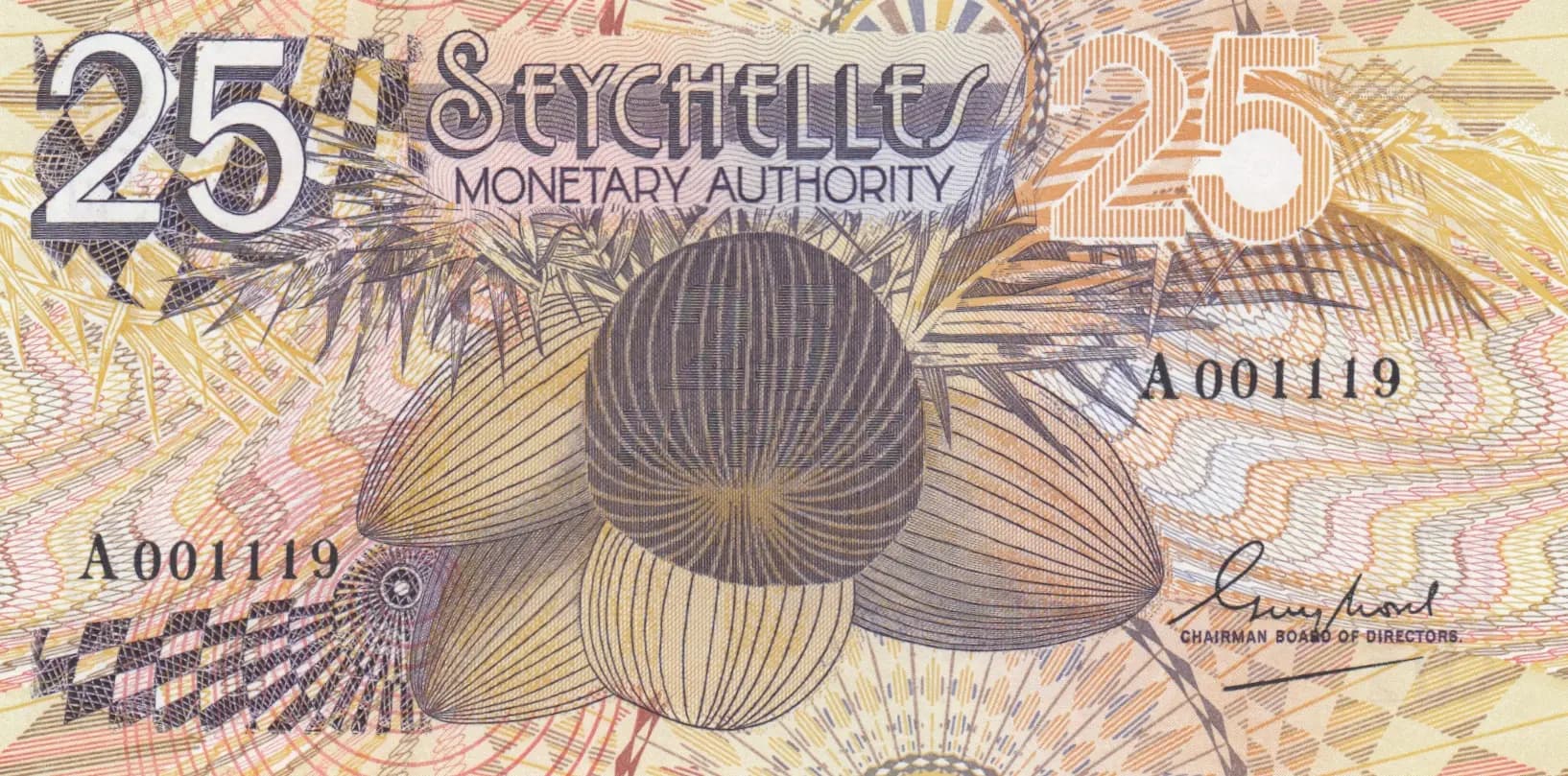
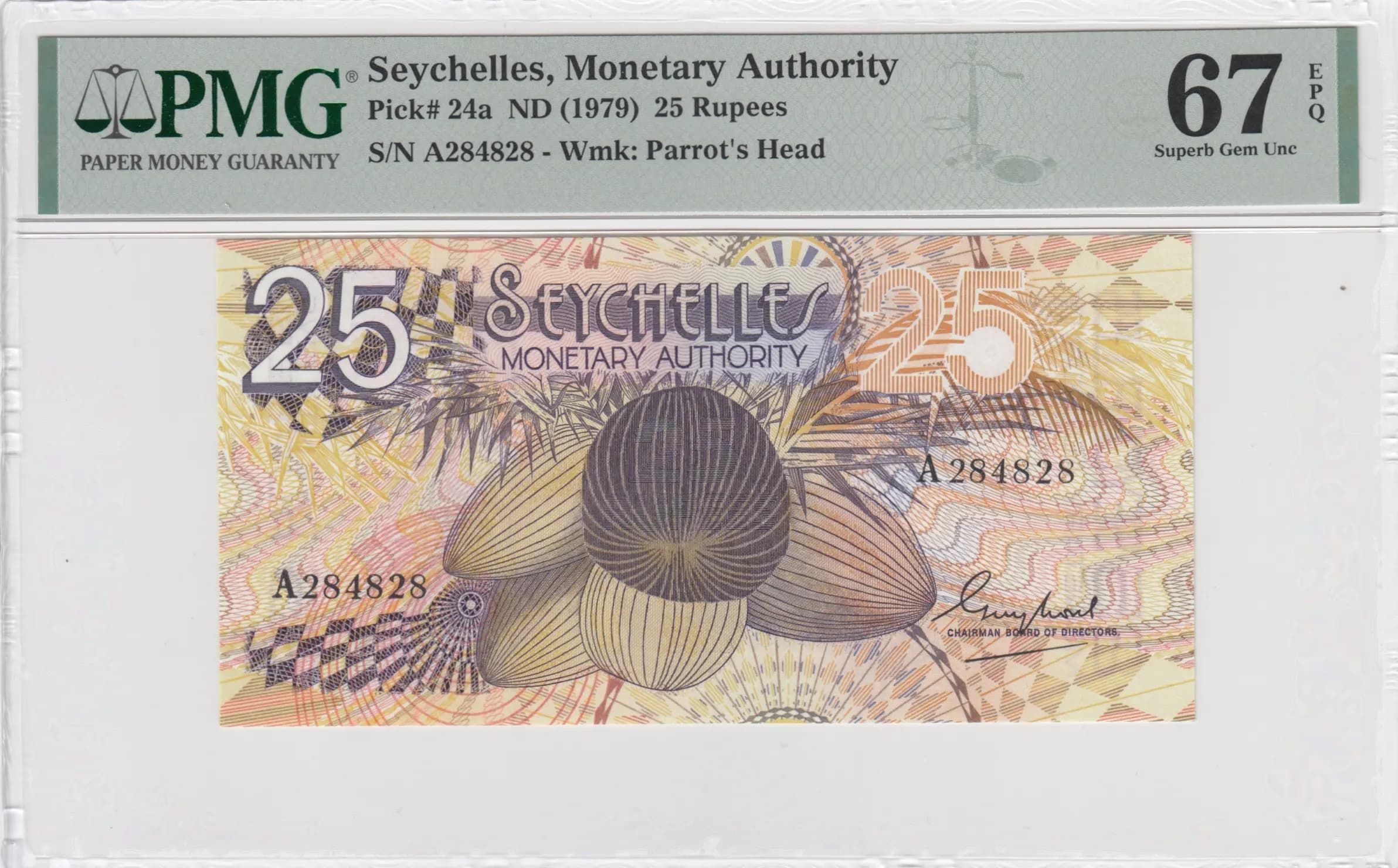
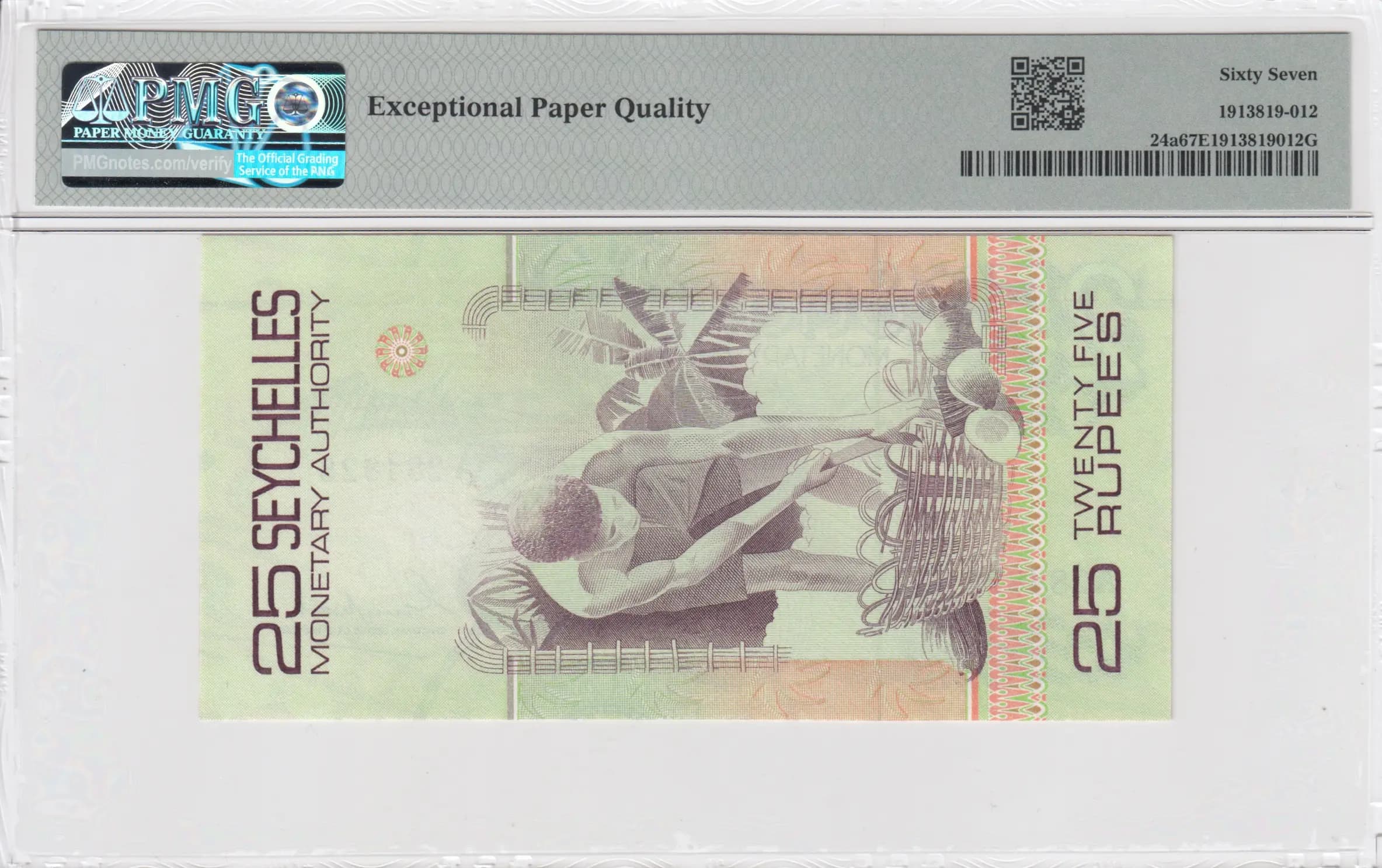
This is a PMG 67 EPQ example of the 1979 Seychelles Monetary Authority 25 Rupees note (Pick P-24), representing an excellent preservation of this early post-independence currency. The obverse features a striking central illustration of the Seychelles parrot's head rendered in detailed intaglio engraving with warm orange, yellow, and brown tones radiating from the center, while the reverse depicts a formal portrait figure against architectural elements in green and purple hues. The note exhibits sharp printing detail, vivid colors, and no visible wear, folds, or creases, making it highly desirable to collectors of African currency and Seychelles numismatic material.
common. This is a regular issue note from the 1979 currency series with no documented shortage or recall. eBay market data shows consistent sales in the $15–$60 range depending on condition grade, with PMG 67 specimens selling for approximately $53–$60. The catalog value for UNC condition is listed at $25, and the note appears frequently enough in the collector market to indicate a substantial print run. There is no evidence of scarcity, limited distribution, or numismatic significance that would elevate this to scarce or rare status.
This note was issued in 1979, shortly after Seychelles achieved full independence in 1976, as the newly established Seychelles Monetary Authority sought to develop a distinctive national currency identity. The prominent placement of the endemic Seychelles parrot on the obverse reflects the nation's commitment to highlighting its unique biodiversity and natural heritage as central symbols of national identity. The reverse portrait and architectural elements represent the formal authority and stability of the young nation's monetary institutions during a formative period of post-colonial development.
The obverse features a large, detailed central vignette of the Seychelles parrot (Psittacula waya), an endemic species of significant cultural and ecological importance to the islands. The parrot's head is rendered in fine intaglio engraving and is surrounded by elaborate radiating decorative patterns creating a sunburst effect in orange, yellow, brown, and cream tones with purple outlines. The reverse displays a formal portrait of a dignitary or national figure in three-quarter view, positioned on the right side of the note against a background containing architectural elements suggesting institutional authority. The background employs light green coloring with purple and maroon accents in the portrait area. Both sides incorporate fine decorative line work and ornamental border designs typical of Commonwealth currency design from this era.
Front side: '25' (denomination in numerals, upper left and upper right), 'SEYCHELLES' (country name), 'MONETARY AUTHORITY' (issuing institution), serial number 'A284828' (appears on both left and right margins), 'Chairman Board of Directors' (signature title). Back side: '25' (denomination in numerals, left and right edges), 'SEYCHELLES' (country name), 'MONETARY AUTHORITY' (issuing institution), 'TWENTY FIVE RUPEES' (denomination in words). All text is in English.
The note was produced using traditional intaglio engraving and multicolor offset lithography combined with letterpress elements, as evidenced by the fine line detail, sharp portrait rendering, and precise color registration visible throughout both sides. The radiating decorative patterns on the obverse and the detailed portraiture on the reverse demonstrate the hallmark characteristics of high-quality security printing from a professional currency printer. The precise serial number application and consistent color saturation suggest printing by a specialized banknote security printer, likely from the British or Swiss printing tradition given Seychelles' Commonwealth affiliations.
The observed specimen carries serial number A284828, indicating the 'A' prefix variety for this issue. No overprints, date varieties, or signature variants are apparent in the visual analysis. The 1979 dated 25 Rupees exists in standard issue form without known major varieties. Collectors may differentiate specimens by serial number prefix and exact printing characteristics, but no officially recognized major varieties have been documented for this Pick number.