20 rupees 1968 specimen
Market Prices
About This Note
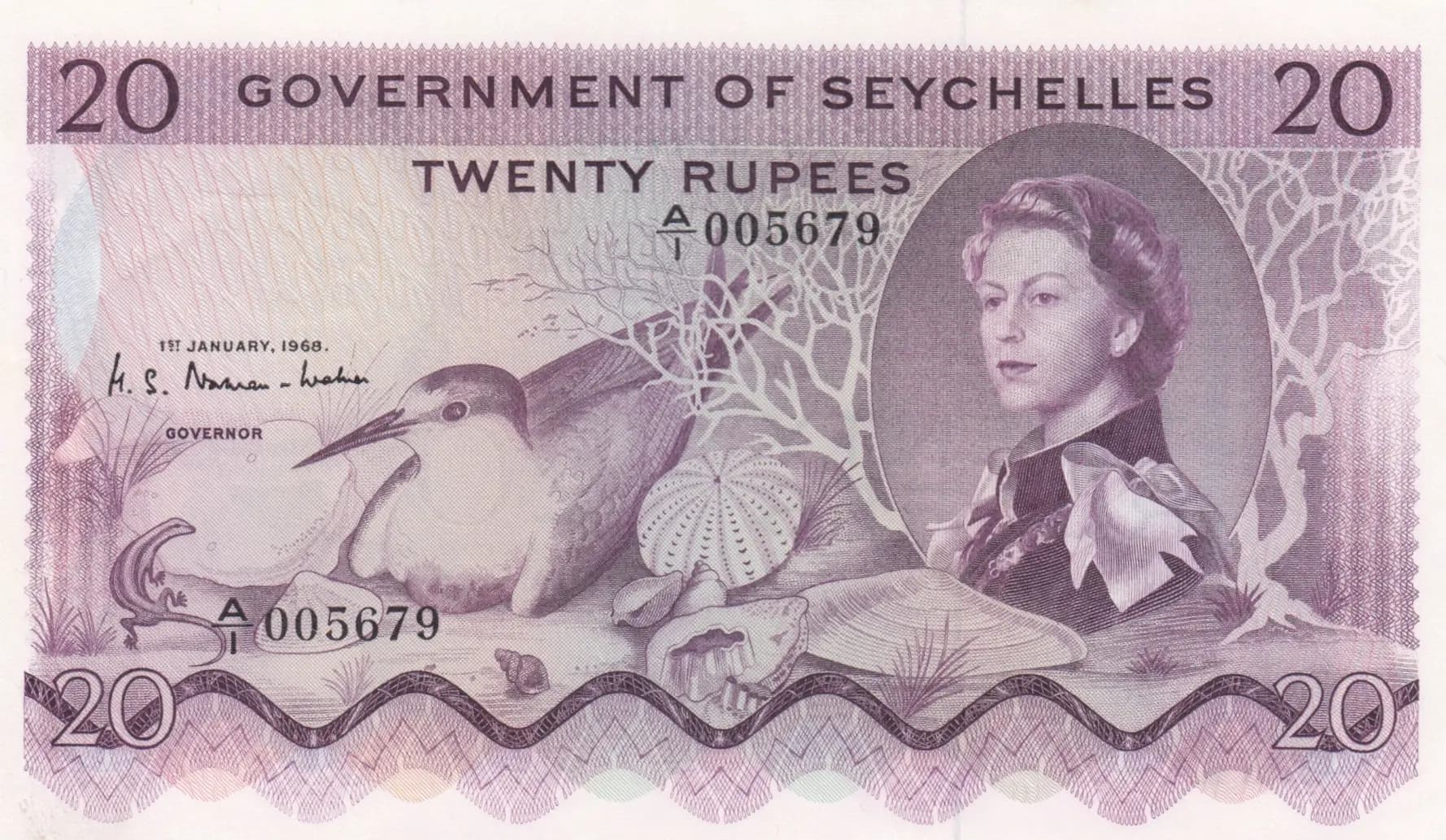
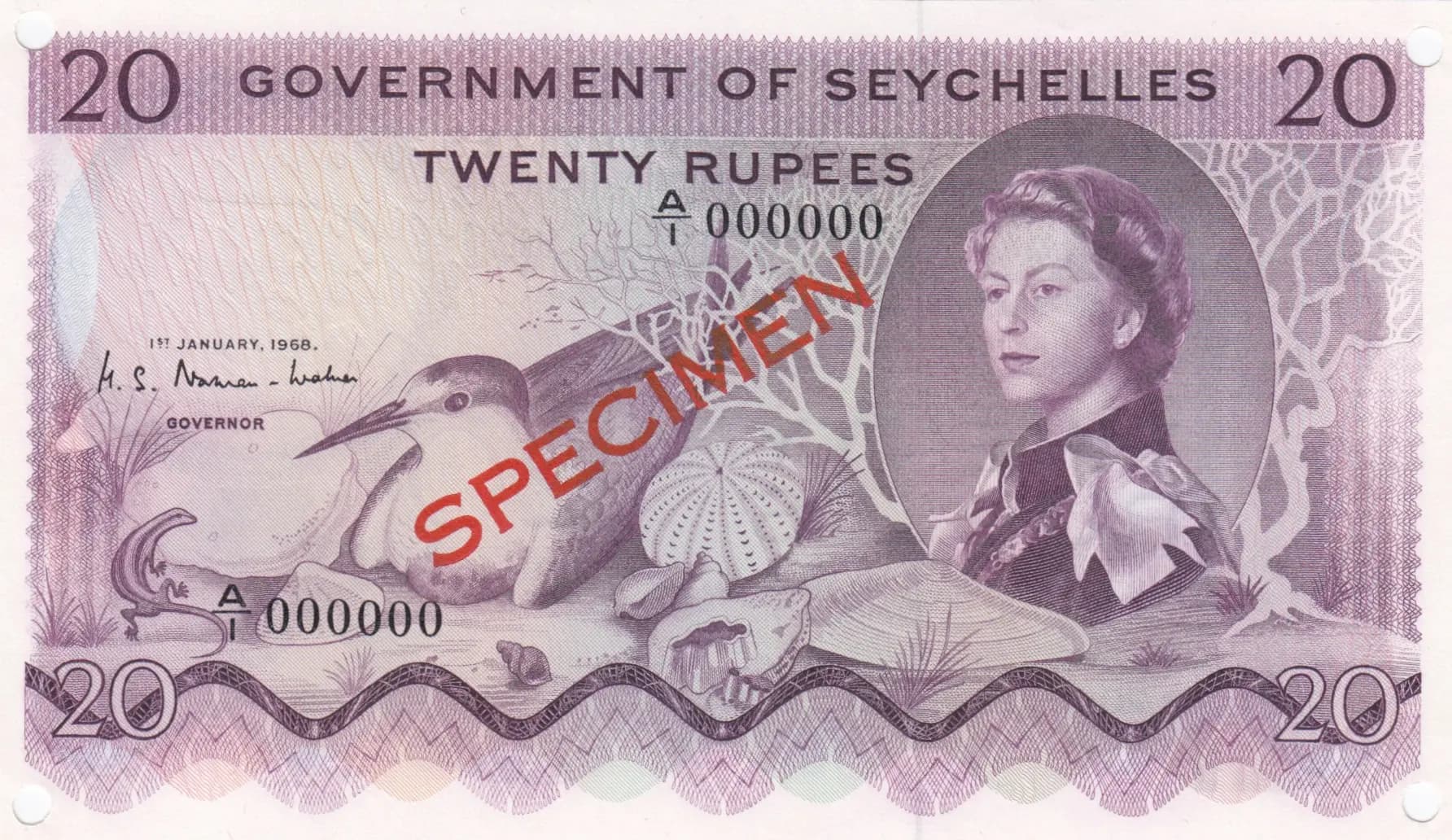
This is a 1968 specimen note from the Government of Seychelles, denominated 20 rupees, presented in pristine uncirculated condition. The note features a striking purple and mauve color scheme with Queen Elizabeth II portrayed in formal 18th century-style dress on the obverse, complemented by marine life imagery including birds and shells on the reverse. The prominent red SPECIMEN overprint and specimen serial numbers (A/000000) clearly identify this as a non-circulating presentation piece, making it an interesting collectible for those focused on specimen notes and Commonwealth currency from the early independence era.
Common. While this is a specimen note (which are generally less common than regular circulating issues), the eBay market data provided shows highly variable pricing with many UNC examples selling in the $6–$9 range, alongside a few outlier listings at $800+. The presence of numerous listings at single-digit dollar amounts strongly indicates this specimen is readily available in the secondary market. Print runs for Seychelles currency specimens of this era were typically moderate, and this particular denomination and date do not represent a scarce issuing authority or short-lived series. The wide availability and low baseline market prices confirm a common classification.
This note was issued by the Government of Seychelles in 1968, coinciding with the islands' path toward independence (achieved in 1976). The continued prominence of Queen Elizabeth II reflects Seychelles' Commonwealth status during this transitional period. The marine-themed imagery—including the depiction of Seychellois maritime life such as birds and shells—demonstrates the new nation's cultural identity and connection to its island heritage, even while maintaining formal ties to the British Crown through numismatic representation.
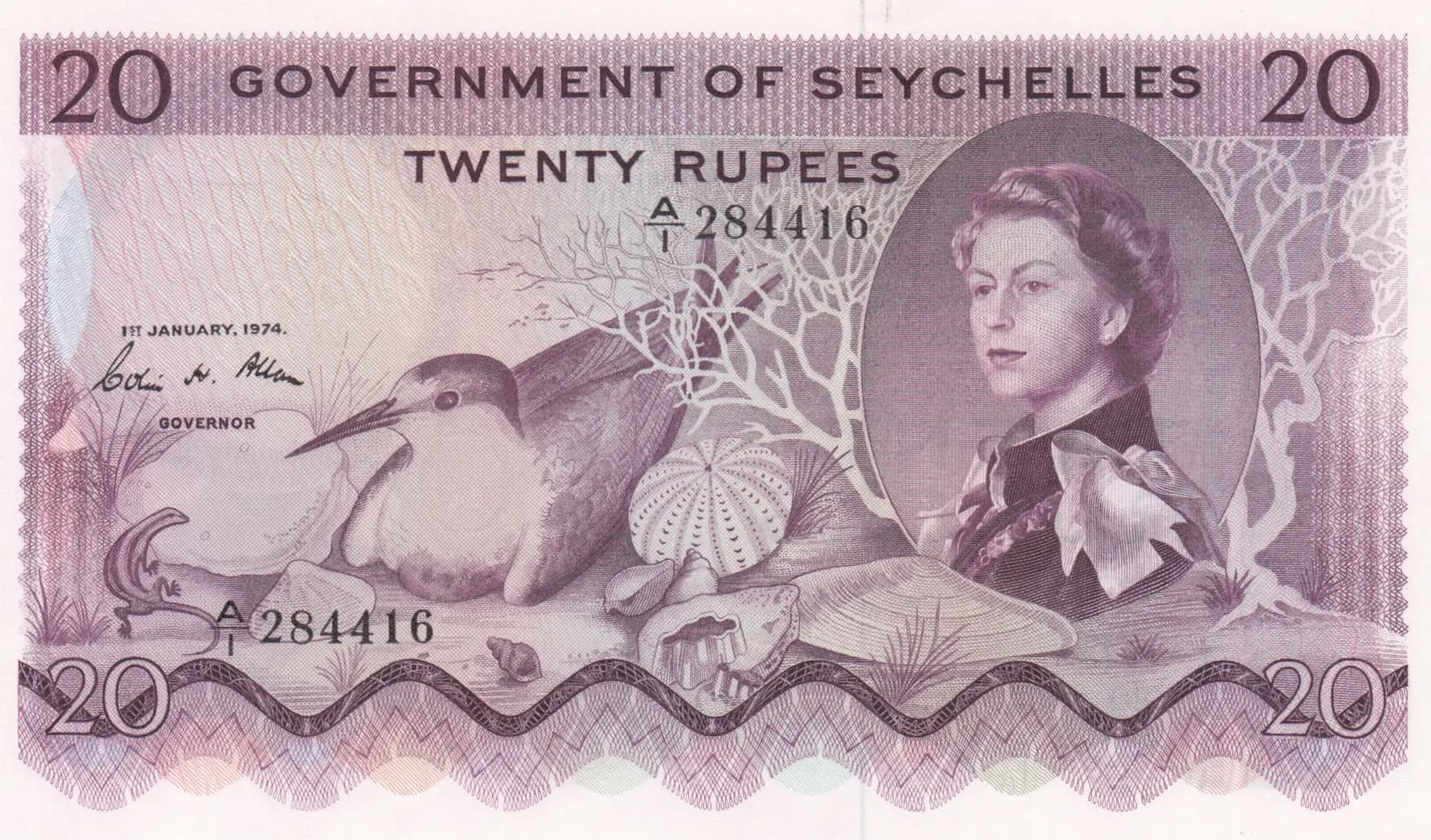
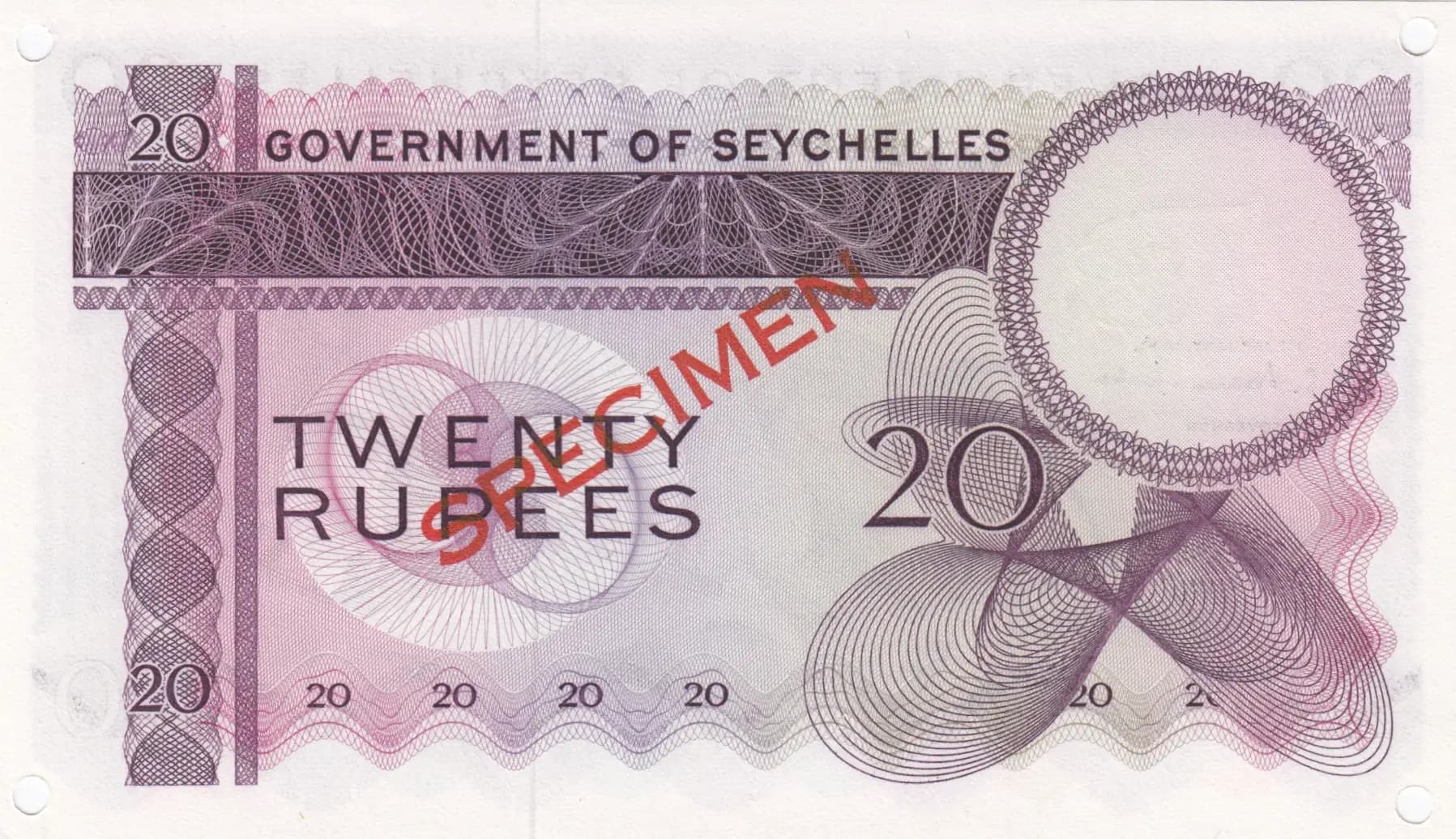
The obverse features a formal portrait of Queen Elizabeth II rendered in profile facing right, positioned within an ornamental oval frame. This three-quarter portrait depicts the Queen in elaborate 18th century-style formal dress with an intricate collar, reflecting a classical representation of monarchy. The left side of the obverse displays naturalistic marine imagery including a bridled tern (or similar wading bird), various shells, and decorative sea plants, emphasizing Seychelles' maritime character. The reverse showcases purely geometric and decorative design elements, with prominent concentric circular patterns, spiral motifs reminiscent of shells, and fine line engraving throughout. An ornamental wavy border pattern adorns the bottom of the obverse. The watermark, though not visible in these images, is catalogued as a black parrot's head, another reference to Seychellois fauna.
Front Side: '20' / 'GOVERNMENT OF SEYCHELLES' / 'TWENTY RUPEES' / '1ST JANUARY, 1968' / 'K.S. Norman-Walker' / 'GOVERNOR' / 'A/000000' (serial number) / 'SPECIMEN' (red overprint). Back Side: '20' / 'GOVERNMENT OF SEYCHELLES' / 'TWENTY RUPEES' / 'SPECIMEN' (red overprint). All inscriptions are in English. The date '1st January, 1968' marks the official issue date of this note series.
Intaglio engraving (line engraving), as evidenced by the fine parallel line work, intricate geometric patterns, and the high level of detail visible throughout both sides. The security features created through complex line work and concentric patterns are characteristic of intaglio production. The crisp, sharp impression of fine lines and the precision of the engraved patterns, combined with the detailed portrait work, confirm this as a professionally executed intaglio-printed banknote. No specific printer attribution is reliably documented in standard catalogues for this Pick number, though it is consistent with Commonwealth banknote production standards of the era.
This is a specimen variety of the 1968 issue, identified by the red SPECIMEN overprint and specimen serial number format (A/000000). The signature of K.S. Norman-Walker as Governor appears on this example. The catalog designation P-16s (the 's' suffix) explicitly marks this as a specimen note. Signature varieties are known for this series, and collectors should note this particular example features Norman-Walker's signature. The date of 1st January, 1968, is consistent with the first issue date of this series, distinguishing it from later printings within the broader 1968–1974 date range noted in the catalog data. No other internal varieties (such as date variations, color variants, or printer marks) are apparent from the visual analysis of this specimen.