20 rupees 1968
Market Prices
3 salesAbout This Note
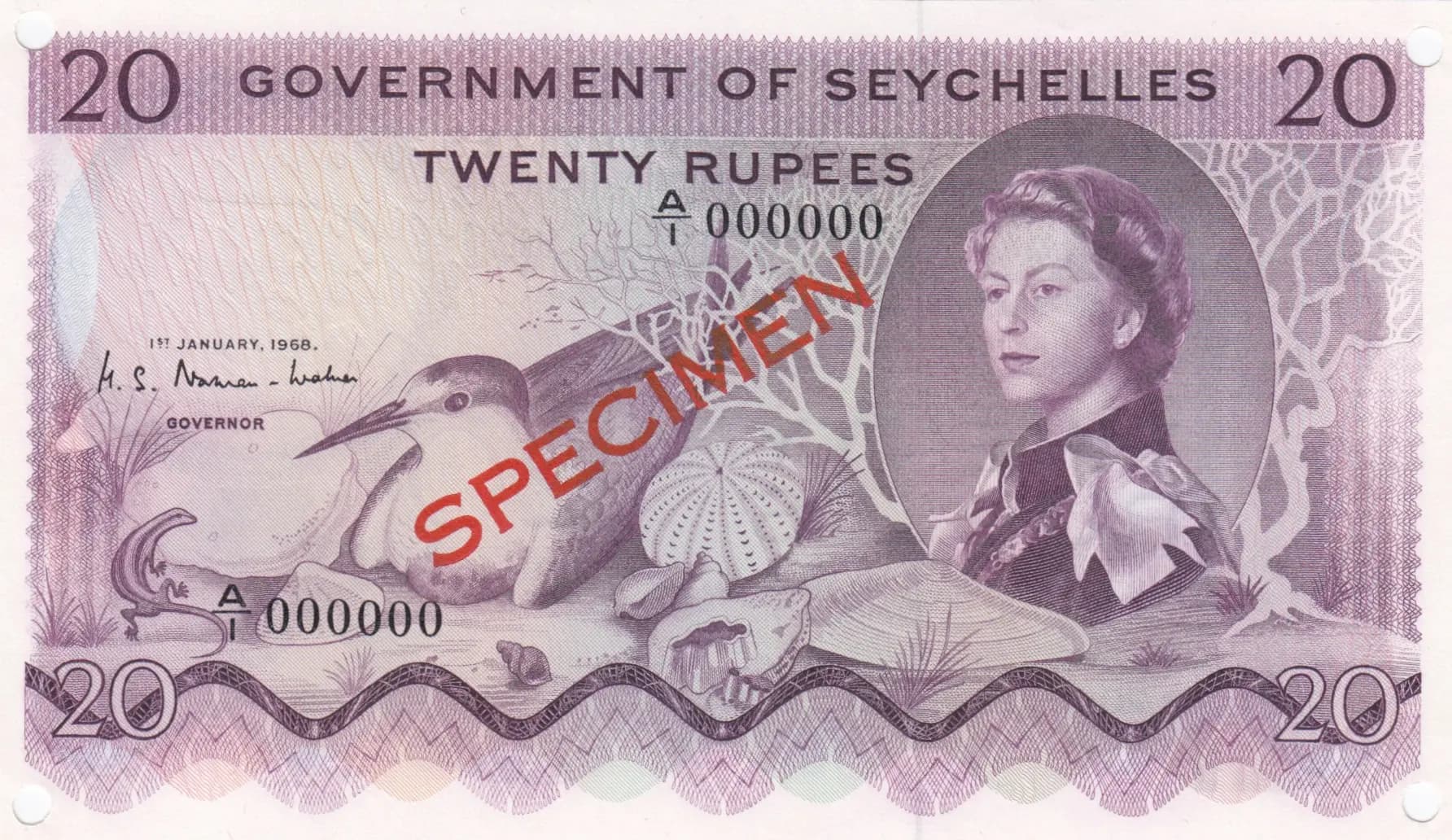
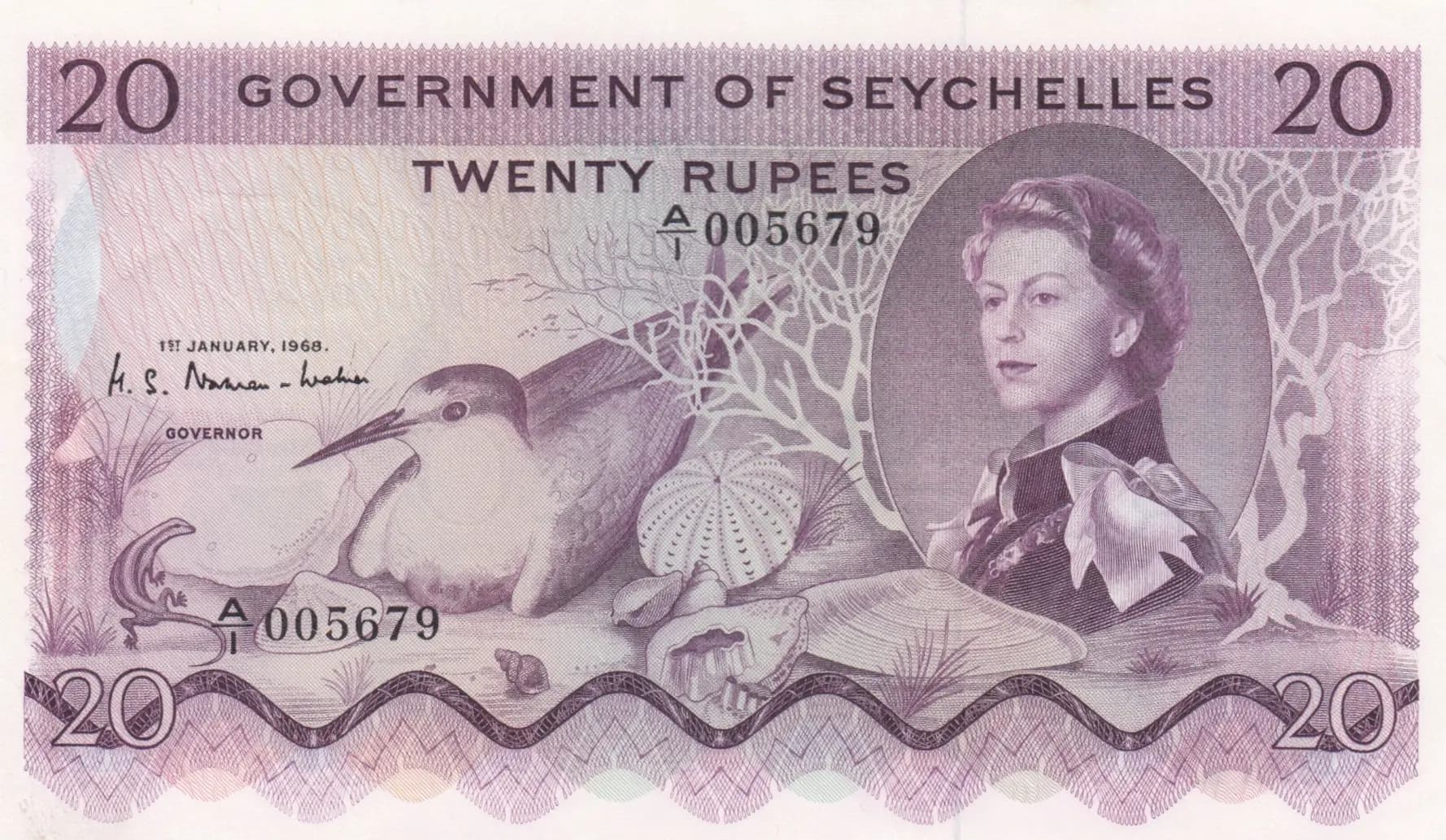
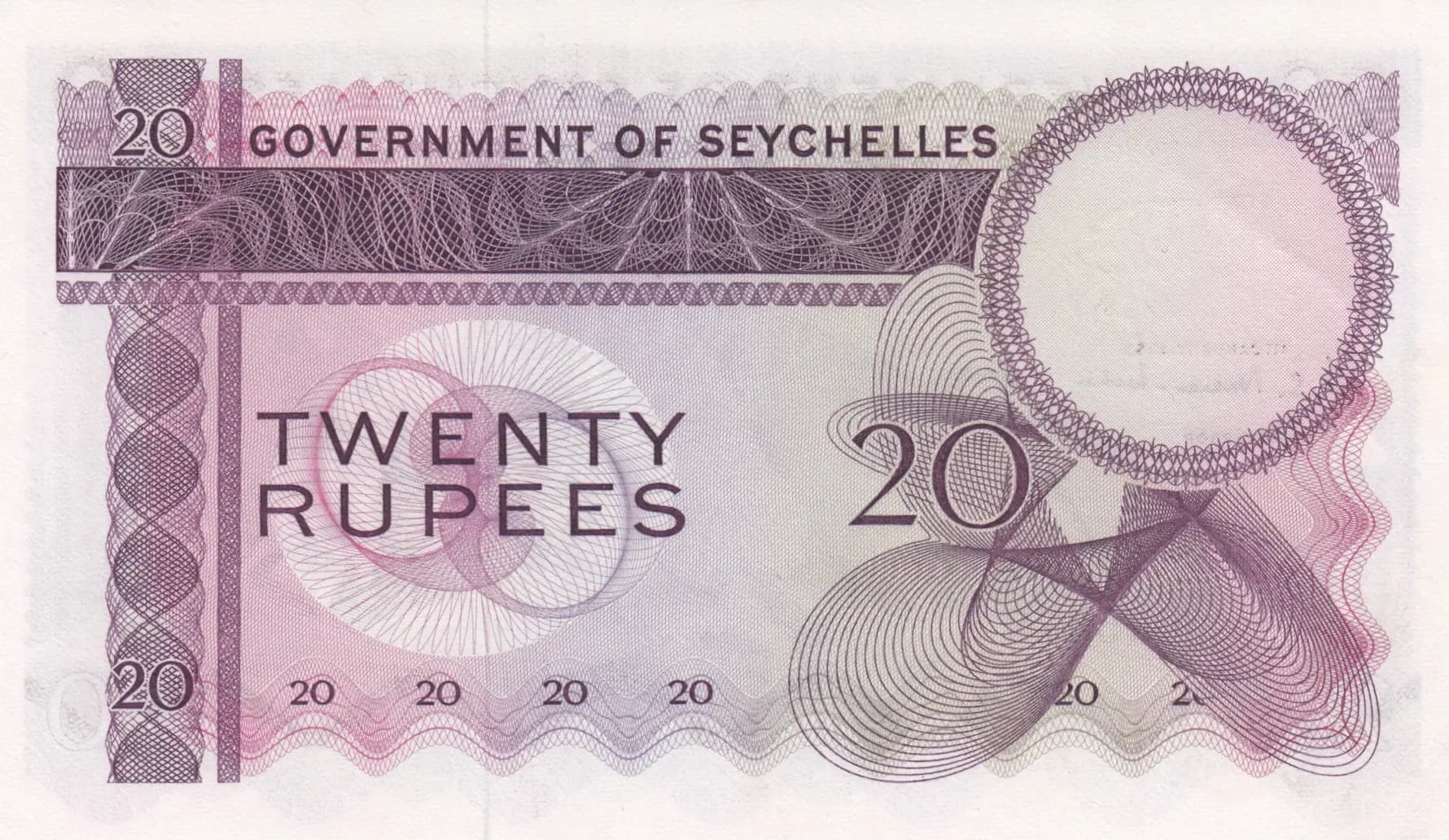
This is an exceptional uncirculated example of the 1968 Seychelles 20 Rupees (Pick P-16a), the inaugural issue from the newly independent nation. The note displays pristine condition with crisp printing and vibrant purple/mauve coloring throughout, featuring Queen Elizabeth II in formal profile on the obverse and ornate decorative patterns on the reverse. With catalog values reaching $800 UNC and recent market activity showing strong demand, this early Government of Seychelles issue represents both historical significance and collector appeal.
Common. While this is an early issue from Seychelles' inaugural currency period, the eBay pricing data and catalog values indicate healthy collector demand without evidence of scarcity. Recent sales in VF condition around $130 and the established 2019 catalog value of $800 UNC suggest this note was produced in sufficient quantities to support regular collector availability. The UNC grade of this specific specimen places it at the higher end of the value scale, but the denomination and issue are not considered scarce or rare by standard numismatic definitions.
This note marks the Government of Seychelles' first currency issuance following the territory's path toward independence in 1968, reflecting the post-colonial era when former British territories established their own monetary systems. The prominent portrait of Queen Elizabeth II on the obverse symbolized Seychelles' continued Commonwealth ties during this transitional period, while the indigenous wading bird depicted on the reverse celebrates the archipelago's unique natural heritage. The formal signature of Governor H.S. Austen-Walker and the date of 1st January 1968 document this foundational moment in Seychellois numismatic history.
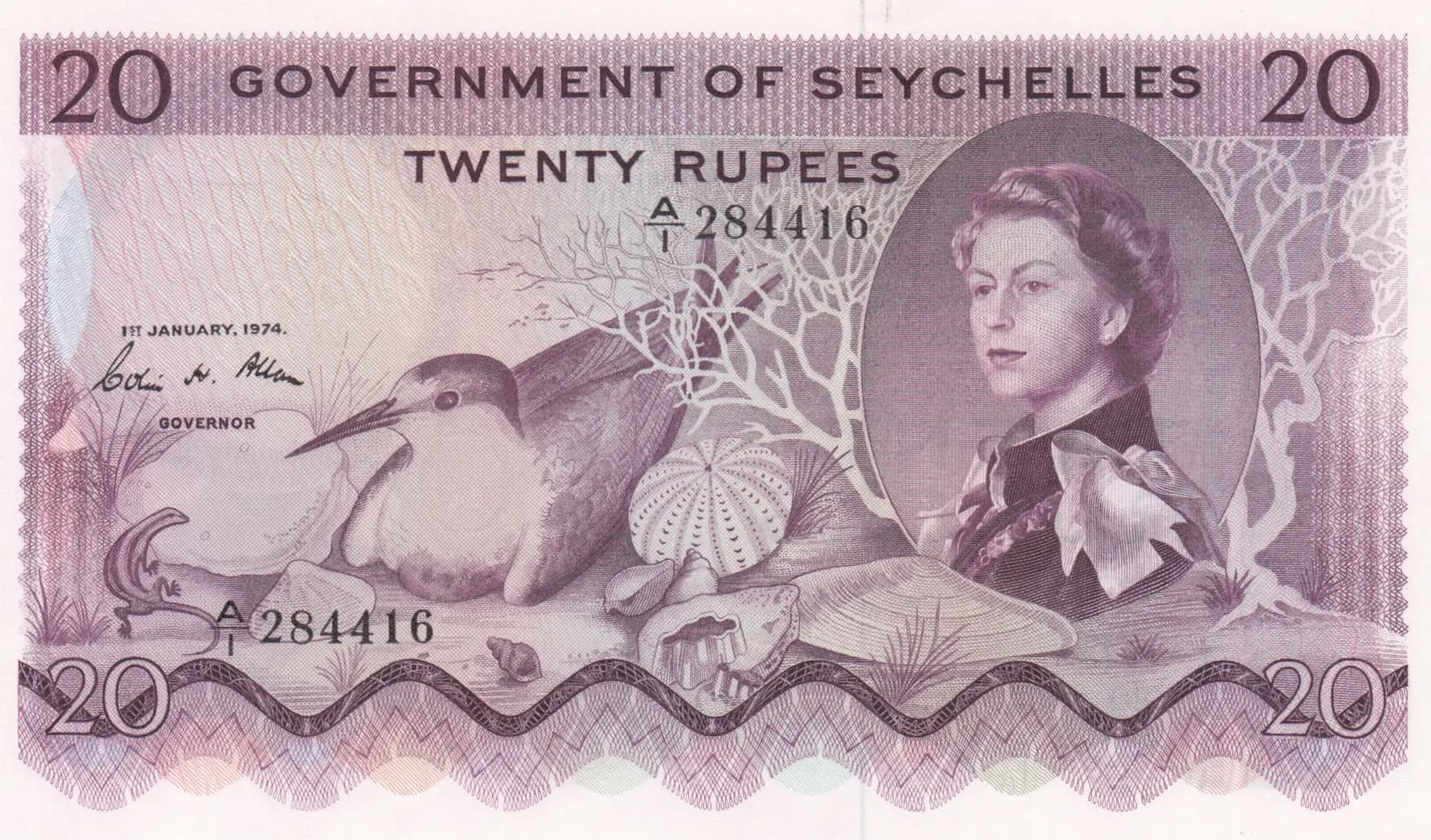
The obverse features a formal portrait of Queen Elizabeth II positioned in an oval frame on the right side, depicted in profile wearing formal attire with a decorative ribbon or sash, reflecting her status as constitutional monarch of the Commonwealth realm. The left side showcases a wading bird, likely a heron or similar species native to the Seychellian archipelago, surrounded by aquatic vegetation including seashells and coral-like botanical elements, emphasizing the nation's maritime character. The reverse displays an abstract ornamental design dominated by a large circular medallion with concentric geometric patterns positioned on the right side, complemented by shell or fan-like motifs and decorative swirls throughout, creating a distinctive aesthetic distinct from the figurative obverse.
Front Side: '20' (denomination), 'GOVERNMENT OF SEYCHELLES' (issuing authority), 'TWENTY RUPEES' (denomination in words), 'A005679' (serial number), '1ST JANUARY, 1968.' (issue date), 'GOVERNOR' (title), 'H.S. Austen-Walker' (signature of Governor). Back Side: '20' (denomination, repeated multiple times), 'GOVERNMENT OF SEYCHELLES' (issuing authority), 'TWENTY RUPEES' (denomination in words).
This note was produced using intaglio (engraving) printing techniques, evident from the intricate fine line work, cross-hatching, detailed border designs, and the characteristic clarity and depth of the portrait and decorative elements. The security medallion and complex geometric patterns reflect professional security printer craftsmanship typical of Commonwealth currency production in the late 1960s. The printer for this series is not definitively identified in available catalogs, though British security printers such as De La Rue or Bradbury Wilkinson were common contractors for such Commonwealth currency during this period.
This note exhibits the signature variety of Governor H.S. Austen-Walker with serial number prefix 'A' (A005679), representing the standard 1968 issue. The Pick catalog designation P-16a indicates this is part of the primary variety series for the 1968 Seychelles 20 Rupees. Known signature varieties exist for this denomination across the 1968-1974 period under different governors; variants may include different signatures and signature positions. The specific date '1ST JANUARY, 1968' on this specimen confirms it as an earliest-dated example from the inaugural January 1st issue.