10 rupees 1976
Market Prices
22 salesAbout This Note
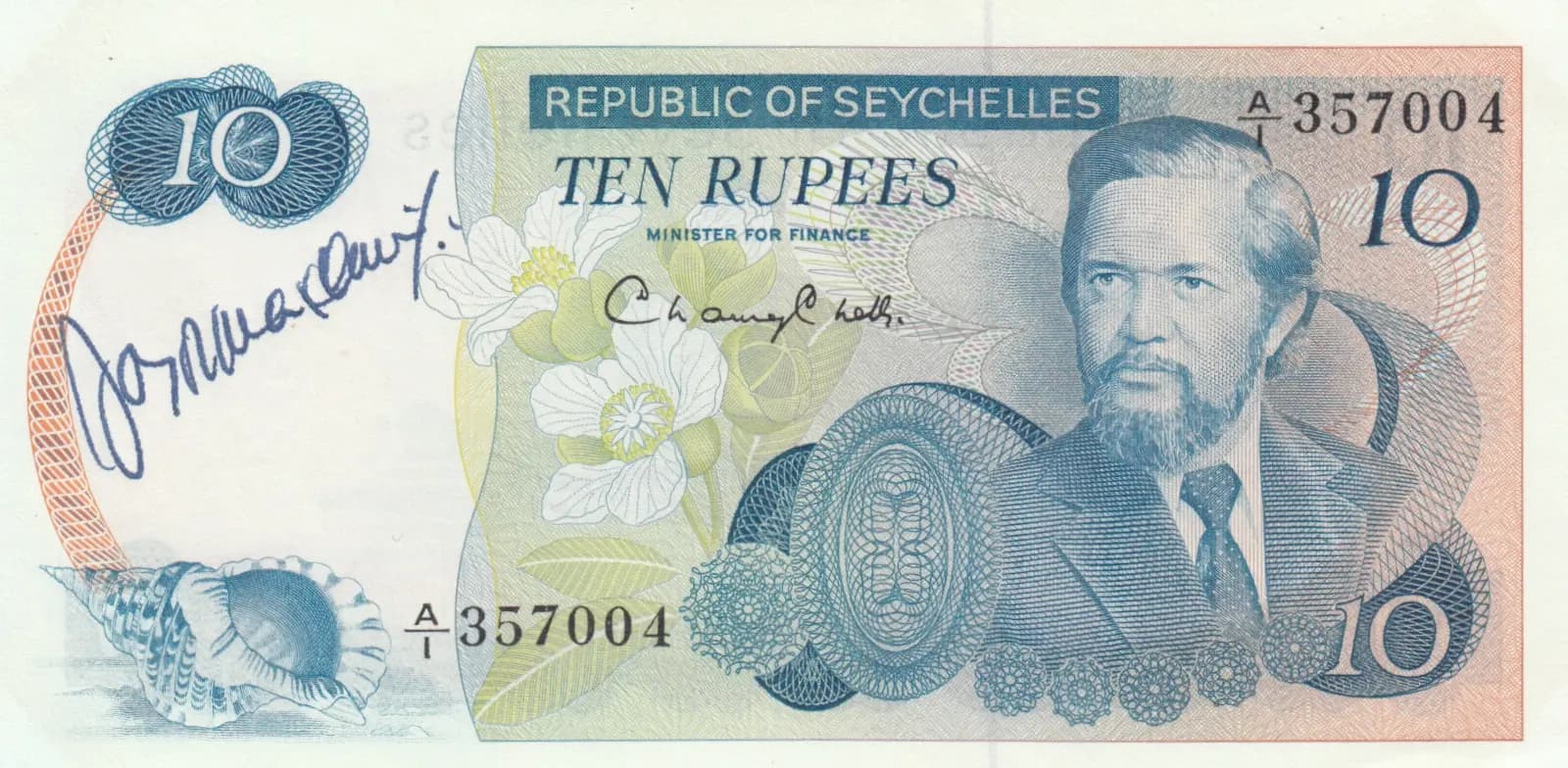
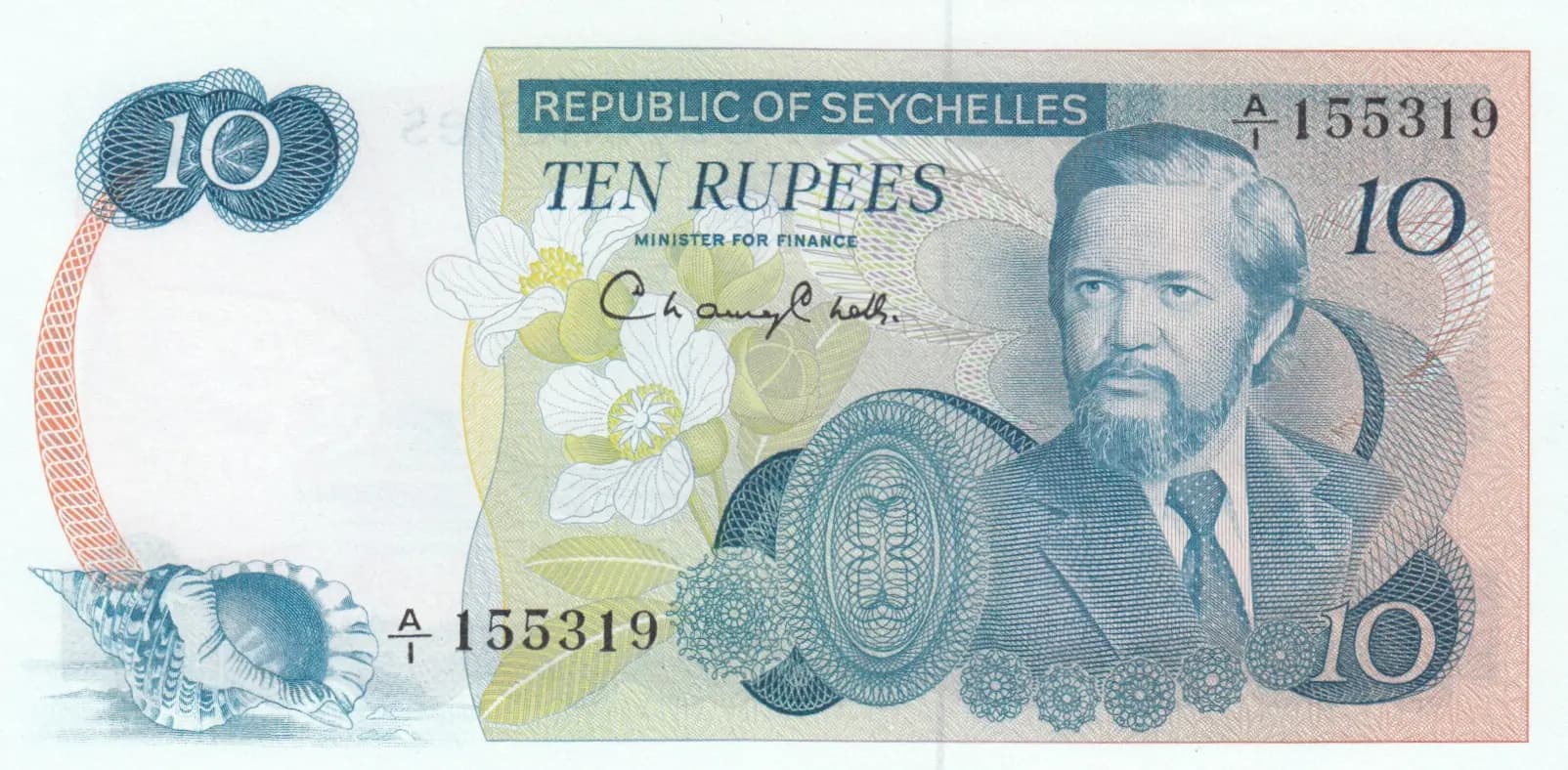
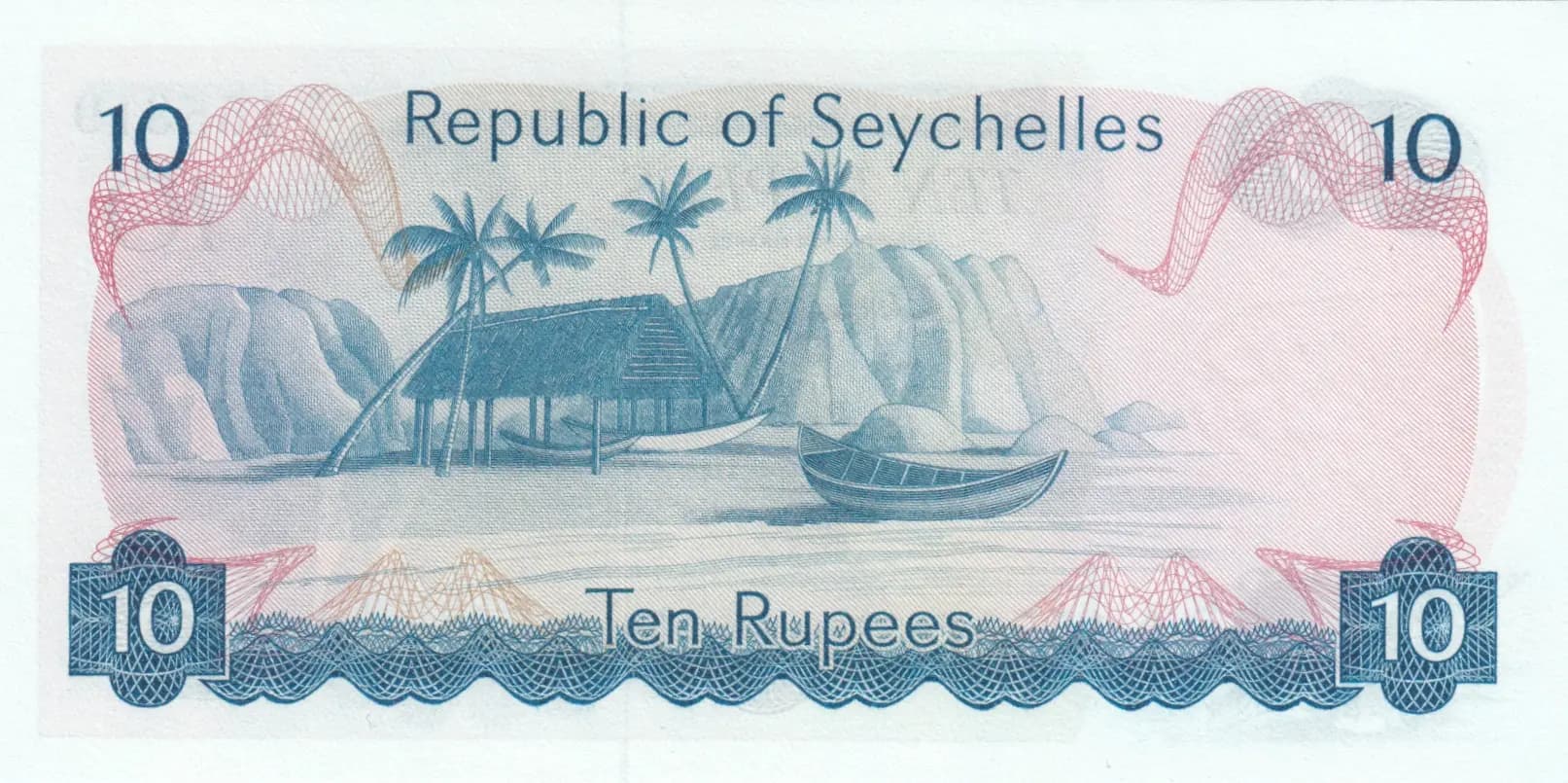
This is an uncirculated example of the Republic of Seychelles' first banknote series, issued in 1976 following independence. The note features a striking portrait of President Sir James Richard Marie Mancham on the obverse and a beautiful tropical coastal scene on the reverse, showcasing the archipelago's natural beauty with traditional dwellings, palm trees, and rocky formations. In UNC condition with sharp intaglio engraving, vibrant multicolor printing, and no signs of wear, this note represents a significant commemorative issue from Seychelles' early post-independence period.
Common. Despite being the inaugural banknote series of an independent nation, this denomination has appeared regularly in circulation and on the secondary market. eBay historical sales data shows UNC examples consistently selling in the $10–$31 range (2011–2017), with more recent PMG-graded examples (PMG 67–68) commanding $65–$115. The 2019 catalog value of $30 for UNC and $5 for VF reflects moderate collector demand but substantial print quantities. The regular appearance of this note in auctions and online sales, along with modest price points for uncirculated examples, confirms its status as a common issue rather than a scarce collectible.
This 10 Rupees note was issued in 1976, the year the Seychelles achieved independence from British rule, making it part of the inaugural currency series of the new Republic. The obverse features President Mancham, the nation's first leader, while the reverse depicts the tropical island landscape—palm trees, traditional stilted structures, and coastal cliffs—that defines the Seychellois identity and economy. This note represents a formative moment in Seychellois numismatic history, as the young nation established its own monetary and visual sovereignty.
The obverse portrays Sir James Richard Marie Mancham, Seychelles' first president, in formal business attire with tie, positioned on the right side of the note. His image is complemented by decorative seashell motifs on the left margin—a symbolic reference to the island nation's maritime heritage. Elaborate guilloche patterns and intricate lace-like engravings frame the design, with white flowers featuring yellow centers in the center-left area. The reverse depicts a quintessentially Seychellois landscape: a thatched-roof traditional dwelling elevated on stilts, palm trees, a traditional sailing or fishing boat in shallow turquoise waters, and dramatic rocky coastal formations with hills in the background. A decorative wave pattern borders the bottom, reinforcing the maritime theme. The color palette of blue-green, pink-red, cream-white, and yellow-gold creates a warm, tropical aesthetic.
Front side: 'REPUBLIC OF SEYCHELLES' (top), 'TEN RUPEES' (denomination), 'MINISTER FOR FINANCE' (signature authority line), Serial number 'A 155319', and signature of the Minister for Finance. Back side: 'Republic of Seychelles' and 'Ten Rupees' with denomination numerals '10' repeated in all four corners. All inscriptions are in English, reflecting the nation's post-colonial administrative language.
This note was produced using intaglio engraving combined with multicolor lithography. The sharp, detailed reproduction of Mancham's portrait, the complex guilloche patterns, and the fine line work evident in both the seashell designs and landscape engraving are characteristic of high-security intaglio printing. The multicolor underprint and distinct color separations indicate professional security printing, likely by De La Rue or a comparable Commonwealth-era security printer, as was standard for new post-colonial central banks in the 1970s.
The observed specimen bears serial number A 155319, indicating it belongs to the early production run with the 'A' prefix. No overprints or date variants are evident. The signature appears consistent with the first Minister for Finance of the Republic. Standard varieties for this Pick number (P-19) relate to different signature combinations of early Republic finance officials and potentially different serial number prefixes (A, B, etc.) denoting production batches, though no major documented varieties exist for this relatively straightforward first issue.