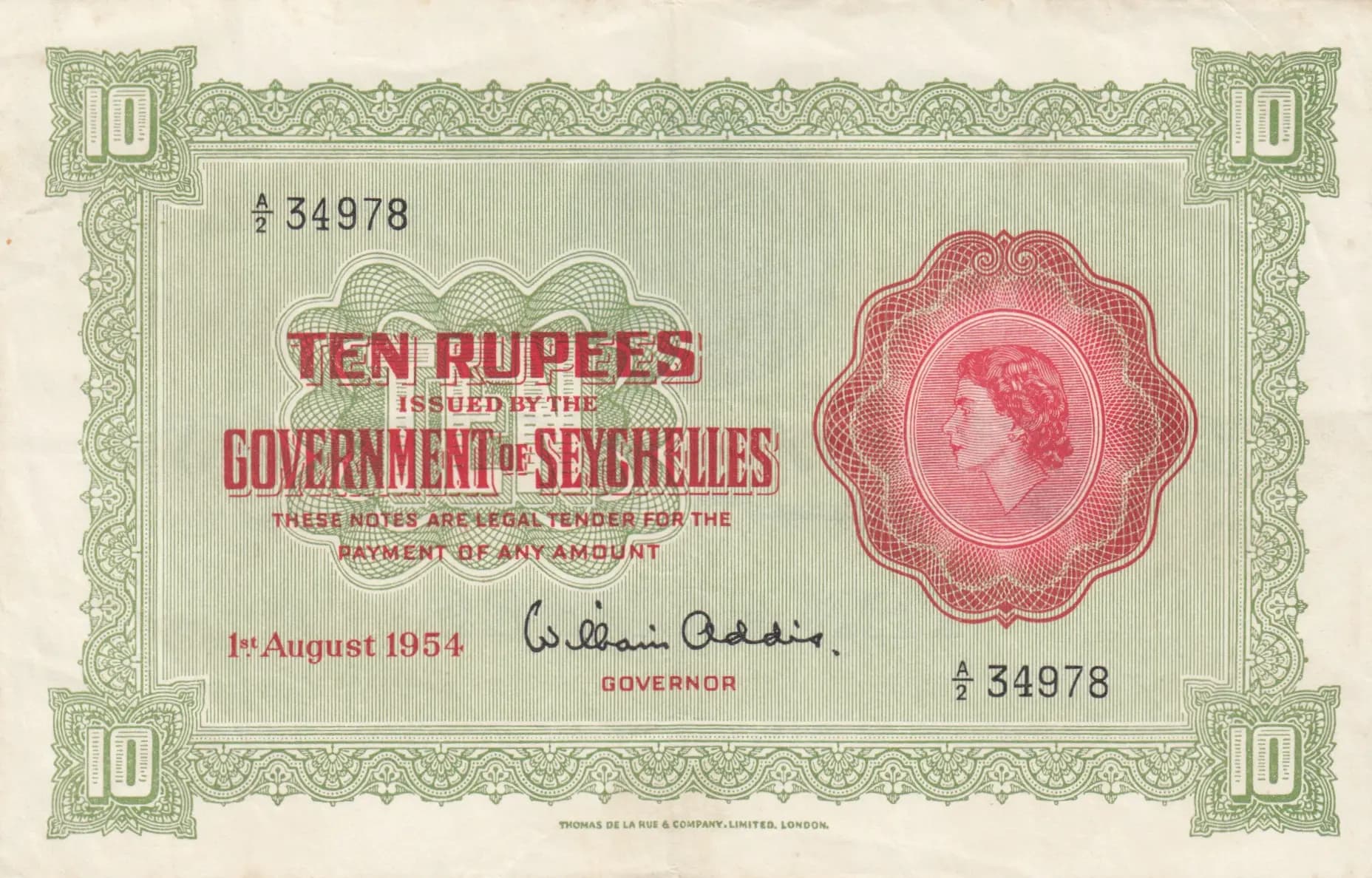
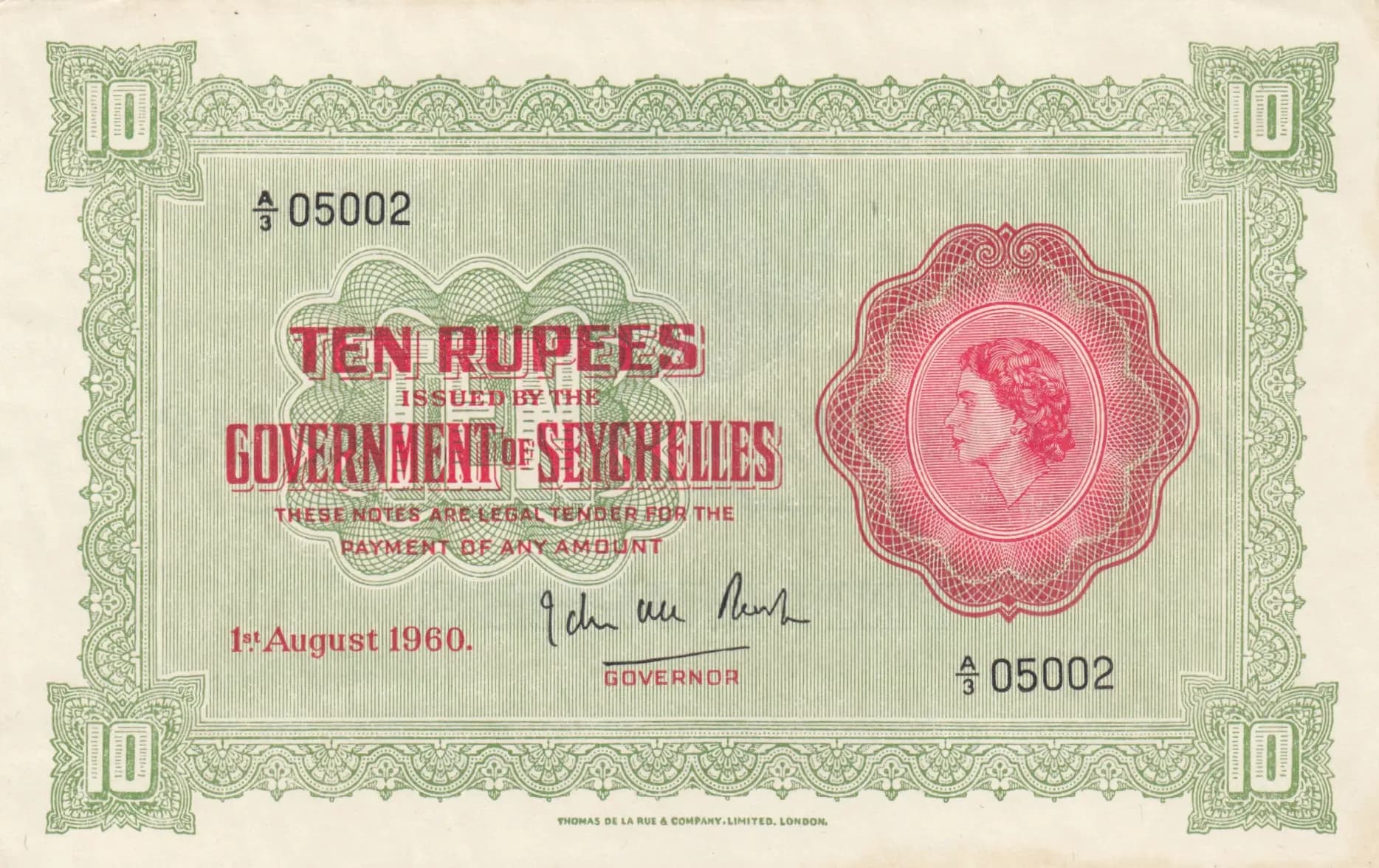
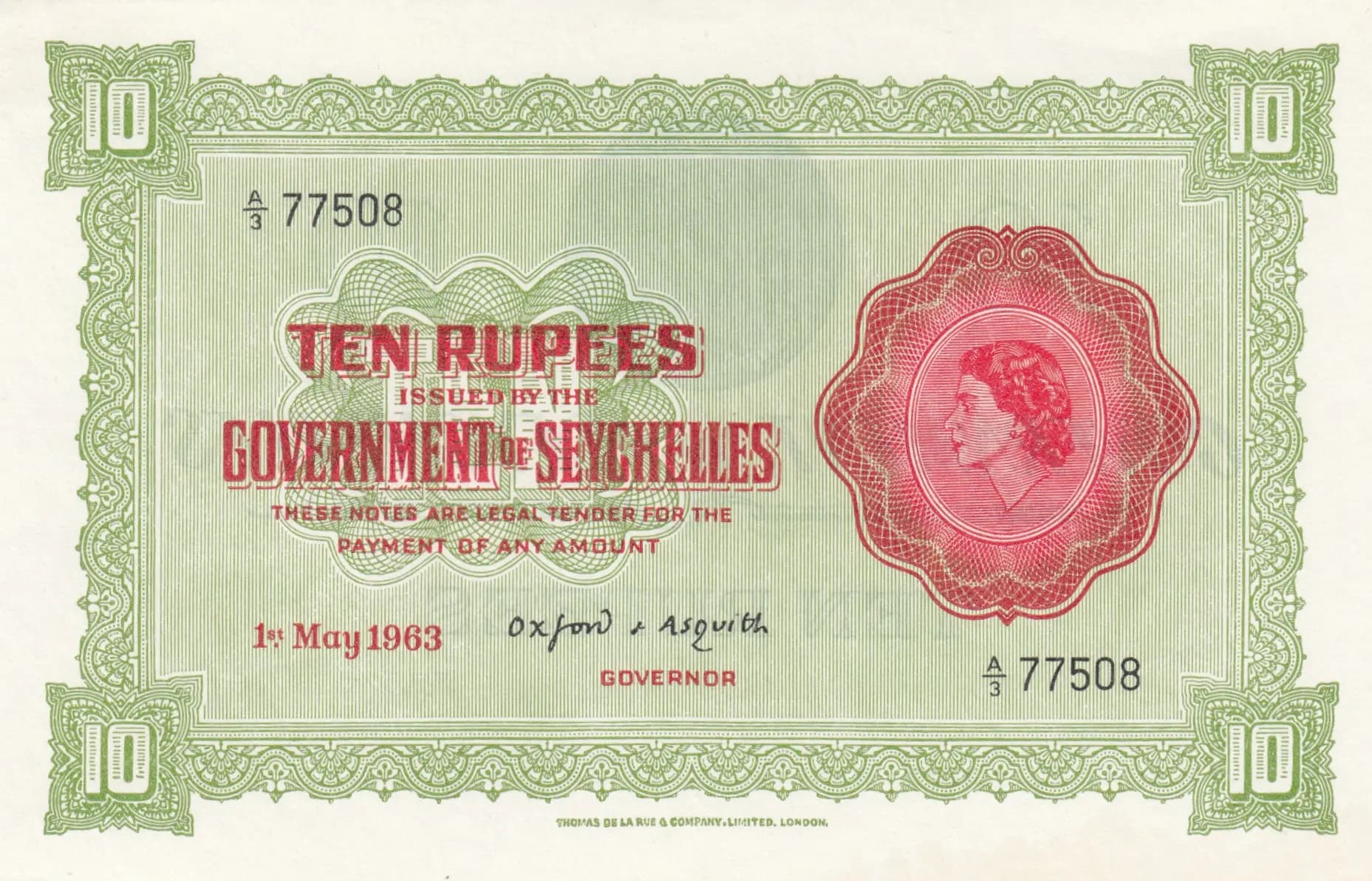
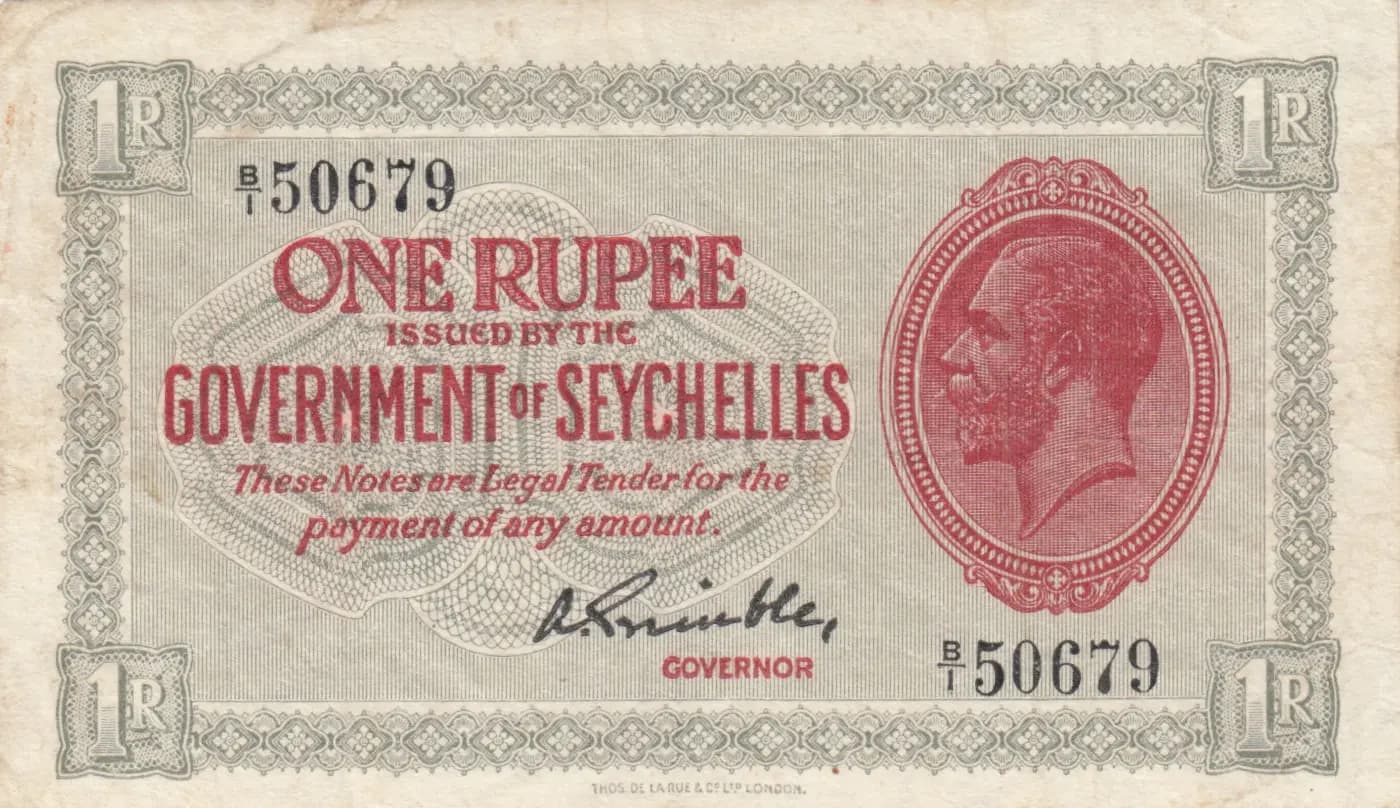
10 rupees 1967
Market Prices
1 saleAbout This Note
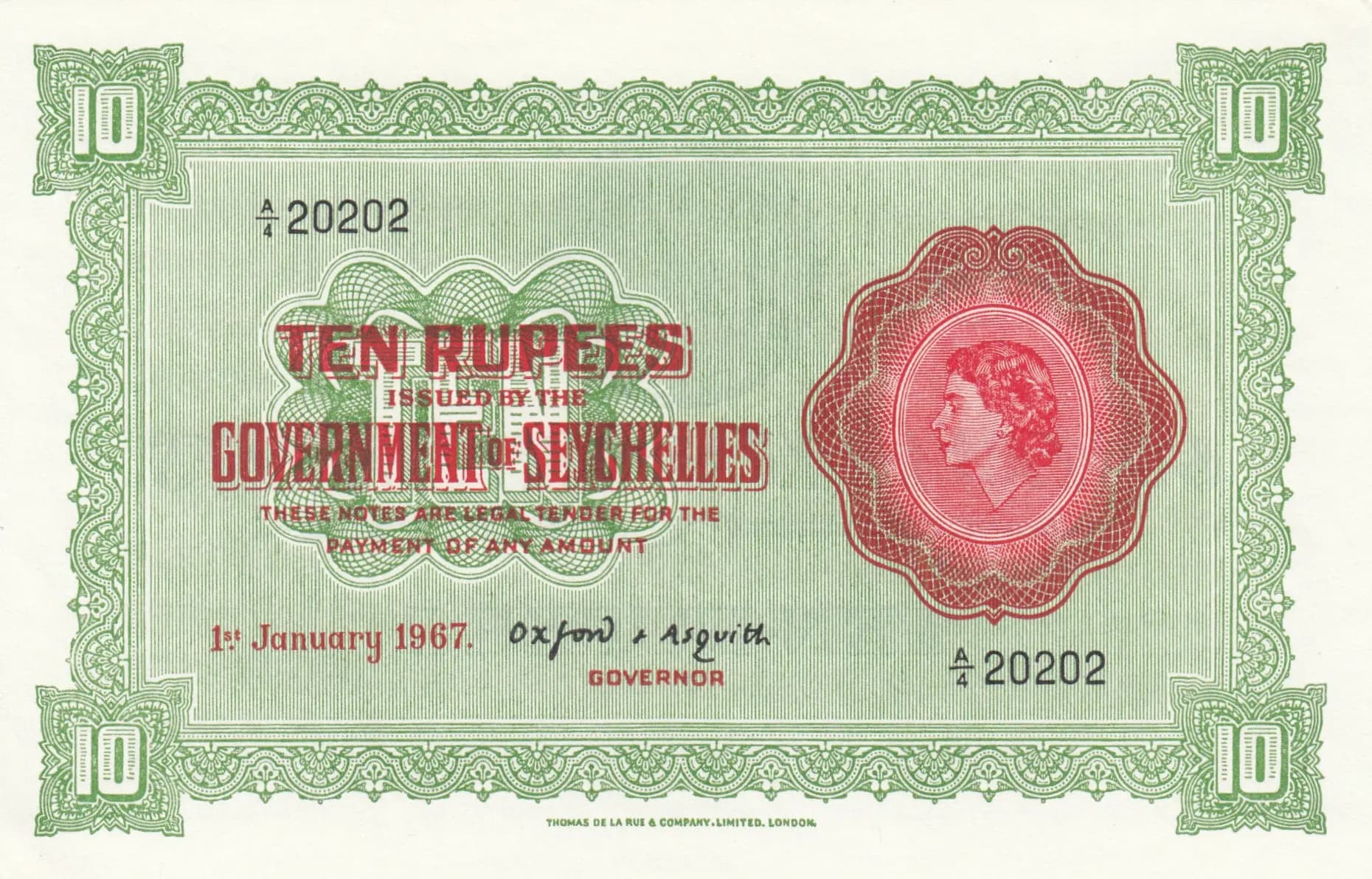
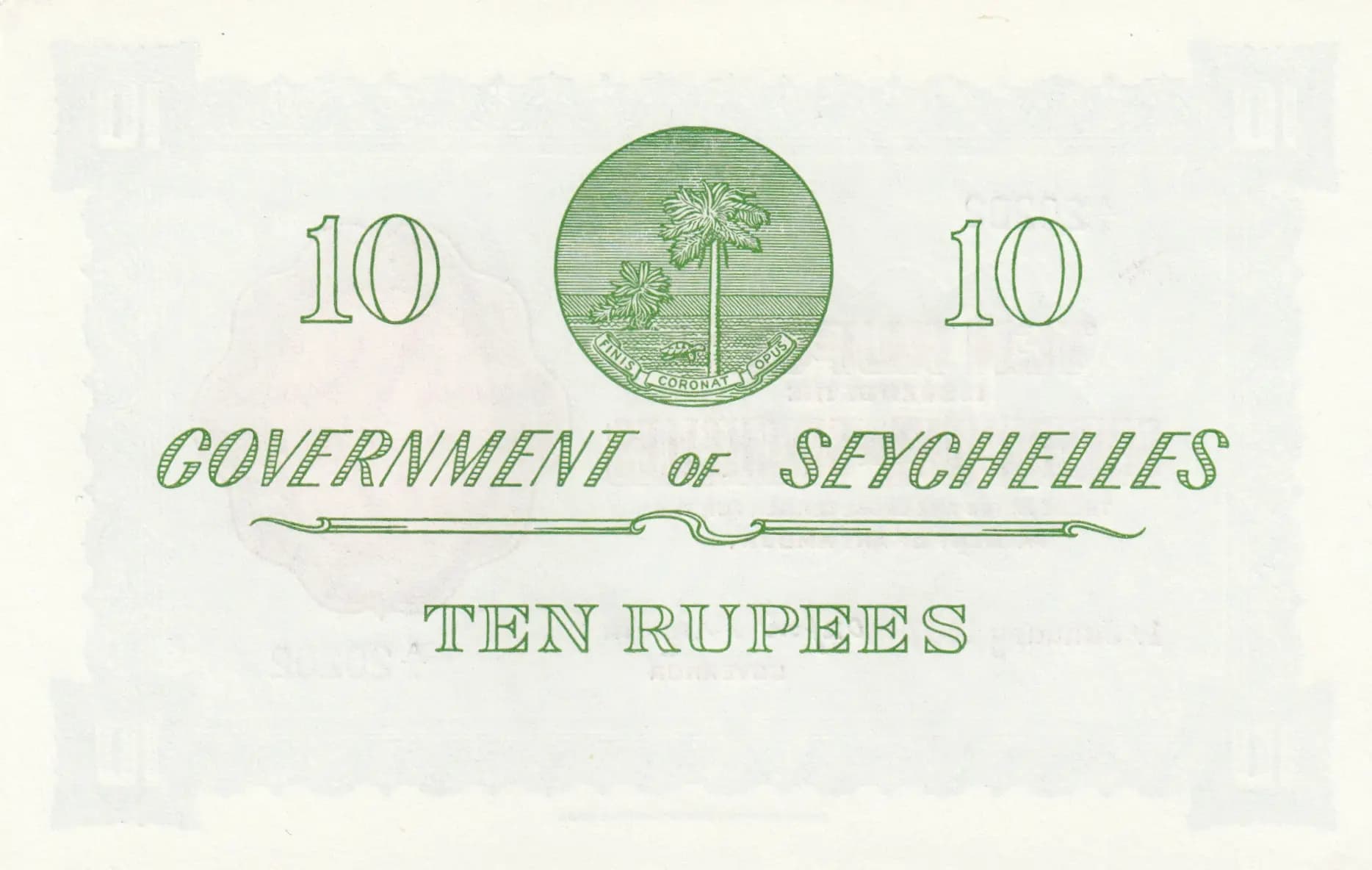
This is a spectacular example of the 1967 Government of Seychelles 10 Rupees note (Pick 12d), printed by Thomas de la Rue in uncirculated condition. The note features an elegant design with a prominent right-facing profile portrait in a red/pink oval medallion on the front, framed by ornate green decorative borders with intricate scrollwork. The reverse displays a serene palm tree vignette in a circular frame, characteristic of the tropical island nation's identity, with large outlined denomination numerals flanking the central design.
Common. The catalog value of $1,500 for UNC condition reflects the note's age and general desirability to collectors rather than scarcity. The Government of Seychelles issued these notes in standard quantities as regular circulation currency for a territory of approximately 60,000 people during a 13-year period (1954–1967). While UNC examples command premium prices due to age and condition rarity, the note itself was not produced in limited quantities nor recalled, making it a standard issue in the Thomas de la Rue colonial currency catalog.
This note was issued on 1st January 1967, marking a significant moment for Seychelles as it transitioned toward independence (achieved in 1976). The portrait featured is Queen Elizabeth II, reflecting Seychelles' status as a British colony at the time of issue. The palm tree imagery on the reverse symbolizes the nation's natural wealth and tropical geography, while the formal design by Thomas de la Rue represents the high-quality currency standards expected of British colonial territories.
The obverse features Queen Elizabeth II in right-facing profile, rendered in red/pink pigment within an ornate circular medallion positioned on the right side of the note. This portrait style is characteristic of British Commonwealth banknotes of the era. The note is bounded by an elaborate green decorative border with symmetrical scrollwork and floral motifs in all four corners, typical of Thomas de la Rue's high-security engraved design aesthetic. The reverse displays a tropical landscape vignette with a prominent palm tree set against a coastal horizon, enclosed in a circular frame and rendered in green linework. The denomination '10' appears in large outlined numerals on both sides, with 'TEN RUPEES' and 'GOVERNMENT OF SEYCHELLES' completing the reverse.
FRONT: 'TEN RUPEES' — Denomination in English; 'GOVERNMENT OF SEYCHELLES' — Issuing authority; 'THESE NOTES ARE LEGAL TENDER FOR THE PAYMENT OF ANY AMOUNT' — Legal tender declaration; '1st January 1967' — Issue date; 'Oxford & Asquith' and 'GOVERNOR' — Signature and title of issuing official; 'A 202002' — Serial number; 'THOMAS DE LA RUE & COMPANY, LIMITED, LONDON' — Printer identification. BACK: '10' — Denomination numerals (left and right); 'GOVERNMENT OF SEYCHELLES' — Issuing authority; 'TEN RUPEES' — Denomination in words.
Intaglio engraving (recess printing), as evidenced by the fine line work visible throughout the border ornaments, portrait detailing, and the palm tree vignette. The multiple color application (green and red/pink) suggests multi-plate printing, a standard Thomas de la Rue security technique of the period. The crisp, detailed linework in the decorative elements and security borders indicates steel plate engraving.
This note is identified as Pick 12d, indicating it represents a specific variety within the 10 Rupees issue. The signature of 'Oxford & Asquith' as Governor is notable; signature varieties exist for this Pick number depending on the governor in office during the note's validity period. The serial number prefix 'A 202002' observed on this example should be cross-referenced against known serial ranges to determine if it represents a specific printing batch or series variety. The 1st January 1967 date is consistent with the Pick 12d dating but should be verified against other documented examples to confirm if date varieties exist within this catalog number.