10 rupees 1960
Market Prices
1 saleAbout This Note
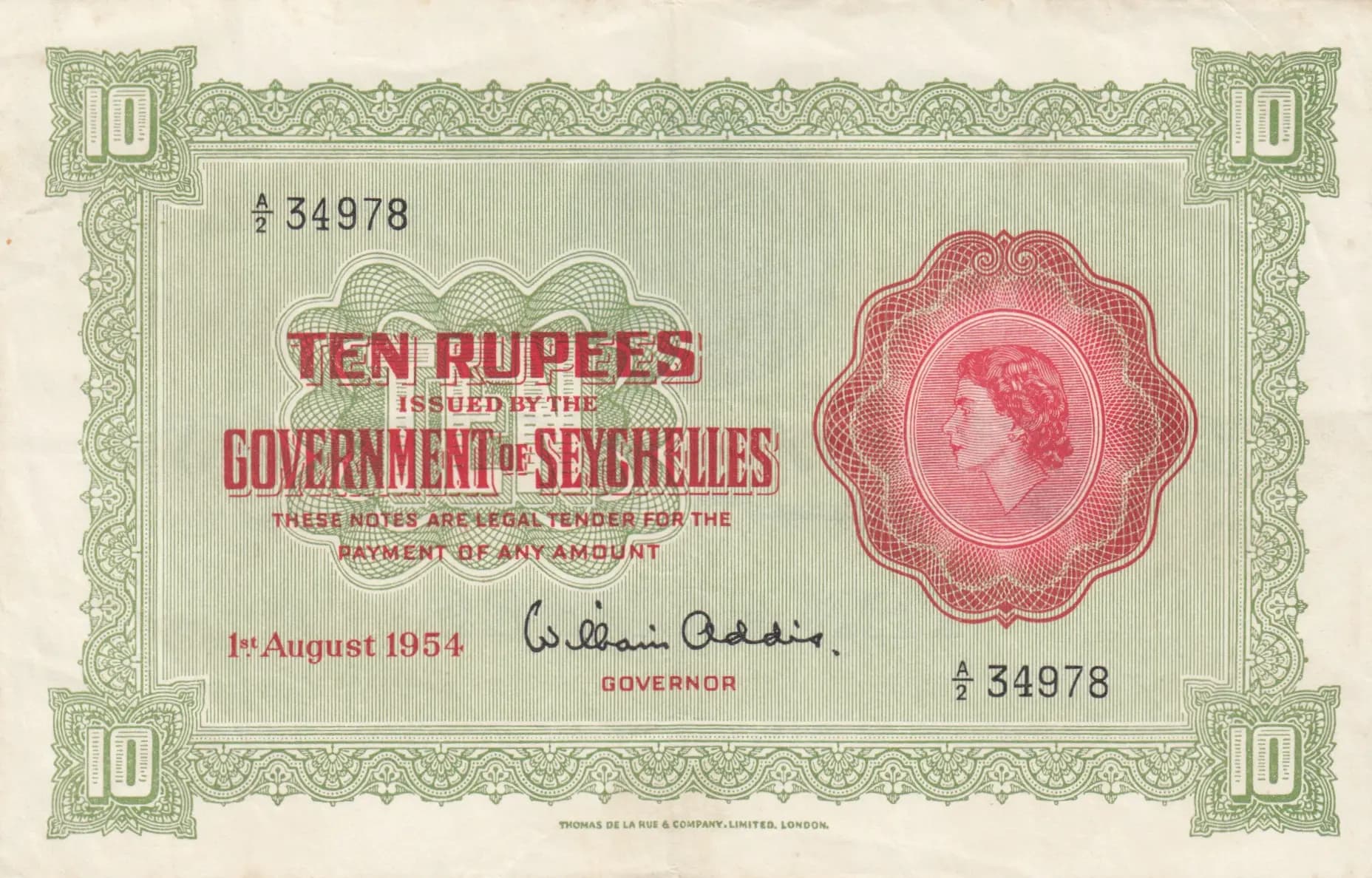
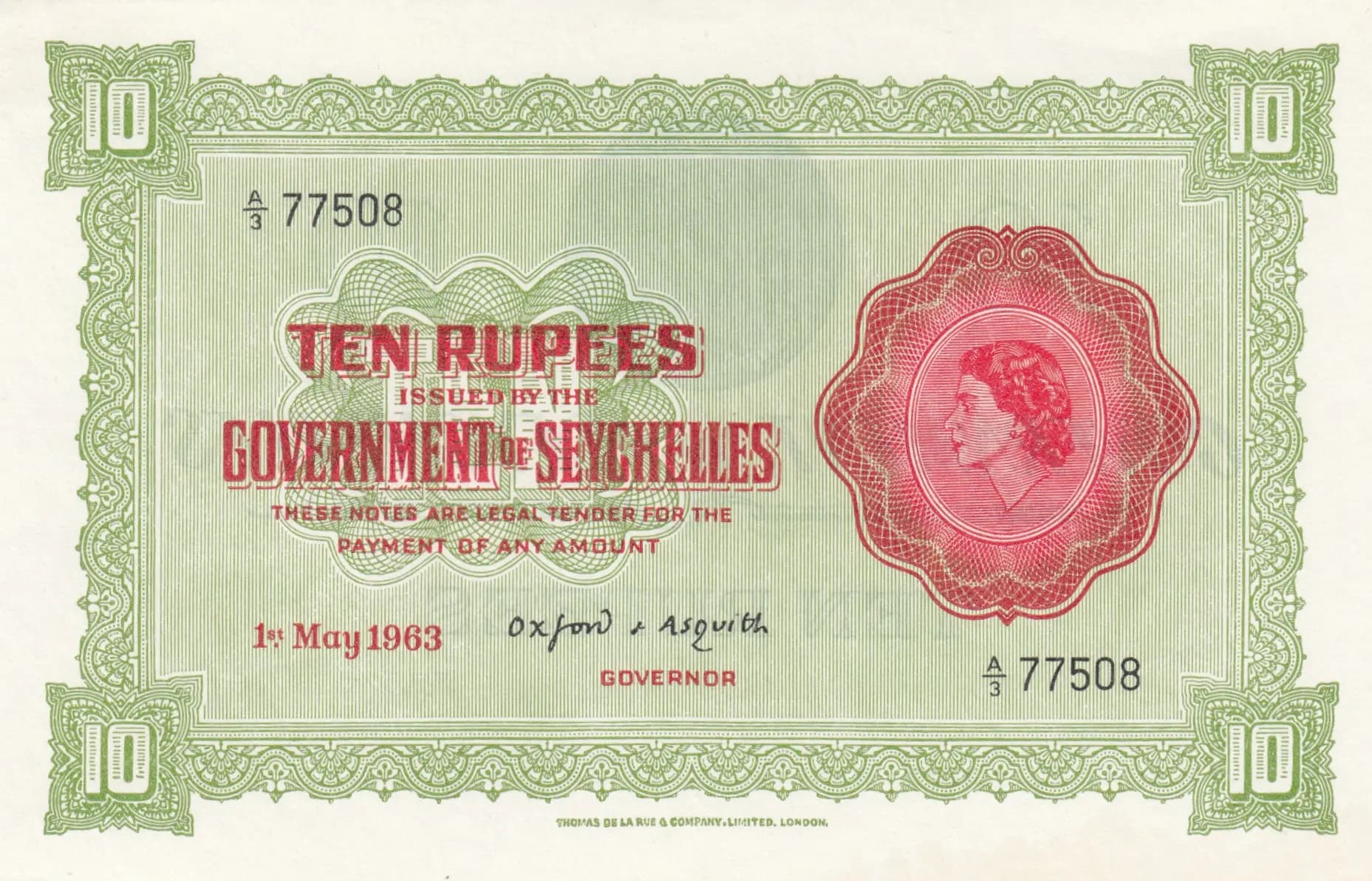
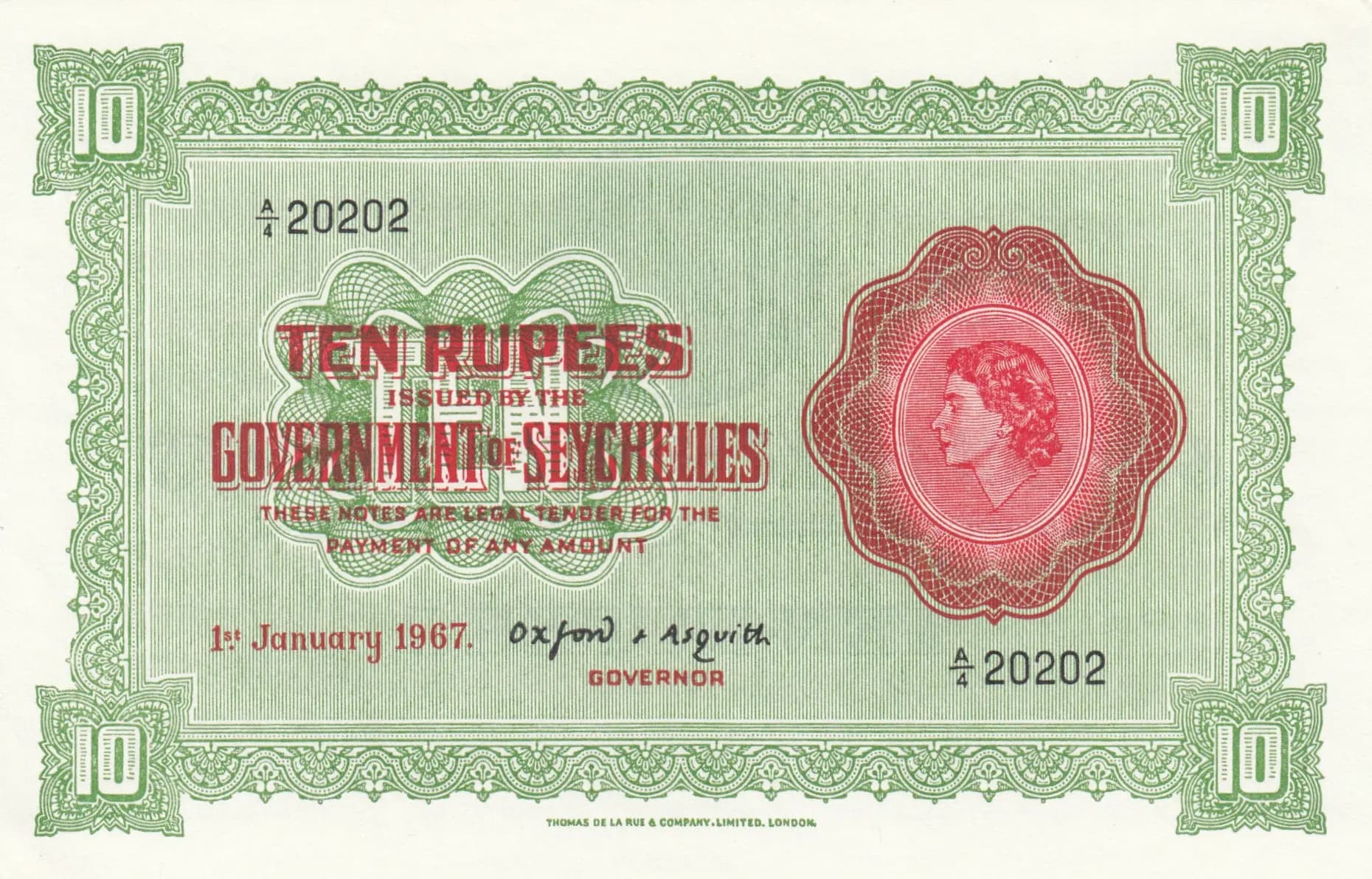
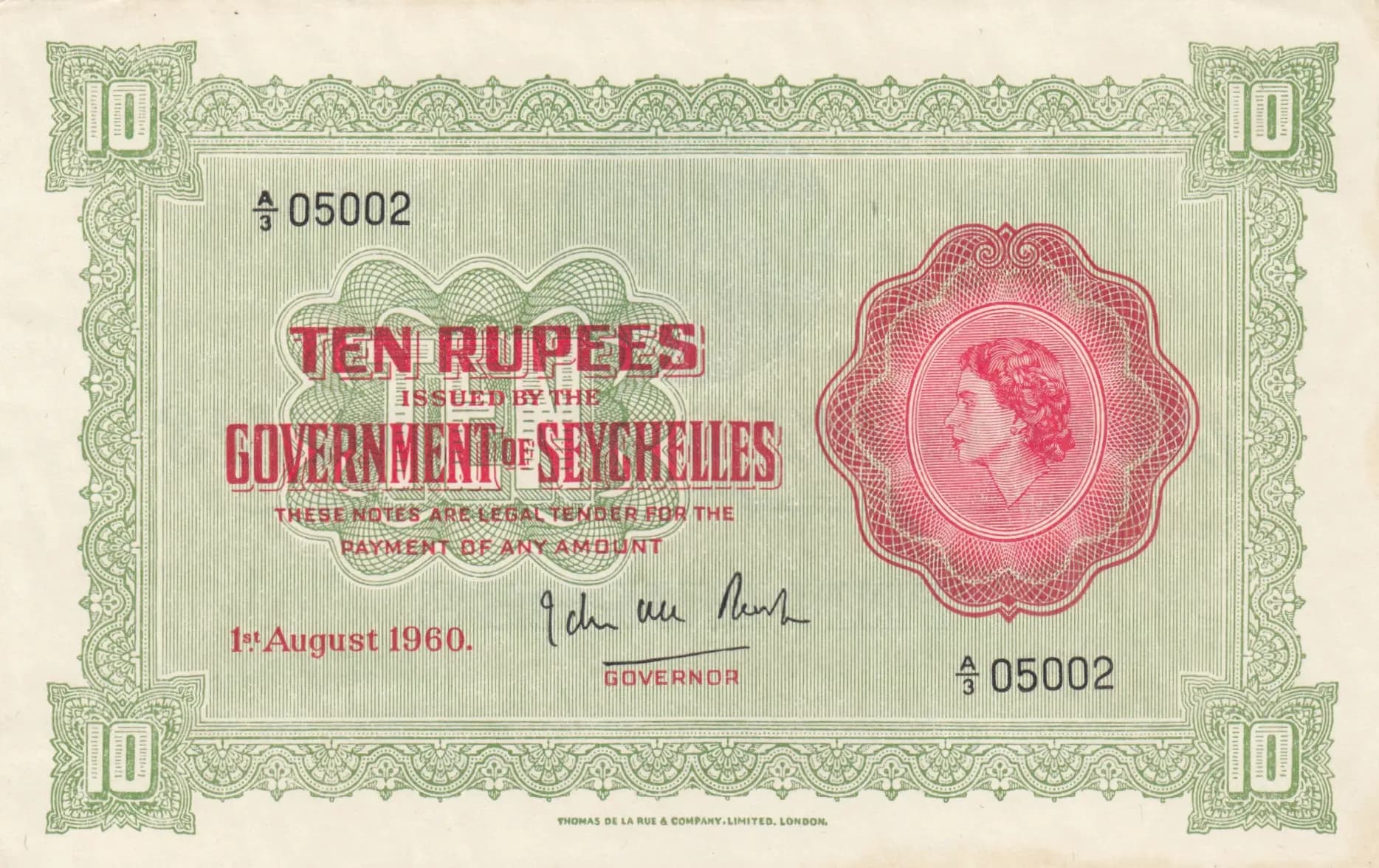
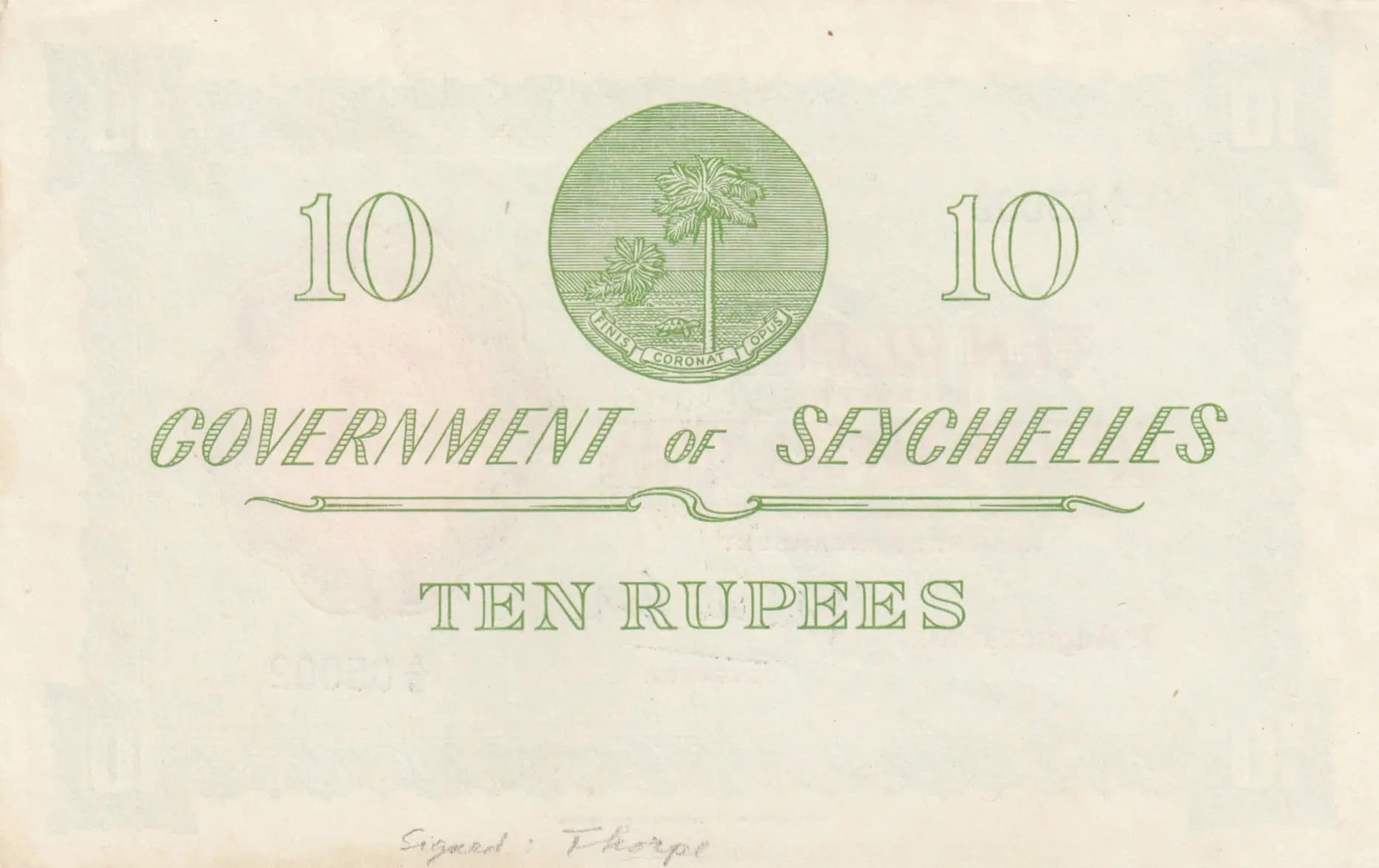
This 10 Rupees note from the Government of Seychelles dated 1st August 1960 is a classic early post-independence issue featuring Queen Elizabeth II in profile on the obverse and the iconic Coco de Mer palm tree on the reverse. The note is graded AU and displays the characteristic green and red color scheme with intricate engraved detailing throughout, showing minor age-related toning and foxing consistent with a 60+ year old note, yet remaining well-preserved with no major tears or creases.
Common. While this is an early Seychelles issue from 1960, the note is not rare. Pick P-12b represents a standard government issue from a regular currency series (1954-1967) with substantial print runs. The catalog values cited ($225 VF, $2000 UNC) reflect normal pricing for moderately aged British Commonwealth banknotes in premium grades, not scarcity. The eBay market data showing a VG note selling for $31 in 2015 further indicates this is a commonly encountered note in the collector market.
This note was issued during the early period of Seychelles' transition toward independence (which would occur in 1976), when the territory was still under British colonial administration and bore the portrait of Queen Elizabeth II. The reverse features the Coco de Mer palm tree, an endemic species found only in Seychelles and a symbol of the islands' unique natural heritage and identity. The 1960 date marks the note as part of the Government of Seychelles' first modern currency series, printed by the prestigious British security printer Thomas De La Rue.
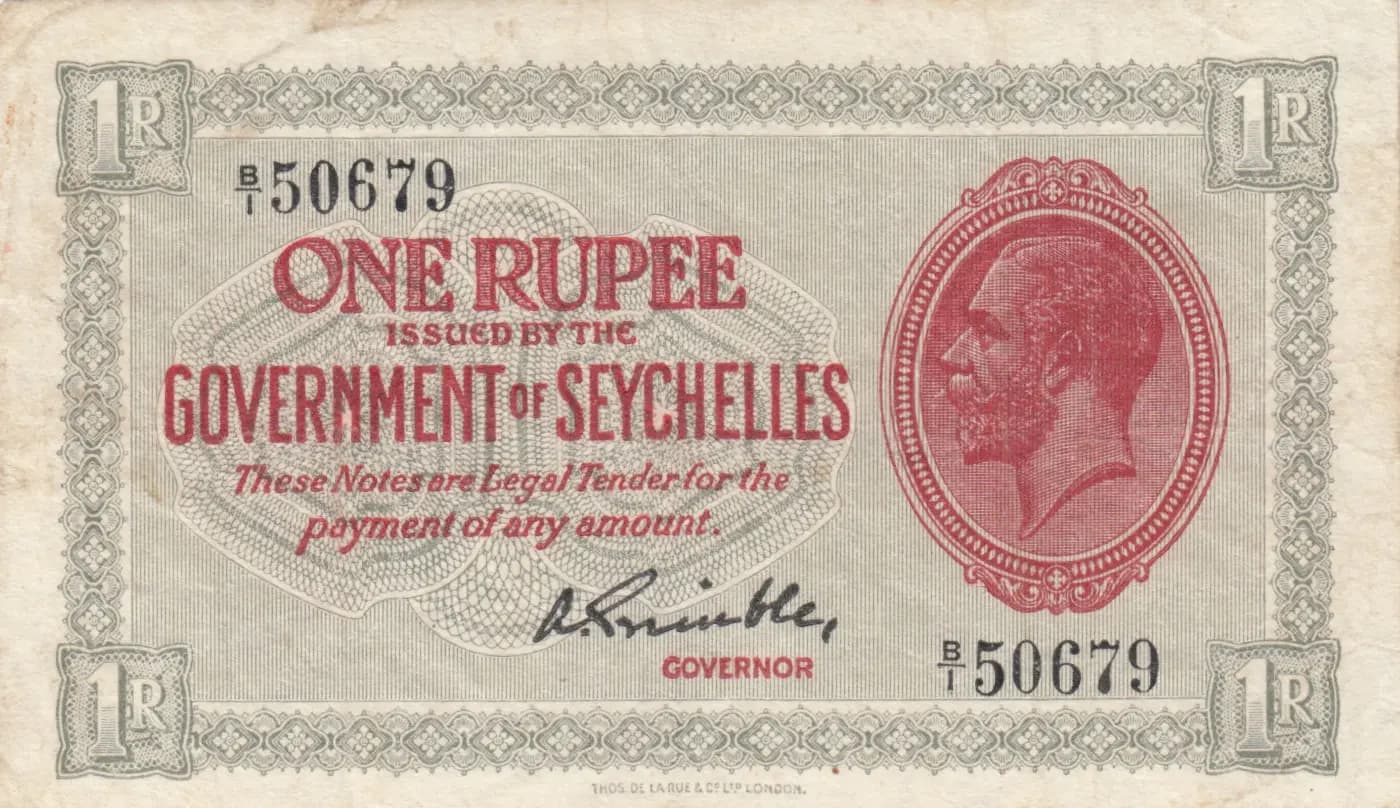
The obverse features a portrait of Queen Elizabeth II in right-facing profile, rendered in red/pink tones within an elaborate circular rosette frame, positioned on the right side of the note. The reverse depicts the Coco de Mer palm tree (Lodoicea maldivica), the distinctive endemic palm of Seychelles, presented in a centered circular medallion with the denomination and issuing authority arranged decoratively around it. Both sides employ ornate border designs with intricate fan-like corner ornaments and fine-line engraved patterns characteristic of De La Rue's security printing standards. The color scheme consists of green and red on a cream/off-white background, with elaborate decorative framing that reinforces the note's formal governmental authority.
FRONT: 'Issued by the Government of Seychelles' / 'Ten Rupees' / '10' (denomination) / 'These notes are legal tender for the payment of any amount' / '1st August 1960' / 'Governor' / 'Thomas De La Rue & Company, Limited, London' (printer attribution) / Serial number 'A/3 05002' (top left and bottom right). BACK: '10' (denomination, repeated on left and right sides) / 'Government of Seychelles' / 'Ten Rupees' / Handwritten annotation 'Signed Edward' (lower left, appears to be a later collector notation).
Intaglio (engraved) printing by Thomas De La Rue & Company, Limited, London. The note exhibits the characteristic fine-line engraving and hatching patterns typical of security banknote production, with multiple color printing (green and red) applied using separate intaglio plates. The intricate circular rosette frame around the portrait and the detailed rendering of the Coco de Mer palm tree demonstrate the high-quality craftsmanship of traditional De La Rue engraving techniques.
This note is cataloged as Pick P-12b, representing a specific variety of the 1960 Government of Seychelles 10 Rupees issue. The visual analysis indicates this specimen carries serial number A/3 05002 with the 'A/3' prefix. The note bears what appears to be a signature variety (the text references 'Governor' signature line, though the specific signatory is not clearly legible in the analysis). The handwritten annotation 'Signed Edward' appears to be a later collector notation rather than a printing variety. No overprints or other distinguishing varieties are evident in the images provided.