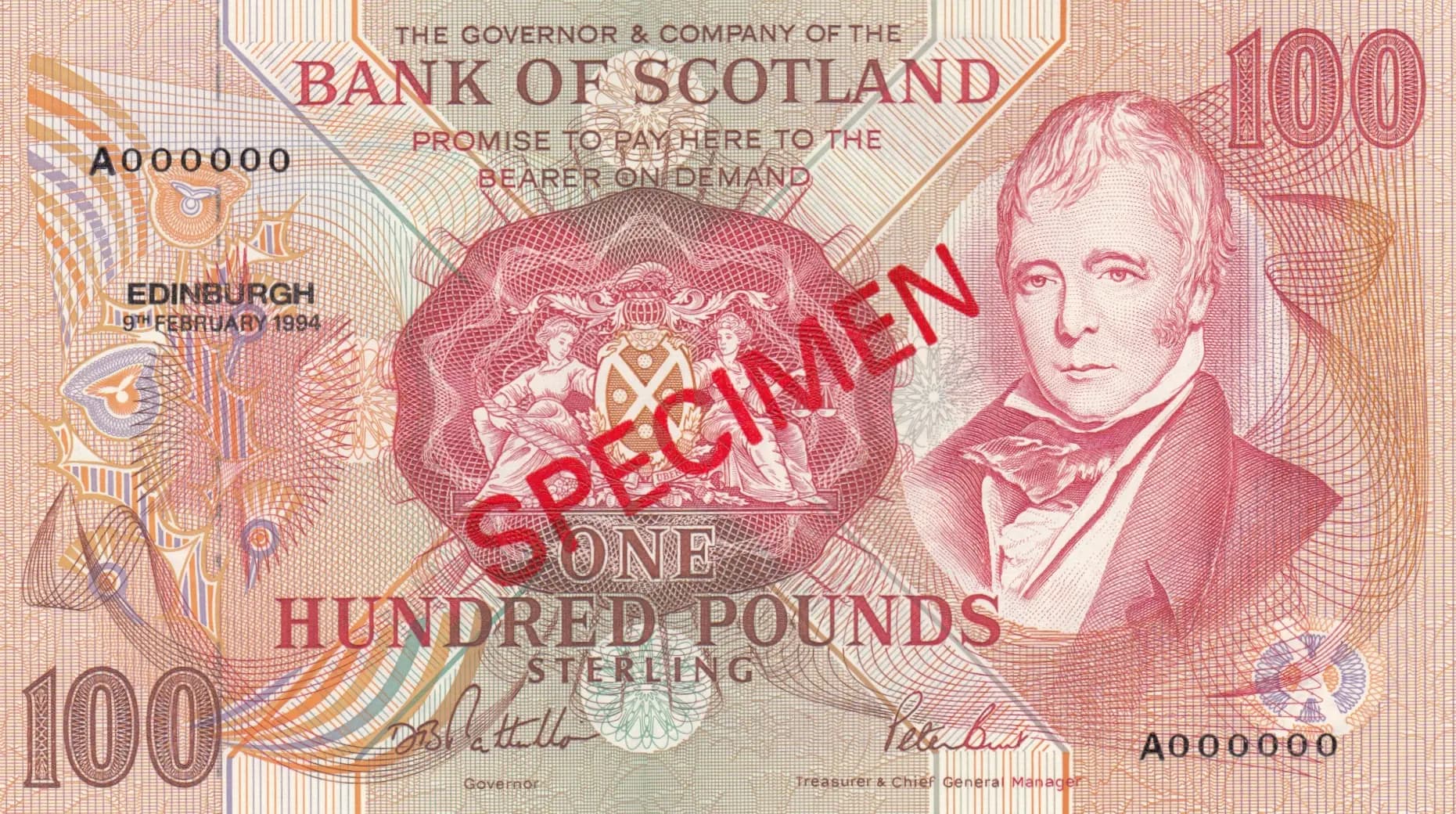
20 pounds 1993 specimen
Market Prices
1 saleAbout This Note
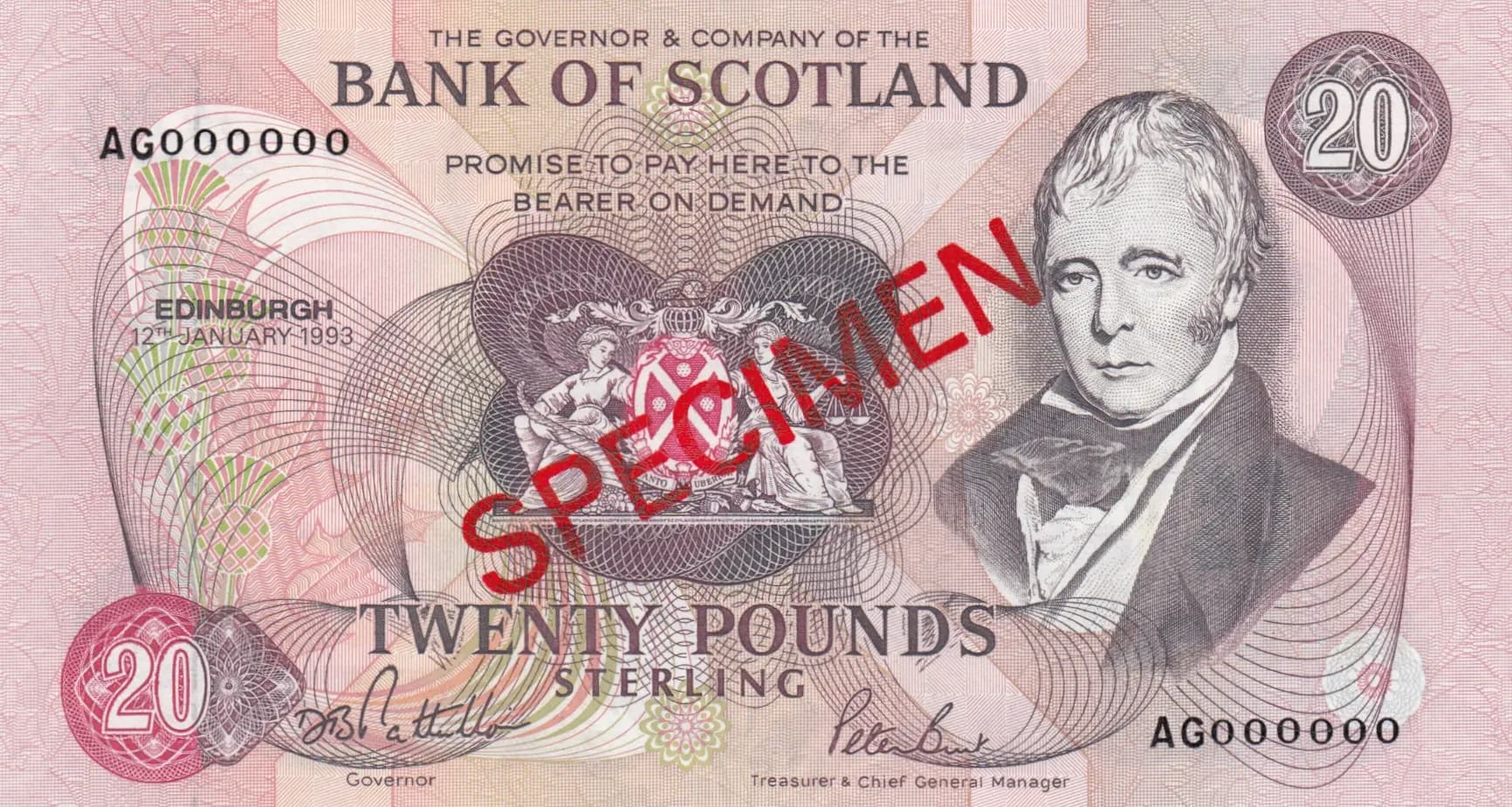
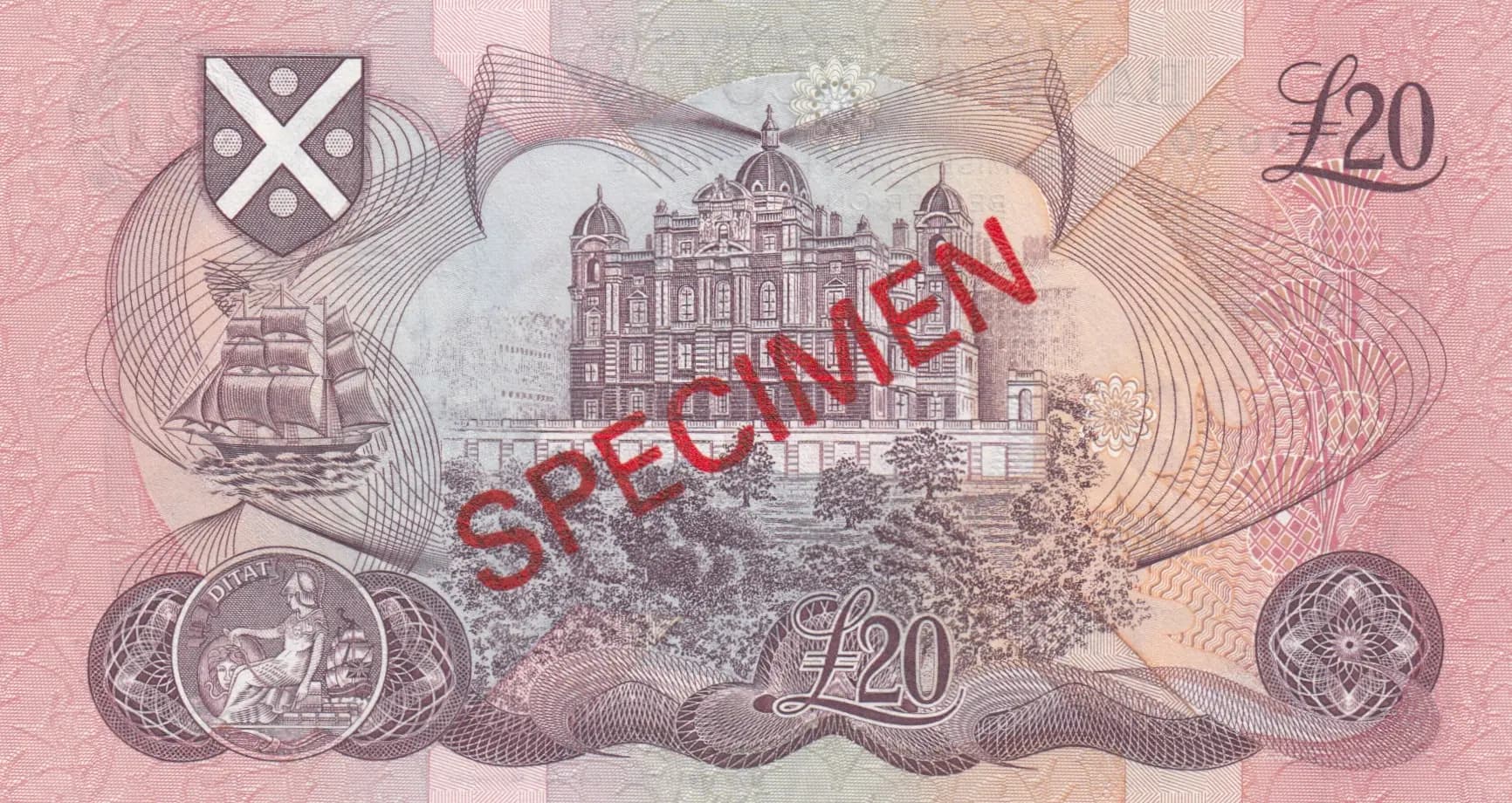
This is a Bank of Scotland £20 specimen note dated 12 January 1993, presented in uncirculated condition with the characteristic large red SPECIMEN overprint. The note features Sir Walter Scott in formal dress on the obverse and the impressive Bank of Scotland head office building in Edinburgh on the reverse, both rendered in distinctive rose and pink tones with intricate security printing. Specimen notes are non-circulating educational and archival pieces, making this an excellent example for collectors interested in Scottish currency or banknote security design from the early 1990s.
Common. Specimen notes from the 1991-1993 series are readily available to collectors. The eBay price tracking data showing a PMG 66 specimen selling for $120 in 2016 indicates moderate collector demand but not scarcity; specimen notes were produced in sufficient quantities for distribution to banks, governments, and the philatelic market. The 1993 date represents the final year of issue for this design, but no evidence suggests a limited print run. Specimen notes are generally more common than circulated examples as they were not handled in commerce and were preserved by institutions.
This note was issued during the final year of the 1991-1993 series of Bank of Scotland £20 notes, a period representing Scotland's continued financial independence and institutional pride. The prominent depiction of Sir Walter Scott, Scotland's celebrated historical novelist and cultural icon, reflects the nation's heritage and literary tradition. The architectural focus on the Bank of Scotland's Edinburgh head office building underscores the institution's historical importance as one of the oldest banks in the world, chartered in 1695, and its role in Scottish economic identity during the late 20th century.
The obverse features a formal right-facing portrait of Sir Walter Scott (1771-1832), the renowned Scottish writer and historical novelist, positioned on the right side in classical engraving style. Central to the design are the Royal Arms flanked by two allegorical female figures representing justice and virtue. The denomination '20' appears in circular markers at top right and bottom left. The reverse showcases the impressive neoclassical Bank of Scotland head office building in Edinburgh as its architectural centerpiece, with the Scottish coat of arms in the upper left corner featuring the distinctive saltire cross pattern. A sailing ship, representing Scotland's maritime heritage, is depicted in the lower left along with a classical allegorical figure (Pallas, goddess of wisdom), referencing the bank's intellectual and cultural significance. Throughout both sides, ornate geometric guilloche patterns, thistle motifs, and decorative floral elements provide security enhancement and aesthetic refinement characteristic of fine banknote engraving.
Front: 'THE GOVERNOR & COMPANY OF THE BANK OF SCOTLAND' / 'PROMISE TO PAY HERE TO THE BEARER ON DEMAND' / 'TWENTY POUNDS STERLING' / 'EDINBURGH 12 JANUARY 1993' / Serial number 'AG000000' / Signature lines for 'Governor' and 'Treasurer & Chief General Manager' / 'SPECIMEN' (overprint). Back: '£20' denomination marker / 'SPECIMEN' (overprint). All inscriptions are in English, reflecting the banknote's use in Scotland within the United Kingdom currency system.
Multi-color intaglio (engraved) printing on watermarked security paper. The note displays sophisticated security features including complex guilloche patterns, multiple denomination markers, fine line work, and intricate decorative elements typical of Bank of Scotland notes from this period. Bank of Scotland notes of this era were printed by Thomas de la Rue, the leading British security printer, utilizing their advanced engraving and multi-color intaglio technology to prevent counterfeiting.
This is a specimen note of the 1993 issue (specifically dated 12 January 1993), indicated by the bold red 'SPECIMEN' overprint across both sides and the zero serial number prefix 'AG000000' typical of specimen production. The 1991-1993 series exists with three known date variants: 1991, 3.2.1992, and 12.1.1993. This example represents the final date variant. Specimen notes may also exist with different printer's marks or signature combinations reflecting the issuing bank's officers during this period, though specimen notes typically feature standard signature blocks without variation.