1 pound 1959
Market Prices
24 salesAbout This Note
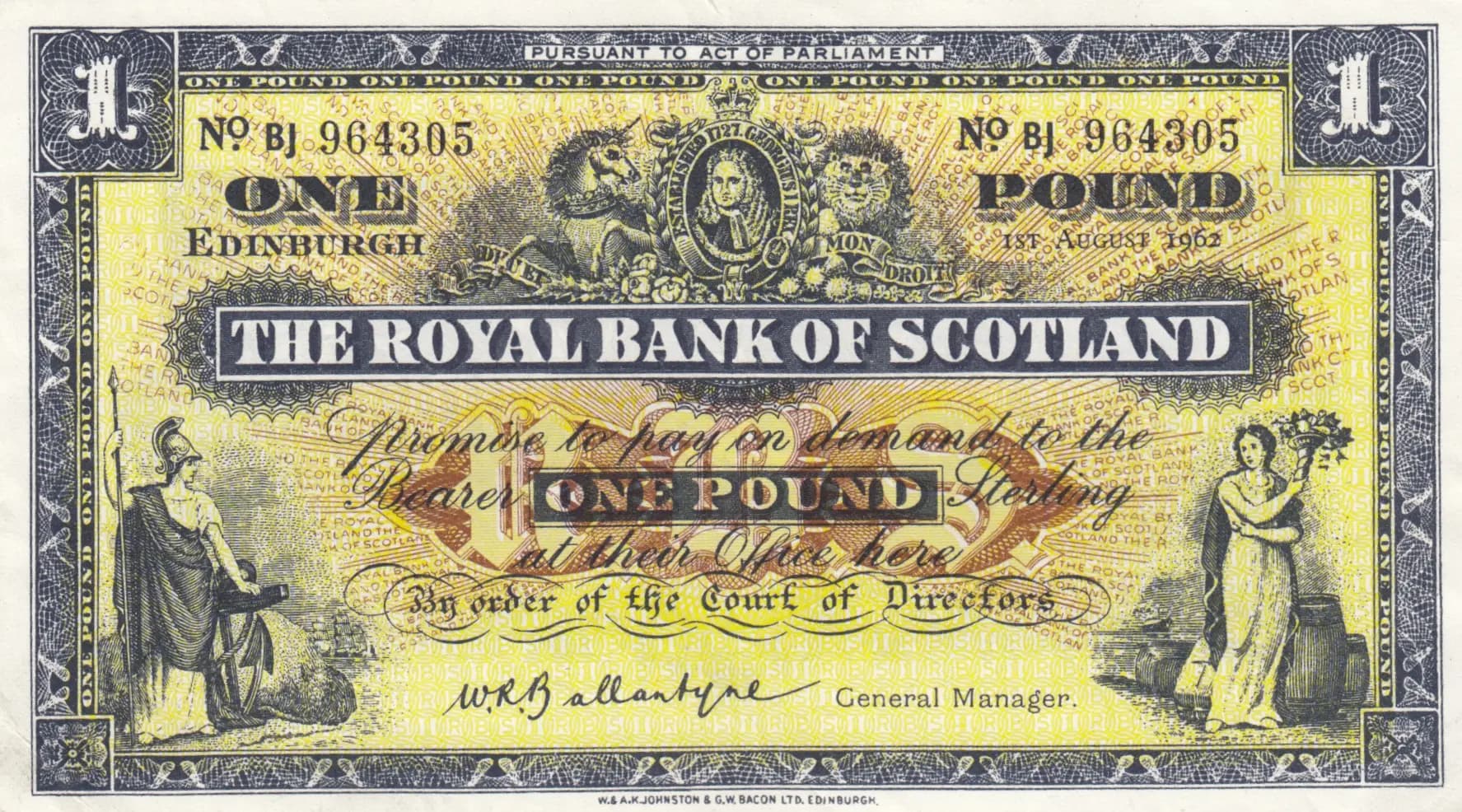
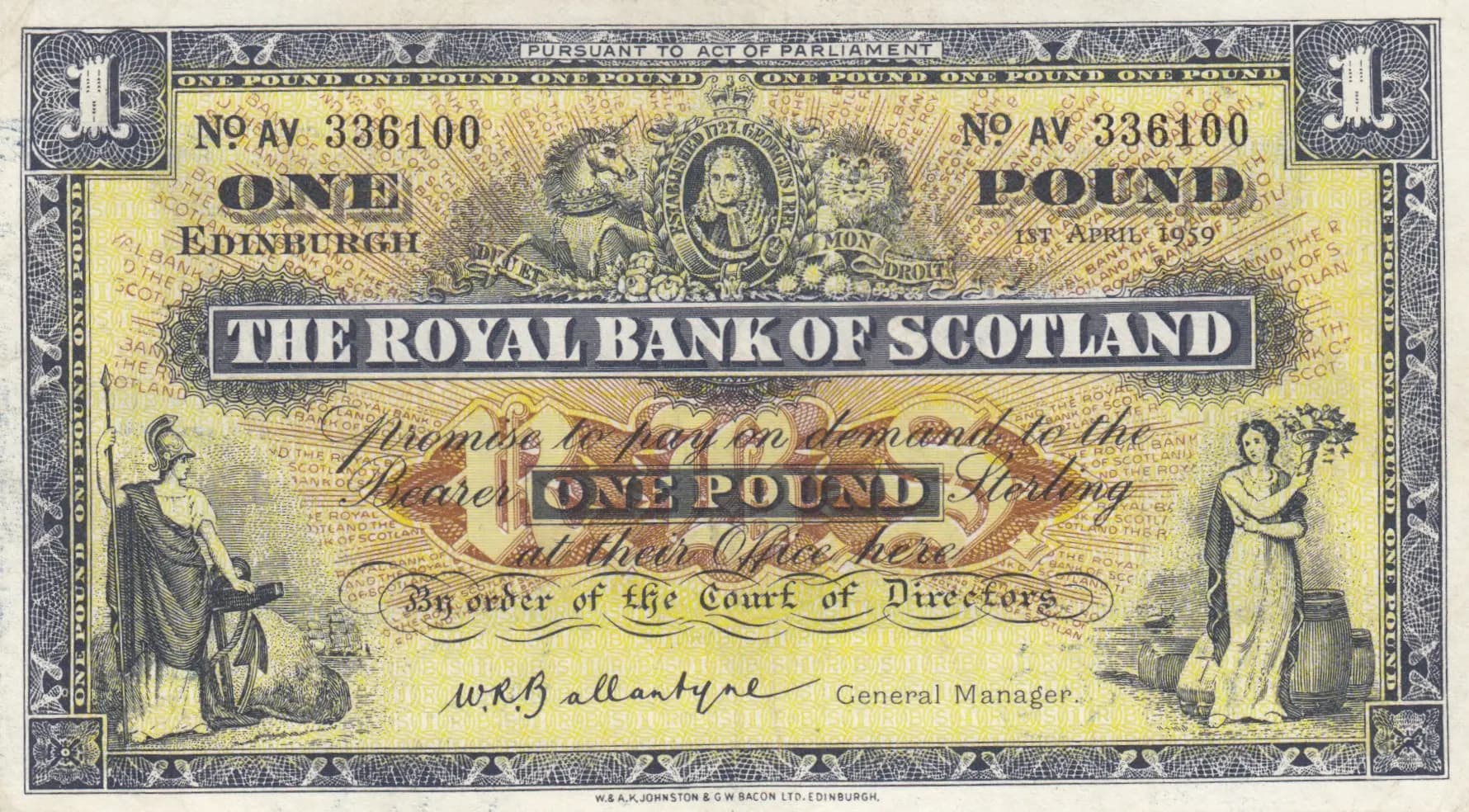
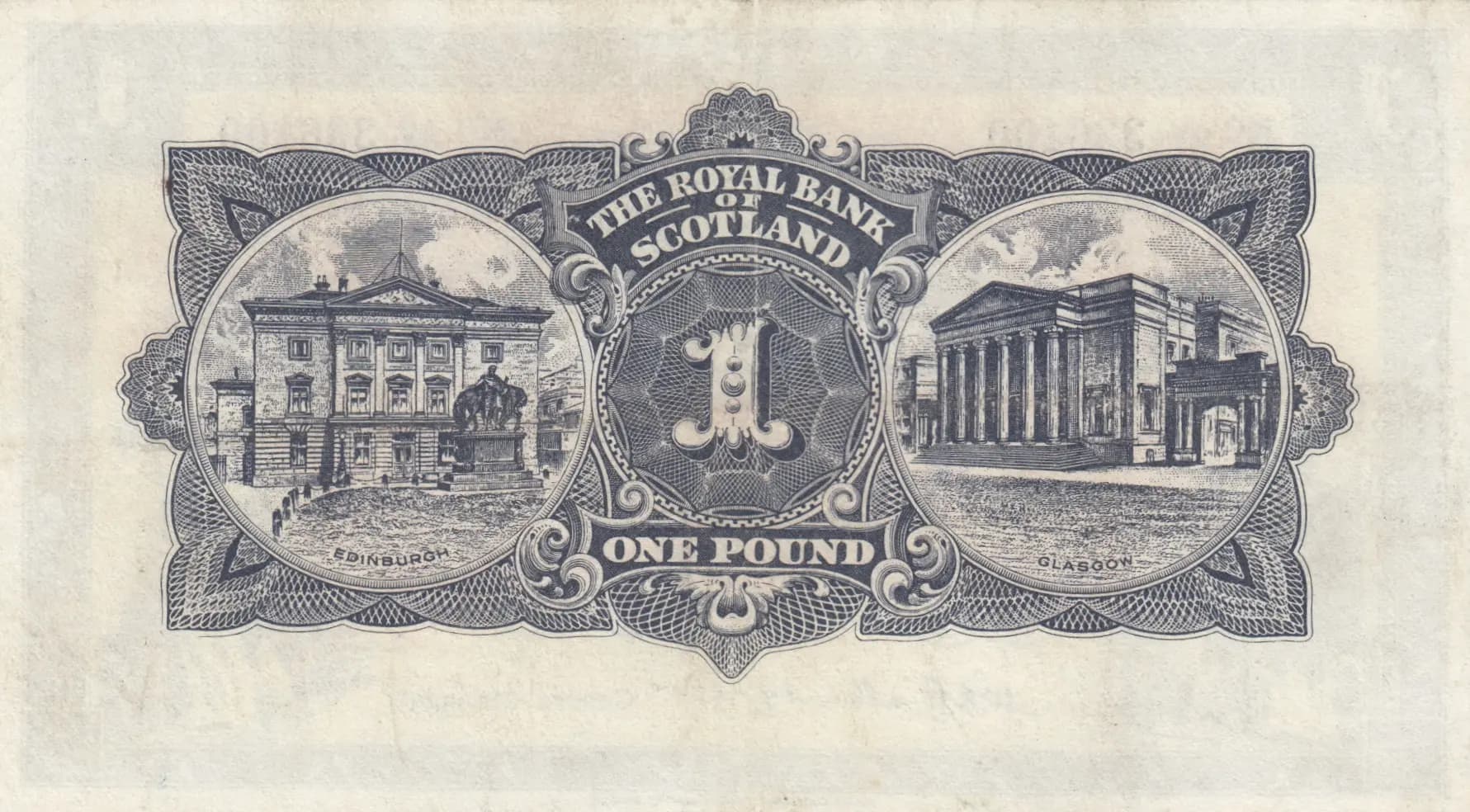
This is a 1959 Royal Bank of Scotland £1 note (Pick P-324b) in EF condition, featuring the distinctive yellow/cream background with dark blue borders characteristic of this series. The note displays excellent clarity of the intricate engraving work, with only light foxing and creasing consistent with age, and represents a well-preserved example of mid-20th century Scottish banking currency. The formal allegorical imagery and architectural vignettes remain crisp and legible, making this an attractive specimen for collectors of Scottish banknotes.
Common. This note from the 1955-1964 series was issued in substantial quantities by the Royal Bank of Scotland. eBay pricing data shows regular sales of similar examples in comparable conditions (EF range) averaging $25-$35, with no evidence of scarcity premiums. Print runs for this mainstream series were substantial, and survival rates are good. The denomination and issuer were not limited, and no recall or withdrawal issues affected availability.
Issued during the 1955-1964 series by the Royal Bank of Scotland, this note reflects post-war Scottish banking prominence and cultural identity through its depiction of Edinburgh and Glasgow civic architecture. The allegorical female figures symbolize virtue and commerce, while the crowned portrait and heraldic elements reinforce the authority of the Crown and the Bank's privileged position as a note-issuing institution in Scotland. This period represents the height of regional banknote diversity in Britain before centralization pressures began to consolidate Scottish banking imagery.
The obverse features a classical design with a crowned male portrait (likely a British monarch) in a central medallion, flanked by two allegorical female figures in classical Greek/Roman dress representing abstractions of commerce and virtue. Twin lion heads ornament the sides of the central portrait, and the composition is heavily embellished with baroque scrollwork and rococo flourishes in the corners. The reverse presents two circular architectural vignettes: the Edinburgh building on the left depicts what appears to be a neoclassical civic building with columned portico and statue, while the Glasgow building on the right shows similar institutional architecture. A large ornamental shield dominates the center, containing the denomination and an elaborate decorative 'L' initial. The overall design language is late Victorian/Edwardian in style, emphasizing the Bank's respectability and institutional authority.
FRONT SIDE: 'THE ROYAL BANK OF SCOTLAND' (bank name and authority); 'ONE POUND' (denomination); '1ST APRIL 1959' (official issue date); 'EDINBURGH' (city of issue); Serial number 'No AY 336100'; 'I promise to pay the Bearer on demand the sum of ONE POUND Sterling at the office here' (standard Bank of England Act promise); 'By order of the Court of Directors' (board authorization); 'W.R Ballantyne' (signature of General Manager); 'General Manager' (title); 'PURSUIT OF PARLIAMENT' (partial reference to banking charter). BACK SIDE: 'THE ROYAL BANK OF SCOTLAND' (bank name and authority); 'ONE POUND' (denomination); 'EDINBURGH' (identification of left architectural vignette); 'GLASGOW' (identification of right architectural vignette).
Steel engraving and intaglio printing on banknote paper, executed by W. & A. K. Johnston & G. W. Bacon Ltd., Edinburgh, the official printer for this series. The technique is evidenced by the fine line work, elaborate cross-hatching in background areas, and the precise rendering of architectural details and allegorical figures. The security features include intricate engraved patterns throughout and complex ornamental borders designed to resist counterfeiting through the difficulty of reproducing such detailed engraved work.
This specific example is dated 1st April 1959 and bears the signature of W.R Ballantyne as General Manager, with serial number No AY 336100. The 'AY' prefix and the 1959 date are consistent with the Pick P-324b variety. The engraver's name 'W.H' is present on the obverse (as noted in cataloging), with 'Egan' appearing upside down in small letters below the right-hand bank building on the reverse—a typical feature of this series where the designer's name is discreetly incorporated into the design.