1 pound 1978
Market Prices
18 salesAbout This Note
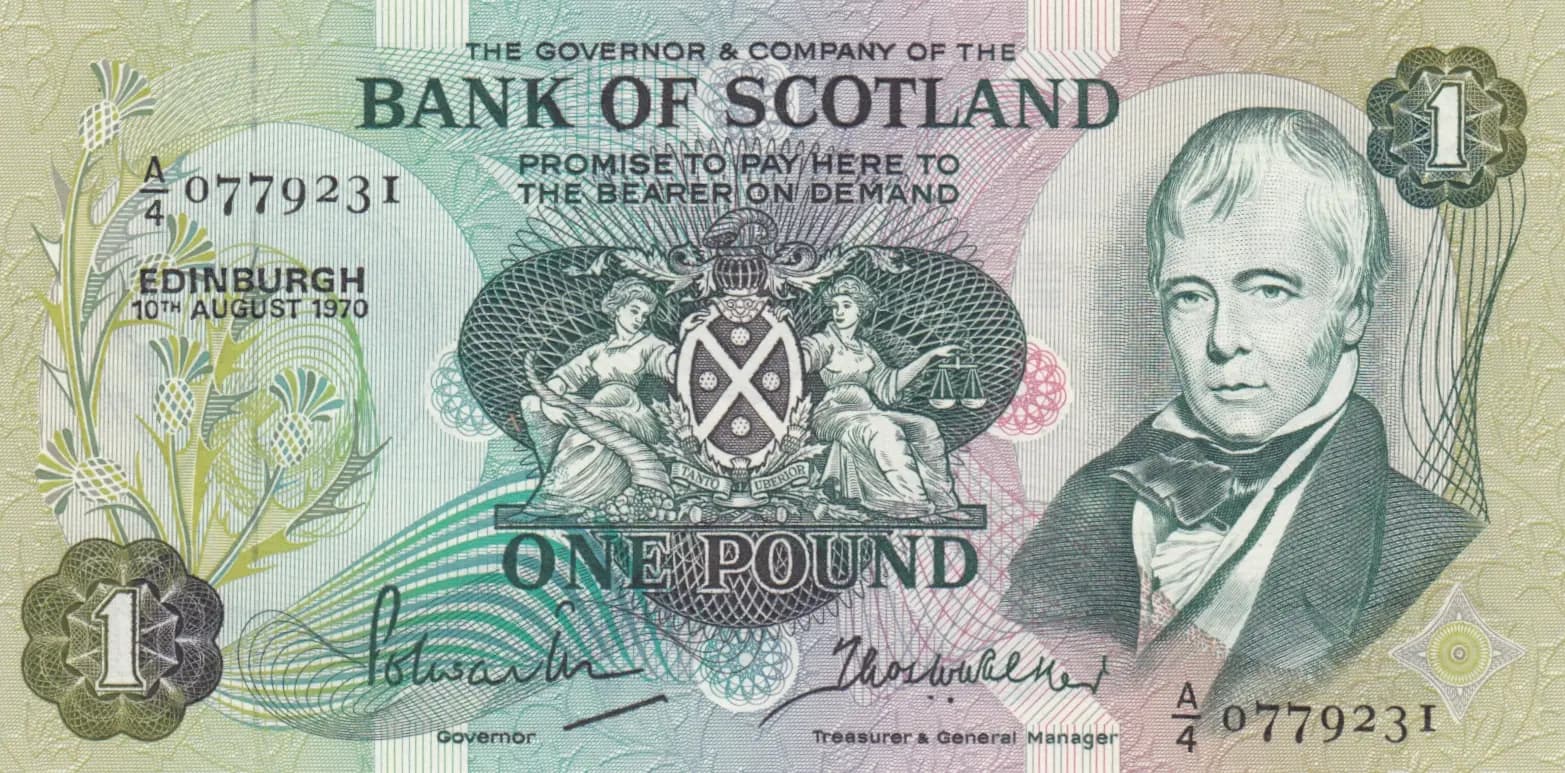
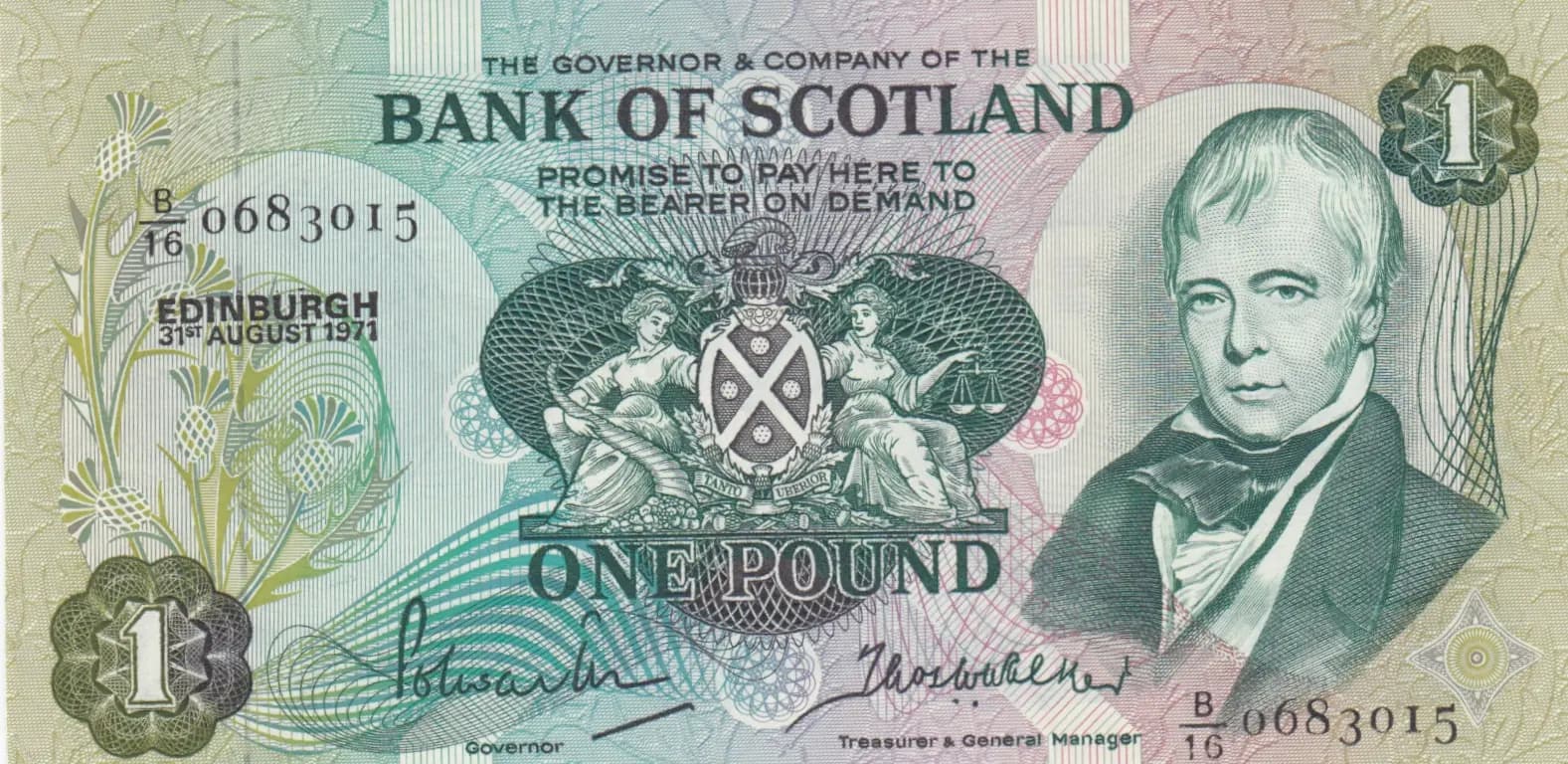
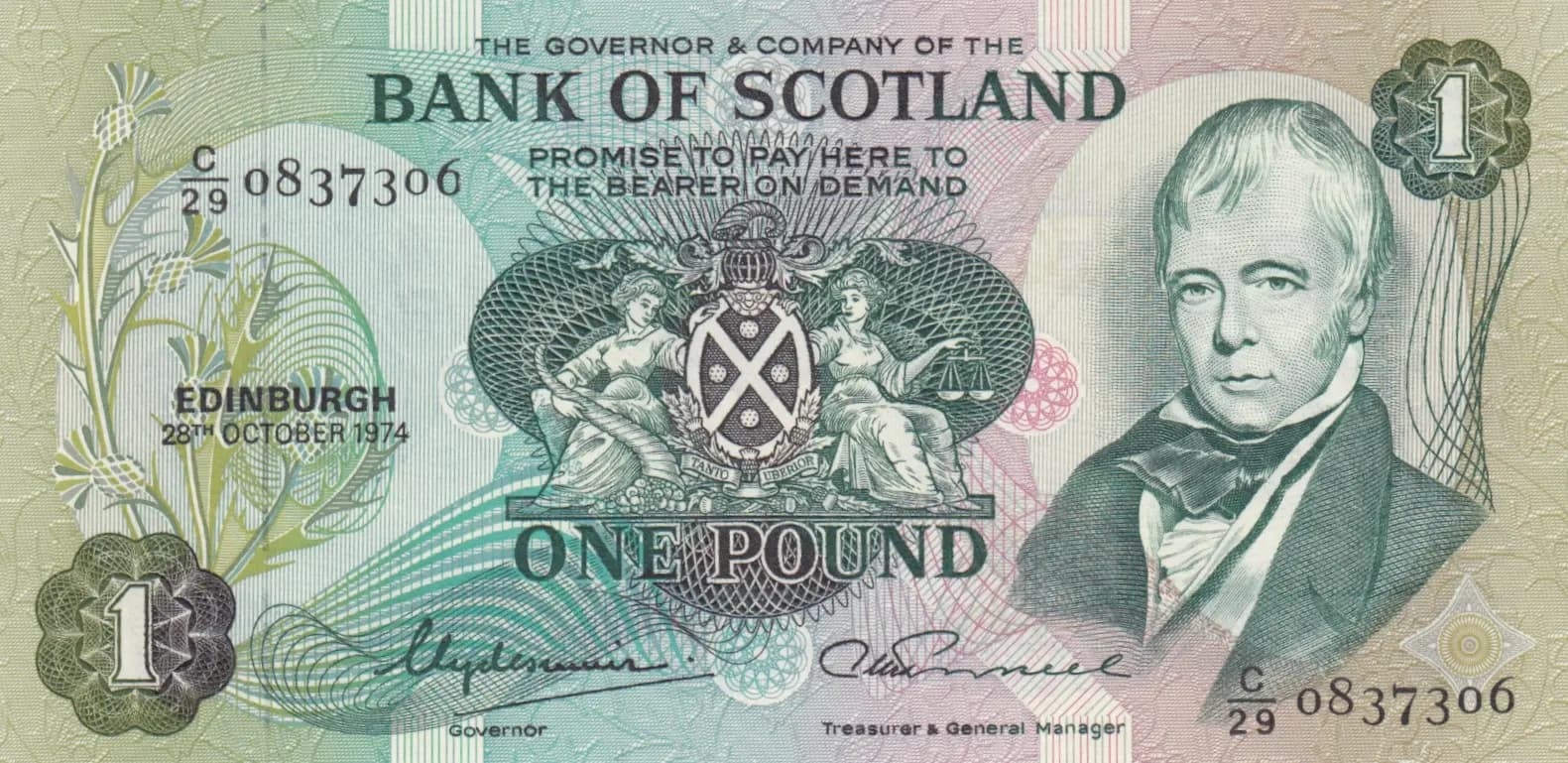
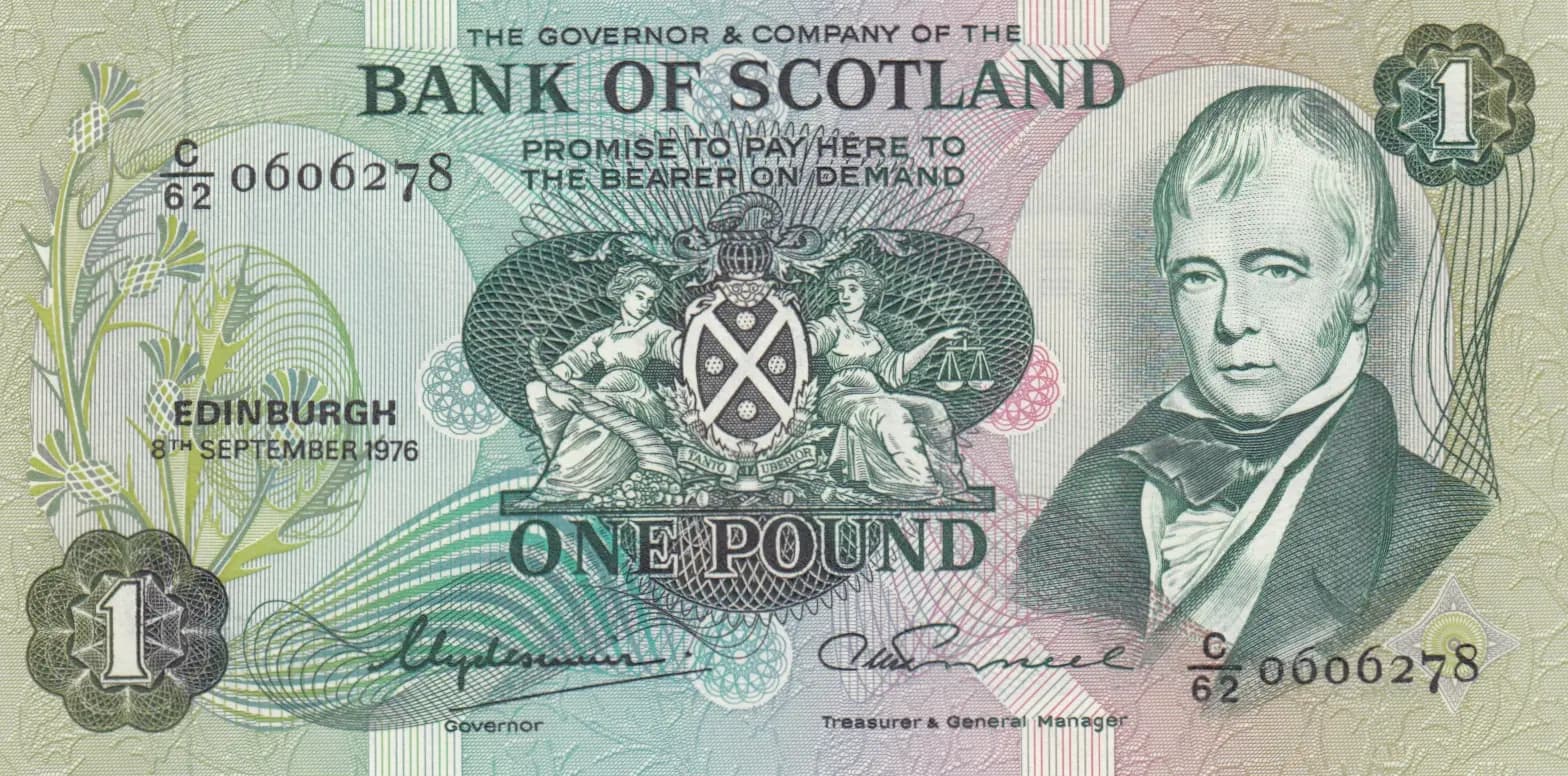
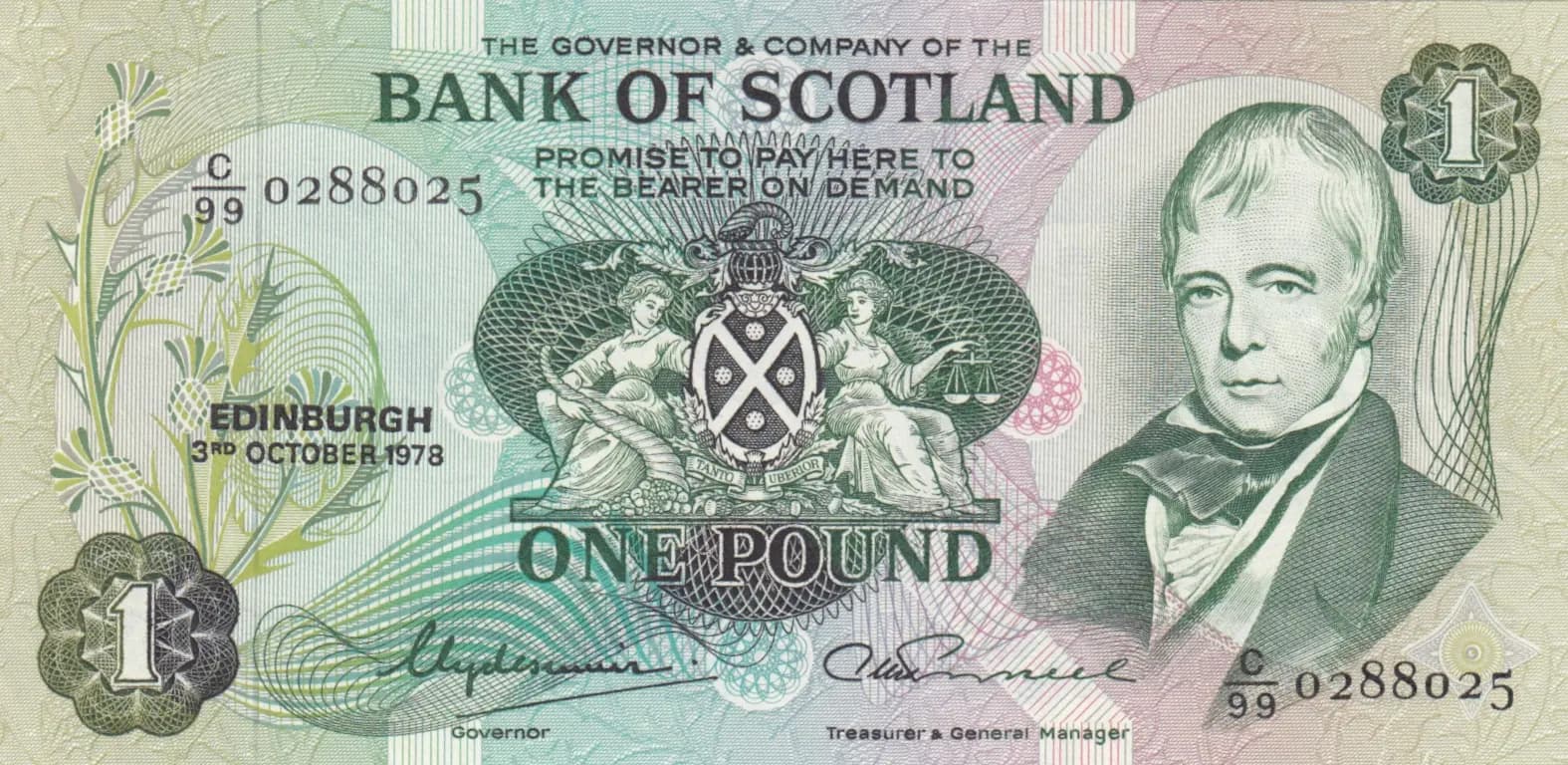
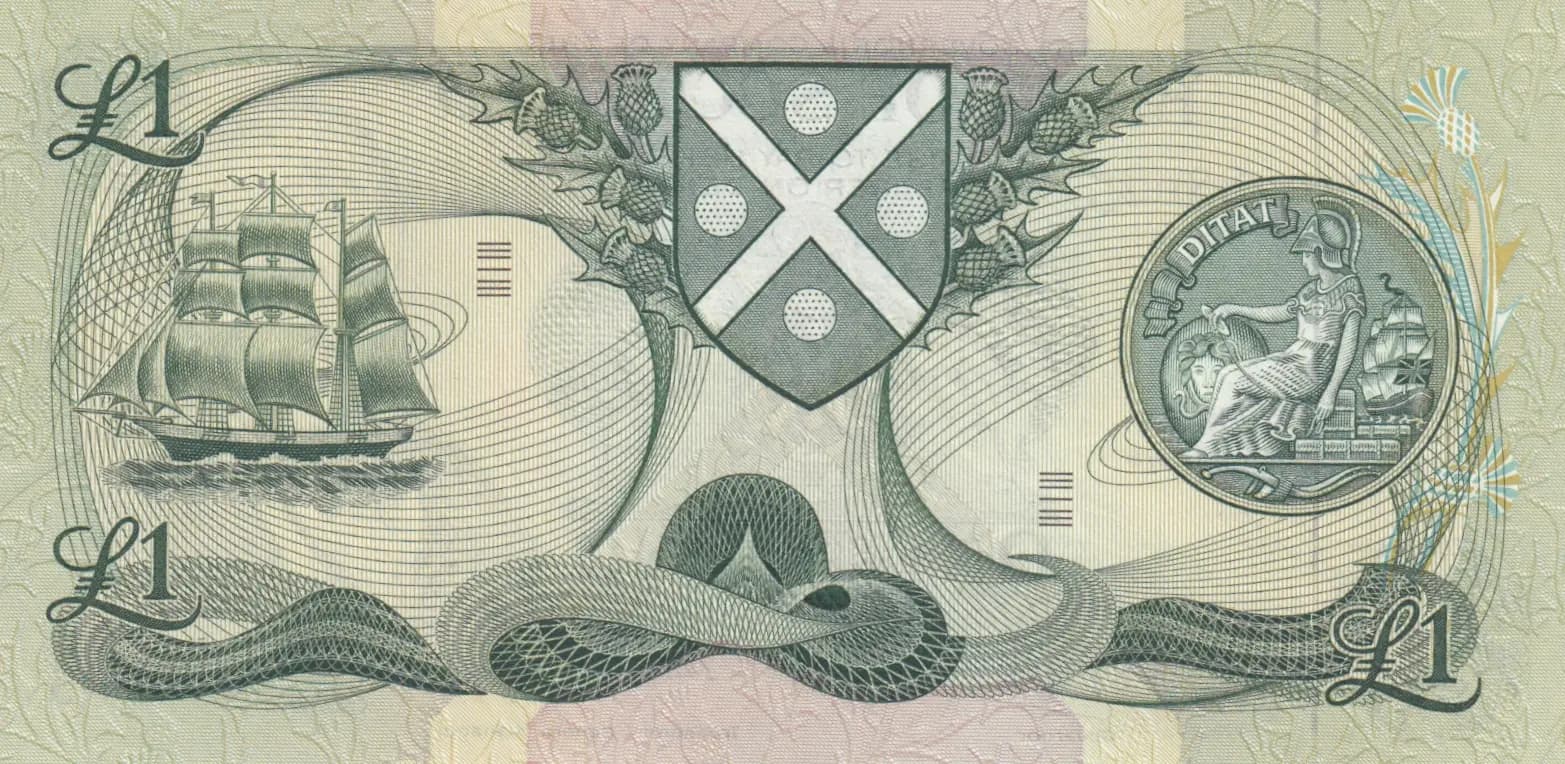
This is a Bank of Scotland 1 pound note from 1978 (Pick-111c) in uncirculated condition, displaying the iconic portrait of Sir Walter Scott in formal 18th-century dress on the obverse. The note exhibits crisp green and pink coloration with exceptional detail in its fine line engraving throughout, and reverse features a historical three-masted sailing ship alongside Scotland's distinctive saltire shield and allegorical maritime imagery. As an UNC example, this note represents a pristine specimen of Scotland's classic pound denomination during the mid-to-late 1970s issue period.
Common. The 1978 Bank of Scotland 1 pound note (Pick-111c) is a regular issue from a nine-year circulation period (1970-1988) with substantial print runs. The eBay market data provided shows consistent sales in the $3-$33 range depending on condition, with UNC examples selling for $8-$10 in recent years (2020-2023), indicating robust supply. The catalog value of $22.50 UNC (2019) reflects market saturation typical of common issues. No print run restrictions, recall status, or special circumstances apply to this variety.
This 1978 issue belongs to the Bank of Scotland's signature series (1970-1988) that commemorated Scotland's literary and maritime heritage during a period of Scottish cultural pride. The prominence of Sir Walter Scott—Scotland's celebrated 19th-century novelist—reflects the nation's emphasis on cultural identity, while the sailing ship and naval themes on the reverse underscore Scotland's historical importance in maritime trade and naval power. The thistle emblem and saltire cross reinforce Scottish national symbolism throughout the design.
The obverse features a formal portrait of Sir Walter Scott positioned on the right side in profile, dressed in 18th-century formal attire, serving as the note's primary security feature and collector focus. The Bank of Scotland coat of arms dominates the upper center, flanked by two allegorical female figures representing commerce and authority, with a protective crown above. A Scottish thistle flower appears on the left side, and ornate numeral '1' frames appear in the left and right margins. The reverse displays a three-masted sailing ship on the left representing Scotland's naval heritage, a central saltire (X-cross) shield with circular dots as the national arms, flanked by thistle flowers, and a circular medallion on the right containing allegorical female figures associated with maritime and trade themes. The entire design employs fine line engraving with intricate guilloche patterns and color gradations from green to pink.
FRONT SIDE: 'THE GOVERNOR & COMPANY OF THE BANK OF SCOTLAND' (issuing authority); 'PROMISE TO PAY HERE TO THE BEARER ON DEMAND' (legal promise); 'ONE POUND' (denomination); 'EDINBURGH' (issuing location); '3RD OCTOBER 1978' (issue authorization date); 'Governor' and 'Treasurer & General Manager' (signature authority captions); Serial number 'C 99 0288025' (printed in top left and bottom right). BACK SIDE: '£1' (denomination symbol, repeated on left and right margins). Note: The visual analysis indicates '1974-3.10.1978' as a date range in external references, with the obverse showing '3rd October 1978' as the authorization date.
Intaglio/line engraving on bank note paper, employing fine line work and guilloche security patterns throughout. The Bank of Scotland's notes from this period were typically produced by Thomas De La Rue or Waterlow & Sons, the primary British currency security printers. The observed color gradation, fine detail work, and integrated security features are consistent with professional bank note intaglio production of the late 1970s era.
This specific example shows serial number prefix 'C' with suffix numbering '99 0288025'. According to external references, replacement notes from this series carried prefixes 'Z/1', 'Z/2', or 'Z/3'—this 'C' prefix example is therefore a standard circulation note rather than a replacement issue. The obverse date of '3RD OCTOBER 1978' corresponds to the Pick-111c designation. No signature varieties or overprint variations are evident in the visual analysis that would distinguish this from other notes of the same Pick number.